Motorcycle touring gloves are made for long days on the road. A good pair fits close without pinching and gives a firm grip on the bars. It should keep your hands comfortable as the weather changes. Before you choose, check the fit, how the cuff closes and where the armour sits.
Motorcycle Touring Gloves Hand-Stitched Protection for Long Rides
Motorcycle touring gloves deliver road-tested protection across all seasons since 2009. Whether tackling summer highway runs or all-weather adventure routes, these hand-stitched gloves combine secure grip with reinforced construction. Built for extended touring comfort, they ship to 50+ countries and suit both standard and made-to-measure fits.
Touring gloves offer abrasion resistance through reinforced palm patches and hand-stitched seams that flex with your hands for faster break-in. Pre-curved fingers reduce hand fatigue on long-distance rides, while secure closures maintain grip through rain and wind. Regular conditioning keeps leather supple and extends glove life.
Touring Glove Styles
All-Season Touring Gloves — best for mixed-weather riding. Leather construction with ergonomic curvature provides steady grip on commutes and extended tours. Hand-stitched seams enhance flexibility for a tailored fit that breaks in faster than mass-produced alternatives.
Waterproof Touring Gloves — best for wet-weather protection. A waterproof membrane keeps hands dry while maintaining dexterity. Reinforced fingertips and knuckle zones strengthen safety on rain-soaked roads; pre-curved fingers aid control during long highway stretches.
Knuckle Protection Gloves — best for aggressive canyon riding. Impact-absorbing reinforcement at knuckles and seams protects hands during quick maneuvers. Pre-curved fingers and palm reinforcement support confident handling on winding routes.
Ventilated Touring Gloves — best for summer long-distance riding. Perforated panels offer airflow without sacrificing durability. Pre-shaped fingers, secure closures, and reinforced stitching support confident control on heated highway miles.
Custom Touring Gloves — best for personalized fit. Made-to-measure construction tailors hand width, length, and closure placement to your exact specifications. Hand-stitched seams ensure flexibility and a break-in suited to your grip style.
Buying Guidance
What size should I choose? Start with your hand measurements using the Size Guide. If you fall between sizes, choose the larger for comfort on long rides. Do you offer made-to-measure options? Yes, Made to Measure customizes fit for touring comfort. How long does shipping take? Visit Shipping and Return for your country or Contact Us. Condition your gloves regularly to maintain grip and leather suppleness across seasons.
Frequently Asked Questions
Touring gloves are made for comfort over many hours on the road. They often have a softer feel and a cuff that is easy to close over a jacket sleeve. Racing gloves are made for the track. They tend to be stiffer, with more hard armour. For long trips, most riders want a glove that lets their hands relax and still gives a good grip on the bars.
A touring glove should feel snug but not tight. Your fingertips should just reach the ends of the fingers. When you make a fist, the glove should not pull hard across your knuckles. Measure around your hand and compare it with the size chart. Leather can stretch a little with wear, so a glove that feels a bit close at first is often fine.
Look at the palm, the knuckles and the cuff. In a fall, your palm often hits the ground first, so a thicker or doubled palm helps. Hard or padded knuckle armour guards the back of the hand. CE marked armour means the armour meets a European standard for impact. A cuff that closes firmly helps the glove stay on your hand.
Wipe your gloves with a damp cloth after a ride to take off dirt and bugs. If they get wet, let them dry slowly at room temperature. Keep them away from heaters and strong sun, since fast drying can make leather stiff and crack. Do not put them in a washing machine. A leather conditioner, used now and then, helps keep the leather soft.
Riding jeans, leather pants and textile pants can all protect your legs. What decides it is a layer that resists scraping, CE armor at the knee and hip, and a...
How do you choose a textile motorcycle jacket for touring? Use a simple checklist. Check the CE armor level at each spot, the D number of the shell fabric, the...
Should you tour in a one-piece or a 2-piece textile motorcycle suit? We compare the two styles for stops, layering, rain and fit. We also explain CE armor...

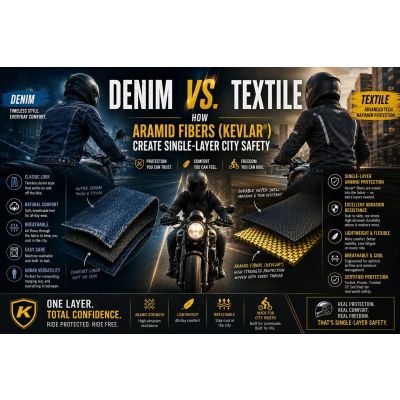 June 20, 2026
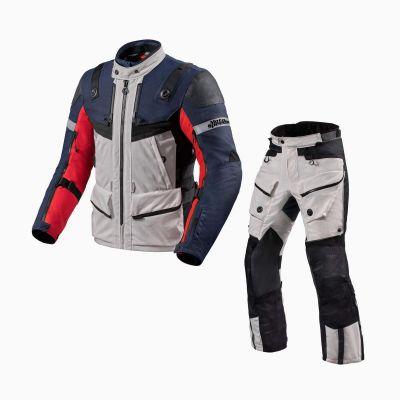 July 19, 2025