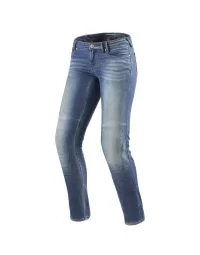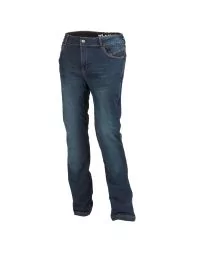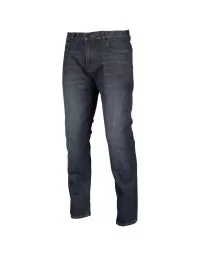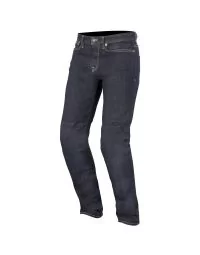
Kevlar Riding Jeans vs. Textile Motorcycle Gear: Which Offers Better City Safety?
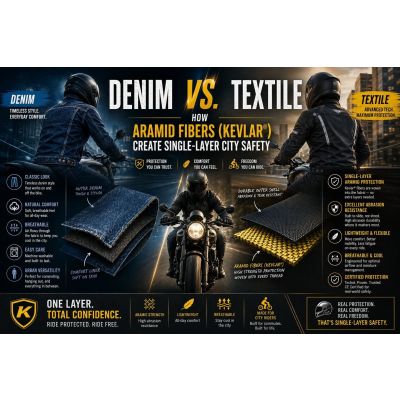
Choosing between Kevlar riding jeans and textile motorcycle pants is one of the most common gear decisions riders face. Both options offer abrasion resistance and protection, but they work differently and suit different riding styles. Kevlar riding jeans use aramid fibers to improve denim durability and are designed for casual city riding. Textile motorcycle pants are purpose-built for broader protection, better armor integration, and longer rides. Understanding the real differences helps you pick the right gear before you buy, rather than discovering limitations after your first commute or crash.
Quick Comparison Answer
Kevlar riding jeans are best for city commuters and short urban trips where casual appearance and everyday comfort matter. They offer abrasion resistance from aramid fibers and work well for lower-speed riding. Textile motorcycle pants are better for riders who want stronger armor coverage, better ventilation, riding-position shaping, and gear built specifically for longer or mixed-condition riding. The better choice depends on your riding style, how often you ride, fit in riding position, armor coverage, and whether you prioritize casual wear or dedicated protection. Neither option is automatically superior—each excels in different situations.
Table of Contents
- What Is the Main Difference Between Kevlar Riding Jeans and Textile Motorcycle Gear?
- How Do Aramid Fibers Improve Denim Riding Jeans?
- Which Option Offers Better Rider Protection?
- Which Option Feels More Comfortable for Daily Riding?
- Which Option Is Better for City Riding?
- Which Option Works Better for Longer Street Rides?
- Why Fit and Armor Placement Matter More Than Looks
- Which Option Gives Better Long-Term Value?
- Pros and Cons of Kevlar Riding Jeans and Textile Gear
- Common Comparison Mistakes Buyers Should Avoid
- Which Option Should You Choose?
- Final Comparison Advice from MotoSpeeds
What Is the Main Difference Between Kevlar Riding Jeans and Textile Motorcycle Gear?
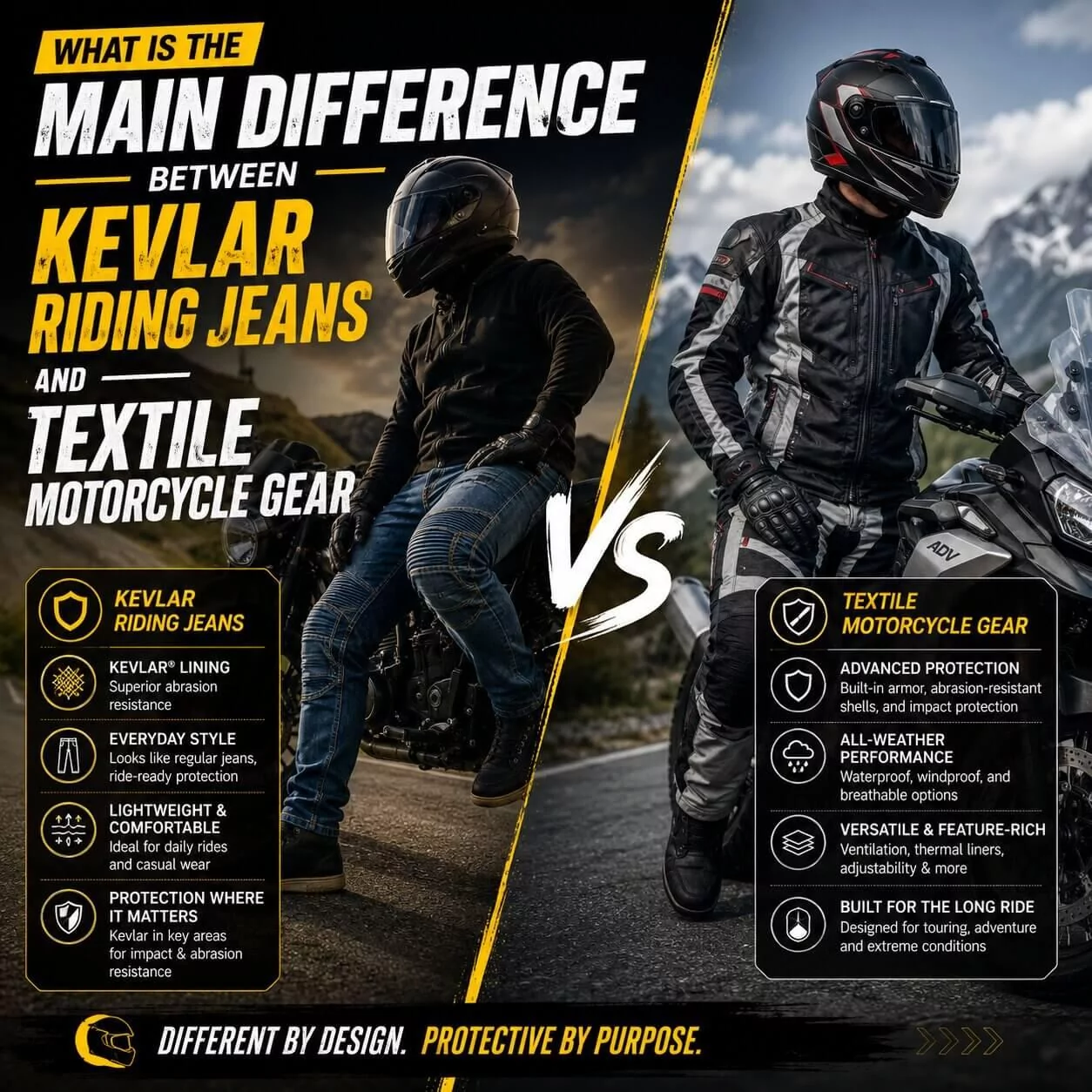
The main difference is material construction and design purpose. Kevlar riding jeans integrate aramid fibers into or alongside traditional denim to improve abrasion resistance while keeping the casual jeans look. They are engineered to feel like everyday pants you can wear off the bike to a café or office. Textile motorcycle pants are purpose-built protective gear. They use synthetic fabrics, reinforced zones, armor pockets designed for riding position, stretch panels for movement, and ventilation systems. Textile gear is designed first for riding safety and comfort, not for casual wear.
The real difference is simple: Kevlar jeans prioritize wearability and casual style, while textile pants prioritize riding-specific protection and technical features. This shapes everything from fit to armor placement to ventilation. Neither approach is wrong—they just serve different rider needs.
How Do Aramid Fibers Improve Denim Riding Jeans?
Aramid fibers such as Kevlar are synthetic materials known for high tensile strength, heat resistance, and abrasion resistance. When woven into riding jeans, they create a stronger barrier against road surface friction compared with ordinary denim. This helps reduce abrasion risk during a slide or crash at lower speeds. The aramid fibers are often placed in high-wear areas like the outer thigh, hip, and knee zones where road contact is most likely.
It is important to understand that abrasion resistance is not the same as impact protection. Aramid fibers help prevent your skin from scraping against pavement. They do not absorb impact energy from a crash. That is where CE-certified armor comes in. Some Kevlar riding jeans include knee or hip armor pockets; others do not. Always check the product label to see if armor is included or if you need to buy it separately.
Which Option Offers Better Rider Protection?
This question confuses many buyers because protection has two parts: abrasion resistance and impact protection. Kevlar riding jeans excel at abrasion resistance because of the aramid fibers. Textile motorcycle pants may also offer strong abrasion resistance depending on material quality and EN 17092 rating. But abrasion resistance alone does not tell the full protection story.
Impact protection depends on CE-certified armor, armor coverage, armor level (Level 1 or Level 2), correct placement, and fit. A pair of Kevlar riding jeans with no armor pockets offers less impact protection than textile pants with well-integrated knee and hip armor. Conversely, textile pants with poor-fitting armor that shifts during riding may not protect as well as they should.
The better choice depends on the whole package: material quality, construction, armor coverage, armor certification, fit in riding position, and how you ride. A well-fitted pair of textile motorcycle pants with proper CE armor is likely to offer broader protection than casual Kevlar jeans without armor. But Kevlar jeans with fitted armor pockets and quality construction can still support good protection for city riding.
Which Option Feels More Comfortable for Daily Riding?
Comfort is personal and depends on your riding position, weather, and how long you ride. Kevlar riding jeans feel like regular jeans when you walk, sit at work, or stand in a café. Many riders love this because they can wear the same pants all day without changing. This is a real advantage for commuters who do not want to carry a separate pair of pants or change at the office.
Textile motorcycle pants are shaped for riding position. The seat area, thigh, and knee are cut and reinforced to support the bent-leg position you hold on a motorcycle. This can feel more comfortable during long rides because the fit matches your posture. But textile pants may feel bulky or awkward when you walk around off the bike. Some riders do not mind this trade-off; others prefer the casual feel of jeans.
Summer comfort is another consideration. Denim can trap heat and may not vent as well as purpose-built textile mesh or ventilated panels. Textile gear often includes vents, mesh zones, water-resistant layers, or removable liners. If you ride in warm weather, check the product details for ventilation features. Kevlar jeans are usually warmer and less breathable than technical textile options.
Which Option Is Better for City Riding?
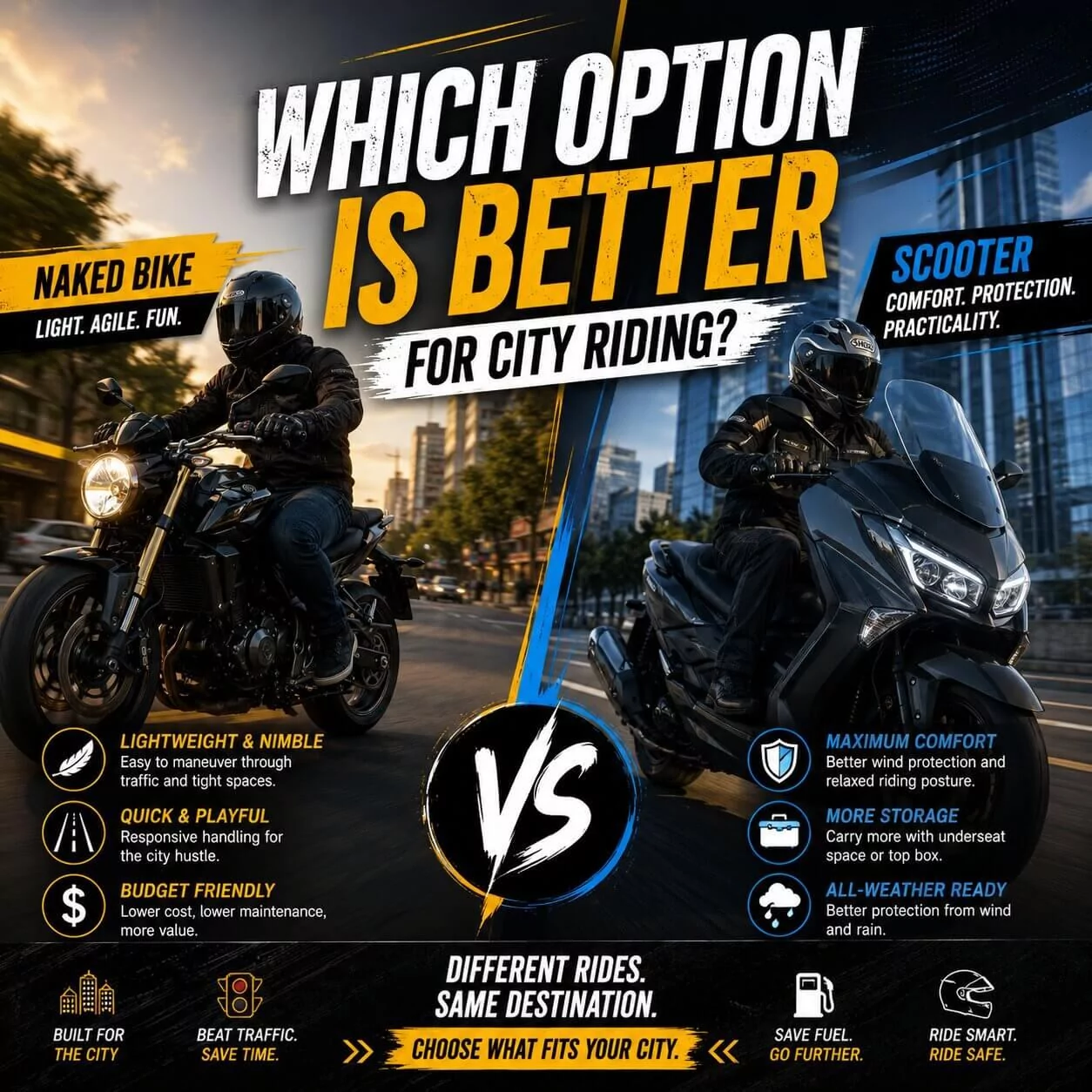
Kevlar riding jeans are well-suited for city riding. Most city commutes involve lower speeds, shorter distances, and frequent stops. You encounter pavement and street surfaces, not high-speed highway riding. Aramid fibers provide good abrasion support for these conditions. The casual appearance means you can ride to work, park your bike, and go into a meeting without looking like you just came off a racetrack. This convenience is valuable for urban riders.
Textile motorcycle pants can also work for city riding, especially if you want broader armor coverage or ride in mixed conditions. Some city riders prefer dedicated protective gear because they feel more confident knowing they have purpose-built construction and armor integration. Others find textile pants too technical-looking for their daily commute.
For pure city riding—short trips, low speeds, frequent stops—Kevlar riding jeans are a practical choice. Make sure they include armor pockets for knees and hips, fit well in riding position, and carry an EN 17092 rating. If you ride longer city distances, mix city and highway riding, or want stronger armor coverage, textile pants may be worth considering.
Which Option Works Better for Longer Street Rides?
Textile motorcycle pants are better for longer rides. When you spend two, three, or four hours on the bike, riding-position shaping, ventilation, and comfort matter more. Textile gear is designed around the bent-leg, forward-leaning posture you hold on a motorcycle. The seat area, thigh, and knee are cut to match this position. Stretch panels allow movement without bunching or restricting blood flow. Ventilation systems help manage heat during extended riding.
Kevlar riding jeans can feel tight or uncomfortable on longer rides because they are cut like casual pants, not riding pants. Your knees bend more acutely on a bike than when you walk or sit at a desk. Jeans that fit well standing up may pull or restrict when you are seated in riding position. This discomfort can build over hours and distract you from the road.
If you ride longer distances, mix city and highway riding, or ride in warmer weather, textile motorcycle pants offer better long-term comfort and protection. They support better armor placement, offer more ventilation options, and are shaped for riding posture. The technical appearance is a trade-off, but the comfort and protection advantages are real.
Why Fit and Armor Placement Matter More Than Looks
Here is where many buyers get confused. Material and style matter, but fit and armor placement matter more for actual protection. A pair of Kevlar riding jeans that fit poorly in riding position will not protect well because the armor will shift away from your knees and hips when you sit on the bike. The best material cannot protect if it is not positioned correctly.
Before buying, always try the gear in riding position. Sit on a chair or bike and check where the knee armor sits. It should cover the kneecap and stay in place when you bend your leg. Hip armor should protect the hip bone and stay centered. If the armor moves or gaps appear, the fit is wrong. Jeans-style pants should still be checked this way because casual fit does not always match riding position.
Textile motorcycle pants are often designed with riding-position shaping, which helps armor stay in place. But poor sizing can still cause problems. Always check the fit in riding position before deciding. Do not assume textile pants automatically fit better—it depends on the specific product and your body shape.
Casual appearance is nice, but protection depends on fit, armor placement, and construction. A well-fitted textile pant with proper CE armor will protect better than a casual-looking pair of Kevlar jeans with loose armor pockets. Choose based on fit and protection first, style second.
Which Option Gives Better Long-Term Value?
Long-term value depends on construction quality, riding frequency, care, and crash history. Do not expect either option to last a specific number of years because durability varies widely by product, material quality, and how hard you ride.
Kevlar riding jeans may feel like regular jeans, but they are not. Washing them in hot water or machine drying can damage aramid fibers and stitching. Check the product label for care instructions. Some Kevlar jeans can be repaired if seams split or small tears appear, but this depends on the damage and the manufacturer. After a crash or significant slide, the gear should be inspected carefully. Aramid fibers can be damaged internally even if the outside looks okay.
Textile motorcycle pants require similar care. Washing in cool water, air-drying, and avoiding harsh detergents help maintain the material and armor. Armor can sometimes be replaced if it breaks or compresses, but this varies by product. After a crash, both options should be inspected for hidden damage.
Value is not just about price—it is about how long the gear lasts and how well it protects you. A more expensive pair of textile pants with better construction and armor may offer better long-term value than cheaper Kevlar jeans that wear out quickly or offer weaker protection. Compare construction quality, armor options, certification, and care requirements, not just the initial price.
Pros and Cons of Kevlar Riding Jeans and Textile Gear
Kevlar Riding Jeans Pros
- Casual appearance lets you wear them all day off the bike
- Easier to integrate into everyday work or social settings
- Good abrasion support from aramid fibers compared with ordinary denim
- Comfortable for short city trips and commuting
- Lower profile than technical motorcycle gear
- Practical for riders who want wearable protection
Kevlar Riding Jeans Cons
- Armor coverage varies by product—some include armor pockets, others do not
- Less technical ventilation than many textile motorcycle pants
- Fit may not be shaped for riding posture, causing discomfort on longer rides
- Protection depends heavily on construction quality and certification
- Not ideal for higher-speed riding or extended street use
- Armor placement may shift if fit is not correct in riding position
Textile Motorcycle Gear Pros
- Purpose-built riding construction designed around safety and comfort
- Better armor pocket design in most products, keeping armor in place
- Stronger ventilation options including mesh, vents, and liners
- Broader protective coverage in most designs
- Better riding-position shaping for comfort on longer rides
- More suitable for mixed conditions, higher speeds, and extended riding
Textile Motorcycle Gear Cons
- Less casual appearance—you look like you are wearing motorcycle gear
- Can feel bulkier or more technical off the bike
- May cost more than casual Kevlar jeans
- Requires careful sizing to fit properly in riding position
- Still depends on certification, armor quality, and fit for protection
- Not ideal if casual appearance is a priority for your commute
Common Comparison Mistakes Buyers Should Avoid
Mistake 1: Buying based only on casual appearance. Casual style is nice, but it should not be your only decision factor. A pair of Kevlar jeans that look great but do not fit well in riding position or lack armor will not protect you as well as textile pants with proper fit and armor. Choose based on fit, protection, and riding use first.
Mistake 2: Assuming all Kevlar jeans include armor. Many do not. Some Kevlar riding jeans have armor pockets for knee and hip protection; others are just denim with aramid fibers and no armor at all. Always check the product label to see if armor is included. If not, you will need to buy CE-certified armor separately.
Mistake 3: Assuming textile pants are automatically better. They are not better for every rider. Textile gear is better for longer rides, broader protection, and technical riding. But if you ride short city commutes and want casual wear, Kevlar jeans may be the better choice. The right option depends on your riding style, not on assumptions.
Mistake 4: Ignoring EN 17092 garment ratings. EN 17092 classifies protective motorcycle garments into classes AAA, AA, A, B, and C based on abrasion resistance, tear strength, and seam strength. A higher class means better material durability. Check the label for the EN 17092 rating. Higher ratings indicate better construction and durability.
Mistake 5: Confusing EN 17092 with EN 1621. EN 17092 rates the garment itself. EN 1621 rates impact protectors (armor). A pair of pants can have an AA EN 17092 rating but weak impact protection if the armor is poor quality or poorly placed. Both ratings matter. Check both the garment rating and the armor certification.
Mistake 6: Ignoring fit in riding position. Many buyers try on gear while standing and assume it fits. But you ride sitting down with your legs bent. Always check the fit in riding position before buying. Sit on a chair or bike and verify that armor stays in place and the fit is comfortable. Do not buy based on standing-up fit alone.
Mistake 7: Choosing price over construction quality. A cheaper pair of Kevlar jeans may wear out faster, offer weaker protection, or have poor armor placement. A more expensive pair of textile pants with better construction, armor, and certification may protect better and last longer. Compare construction, armor, and certification, not just the price tag.
Mistake 8: Forgetting about the rest of your gear. Pants are only part of your protection. Your jacket, gloves, and boots matter too. A pair of Kevlar riding jeans cannot protect you if you are not wearing a protective jacket, gloves, and boots. Think about your full protective system, not just one piece.
Which Option Should You Choose?
Choose Kevlar Riding Jeans If
- You mainly ride in the city for short trips and commuting
- You want casual appearance and everyday comfort
- You need gear you can wear to work or social events off the bike
- You ride at lower speeds in familiar urban environments
- You prefer lightweight, wearable protection over technical gear
- You want to avoid the "motorcycle gear" look in your daily routine
Choose Textile Motorcycle Gear If
- You ride longer distances or mixed city and highway routes
- You want stronger armor integration and broader protective coverage
- You need ventilation for warm weather or extended riding
- You prefer riding-position shaping and technical comfort features
- You ride at higher speeds or in more demanding conditions
- You prioritize dedicated protective construction over casual appearance
Riders who want better protection for city and road use can explore our
for gear designed around safety, fit, and everyday riding comfort.Final Comparison Advice from MotoSpeeds
Kevlar riding jeans and textile motorcycle pants both have a place in rider protection. The better choice depends on your riding style, distance, speed, weather, fit, armor coverage, and how often you actually wear the gear. Neither option is automatically superior—each excels in different situations.
Before buying, check three things: the EN 17092 garment rating to confirm material durability, the CE armor certification to confirm impact protection, and the fit in riding position to confirm that armor stays in place when you sit on the bike. Casual appearance and price matter, but protection and comfort matter more.
For city commuters who want casual style and everyday comfort, Kevlar riding jeans with quality construction and proper armor can be a smart choice. For riders who want broader protection, better ventilation, and gear built specifically for riding, textile motorcycle pants are worth the investment. The right choice is the one that fits well, protects properly, and matches how you actually ride.
For riders comparing real protective gear, the
shows how armor placement, reinforced construction, and fit work together to support better protection and comfort on the bike.Frequently Asked Questions
Are Kevlar riding jeans good for city riding?
Yes, Kevlar riding jeans are well-suited for city riding. Aramid fibers provide good abrasion support for lower-speed urban commuting, and the casual appearance lets you wear them to work or social events. Make sure they include knee and hip armor pockets, fit well in riding position, and carry an EN 17092 rating. For pure city commuting with short trips and low speeds, Kevlar jeans can be a practical choice. If you ride longer distances or mix city and highway riding, textile motorcycle pants may offer better long-term comfort and protection.
Do Kevlar riding jeans need CE armor?
Kevlar riding jeans do not automatically include CE armor. Some products have armor pockets for knees and hips; others are just denim with aramid fibers and no armor at all. Always check the product label to see what is included. If your Kevlar jeans do not have armor pockets, you will need to buy CE-certified knee and hip armor separately. Aramid fibers help with abrasion resistance, but armor is necessary for impact protection. Do not assume armor is included—verify before buying.
Are textile motorcycle pants better than Kevlar jeans?
Textile motorcycle pants are better for some riders but not for all. They offer stronger armor integration, broader protective coverage, better ventilation, and riding-position shaping. They suit riders who want dedicated protective gear, ride longer distances, or want better technical features. Kevlar riding jeans are better for city commuters who want casual appearance and everyday comfort. The better choice depends on your riding style, distance, speed, and priorities. Neither option is automatically superior—each excels in different situations.
What is the difference between abrasion resistance and impact protection?
Abrasion resistance is how well the material resists scraping against pavement during a slide. Aramid fibers like Kevlar provide good abrasion resistance. Impact protection is how well armor absorbs energy from a crash or collision. Impact protection depends on CE-certified armor, armor coverage, armor level, placement, and fit. A pair of Kevlar jeans with strong abrasion resistance but no armor offers less impact protection than textile pants with proper CE armor. Both matter for real protection—you need both abrasion resistance and impact protection.
Can Kevlar riding jeans be worn all day?
Yes, Kevlar riding jeans can be worn all day because they look and feel like casual denim. This is one of their main advantages for commuters. You can ride to work, park your bike, and go into a meeting without changing pants or looking out of place. However, remember that they are specialized protective gear, not regular jeans. Follow the care instructions on the label—avoid hot water, machine drying, or harsh detergents that can damage aramid fibers and stitching. Treat them as protective gear that happens to look casual, not as casual jeans.
What should I check before buying protective motorcycle pants?
Before buying, check the EN 17092 garment rating to confirm material durability and abrasion resistance. Check the CE armor certification to confirm impact protection. Always try the pants in riding position—sit on a chair or bike and verify that armor stays over the knee and hip areas. Check that the fit is comfortable when your legs are bent, not just when standing. Confirm that armor pockets are included or that you can add armor separately. Read product reviews from other riders. Do not buy based on price or appearance alone—protection and fit matter more.
What do EN 17092 and EN 1621 mean for riding pants?
EN 17092 is a safety standard for motorcycle garments like pants, jackets, and suits. It rates them into classes AAA, AA, A, B, and C based on abrasion resistance, tear strength, and seam strength. A higher class means better material durability. EN 1621 is a separate standard for impact protectors like knee and hip armor. It rates armor as Level 1 or Level 2 based on impact performance. Both standards matter. A pair of pants can have a good EN 17092 rating but weak impact protection if the armor is poor quality. Check both the garment rating and the armor certification before buying.