Long rides bring rain, heat and many hours on the bike. The Touring blog shows how rainproof and waterproof gear differ and how liners keep water out. It explains how to layer for comfort and what the denier number on a fabric means. Read about common touring mistakes and CE abrasion ratings, plus how to choose touring suits, gloves and boots.
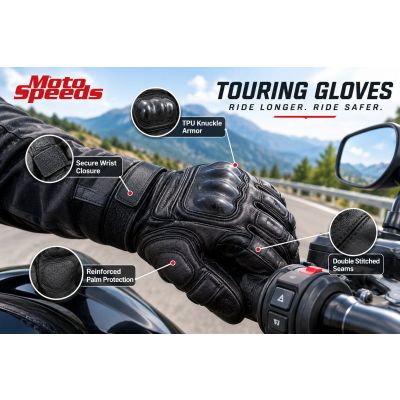
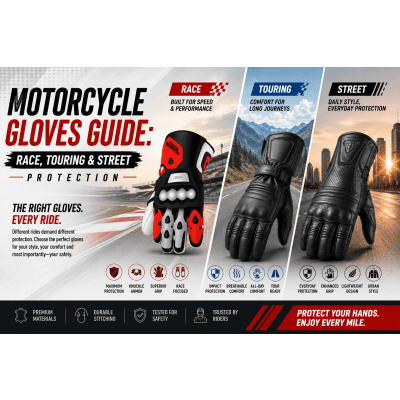
Discover what to look for in motorcycle touring gloves for long-distance riding—from armor placement and fit to materials and weather protection for safer, more comfortable tours.
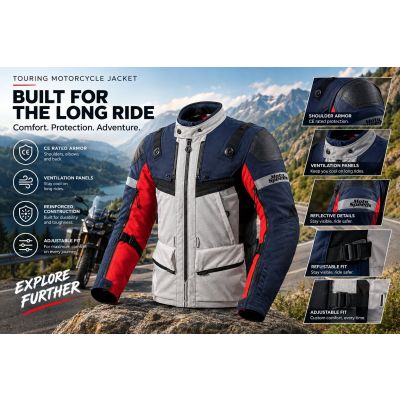
Discover how CE armor, abrasion resistance, and smart ventilation work together in the best motorcycle jacket for mountain riding and long-distance touring.
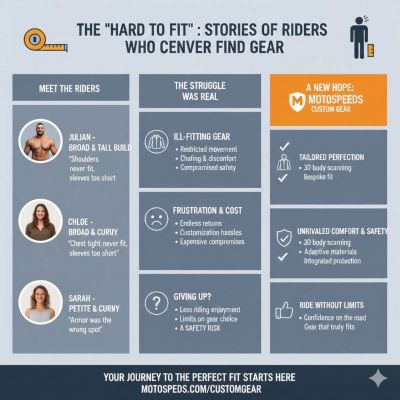
Tired of gear that doesn't fit? Read how riders found safety and comfort with Motospeeds custom sizing. Design your perfect-fit motorbike race gear today.
Summer motorcycle gloves need a way for air to get in and out. Learn how knuckle vents work, how vents differ from perforation, why thin cowhide and a snug fit matter when hands sweat, and which...
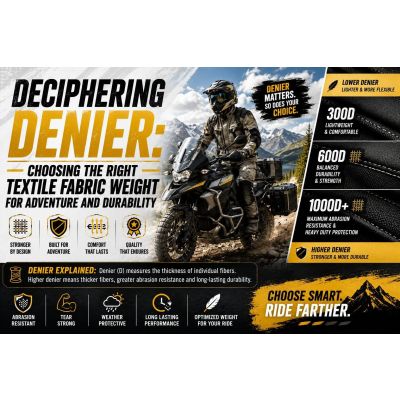
How do you choose a textile motorcycle jacket for touring? Use a simple checklist. Check the CE armor level at each spot, the D number of the shell fabric, the liners and the vents. Then look at...
How do you choose motorcycle touring pants for long rides? Learn what CE Level 1 and Level 2 armor means, what 750D Cordura is, and how a thermal liner differs from a waterproof liner. See how vents...
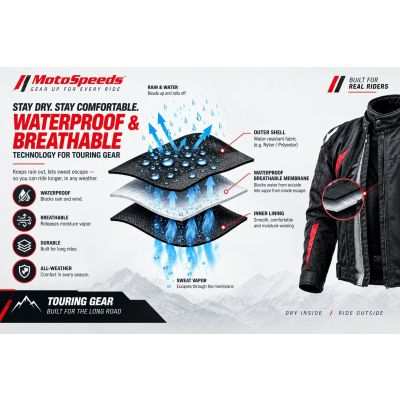
Waterproof breathable membranes sit between the outer shell and the inner lining of touring gear. Tiny pores or a special coating let sweat vapor out, while rain and wind stay outside. This keeps you...
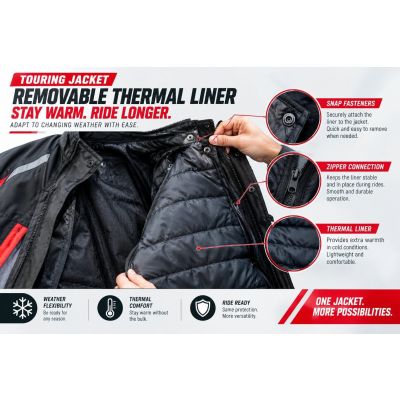
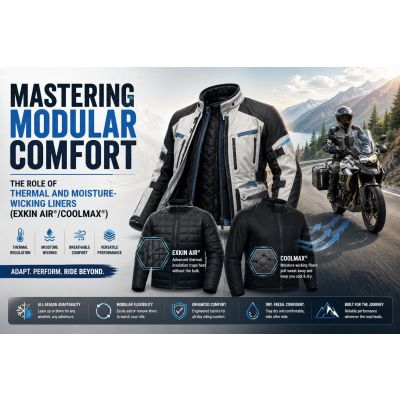
A removable liner is a warm or weather layer that fits inside a touring jacket. Snaps are quick to use. Zippers hold the liner tight and seal well. Hook-and-loop is simple but can lose grip with...
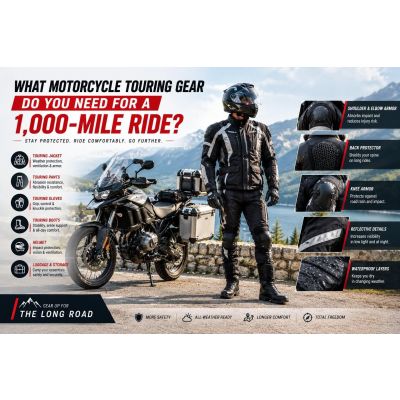
A 1,000-mile ride can mean eight to sixteen hours a day on the bike. Your gear has to guard you in a slide and still feel good at fuel stops. Look for CE armor at the shoulders, elbows, knees and...
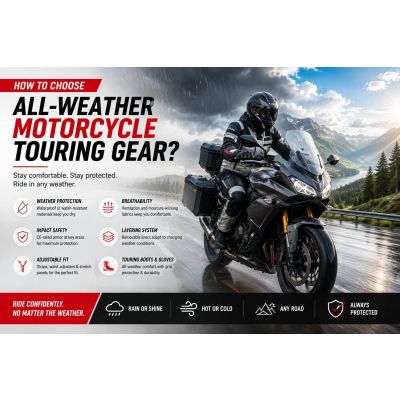
Touring riders face rain, wind and heat on the same trip. Good all-weather gear needs vents, a water-resistant lining and room to move. Fit comes first, since armor must stay on your shoulders...
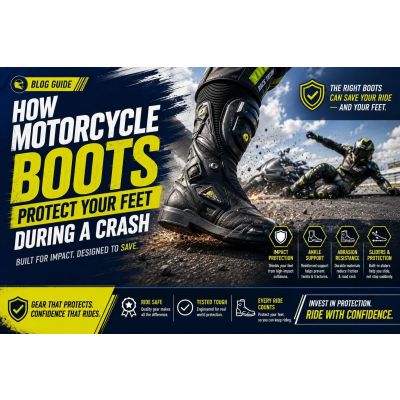
In a crash, your boots are the only thing between your feet and the road. Thick leather fights wear in a slide. Armor at the heel, toe and ankle soaks up hits. A high, stiff collar helps stop the...
Denier is a way to weigh yarn. One denier is one gram for every 9,000 meters of fiber. A 1000 denier cloth is thicker than a 200 denier one, so it takes longer to wear through in a slide. But denier...
Your hands often hit the road first in a slide. Good motorcycle gloves use leather or strong textile, tight stitching, and armor on the knuckles and the back of the hand. Pick track gloves for the...
A removable liner fits inside your jacket, suit or pants with snaps, zips or hook-and-loop tape. COOLMAX fabric moves sweat away from your skin so it can dry. Exkin Air traps warm air but lets...