
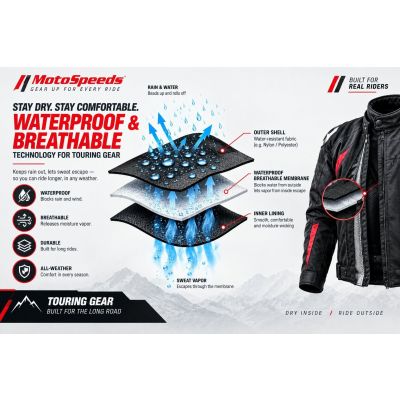
How Do Waterproof-Breathable Motorcycle Touring Membranes Work?
When you're riding across state lines or tackling a weekend touring trip, weather changes fast. Rain can catch you on the highway. Sun beats down during long hours in the saddle. You need gear that protects you from the elements without trapping sweat and heat inside. That's where waterproof-breathable motorcycle touring membranes come in. These technical layers sit between your outer shell and inner lining, allowing moisture vapor to escape while blocking liquid water. Understanding how waterproof-breathable motorcycle gear works helps you choose protective touring apparel that keeps you dry, comfortable, and focused on the road ahead.
Quick Answer
Waterproof-breathable membranes in motorcycle touring gear use microscopic pores or chemical coatings to let sweat vapor pass through while blocking rain and wind. They work by allowing smaller water vapor molecules to escape as you ride, while larger water droplets cannot penetrate the material. This technology helps touring riders manage temperature and moisture during long-distance rides in changing weather. Proper fit, layering, and care matter just as much as the membrane itself. The best touring gear matches your riding conditions, climate, trip length, and personal comfort preferences.

Table of Contents
- How Waterproof-Breathable Membranes Work
- Why Touring Riders Need Them
- Common Membrane Types in Touring Gear
- How Fit and Comfort Affect Membrane Performance
- Layering Strategy for Long-Distance Riding
- Choosing Waterproof-Breathable Touring Gear
- Caring for Your Waterproof-Breathable Touring Gear
- Final Buying Advice
How Waterproof-Breathable Membranes Work
A waterproof-breathable membrane is a thin technical layer engineered to handle two opposing tasks at once: block liquid water and allow water vapor to pass through. This works because of a fundamental difference in molecular size and behavior.
Water droplets in rain are much larger than individual water vapor molecules produced by your body's perspiration. The membrane's pore structure or chemical coating exploits this difference. Microscopic pores in the material are small enough to repel liquid water droplets but large enough to allow vapor molecules to escape. When you ride for hours in protective gear, your body generates heat and moisture. Sweat turns to vapor inside the suit. That vapor pressure builds up and seeks an escape route. The membrane lets the vapor pass outward, where it dissipates into the air. Meanwhile, rain, wind, and spray hitting the outside cannot force their way through the barrier.
Some membranes rely on pore-based technology, where millions of tiny holes allow vapor through but stop liquid water. Others use chemical coatings that attract water vapor molecules and transport them across the material. Many modern touring membranes combine both approaches for better performance and durability.
Why Touring Riders Need Them
Long-distance motorcycle riding creates unique demands on protective gear. You may spend six, eight, or ten hours in the saddle. Weather can change multiple times during a single day. You need protection from crashes and abrasion, but you also need comfort and breathability to manage body temperature and moisture.
Without a breathable membrane, traditional protective gear traps sweat and body heat inside. Moisture accumulates against your skin. You feel clammy and uncomfortable. Over hours, this discomfort can affect your focus, decision-making, and riding safety. You may also be tempted to unzip or remove protective gear to cool down, which reduces protection when you need it most.
Waterproof-breathable membranes solve this problem by letting perspiration escape while keeping rain out. This is especially important on touring rides where you cannot simply stop and change clothes. A sport-touring rider tackling a cross-country trip needs gear that adapts to morning chill, midday heat, afternoon rain, and evening cool-down. A weekend touring rider heading into mountains might face sun, wind, and sudden thunderstorms. Breathable membranes help your gear perform across these changing conditions without forcing you to choose between protection and comfort.
Common Membrane Types in Touring Gear
Several membrane technologies appear in modern motorcycle touring jackets, suits, and pants. Understanding the differences helps you evaluate what might work best for your riding conditions and comfort needs.
Pore-based membranes use tiny holes punched or created in a polymer film. These pores are typically measured in microns. The membrane is often laminated between an outer shell and an inner lining to protect the delicate pore structure. Examples include Gore-Tex, which is widely used in touring gear. Pore-based membranes offer consistent breathability and water resistance, though they can eventually clog with dirt or body oils over time.
Chemical-coating membranes apply a hydrophilic layer to the inside of the outer shell or to a separate film. This coating attracts water vapor molecules and helps them move across the material, then releases them on the outside. These membranes can be more durable than pore-based types because there are no tiny holes to clog. However, they may require different care to maintain performance.
Hybrid membranes combine pore and coating technologies to optimize both water resistance and breathability. Some touring gear uses a pore-based layer for initial water resistance and a coating layer underneath to manage vapor transport. This approach can offer better long-term durability and comfort balance.
Riders who want to compare related MotoSpeeds touring and protective gear can explore
for options built around fit, protection, comfort, and riding use.How Fit and Comfort Affect Membrane Performance
A membrane can only protect and breathe if your gear fits correctly. Poor fit undermines the entire system.
When touring gear is too tight, restricted movement reduces comfort and can disrupt armor positioning. Armor must sit correctly over impact zones such as shoulders, elbows, knees, and hips to provide the protection it was designed for. If a suit bunches up or shifts during riding, armor may move away from vulnerable areas. Tight gear also increases internal heat and moisture accumulation, forcing the membrane to work harder than it should.
When touring gear is too loose, air gaps form between the membrane and your body. These gaps reduce the membrane's ability to manage moisture effectively. Rain or wind can flow through the gaps, and sweat vapor may not reach the membrane efficiently. Loose gear also reduces impact protection because armor cannot stay positioned correctly.
The best fit for touring gear balances protection, comfort, and breathability. Your suit or jacket should allow movement in a seated riding position without excessive slack. Sleeves should reach your wrists when your arms are extended forward as if holding the bars. Torso length should cover your lower back and hips. Pant legs should reach your ankles and cover your boots. Proper fit helps the membrane work as designed and keeps armor in place during long rides or in a crash.
Comfort matters because touring riders wear gear for many hours. If your protective suit is uncomfortable, you may make unsafe choices such as removing armor, unzipping protective layers, or rushing through rest stops. Breathable membranes help manage comfort by reducing heat and moisture buildup. Combined with proper fit and layering, they support extended riding without forcing you to compromise protection.
Layering Strategy for Long-Distance Riding
Waterproof-breathable membranes work best as part of a layering system. The layers you wear underneath your protective gear affect how well the membrane can manage moisture and temperature.
Base layers made from moisture-wicking synthetic fabrics or merino wool help pull sweat away from your skin and toward the membrane. Cotton absorbs moisture and holds it against your body, which reduces breathability and comfort. A good base layer helps the membrane do its job by delivering sweat vapor to the membrane surface efficiently.
Mid-layers provide insulation for cold-weather touring. Fleece or thermal layers trap warm air while still allowing vapor to pass through. On warm touring days, you might skip the mid-layer. On cold-weather touring or mountain rides, a removable thermal layer helps you adapt to temperature changes without removing your protective gear.
Your outer touring gear—jacket, suit, or pants—contains the membrane and provides the waterproof shell, impact protection, and abrasion resistance. The membrane sits between the outer shell and the inner lining, where it can manage vapor flow and block liquid water.
Smart layering means you can adjust to weather and temperature without losing protection. A touring rider heading into changing conditions might wear a lightweight base layer in the morning, add a thermal mid-layer if rain develops, and remove the mid-layer if the sun returns. The membrane in your outer gear handles the moisture from all these layers, keeping you dry and comfortable for hours.
Choosing Waterproof-Breathable Touring Gear
When comparing touring jackets, suits, and pants, membrane technology is one factor among many. Do not assume that a more expensive membrane or a well-known brand name automatically means better performance for your specific riding needs.
Consider your typical touring conditions. If you ride mostly in dry weather with occasional light rain, a standard pore-based membrane may be sufficient and cost-effective. If you tour in wet climates or cross-country where weather changes frequently, a hybrid membrane or a high-performance pore-based type might offer better long-term breathability and durability. Sport-touring riders who push gear to its limits may benefit from more advanced membrane technology.
Check the product details and manufacturer documentation for information about the membrane type, waterproof rating, and breathability claims. Ask whether the membrane is laminated, how it is cared for, and whether it can be serviced or replaced if it degrades. Different membranes require different cleaning and storage methods to maintain performance.
Fit and construction matter as much as the membrane itself. A suit with an excellent membrane but poor fit will not protect or breathe well. Look for reinforced stitching in high-stress areas, proper armor placement, and construction that supports long hours in the saddle. Stretch panels in the right places improve comfort and allow the membrane to work more efficiently by reducing bunching and gaps.
Consider whether you want a full touring suit or a jacket-and-pants combination. Full suits offer integrated protection and often provide better sealing at the waist. Separate jackets and pants give you flexibility to mix and match with other gear. Both approaches can include excellent membranes; the choice depends on your riding style and storage needs.
For riders comparing a real touring gear example,
shows how construction, fit, and protective features can work together for extended road riding.Caring for Your Waterproof-Breathable Touring Gear
A waterproof-breathable membrane performs best when you maintain it properly. Dirt, body oils, and product buildup can reduce breathability and water resistance over time.
Clean your touring gear regularly according to the manufacturer's instructions. Most membranes require gentle washing with specific products designed for technical fabrics. Harsh detergents, bleach, or high-heat drying can damage the membrane. Some membranes need occasional re-treatment with hydrophobic products to restore water resistance. Check your gear's care label for specific guidance.
Store your touring gear in a cool, dry place away from direct sunlight. Prolonged heat or UV exposure can degrade membrane materials. Allow gear to dry completely before storing to prevent mold and odor. If you take a crash or notice damage to the outer shell, have the gear inspected. Tears or punctures in the outer layer can compromise the membrane's effectiveness. Damaged gear may need repair or replacement depending on the extent of the damage.
Inspect your gear before long touring trips. Check seams for any separation, look for cracks or tears in the outer shell, and verify that all closures and zippers work smoothly. A pre-ride check helps you catch problems before you head out on the road.
Final Buying Advice
Waterproof-breathable membranes represent an important advancement in motorcycle touring gear technology. They help you manage comfort and protection during long-distance rides in changing weather. However, the membrane is just one part of a complete protective system.
The best touring gear combines a quality waterproof-breathable membrane with proper fit, reinforced construction, appropriate armor placement, and thoughtful design for extended road use. Your choice should match your typical riding conditions, climate, trip length, and personal comfort preferences. A weekend touring rider in mild weather may have different needs than a cross-country sport-touring rider who encounters varied climates.
Take time to understand what each membrane type offers. Try on gear to confirm fit in a seated riding position. Read the care instructions and maintenance requirements. Ask questions about durability, repairability, and long-term performance. Consider whether you want a full suit or separate jacket and pants. Think about layering options that work with your gear.
Protective gear helps reduce risk during long-distance touring, but it does not remove all crash danger. Fit, comfort, and construction all affect how well your gear protects and performs. Damaged gear or damaged armor may need inspection, servicing, repair, or replacement after a crash. Proper maintenance keeps your waterproof-breathable motorcycle touring gear performing as designed for many miles ahead.
Frequently Asked Questions
What is the difference between waterproof and water-resistant motorcycle touring gear?
Waterproof gear blocks water completely under normal riding conditions, using membranes or sealed seams to prevent water penetration. Water-resistant gear slows water entry but may allow some moisture through if exposed to heavy rain or high pressure for extended periods. Waterproof touring gear is better suited for long-distance riding in wet weather or unpredictable conditions. Water-resistant gear works well for light rain or casual touring in dry climates. Check product labels to understand the water-resistance rating and expected performance.
Can a waterproof-breathable membrane stop working over time?
Yes, membranes can degrade with age, improper care, or damage. Dirt and body oils can clog pore-based membranes. Harsh cleaning products or high heat can damage the membrane structure. UV exposure and prolonged storage in hot conditions can reduce effectiveness. Regular gentle cleaning, proper storage, and occasional re-treatment with hydrophobic products can extend membrane life. If you notice reduced breathability or water resistance, check the care label or contact the manufacturer about servicing or re-treatment options.
Do I need a full touring suit or can a jacket with waterproof-breathable membrane work alone?
A quality touring jacket with a waterproof-breathable membrane can work well if paired with appropriate touring pants. Full suits offer integrated protection and better sealing at the waist, which some riders prefer for long-distance touring. Separate jackets and pants provide flexibility to mix and match with other gear and can be easier to manage during rest stops. Both approaches can include excellent membranes and protection. Choose based on your riding style, storage needs, and comfort preferences.
How do I know if my touring gear fits well enough for the membrane to work properly?
Proper fit means your gear allows movement in a seated riding position without excessive slack or bunching. Sleeves should reach your wrists when arms are extended forward. Torso length should cover your lower back and hips. Pant legs should reach your ankles and cover your boots. Try on gear while sitting on a motorcycle or sitting position to test fit. Poor fit creates air gaps that reduce membrane effectiveness and allow armor to shift. Custom sizing or tailoring can help if standard sizes do not fit your body.
What base layers work best under waterproof-breathable touring gear?
Moisture-wicking synthetic fabrics and merino wool base layers help pull sweat away from your skin toward the membrane. These materials allow vapor to pass through efficiently. Avoid cotton, which absorbs moisture and holds it against your body, reducing breathability. Lightweight synthetic or wool base layers work for warm touring. Thermal synthetic or wool layers add insulation for cold-weather touring. Choose base layers that complement your typical riding temperature and conditions.
Should I re-treat my waterproof-breathable gear with hydrophobic products?
Some membranes benefit from periodic re-treatment with hydrophobic products to restore water resistance. Check the manufacturer's care instructions to see if re-treatment is recommended for your specific gear. Not all membranes require re-treatment. Some are designed to maintain performance without additional products. Follow the manufacturer's guidance to avoid using products that could damage the membrane. If you are unsure, contact the brand or check the product documentation before applying any treatments.
Can waterproof-breathable membranes protect me from a crash?
Waterproof-breathable membranes manage moisture and weather protection. They do not provide impact protection or abrasion resistance. Impact protection comes from CE-certified armor placed in key zones. Abrasion resistance comes from the outer shell material, reinforced stitching, and construction quality. A complete touring gear system combines the membrane for comfort and weather adaptability with armor for impact protection and durable materials for abrasion resistance. No single feature prevents all crash injuries. Proper fit, maintenance, and rider behavior all matter.