
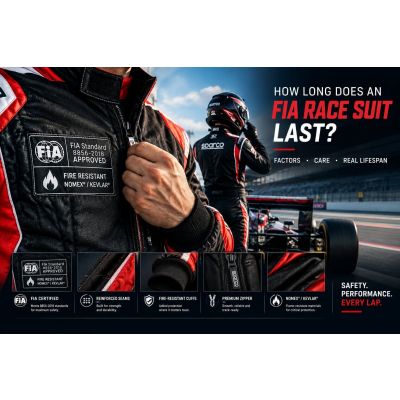
Drivers shopping for fire-resistant racing apparel often wonder: how long will my FIA race suit actually last? The answer depends on materials, construction, use frequency, care, event rules, and certification requirements. Understanding gear lifespan helps you make safer, smarter purchases and know when replacement is necessary. This guide explains what affects the durability of your FIA race suit, how to inspect for wear, and what drivers should check before competition use.
Quick Safety Summary
An FIA race suit's lifespan depends on how often you race, how well you care for it, and what your event rulebook requires. Most drivers get several years of use from a quality fire-resistant racing suit if they inspect it regularly, follow care instructions, and store it properly. However, event rules may set expiration dates or require replacement after damage, contamination, or extended storage. Always check your suit's certification label, your event's safety requirements, and the manufacturer's guidance before race day. Damaged seams, worn cuffs, faded labels, or compromised zippers mean it's time to replace your gear.
Why Car Racing Gear Matters for Driver Safety
Car racing gear is designed to support driver protection during motorsport competition. Fire-resistant racing suits, racing gloves, shoes, balaclavas, and underlayers work together to help reduce burn risk and provide escape time in a cockpit fire. They also protect against abrasion and contact injuries during crashes and collisions. Unlike street clothing, fire-resistant racing apparel is engineered with materials and construction designed to slow heat transfer and maintain integrity under motorsport conditions.
Event rules require specific gear types and certification levels because racing environments involve real fire risk, high-speed impacts, and cockpit heat exposure. Drivers need gear that fits properly in a seated position, allows full range of motion, and meets sanctioning body standards. Wearing compliant, well-maintained racing gear is part of responsible track preparation and helps you focus on driving rather than worrying about basic protection.
Safety Standards, Materials, and Certification Checks
FIA (Fédération Internationale de l'Automobile) and SFI (Safety Equipment Institute) are the two most common motorsport safety certification systems. Both set standards for fire-resistant materials, construction methods, and protective performance. Your event rulebook will specify which certification your gear must have—FIA, SFI, or both.
Fire-resistant racing suits are typically made from aramid fabrics like Nomex or similar heat-resistant materials. These fabrics are designed to resist ignition and slow heat transfer, but they are not fireproof. The number of layers, fabric weight, and construction quality all affect how well a suit performs. Certification helps show that gear has been tested to a defined standard, but it does not guarantee injury prevention. Protection depends on the correct rating, fit, condition, layers, and racing environment.
Before buying or using any racing suit, check the certification label or patch on the garment. Look for the FIA or SFI marking, the rating level, and any expiration or validity date. Many events require gear to be within a certain number of years of manufacture or certification. Some sanctioning bodies set strict expiration rules; others focus on condition and compliance. Always verify your event's specific requirements in the rulebook before race day. Drivers comparing options should review product details, certification information, and sizing guidance to ensure gear meets both their event needs and personal fit requirements.
Fit, Layers, and Comfort in the Cockpit
How your FIA race suit fits directly affects both safety and comfort. A suit that is too loose can bunch up, trap heat, and reduce protective coverage. A suit that is too tight restricts movement, causes fatigue, and may compromise seam integrity during extended racing. The correct fit means the suit sits snug against your body while seated in the cockpit, with sleeves reaching your wrists and pant legs covering your ankles when you sit.
Cuffs should overlap with your gloves, and your glove wrists should overlap with your suit sleeves to eliminate gaps. Racing shoes should cover your ankles and overlap with your suit pant legs. A racing balaclava should fit comfortably under your helmet without excess fabric. Base layers (racing underwear) should fit snugly without bunching so they work effectively with your suit's outer layer.
Many drivers prefer made-to-measure or custom-sized racing suits because seated fit is hard to judge from standard sizing alone. MotoSpeeds and other gear makers offer sizing guidance and custom options to help you find the right fit. When you try on a suit, sit in a racing position or bucket seat to confirm that sleeves, pant legs, and overall coverage feel right. Comfort and protection both depend on correct fit, so take sizing seriously when you order.
Inspection, Maintenance, and Common Mistakes
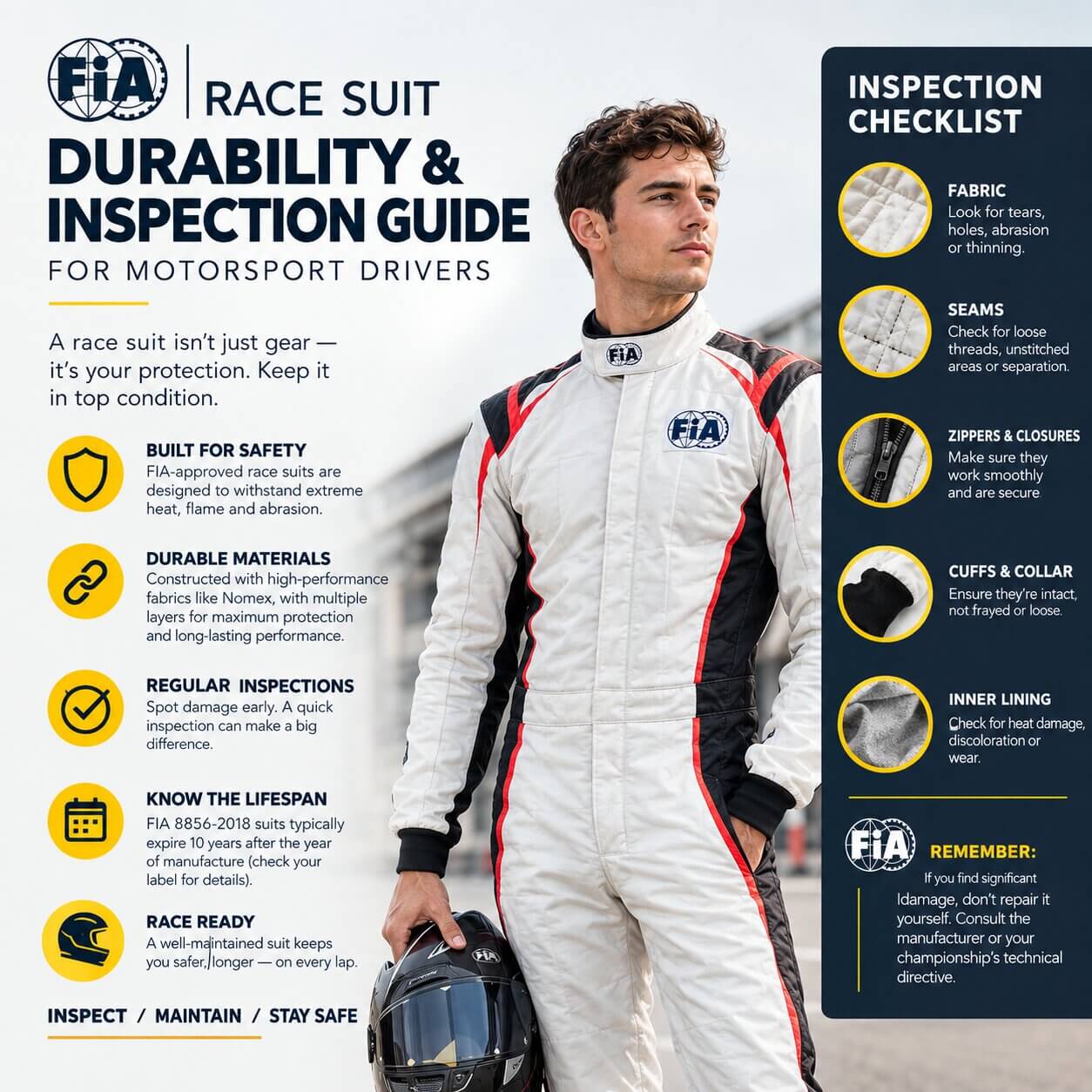
Your FIA race suit should be inspected before every use and after any incident. Check seams for separation, zippers for smooth operation, cuffs for wear or fraying, and the certification label for visibility and validity. Look for stains, burns, tears, or discoloration that might indicate contamination or heat damage. Feel the fabric to make sure it has not become stiff, brittle, or compromised. If your suit has been exposed to fire, chemicals, or extreme heat, it should be replaced immediately, regardless of how it looks.
Follow the care label instructions on your suit. Most fire-resistant racing apparel should be hand-washed or machine-washed in cool water with mild detergent, then air-dried away from direct heat or sunlight. Never dry-clean, bleach, or use fabric softener unless the label permits it, because these processes can damage fire-resistant coatings or fibers. Store your suit in a cool, dry place away from moisture, chemicals, and direct sunlight. Proper care extends gear lifespan and maintains protective performance.
Common mistakes that shorten gear life or compromise safety include:
- Choosing by looks only: Select gear based on fit, certification, materials, and event compliance, not just color or style.
- Ignoring certification labels: Always verify that your suit carries the correct FIA or SFI rating and check expiration dates required by your event.
- Wearing the wrong underlayers: Use racing-specific underwear and base layers that are compatible with your suit and designed for motorsport use.
- Buying the wrong fit: Test fit while seated; a suit that fits standing may not fit correctly in the cockpit.
- Skipping inspection: Review your gear before every race; damaged, contaminated, or expired suits should be replaced.
How Long Does Your FIA Race Suit Really Last?
Most quality FIA race suits last 3 to 7 years with regular use and proper care, but lifespan varies widely. A driver who races once a month will see different wear than one who races weekly. Exposure to heat, sweat, sun, and chemicals all accelerate aging. Storage conditions matter too; suits kept in damp basements or hot garages degrade faster than those stored in climate-controlled spaces.
Event rules often impose strict limits independent of physical condition. Some sanctioning bodies require gear to be no more than 5 or 10 years old from the manufacture date, even if the suit looks perfect. Others set shorter windows for specific racing disciplines. Rally events, drag racing, circuit racing, and karting may have different rules. Always check your event rulebook before competition to know whether your suit is still legal.
Damage or contamination can end a suit's useful life immediately. A suit exposed to fire, fuel, oil, or solvents should be replaced. Seams that separate, zippers that fail, or cuffs that tear should trigger replacement if they cannot be professionally repaired. If you are unsure whether your suit is still safe or compliant, contact the manufacturer or your event's technical official for guidance.
How MotoSpeeds Supports Car Racing Gear Buyers
Drivers comparing fire-resistant suits, gloves, shoes, and related safety apparel can review
to explore gear options and product details before ordering.MotoSpeeds offers car racing suits, auto racing suits, fire-resistant racing apparel, racing gloves, racing shoes, balaclavas, and racing underwear designed for drivers who want to compare fit, materials, comfort, and protective features. Many products offer custom sizing or made-to-measure options so you can find the exact fit you need for cockpit comfort and safety. Product pages include detailed sizing guidance, material descriptions, and certification information to help you make an informed choice.
MotoSpeeds also focuses on driver education and safety awareness. Before you order, review product details, certification information, sizing guidance, and your event's specific requirements. Contact MotoSpeeds customer support if you have questions about sizing, certification, materials, or which gear is right for your racing discipline. Making the right choice upfront means safer, more comfortable racing and longer gear lifespan.
Final Safety Guide Before You Buy
Here is what to do before you purchase or use an FIA race suit:
- Identify your racing discipline and check your event's safety rulebook for specific gear requirements.
- Verify whether your event requires FIA certification, SFI certification, or both, and what rating level is needed.
- Check if your event sets age limits or expiration dates for gear; some events require suits to be less than 5 or 10 years old from manufacture.
- Choose a suit type and layer configuration that matches your racing environment and event rules.
- Confirm fit by sitting in a racing position; sleeves should reach your wrists, pant legs should cover your ankles, and overall coverage should feel snug but not restrictive.
- Make sure your racing gloves, shoes, balaclava, and base layers are compatible with your suit and also meet event requirements.
- Inspect your gear before every use for damage, contamination, or wear.
- Follow the care label instructions and store your suit in a cool, dry place.
- Replace your gear if it is damaged, expired by event rules, contaminated, or no longer compliant with your racing discipline's standards.
Understanding how long your FIA race suit lasts—and what affects its lifespan—helps you budget for gear replacement and stay compliant with event rules. Fire-resistant racing apparel is an investment in your safety and track readiness. When you are ready to shop for a new suit or explore other motorsport protective gear, MotoSpeeds offers a range of options designed for drivers who prioritize fit, comfort, and protective performance. Start by checking your event requirements, confirming your sizing, and reviewing product details before ordering.
Frequently Asked Questions
What is car racing gear designed to do?
Car racing gear is designed to help reduce burn risk, provide escape time in a cockpit fire, and protect against abrasion and contact injuries. Fire-resistant racing suits, gloves, shoes, balaclavas, and underlayers work together to slow heat transfer and maintain protective integrity under motorsport conditions. Gear also helps drivers comply with event safety rules. Racing gear is not fireproof and does not eliminate injury risk, but it supports driver protection when used correctly and maintained properly.
Is fire-resistant race gear the same as fireproof gear?
No. Fire-resistant means the material resists ignition and slows heat transfer, but it is not fireproof. Fireproof gear would be completely immune to fire, which is not possible with current motorsport materials. Fire-resistant racing apparel is designed to give drivers extra escape time and reduce burn severity in a fire event, but it depends on correct fit, condition, underlayers, and proper use. Always check product labels and certification markings to understand what your gear is designed to do.
What should I check before buying a car racing suit?
Before buying, check your event's rulebook for required certification (FIA or SFI), rating level, and any age or expiration limits. Verify the suit's certification label and confirm it matches your event needs. Test fit while seated in a racing position to ensure sleeves reach your wrists and pant legs cover your ankles. Review sizing guidance and consider custom-sized options if standard sizes do not fit well. Check material descriptions and care instructions. Contact the maker if you have questions about fit, materials, or compliance before ordering.
Do I need racing gloves, shoes, balaclava, and underlayers too?
Yes. Your event rulebook likely requires racing gloves, shoes, and possibly a balaclava in addition to your suit. These items must also meet certification standards and fit properly. Racing gloves should overlap with your suit cuffs; racing shoes should cover your ankles and overlap with your pant legs. A racing balaclava must fit comfortably under your helmet. Racing underwear (base layers) should fit snugly to work effectively with your suit. All these items work together to provide consistent protective coverage and meet event compliance.
How should car racing gear fit in the cockpit?
Test fit by sitting in a racing position or bucket seat. Your suit should feel snug against your body without excess fabric or gaps. Sleeves should reach your wrists, pant legs should cover your ankles, and overall coverage should feel secure. Cuffs should overlap with your glove wrists; glove wrists should overlap with your suit sleeves. Racing shoes should cover your ankles and overlap with your pant legs. A racing balaclava should fit comfortably under your helmet without bunching. Correct seated fit ensures both safety and comfort during racing.