Quick Buying Recommendation
Your racing discipline shapes your car racing gear needs. Formula 1 drivers need FIA-certified multi-layer suits with advanced fire resistance. Track-day and circuit racers often choose SFI-certified single or two-layer suits with proper fit and glove compatibility. Kart racers prioritize lightweight, mobile gear for confined cockpits. First-time buyers should verify event certification requirements, measure while seated, and consider custom sizing if standard sizes don't match. Gloves, shoes, balaclavas, and underlayers should work together as a system, not as separate purchases. MotoSpeeds offers custom sizing and detailed product information to help you compare options before ordering.
Table of Contents
- Choose Car Racing Gear Based on Your Racing Use
- Fit, Certification, and Product Details to Check
- Suit, Gloves, Shoes, Balaclava, and Underlayers
- Buying Mistakes and Why Consider MotoSpeeds
- Final Car Racing Gear Buying Guide
Choose Car Racing Gear Based on Your Racing Use
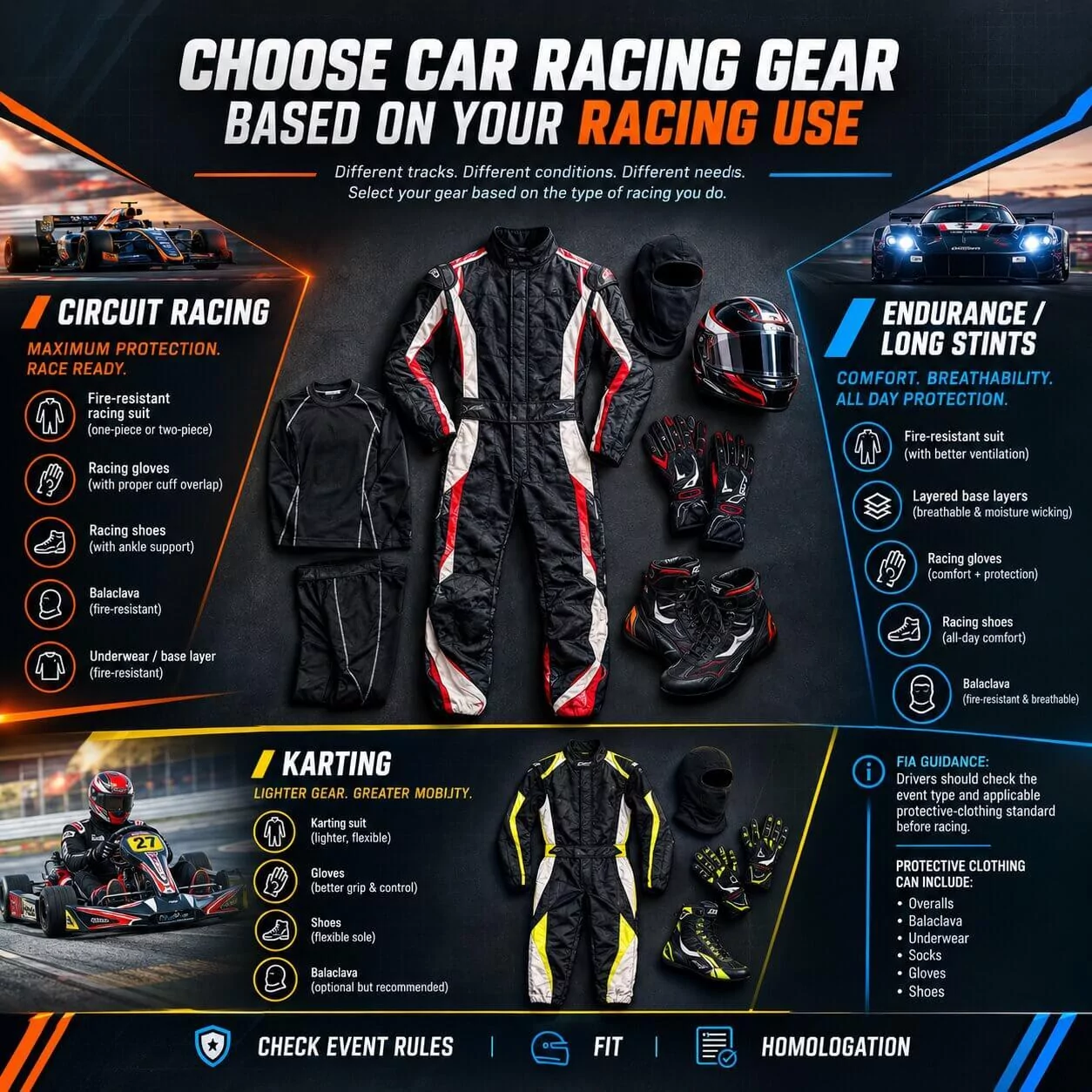
Different racing environments demand different car racing gear priorities. Understanding your racing discipline helps you choose the right suit type, layer count, fit, and protective features before you buy.
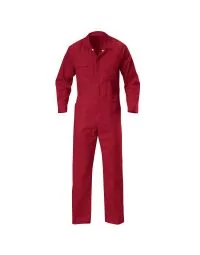
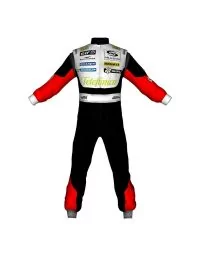
Formula 1 and professional circuit racing require FIA-certified multi-layer fire-resistant racing suits. These suits are engineered for extreme heat exposure, multiple layers, and strict event compliance. Drivers in these environments need advanced protective apparel that meets specific international standards and certification labels. If you compete in Formula 1 or similar professional circuits, your event rulebook will specify exact certification requirements, fabric ratings, and validity periods.
Track-day drivers and club racers often choose SFI-certified single or two-layer car racing suits. Track days typically allow more flexibility in gear specifications than professional circuits. Many track events accept SFI ratings and require drivers to verify certification labels before arrival. These drivers benefit from suits that balance fire-resistant protection with comfort during longer sessions. Fit is critical because track days can last several hours, and poor cockpit comfort affects concentration and safety.
Drag racers face intense heat and acceleration forces in confined cockpits. Drag racing suits need excellent cuff overlap with gloves, secure fit through high-G forces, and fire-resistant materials suited to short, explosive runs. Drag racing gear often emphasizes secure fit over extended comfort because sessions are brief but intense.
Rally drivers need car racing gear that supports mobility and ventilation during long, varied-intensity stages. Rally cockpits often have tighter spaces than circuit cars, and drivers shift frequently between acceleration, braking, and steering inputs. Rally suits should fit well while seated and allow shoulder and arm movement without excess fabric bunching. Some rally events may accept different certification standards than circuit racing, so checking your event rulebook is essential.
Karting drivers prioritize lightweight, mobile car racing gear because kart cockpits are confined and movement is constant. Kart suits should fit closely without restricting arm and leg movement. Many kart drivers start with entry-level fire-resistant suits and upgrade as they progress to higher competition levels. Certification requirements vary by karting organization, so verify your event rules before buying.
First-time buyers and drivers upgrading older gear should identify their primary racing use first. Are you doing occasional track days, club racing, drag racing, rally, or karting? Your racing discipline determines whether you need entry-level protection, advanced multi-layer construction, or custom sizing for a tight fit. Experienced drivers upgrading often know their fit preferences and can move to custom sizing or higher-specification suits more confidently.
Event rules, cockpit layout, session length, and heat exposure all influence your choice. Before shopping for car racing gear, check your event rulebook for certification requirements, then compare suit types and layer counts that match your racing environment and budget.
Fit, Certification, and Product Details to Check
Fit and certification are equally important when choosing car racing gear. A certified suit that doesn't fit well offers poor protection and cockpit comfort. A well-fitting suit without proper certification may not meet your event requirements.
Fit matters more in the cockpit than standing up. Always check measurements while seated, with your arms in driving position and legs bent as they would be in your car. Sleeve length should reach your wrist without pulling your shoulder forward. Cuff coverage should overlap properly with your gloves—typically one to two inches of overlap. Torso length should allow comfortable seated posture without riding up or pulling down. Pant legs should cover your ankles and overlap with your racing shoes without excess fabric bunching at the knees or ankles.
Standard sizing works when your measurements match the size chart exactly. Most manufacturers provide detailed size charts showing chest, sleeve length, torso length, inseam, and weight ranges. If your measurements fall cleanly within one size, standard sizing is usually sufficient. However, if you're between sizes, have longer arms, a shorter torso, or unusual proportions, custom sizing may provide better fit and comfort during long races.
Custom sizing or made-to-order options help when standard sizes don't match your body. Custom car racing gear allows you to specify sleeve length, torso length, inseam, and other details to your exact measurements. This option takes longer to receive but can mean the difference between a suit that shifts during driving and one that stays in place. Drivers with non-standard proportions, those buying for their first time, or experienced racers who know their fit preferences often choose custom sizing.
Certification labels and event requirements must be checked before buying. SFI (Safety Equipment Institute) and FIA (Fédération Internationale de l'Automobile) are common motorsport safety certification systems. Your event rulebook will specify which certification is required, what rating level, and whether the certification must be current or valid for a specific date range. Certification labels should be visible on the suit and include the rating, test date, and expiration or validity period. Do not assume a suit is legal for your event without verifying the certification label against your event requirements.
Fire-resistant materials and layers affect protection and comfort. Nomex and aramid fabrics are common in motorsport gear because they help slow heat transfer and can support driver protection during fire exposure. Single-layer suits are lighter and more comfortable for shorter sessions. Two-layer and multi-layer suits offer more thermal protection but are heavier and warmer. Your racing discipline and event rules should guide your choice. Longer endurance races and hotter cockpits may benefit from multi-layer construction, while shorter track days or cooler seasons may be comfortable with single-layer suits.
Product details should confirm material composition, care instructions, included features, and sizing specifics. Before buying, review the manufacturer's product description for fabric type, layer count, seam construction, zipper type, whether gloves and shoes are included, and any special fit notes. Check care instructions—some fire-resistant gear requires specific washing and storage to maintain protective properties. Ask the seller about any sizing concerns or unusual fit details before ordering.
Drivers who want to compare related MotoSpeeds car racing gear can explore
for options built around fit, protection, and motorsport use.Suit, Gloves, Shoes, Balaclava, and Underlayers
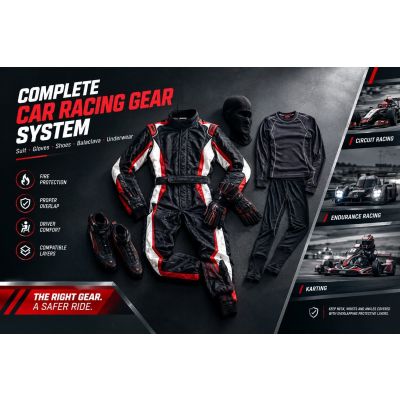
Car racing gear is a system, not just a suit. Your racing suit is the foundation, but gloves, shoes, balaclava, racing underwear, and underlayers all work together to support protection, fit, and comfort in the cockpit.
Racing gloves should overlap your suit cuffs by one to two inches and allow full hand and finger movement on the steering wheel and pedals. Glove material should match your suit's fire-resistant specification. Some drivers prefer thinner gloves for better pedal feel, while others choose thicker gloves for extra grip and protection.
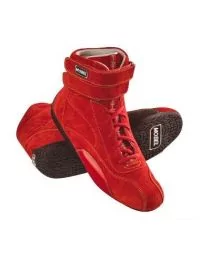
Racing shoes should fit snugly without crowding your footwell. Your shoes must allow stable heel placement for braking, smooth throttle control, and confident clutch operation. Thin-soled racing shoes offer better pedal feedback than street shoes. Shoes should overlap your pant legs without excess fabric bunching.
Balaclavas provide fire-resistant head and neck coverage under your helmet. A balaclava should fit comfortably under your helmet without shifting or bunching. It should cover your neck, ears, and lower face completely. Some drivers prefer thinner balaclavas for summer racing, while others choose thicker versions for winter or longer sessions.
Racing underwear and socks are often overlooked but critical for comfort and protection. Fire-resistant racing underwear and socks should be compatible with your suit's protective system. During long sessions, regular cotton underwear and socks can absorb sweat and reduce comfort. Motorsport-specific underlayers wick moisture and support thermal management.
Helmet compatibility matters. Your balaclava, suit, and gloves should all work together with your helmet. Make sure your balaclava fits comfortably under your helmet without restricting your vision or causing pressure points. Check that suit shoulders don't bunch under your helmet collar.
Some racing events require more than a suit. Many events mandate gloves, shoes, and a balaclava as part of the gear system. Check your event rulebook before buying to confirm what gear is required. Building a complete car racing gear setup ensures proper coverage, fit, and compliance with event rules.
Buying Mistakes and Why Consider MotoSpeeds
Common buying mistakes can lead to poor fit, event non-compliance, and wasted money. Avoid these pitfalls when choosing your next car racing gear.
- Buying by appearance only: Don't choose car racing gear based on color or style alone. Check fit measurements, certification labels, material composition, and event compliance before ordering.
- Ignoring certification labels: A suit without the right certification label won't meet your event requirements, even if it looks similar to certified gear. Always verify the certification label, rating, and validity period against your event rulebook.
- Choosing the wrong fit: Buying a size based on street clothing or standing-up measurements leads to poor cockpit fit. Always measure while seated and compare your measurements to the manufacturer's size chart.
- Skipping gloves or shoes: Some drivers buy only a suit, then realize they need gloves and shoes that match the suit's fire-resistant rating and overlap properly. Plan your full gear setup before ordering.
- Using the wrong underlayers: Pairing your fire-resistant suit with regular cotton underwear or socks reduces comfort and may affect the protective system. Use compatible racing underwear and socks designed for motorsport.
- Not inspecting gear before race day: Always inspect your suit, gloves, shoes, and balaclava before competition. Check for damage, proper fit, certification label visibility, and any issues that might need repair or replacement.
MotoSpeeds offers car racing gear designed for drivers who want to compare fit, material, comfort, and protective features before ordering. The brand focuses on driver safety awareness, proper fit, fire-resistant materials, and certification transparency. MotoSpeeds provides detailed product information, custom sizing options, and made-to-order car racing gear that helps you avoid common buying mistakes.
When you shop at MotoSpeeds, you get access to detailed size charts, material specifications, certification information, and customer support to answer sizing and certification questions. The brand's commitment to fit and protective features means you can make a confident buying decision based on your racing discipline, event requirements, and body measurements.
For drivers comparing a real gear example,
shows how construction, fit, and protective features can work together.Final Car Racing Gear Buying Guide
Choosing the right car racing gear requires a clear process. Start by identifying your racing discipline and checking your event rulebook for certification requirements, required gear, and any specific rules about suit construction or materials. Measure your body while seated in your car or in driving position, then compare your measurements to the manufacturer's size chart. If your measurements fall between sizes or you have unusual proportions, consider custom sizing or made-to-order options for better fit.
Verify that the suit's certification label, rating, and validity period match your event requirements. Review the product details for material composition, layer count, care instructions, and included features. Plan your complete gear setup by choosing gloves, shoes, balaclava, and underlayers that match your suit's fire-resistant rating and overlap properly.
Before race day, inspect all gear for damage, proper fit, and certification label visibility. Test your suit, gloves, and shoes in your car to confirm cockpit fit and comfort. If you have questions about sizing, certification, or product compatibility, contact the manufacturer or retailer before ordering.
Choosing car racing gear that fits well, meets event requirements, and supports your racing discipline helps you focus on driving rather than worrying about gear comfort or compliance. Take time to measure accurately, verify certification, and compare options. When you're ready to order, MotoSpeeds offers detailed product information, custom sizing, and customer support to help you make a confident decision on the right car racing gear for your next race.
Frequently Asked Questions
What car racing gear should I buy first?
Start with a fire-resistant racing suit that matches your racing discipline and event certification requirements. Then add racing gloves that overlap the suit cuffs, racing shoes for stable pedal control, and a balaclava for head and neck protection. Some events require all four items, so check your rulebook. If you're unsure about fit or certification, ask the manufacturer or retailer before ordering. First-time buyers often benefit from detailed size charts and customer support to confirm measurements and event compliance.
How do I know if my racing suit meets event rules?
Check your event rulebook for the required certification system (SFI or FIA), the specific rating level, and whether the certification must be current or valid for a specific date range. Look at your suit's certification label, which should show the rating, test date, and expiration or validity period. The label must match your event's requirements exactly. If you're unsure whether your suit qualifies, contact your event organizer or the suit manufacturer before race day. Don't assume a suit is legal without verifying the label.
Should I choose standard size or custom car racing gear?
Use standard sizing if your measurements match the manufacturer's size chart exactly. Measure while seated in driving position, comparing chest, sleeve length, torso length, and inseam to the chart. If your measurements fall between sizes, you have unusual proportions, or you've had fit problems before, custom sizing or made-to-order options provide better cockpit comfort and proper overlap with gloves and shoes. Custom gear takes longer to receive but can mean the difference between a suit that shifts during driving and one that stays in place throughout your race.
Do I need racing gloves, shoes, balaclava, and underlayers?
Many racing events require gloves, shoes, and a balaclava as part of your complete gear system. Check your event rulebook to confirm what's mandatory. Even if not required, these items support protection, fit, and comfort. Gloves should overlap your suit cuffs and match the suit's fire-resistant rating. Shoes should allow stable pedal control and overlap your pant legs. A balaclava provides head and neck coverage under your helmet. Racing underwear and socks designed for motorsport improve comfort during long sessions. Building a complete system ensures proper coverage and event compliance.
How should car racing gear fit in the cockpit?
Your car racing gear should fit snugly while seated without restricting movement. Sleeve length should reach your wrist without pulling your shoulder forward. Cuffs should overlap gloves by one to two inches. Torso length should allow comfortable seated posture without riding up or pulling down. Pant legs should cover your ankles and overlap shoes without bunching at the knees. Test fit by sitting in your car with your hands on the steering wheel and feet on the pedals. If the suit shifts, bunches, or restricts movement, consider a different size or custom sizing before race day.