Long-distance motorcycle touring demands gear that adapts to changing weather, temperature swings, and extended hours in the saddle. One of the most practical features found in modern touring jackets is the removable liner—a thermal or weather-resistant layer that can be added or removed based on riding conditions. Understanding how removable motorcycle touring liners work helps riders make informed decisions about gear that supports comfort, protection, and versatility across different routes and seasons.
Quick Answer
Removable liners in touring jackets are thermal or weather-resistant layers that attach via snaps, zippers, or hook-and-loop fasteners. They add warmth in cold weather and can be detached when temperatures rise or when riding in rain. Liners help touring riders adapt gear to changing conditions without carrying multiple jackets, supporting both comfort during long rides and practical layering for different seasons. When choosing touring gear with removable liners, check attachment security, liner thickness, weather resistance, and how the jacket fits with and without the liner in your typical riding position.
Table of Contents
- What Are Removable Liners in Touring Jackets?
- How Removable Liners Attach and Detach
- Why Removable Liners Matter for Touring Riders
- Types of Removable Liners and Their Uses
- How to Choose Touring Jackets with Removable Liners
- Fit, Comfort, and Long-Distance Wearing
- Care and Maintenance of Removable Liners
- Final Buying Advice for Touring Gear
What Are Removable Liners in Touring Jackets?
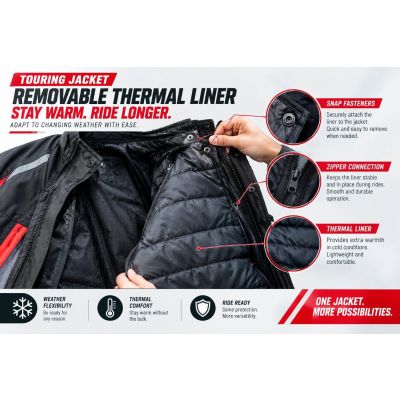
A removable liner is a separate thermal or weather-resistant layer built into a touring jacket that can be attached and detached as needed. Unlike fixed linings that are permanently sewn into the garment, removable liners use fastening systems such as snaps, zippers, or hook-and-loop material to connect securely to the inner jacket shell. This design allows touring riders to adjust their gear's warmth and weather protection without changing jackets entirely.
Removable liners serve two primary purposes: they add thermal insulation for cold-weather riding and provide weather protection when touring in rain or wind. A touring rider heading out on a spring morning might start with the liner attached for warmth, then remove it at midday as temperatures rise. The same jacket works for summer highway riding without the liner and winter touring with it installed.
The outer jacket shell itself typically remains consistent—usually constructed from leather, textile, or a combination of both—providing abrasion resistance and structural durability. The removable liner handles temperature and weather adaptability, making the overall system more versatile than a single-season touring jacket.
How Removable Liners Attach and Detach
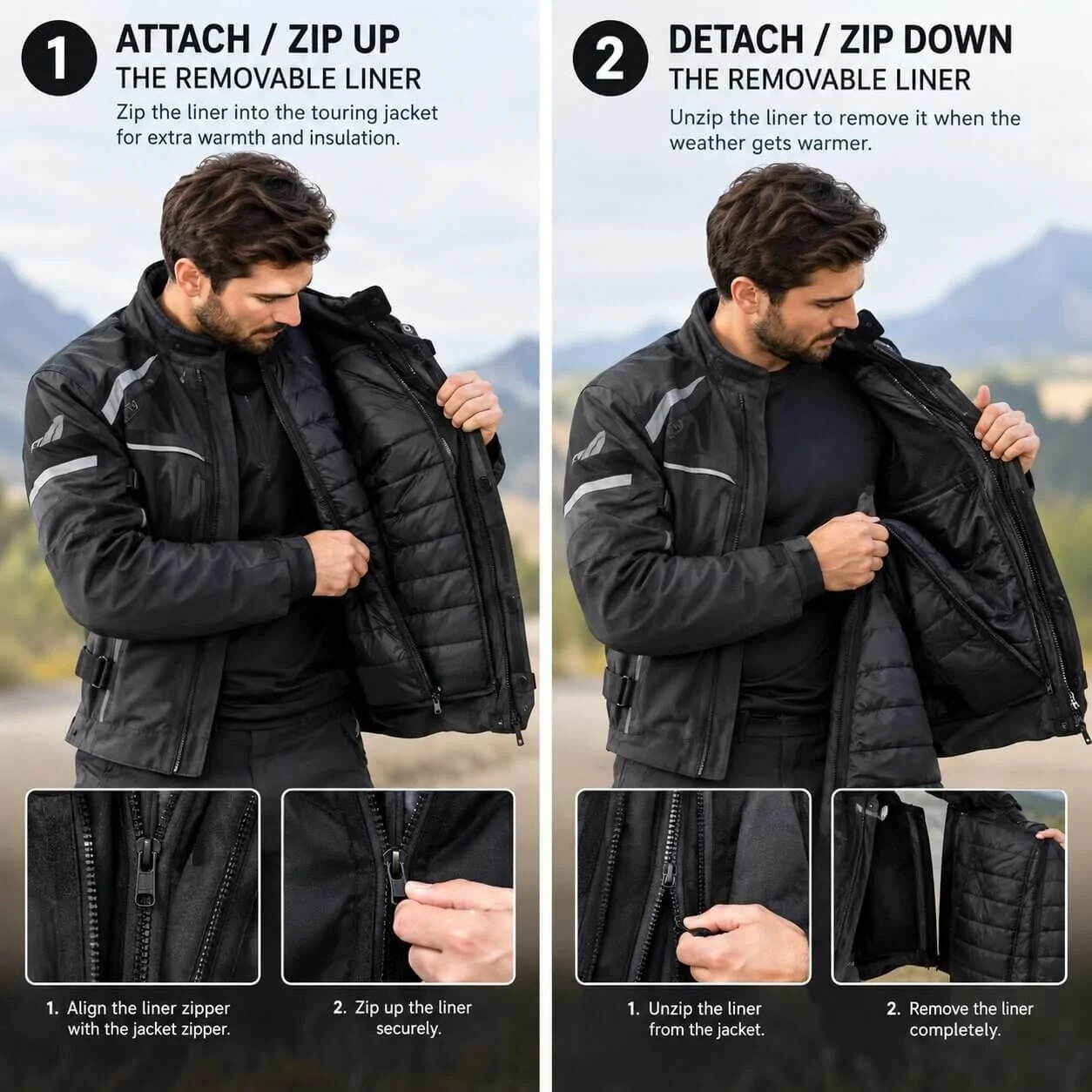
Removable liners use three primary attachment methods, each with different benefits for touring riders.
Snap Fasteners: Snaps are the most common attachment system for removable touring liners. Snaps are sewn into both the liner and the jacket shell at multiple points—typically around the shoulders, sides, and back. Touring riders simply align the snaps and press them together. Snaps are quick to attach and remove, making them ideal for riders who change liners multiple times during a trip. They stay secure during highway riding and do not require tools or careful alignment.
Zippered Attachment: Some touring jackets use a full-length or partial zipper system to attach liners. The liner has a zipper strip sewn along its edges, and the jacket shell has a corresponding zipper track. Riders zip the liner in place, creating a very secure connection. Zippered systems work well for touring in unpredictable weather because the seal is tight and weather-resistant. The trade-off is that zipping and unzipping takes longer than snapping, which matters if a rider needs to remove the liner quickly during a rest stop.
Hook-and-Loop Fasteners: Hook-and-loop material (such as Velcro) is sometimes used to attach liners, particularly in lighter thermal layers. This system is simple and allows riders to position the liner precisely. However, hook-and-loop fasteners can lose grip over time with repeated use and may not hold as securely during extended highway riding compared to snaps or zippers.
Quality attachment points matter for touring safety and comfort. A loose or improperly secured liner can shift during riding, creating bunching under protective armor or causing discomfort during long hours on the bike. When evaluating touring jackets, check that attachment points are reinforced with strong stitching and that the fastening system feels secure when you move in a riding position.
Why Removable Liners Matter for Touring Riders
Touring riders face conditions that change hour by hour. A cross-country trip might begin in cool mountain air, move through warm afternoon highway riding, and end in a chilly evening at a rest stop. A removable liner gives touring riders the flexibility to adapt without stopping to change jackets entirely.
Temperature Adaptability: Without a removable liner, touring riders either wear a warm jacket in mild weather (leading to overheating and discomfort during long hours in the saddle) or carry a separate warm jacket to swap out. A removable liner solves this by letting riders adjust warmth in seconds. This is especially valuable for spring and fall touring, when morning temperatures may be 50°F but afternoon heat reaches 70°F or higher.
Weather Protection: Weather-resistant liners add an extra layer against wind and rain. A touring rider caught in unexpected rain can keep the liner attached to the jacket, creating a more weather-resistant barrier than the jacket shell alone. When the rain passes and temperatures rise, removing the liner reduces bulk and improves ventilation.
Reduced Gear Burden: Touring riders often pack limited luggage space. A removable liner means one jacket can work across multiple seasons and weather conditions, reducing the need to carry multiple jackets. This is practical for long-distance trips where every pound of gear matters.
Extended Riding Comfort: Long-distance touring means hours in the saddle. Comfort directly affects rider focus and safety. A removable liner that can be adjusted for temperature helps touring riders stay comfortable, which supports better concentration and reduced fatigue during extended road use.
Types of Removable Liners and Their Uses
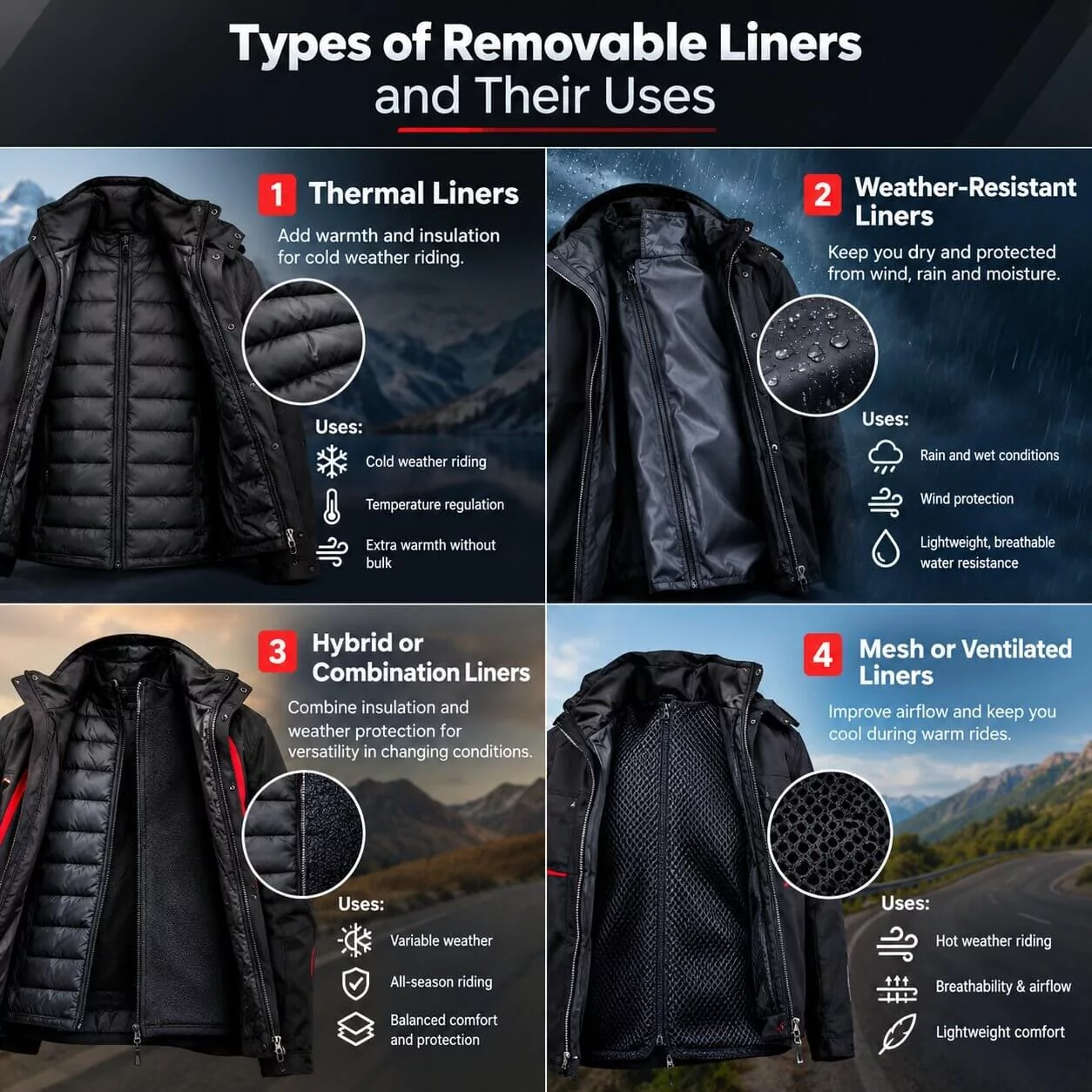
Removable liners come in different constructions, each suited to different touring scenarios and seasons.
Thermal Liners: Thermal liners are quilted or fleece-lined layers designed to trap warm air and provide insulation. These are ideal for cold-weather touring, winter commuting, or early-morning and evening riding during shoulder seasons. Thermal liners add significant warmth without bulk, making them suitable for touring riders who need protection during long hours on the bike in temperatures below 50°F. The thickness varies—some thermal liners are thin and lightweight, while others are heavily quilted for serious cold-weather protection.
Weather-Resistant Liners: These liners are constructed from windproof or water-resistant material, often with a smooth outer surface that resists moisture. Weather-resistant liners are useful for touring in rain, wind, or changeable conditions. They may or may not provide significant warmth, but they add a protective barrier that helps keep wind and light rain from penetrating the jacket. Some touring riders use weather-resistant liners in spring and fall when temperatures are moderate but conditions are wet or windy.
Hybrid or Combination Liners: Some removable liners combine thermal insulation with weather resistance, offering both warmth and protection. These versatile liners work well for touring riders who encounter variable conditions and want a single liner that handles multiple scenarios.
Mesh or Ventilated Liners: A few touring jackets include removable mesh liners designed for summer riding. These add minimal warmth but provide structure and can hold protective armor in place. Ventilated liners are less common but useful for riders who want to keep the jacket's protective fit while maximizing airflow during hot-weather touring.
Riders who want to compare related MotoSpeeds touring and protective gear can explore
for options built around fit, protection, comfort, and riding use.How to Choose Touring Jackets with Removable Liners
Selecting a touring jacket with the right removable liner system depends on your typical riding conditions, trip length, and climate.
Evaluate Your Riding Environment: Consider the seasons and temperatures where you tour most often. If you ride primarily in cold weather, a thermal liner is essential. If you tour in spring, summer, and fall across variable weather, a weather-resistant or hybrid liner offers more flexibility. Cross-country touring riders who encounter multiple climate zones benefit from jackets with both thermal and weather-resistant liner options.
Check Attachment Security: Test the fastening system if possible. Snaps should feel solid and not loose. Zippers should move smoothly without catching. Hook-and-loop should feel sticky and secure. Poor attachment points mean the liner may shift during riding, reducing comfort and potentially affecting how protective armor stays positioned.
Confirm Jacket Fit With and Without the Liner: Try on the jacket with the liner installed to ensure it still fits properly in your riding position. The liner should not bunch or create pressure points. Without the liner, the jacket should still fit correctly and allow natural arm movement. A jacket that fits well only with the liner or only without it limits your flexibility.
Assess Liner Thickness and Warmth Rating: Check product details or manufacturer documentation for liner thickness and the temperature range the liner supports. A thin thermal liner works for mild winter riding, while a heavily quilted liner is better for serious cold-weather touring. Know what warmth level you need for your trips.
Consider Weather Resistance: If you tour in rain or high-wind areas, a weather-resistant or hybrid liner adds practical protection. Check the product description to understand whether the liner is water-resistant, windproof, or both.
Look for Removable Liner Pockets: Some removable liners include their own pockets for storing small items during touring. This is a convenience feature that adds practicality during long rides.
Fit, Comfort, and Long-Distance Wearing
Touring riders spend hours in the saddle, often in the same gear across multiple days. Proper fit with a removable liner is critical for both protection and comfort.
Shoulder and Arm Movement: A removable liner should not restrict your arm movement or create tightness in the shoulders. In a seated riding position, your arms angle forward. The liner should move with your body without bunching or pulling. Poor fit can cause discomfort during long hours and may affect how protective armor stays in place.
Torso and Back Fit: The liner should sit flat against your back and sides without creating gaps or excess fabric. Gaps between the liner and jacket shell can allow wind to penetrate, reducing the protective benefit. Excess fabric creates bunching, which is uncomfortable during extended riding and can shift protective elements like back or shoulder armor.
Layering Underneath: Touring riders often wear base layers or thermal shirts under their gear. A removable liner should accommodate layering without creating excessive bulk. Test the jacket and liner combination with the type of layers you typically wear during touring.
Armor Positioning: If your touring jacket includes protective armor in the shoulders, elbows, back, or chest, the removable liner should not interfere with armor placement or movement. Armor must stay correctly positioned to provide intended protection. A liner that shifts or bunches can move armor out of position, reducing its effectiveness.
Heat and Ventilation: A thermal liner reduces ventilation, which means heat builds up during extended riding. This is expected in cold weather, but touring riders should understand that adding a thermal liner makes the jacket warmer and less breathable. On warm days, removing the liner allows better airflow and reduces heat stress during long hours on the bike.
Care and Maintenance of Removable Liners
Removable liners require periodic care to maintain attachment security, cleanliness, and durability across multiple touring seasons.
Inspect Fasteners Regularly: Before long touring trips, check that snaps, zippers, or hook-and-loop fasteners are secure and functional. Snaps should click firmly into place. Zippers should move smoothly without sticking. Hook-and-loop should feel sticky. Replace worn fasteners or have them serviced before extended riding.
Clean the Liner: Removable liners can be removed for cleaning more easily than fixed linings. Follow the manufacturer's care instructions for your specific liner material. Most thermal liners can be hand-washed or gently machine-washed. Weather-resistant liners may only need spot-cleaning. Allow the liner to dry completely before reattaching it to the jacket.
Check Attachment Points: Inspect the stitching around attachment points periodically. Extended touring and repeated attachment and detachment can stress the stitching. If stitching appears loose or damaged, have the attachment points reinforced before the next touring trip.
Store Properly: When not in use, store the jacket with the liner detached if you will not be wearing it for several months. This reduces stress on the fasteners and allows both the jacket and liner to air out. Store in a cool, dry place away from direct sunlight.
Replace When Necessary: Over time, thermal insulation may compress or weather-resistant coating may wear. If your removable liner no longer provides adequate warmth or weather protection, replacement is often more practical than repairing it. Check whether your jacket manufacturer offers replacement liners for your model.
Final Buying Advice for Touring Gear
Removable liners represent a practical investment for touring riders who encounter variable weather and want gear that adapts to changing conditions. A well-chosen touring jacket with a removable liner can work across multiple seasons, reducing the need to buy separate jackets for different weather.
When shopping for a touring jacket with a removable liner, prioritize secure attachment, proper fit in your riding position, and a liner type that matches your typical touring conditions. Test the jacket with the liner installed and without it to ensure comfort and protection in both configurations. Check that protective armor stays correctly positioned regardless of whether the liner is attached.
Remember that protective gear helps reduce risk but does not remove all crash danger. A removable liner adds weather adaptability and thermal comfort, which supports better touring comfort during extended road use. Proper fit, regular inspection, and appropriate armor placement all work together to support protection and comfort.
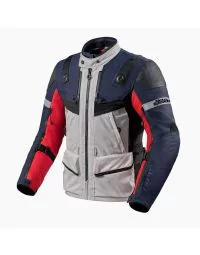
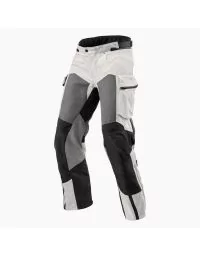
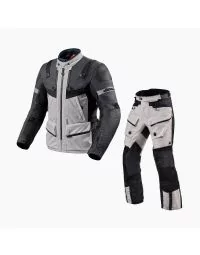
For riders comparing a real touring gear example,
shows how construction, fit, and protective features can work together for extended road riding.Frequently Asked Questions
Can I use a removable liner in warm weather? Yes. Simply detach the liner and ride with the jacket shell alone. Most touring jackets are designed to work well without the liner, providing abrasion resistance and protection while allowing better ventilation. Removing the liner reduces bulk and heat buildup during hot-weather touring.
Do removable liners add bulk to my jacket? Removable liners do add some thickness, especially thermal liners. However, when properly attached, a quality liner should not create noticeable bunching or restrict arm movement. Test the jacket in your riding position before purchasing to ensure the fit remains comfortable with the liner installed.
What is the best attachment system for removable liners? Snaps are the most common and convenient for touring riders because they attach and detach quickly. Zippers offer a more secure connection, which is valuable in extreme weather. Hook-and-loop is simple but may not hold as securely over time. Choose based on how often you plan to change the liner and your riding conditions.
Can I wash my removable liner? Most removable liners can be washed, but check the manufacturer's care instructions for your specific liner material and construction. Many thermal liners can be hand-washed or gently machine-washed. Weather-resistant liners may only need spot-cleaning. Always allow the liner to dry completely before reattaching it to the jacket.
Will a removable liner work with my protective armor? Yes, as long as the jacket is properly fitted with the liner installed. Protective armor should stay correctly positioned regardless of whether the liner is attached. Test the jacket with the liner and your typical riding layers to confirm that armor positioning remains secure and comfortable.
How long do removable liners last? Removable liners typically last several touring seasons with proper care. Thermal insulation may compress over time, reducing warmth. Weather-resistant coatings may wear with extended use. If your liner no longer provides adequate protection or warmth, replacement is often more practical than repair. Check whether your jacket manufacturer offers replacement liners.
What temperature range do removable liners support? Temperature support depends on liner thickness and material. Thin thermal liners work for mild winter riding and shoulder seasons. Heavily quilted liners support serious cold-weather touring. Weather-resistant liners primarily protect against wind and rain rather than providing warmth. Check product details or manufacturer documentation for the specific temperature range your liner supports.
Conclusion
Removable motorcycle touring liners represent one of the most practical features in modern touring jackets, giving riders the flexibility to adapt their gear to changing weather, temperature swings, and extended hours on the road. By understanding how removable liners attach, what types are available, and how to choose the right system for your touring needs, you can select a jacket that works across multiple seasons and riding conditions.
Proper fit, secure attachment, and regular maintenance ensure that your removable liner performs reliably across long-distance trips. Whether you tour in cold winters, variable shoulder seasons, or unpredictable weather, a quality touring jacket with a removable liner supports both comfort and practical gear adaptability.
Explore MotoSpeeds' selection of touring jackets and protective gear designed for fit, protection, and long-distance riding comfort. Whether you are planning your first extended motorcycle tour or upgrading your existing gear, the right removable liner system can make a meaningful difference in how well your touring jacket serves your riding across different seasons and conditions.