Long rides bring rain, heat and many hours on the bike. The Touring blog shows how rainproof and waterproof gear differ and how liners keep water out. It explains how to layer for comfort and what the denier number on a fabric means. Read about common touring mistakes and CE abrasion ratings, plus how to choose touring suits, gloves and boots.
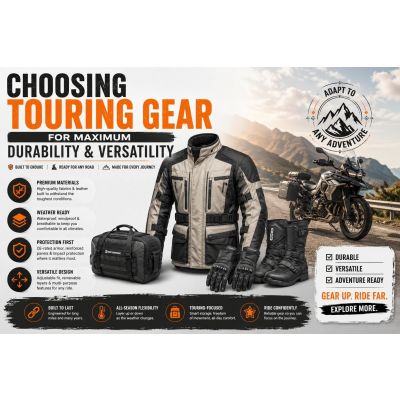
Long rides test your gear for hours at a time. Durable touring gear must fit well first, so the armor does not shift and your shoulders do not tire. Next, check the leather, the seams and the armor...
A year of MotoSpeeds posts comes down to one idea: protection is a system. Tough leather and strong seams slow damage in a slide. CE armor soaks up impact at the shoulders, elbows, knees, hips and...
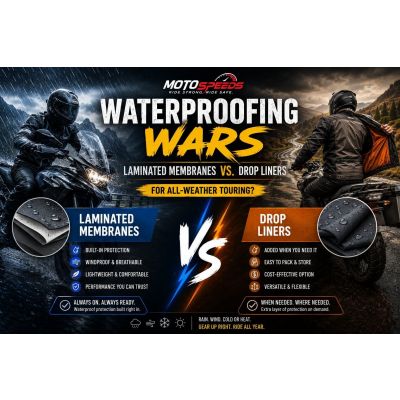
There are two main ways to keep rain out of touring gear. A laminated membrane is bonded to the outer fabric, so it stays in place and leaves no gaps. A drop liner is a separate layer that hangs...
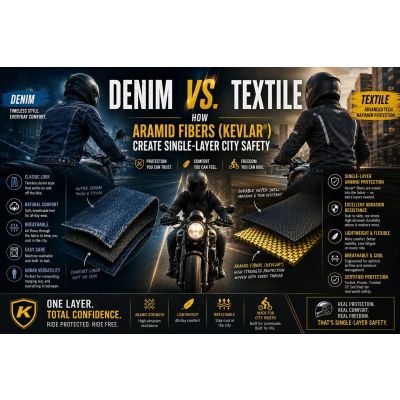
Riding jeans, leather pants and textile pants can all protect your legs. What decides it is a layer that resists scraping, CE armor at the knee and hip, and a fit that keeps the armor in place...
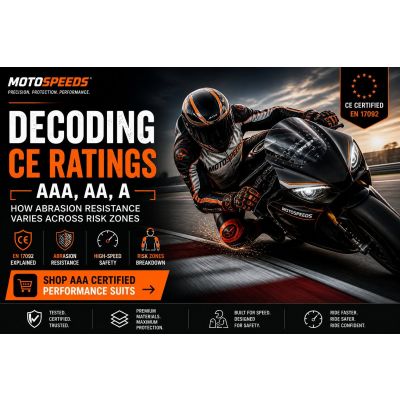
CE ratings AAA, AA and A come from EN 17092, the European test for motorcycle clothing. AAA gives the most abrasion resistance and suits racing and fast riding. AA balances safety and comfort for...
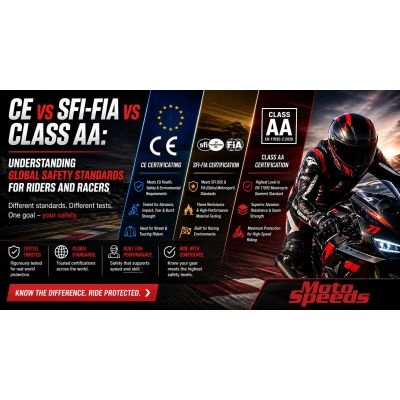
CE, SFI, FIA and Class AA are not the same test. CE is the European system, with Level 1 and Level 2 for armour and ratings for how well gear resists sliding. SFI is used mostly in North American...
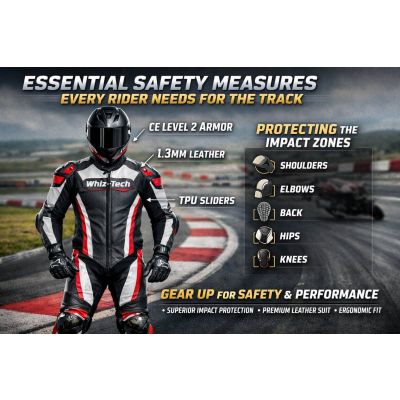
A simple track day gear checklist for riders. See what your race suit, back protector, gloves and boots need, how one-piece and two-piece suits compare for the track, what else to pack, and the quick...
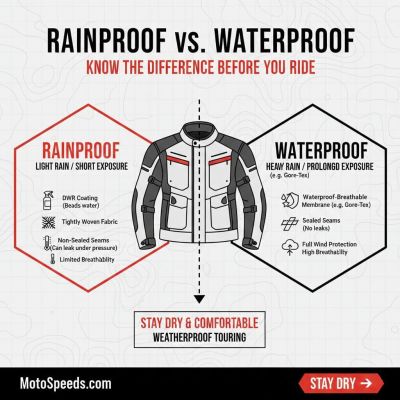
Rainproof gear uses tightly woven fabric and a basic coating. It is fine for short showers and slow city rides, but water can get in through the seams at highway speed. Waterproof gear adds a...
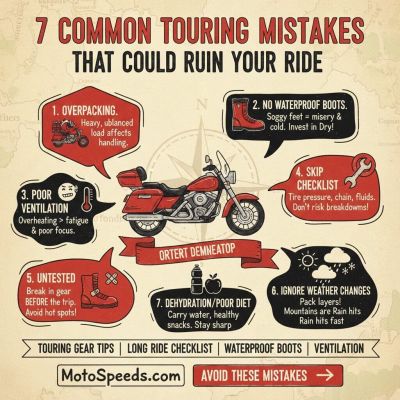
A long motorcycle trip can go wrong in small ways. Too much weight makes the bike hard to handle. Wet feet make you cold fast. Poor airflow can wear you out in the heat. New gear can rub on day one...
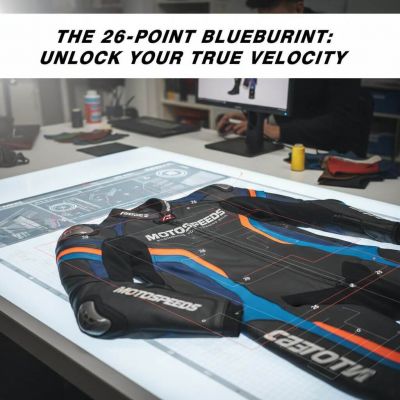
Most size charts check only the chest, waist and inseam. The 26 point checklist goes much further. It measures your neck, shoulders, arms, torso, legs and weight, plus your reach in a riding tuck...
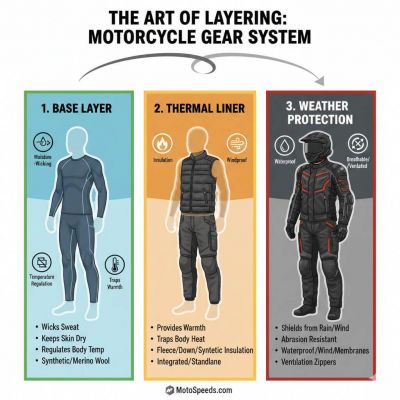
Good layers keep you comfortable on long rides. A thin base layer pulls sweat off your skin. A thermal liner traps warm air. An outer shell blocks wind and rain. Add or remove layers as the day warms...
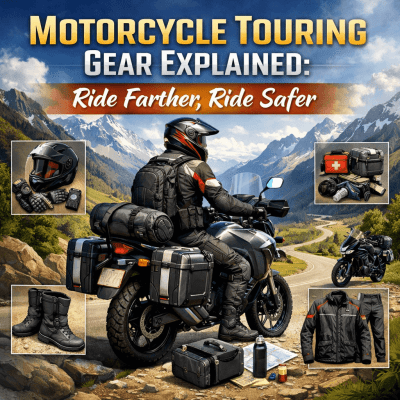
Touring is about long hours in the saddle. Good touring gear rests on three pillars. Protection means CE armor and tough, well-stitched shells. Comfort means vents, soft liners and room to move...
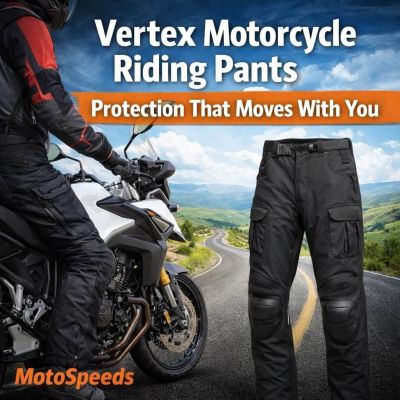
The Vertex pants from MotoSpeeds are made to move with you. Armour sits at the knees and hips. A smooth lining and airflow keep you cool on warm days, and you can add a layer when it turns cold. They...
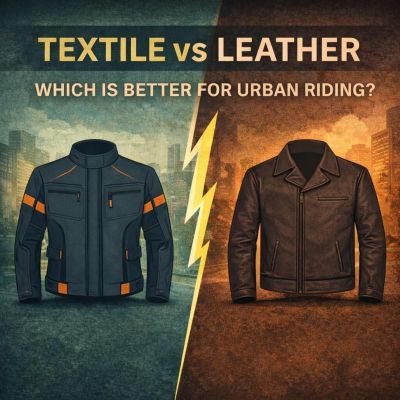
For city riding, textile jackets are lighter, often have vents and rain liners, and work well in heat and wet weather. Leather holds up better in a slide and lasts for years with care, but it can...
MotoSpeeds has grown its range for 2026. The new gear spans four lines. Track riders get race suits, gloves and boots. City riders get armored jeans and light jackets. Touring riders get waterproof...