Table of Contents
At highway speeds, the road doesn’t forgive mistakes.
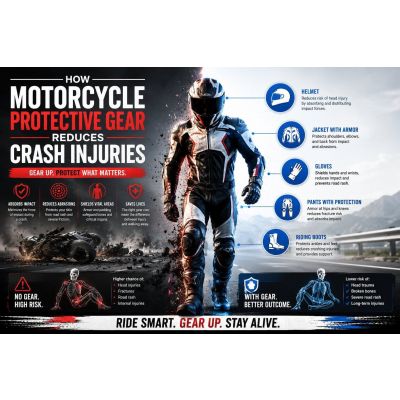
A fall at 60 mph can expose your gear to extreme friction, heat, and impact. That’s where CE Ratings AAA, AA, and A come into play. These ratings are not just labels—they define how well your gear can protect you when it matters most.
Many riders assume all protective gear offers the same level of safety. In reality, abrasion resistance varies significantly depending on certification levels and risk zones.
This guide breaks down EN 17092 standards, explains how CE ratings work, and helps you choose the right level of protection for your riding style.
Explore here:
What Are CE Ratings (AAA, AA, A)?
CE ratings are part of the European safety certification system for motorcycle gear.
They indicate how well a garment performs in:
Abrasion resistance
Tear strength
Seam strength
Impact protection
CE Rating Levels
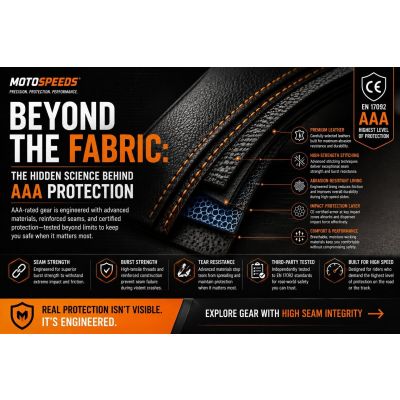
AAA (Highest Protection)
Designed for high-speed riding
Maximum abrasion resistance
Used in racing and aggressive riding
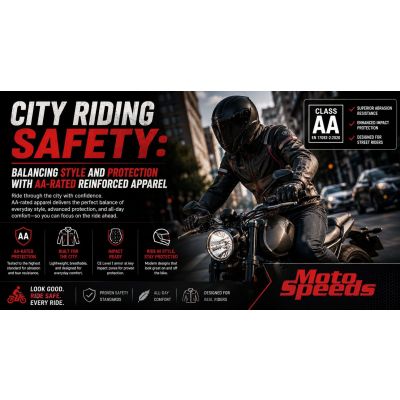
AA (Medium Protection)
Balanced safety and comfort
Suitable for touring and daily riding
A (Basic Protection)
Lightweight gear
Minimal abrasion resistance
Best for urban commuting
AAA vs AA vs A: Key Differences
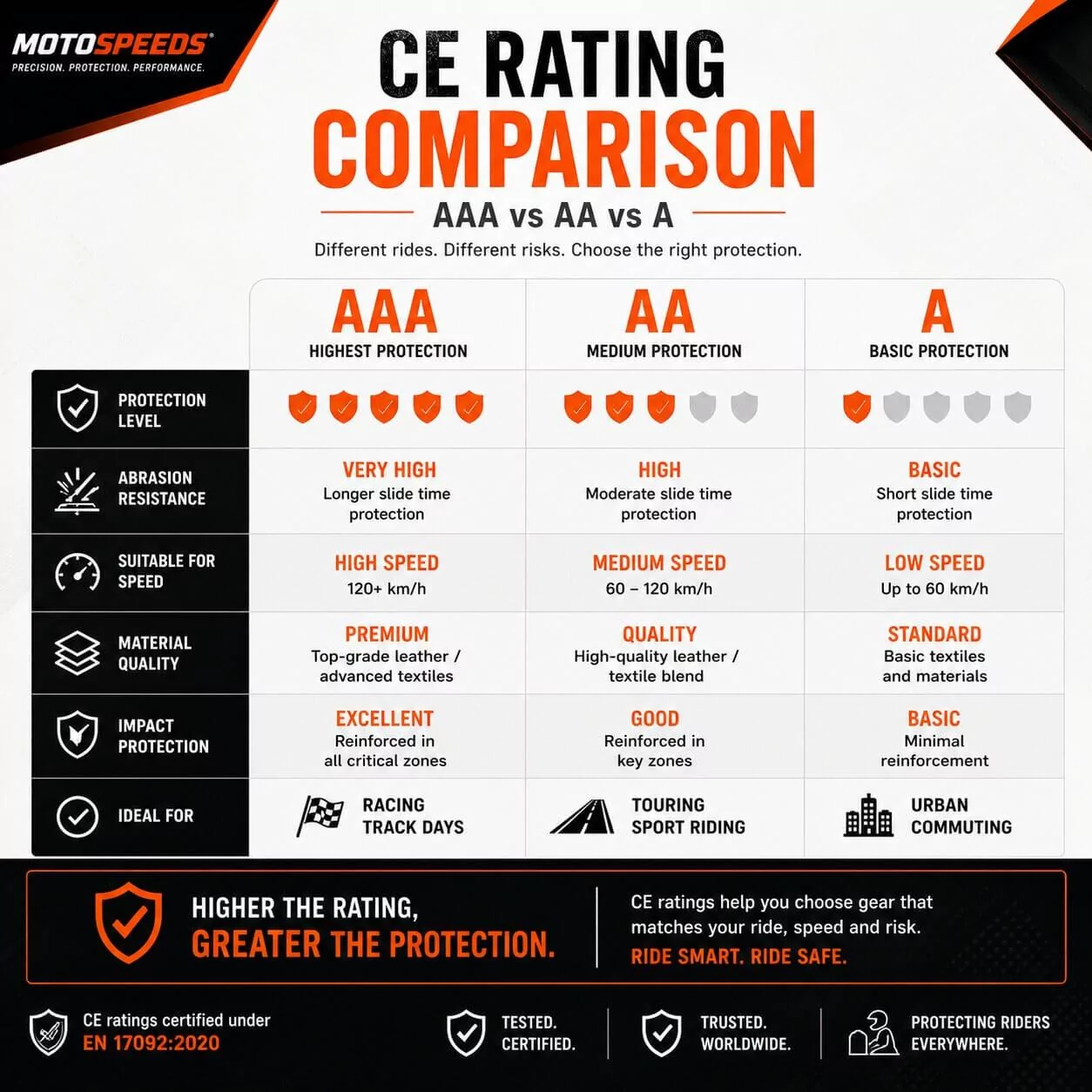
Abrasion Resistance
AAA → Highest
AA → Moderate
A → Basic
Suitable Speed Range
AAA → High-speed riding
AA → Medium-speed riding
A → Low-speed commuting
Material Quality
AAA → Premium leather / advanced textiles
AA → Mixed materials
A → Lightweight fabrics
Protection Level
AAA gear is designed for maximum crash protection, while A-rated gear prioritizes comfort.
Understanding EN 17092 Standard
What Is EN 17092?
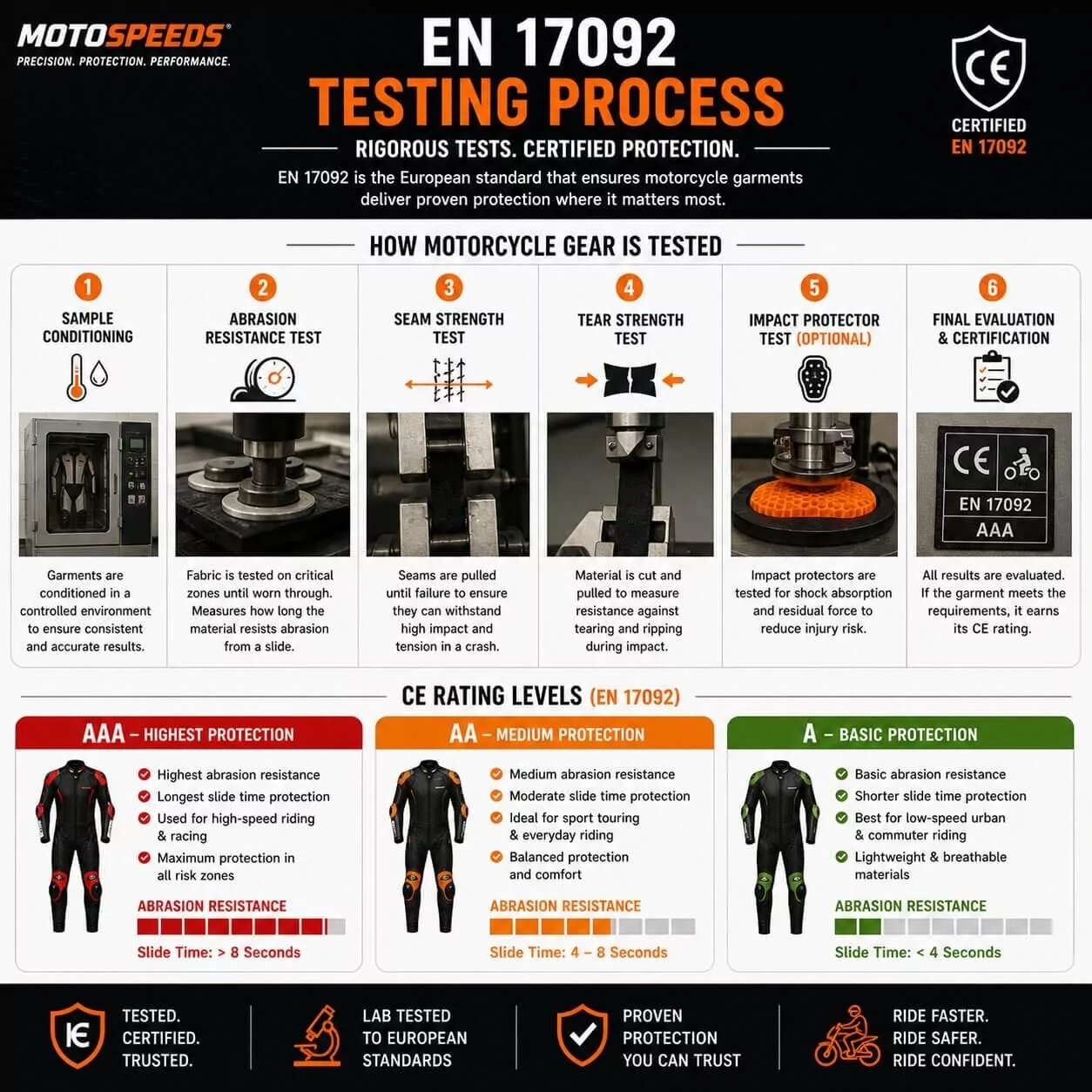
EN 17092 is the official European standard that tests motorcycle clothing.
It evaluates gear under controlled conditions to simulate real crash scenarios.
What It Tests
Abrasion resistance
Impact protection zones
Tear strength
Seam durability
Why It Matters
Without EN 17092, there would be no consistent way to compare gear safety.
This standard ensures that CE-certified gear meets minimum protection requirements.
What Is Abrasion Resistance in Motorcycle Gear?
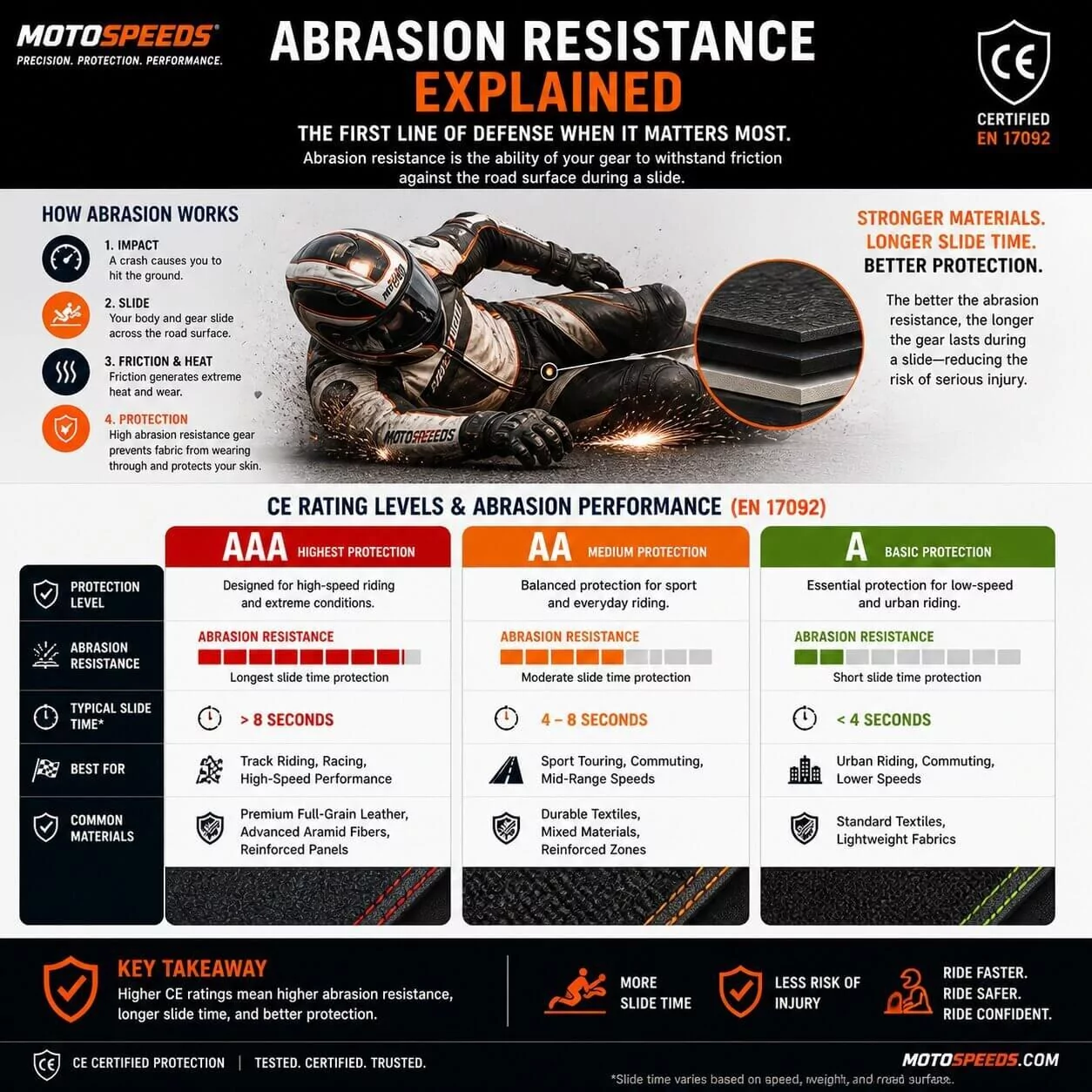
Abrasion resistance is the ability of gear to withstand friction against the road surface.
Why Abrasion Matters
During a crash:
Skin contact with asphalt causes severe injuries
Friction generates extreme heat
Materials can wear through quickly
Real Insight
At 60 mph, a rider can slide for several meters. Without proper abrasion resistance, standard clothing fails within seconds.
Risk Zones Explained (Zone 1, 2, 3)
Motorcycle gear is divided into risk zones based on impact likelihood.
Zone 1 (High Risk Areas)
Includes:
Shoulders
Elbows
Knees
These areas face the highest abrasion and impact.
Zone 2 (Medium Risk Areas)
Includes:
Upper arms
Thighs
Moderate protection required.
Zone 3 (Low Risk Areas)
Includes:
Chest
Back
Lower abrasion exposure but still important.
Why Zones Matter
Higher CE ratings require stronger materials in critical zones, especially Zone 1.
How CE Ratings Impact High-Speed Safety
At high speeds, gear must:
Resist tearing
Prevent burn-through
Maintain structural integrity
Why AAA Is Critical for Racing
AAA-rated gear:
Withstands longer slide times
Uses reinforced panels
Protects critical impact zones
This is why professional riders rely on high-performance motorcycle suits.
Materials & Construction Behind CE Ratings
Common Materials
Full-grain leather
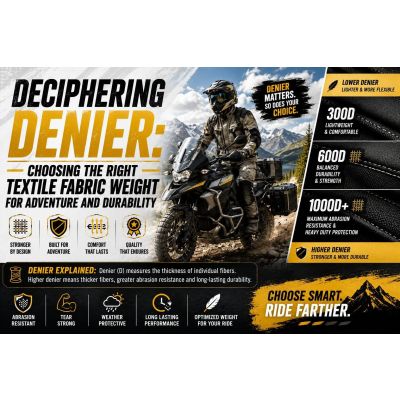
Reinforced textiles
Kevlar blends
Construction Techniques
Double/triple stitching
Reinforced seams
Layered abrasion panels
Real Insight
Even the best materials fail without proper construction. Stitching quality is just as important as fabric strength.
Real-World Crash Scenarios
Scenario 1: Urban Fall (A Rating)
Low-speed impact
Minimal sliding
Basic protection sufficient
Scenario 2: Highway Crash (AA Rating)
Moderate sliding
Requires better abrasion resistance
Scenario 3: Track Crash (AAA Rating)
High-speed slide
Extreme friction
Maximum protection required
How to Choose the Right CE Rating
Step 1: Assess Your Riding Style
City riding → A
Touring → AA
Racing → AAA
Step 2: Consider Speed & Risk
Higher speed = higher rating needed.
Step 3: Balance Comfort vs Protection
Lightweight → A
Balanced → AA
Maximum safety → AAA
Step 4: Invest in Quality
Better gear costs more but protects better.
Common Mistakes Riders Make
Avoid these:
Choosing style over safety
Ignoring CE ratings
Buying low-rated gear for high-speed riding
Overlooking fit and construction quality
Conclusion
CE Ratings AAA, AA, and A are not just technical labels—they are your safety benchmark on the road.
Understanding EN 17092, abrasion resistance, and risk zones helps you make smarter decisions.
If you ride fast or aggressively, AAA-rated gear is not optional—it’s essential.
Shop AAA →
FAQs
What does CE AAA mean in motorcycle gear?
AAA is the highest protection level under EN 17092, offering maximum abrasion resistance and safety for high-speed riding.
Is AA rating enough for highway riding?
Yes, AA-rated gear is suitable for most highway conditions, offering a balance between protection and comfort.
What is the difference between AAA and A rating?
AAA provides significantly higher abrasion resistance and protection, while A is designed for low-speed urban riding.
Are CE ratings mandatory?
In many regions, CE certification is required to ensure minimum safety standards in motorcycle gear.
Does CE rating guarantee full protection?
No, but it ensures tested protection levels. Fit, material, and riding conditions also matter.
What material is best for abrasion resistance?
Full-grain leather offers the best abrasion resistance, followed by advanced textile blends.