Table of Contents
Introduction
Many riders judge protective gear by what they can immediately see. Thick leather looks stronger. Large armor pieces look safer. Aggressive styling looks race-ready.
But some of the most important safety features are hidden beneath the surface.
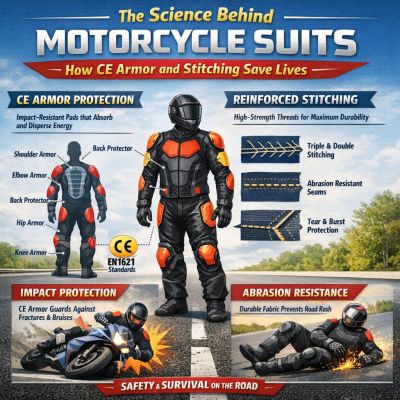
During a motorcycle crash, the road creates multiple forces at the same time. Abrasion pulls against leather. Impact creates pressure on armor. Sliding movement twists and stretches the suit. If the seams connecting those panels fail, even durable materials lose their ability to protect.
This is where motorcycle seam strength becomes important.
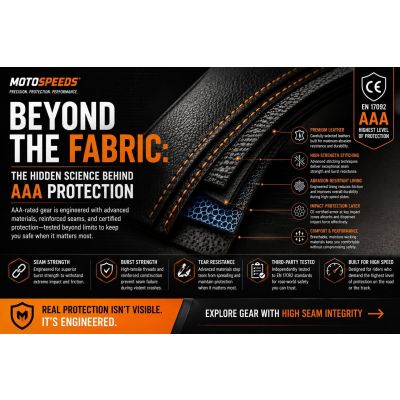
Modern performance gear is designed as a complete protection system. Materials, armor, stretch zones, and stitching all work together. Under EN 17092 standards, manufacturers must prove that motorcycle garments can resist forces beyond simple abrasion.
Understanding seam integrity helps riders make smarter decisions when choosing protective equipment.
Explore performance riding gear
Why Strong Leather Alone Is Not Enough
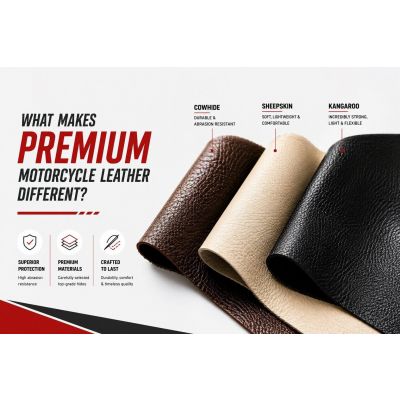
Many people believe thicker leather automatically means stronger protection.
That is only part of the story.
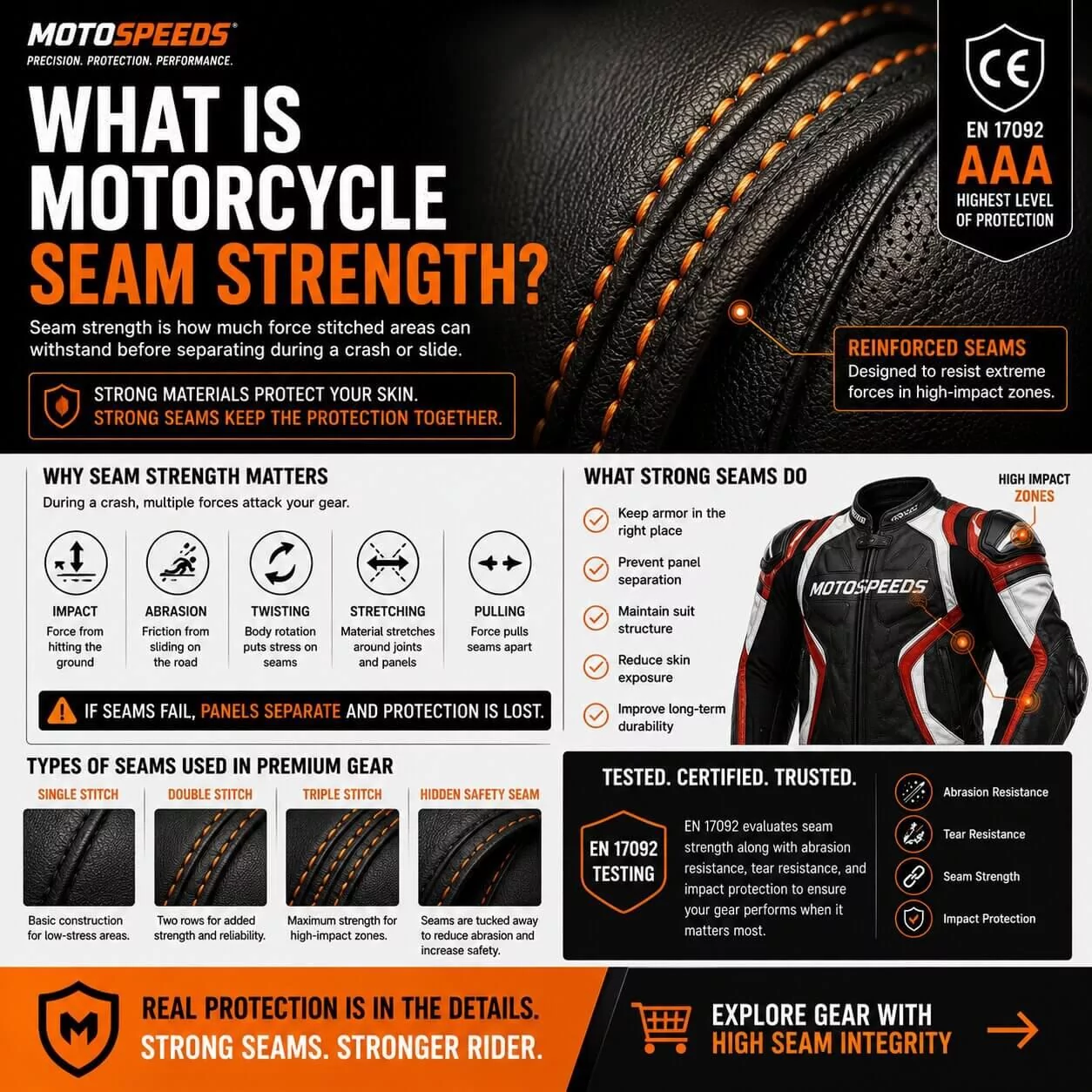
A motorcycle suit experiences different forces during an accident:
Impact force from striking the ground
Abrasion during sliding
Stretching around joints
Twisting movement during body rotation
Pulling force across stitched panels
Imagine a rider sliding at highway speed.
The leather panel itself may survive. The armor may stay intact. But if stitching near the shoulder separates, exposed areas can immediately contact asphalt.
That changes the outcome of a crash.
Professional riding gear focuses on structural performance, not material thickness alone.
MotoSpeeds performance products commonly use features designed for higher-stress environments such as:
Reinforced construction zones
Stretch movement panels
CE-certified protection systems
Race-inspired panel layouts
High-strength stitching techniques
The goal is simple: keep protective components working together.
What Is Motorcycle Seam Strength?
Motorcycle seam strength measures how much force stitched connections can withstand before separating.
Think of seams as the skeleton of the suit.
Panels of leather and protective material create the outer structure, but stitching holds those parts together under stress.
Strong seams help:
Keep armor correctly positioned
Prevent panel separation
Maintain suit structure
Reduce skin exposure during a slide
Improve long-term durability
Weak seams create failure points.
Even premium materials become less effective if the connections holding them together fail.
How EN 17092 Evaluates Gear Safety
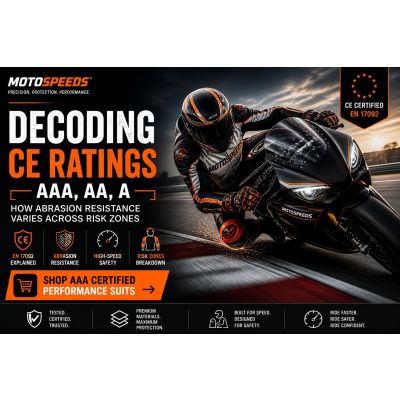
EN 17092 is the European standard for motorcycle protective garments.
Instead of evaluating only one characteristic, it tests multiple areas of performance.
These include:
Abrasion Resistance
Measures how long materials survive against friction during sliding.
Tear Resistance
Measures how effectively materials resist ripping.
Seam Strength
Measures how much force stitched areas tolerate before separating.
Impact Protection
Measures performance of armor systems.
Protection classes typically include:
A
Basic protection for lower-risk riding.
AA
Balanced protection for sport touring and regular use.
AAA
Highest level designed for demanding riding environments.
AAA certification requires stronger overall performance.
Why AAA-Certified Gear Depends on Seam Integrity
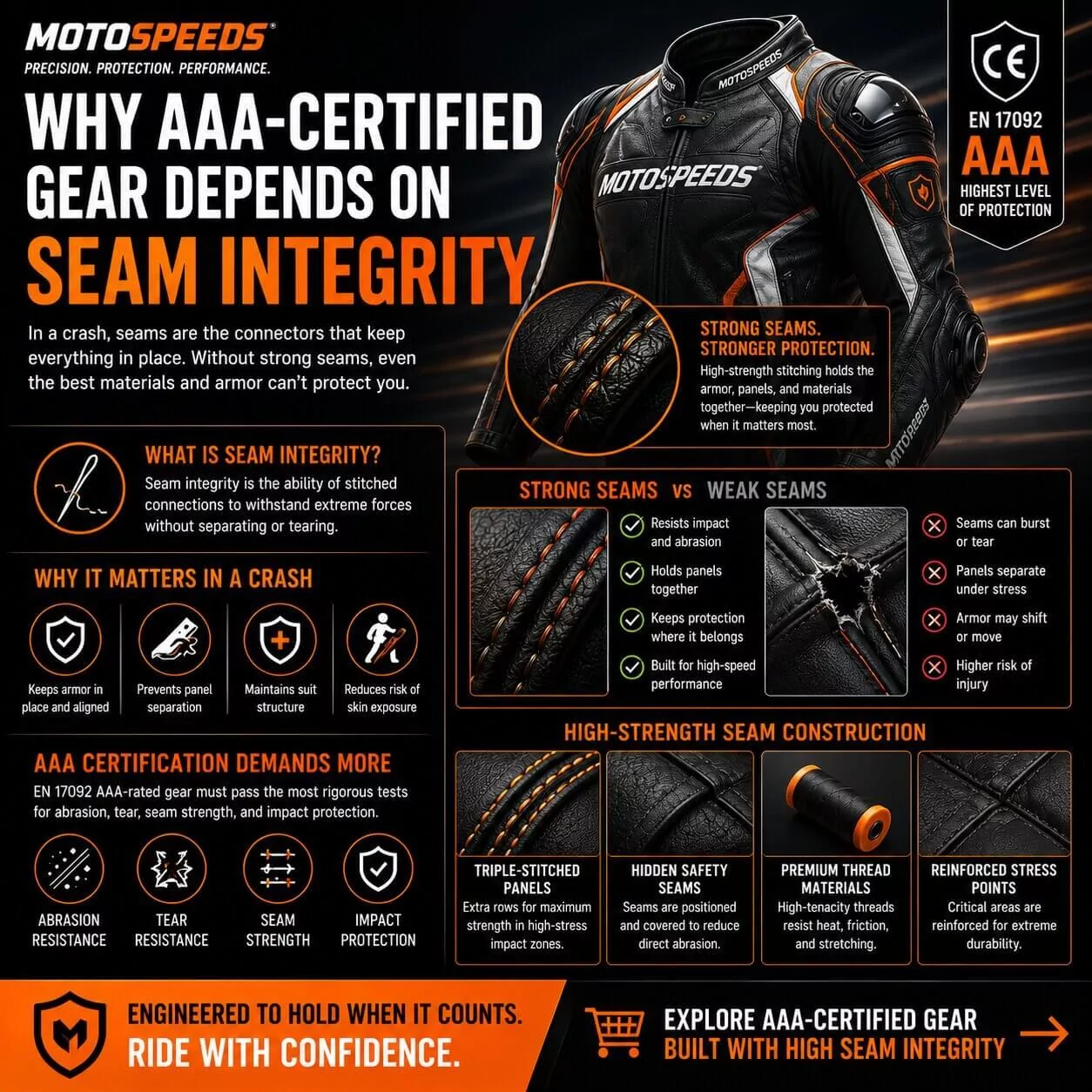
AAA gear must survive more demanding tests compared with lower-rated equipment.
Manufacturers cannot simply add thicker leather and achieve certification.
Every component must work together.
AAA-rated motorcycle gear often includes:
Reinforced high-impact areas
Hidden safety seams
Double or triple stitching
Strategic seam placement
Advanced protective materials
frequently reduce seam exposure in critical areas.
For example:
Shoulders, elbows, and knees experience significant forces during crashes. Designers often move seam placement away from these direct impact areas.
This reduces stress concentration.
Burst Strength vs Tear Resistance
These two terms often confuse riders.
Although they sound similar, they measure different safety characteristics.
Burst Strength
Burst strength measures how much pressure or force material and seams tolerate before failing.
Higher burst strength helps:
Resist violent impacts
Maintain structure during crashes
Improve high-speed performance
Tear Resistance
Tear resistance measures how effectively materials prevent damage from spreading.
Higher tear resistance helps:
Reduce panel failure
Limit damage progression
Maintain protection after impact
Why Both Matter
Imagine a suit with high burst strength but poor tear resistance.
The material survives initial impact but tears easily afterward.
Now imagine strong tear resistance with weak seams.
Panels stay intact but separate from each other.
AAA-rated gear requires balance.
Risk Zones and High-Speed Safety
Motorcycle garments use risk zones because not every body area experiences equal danger.
Zone 1: Highest Risk
Includes:
Shoulders
Elbows
Knees
Hips
These areas usually experience:
Longest slide time
Highest impact force
Greater abrasion exposure
Zone 2: Medium Risk
Includes:
Upper arms
Thigh areas
Zone 3: Lower Risk
Includes:
Chest
Back
Strong seam construction becomes especially important around Zone 1 areas.
At higher speeds, force increases dramatically.
That is why performance suits frequently use reinforced stitching around these critical zones.
How Premium Motorcycle Suits Build Strong Seams
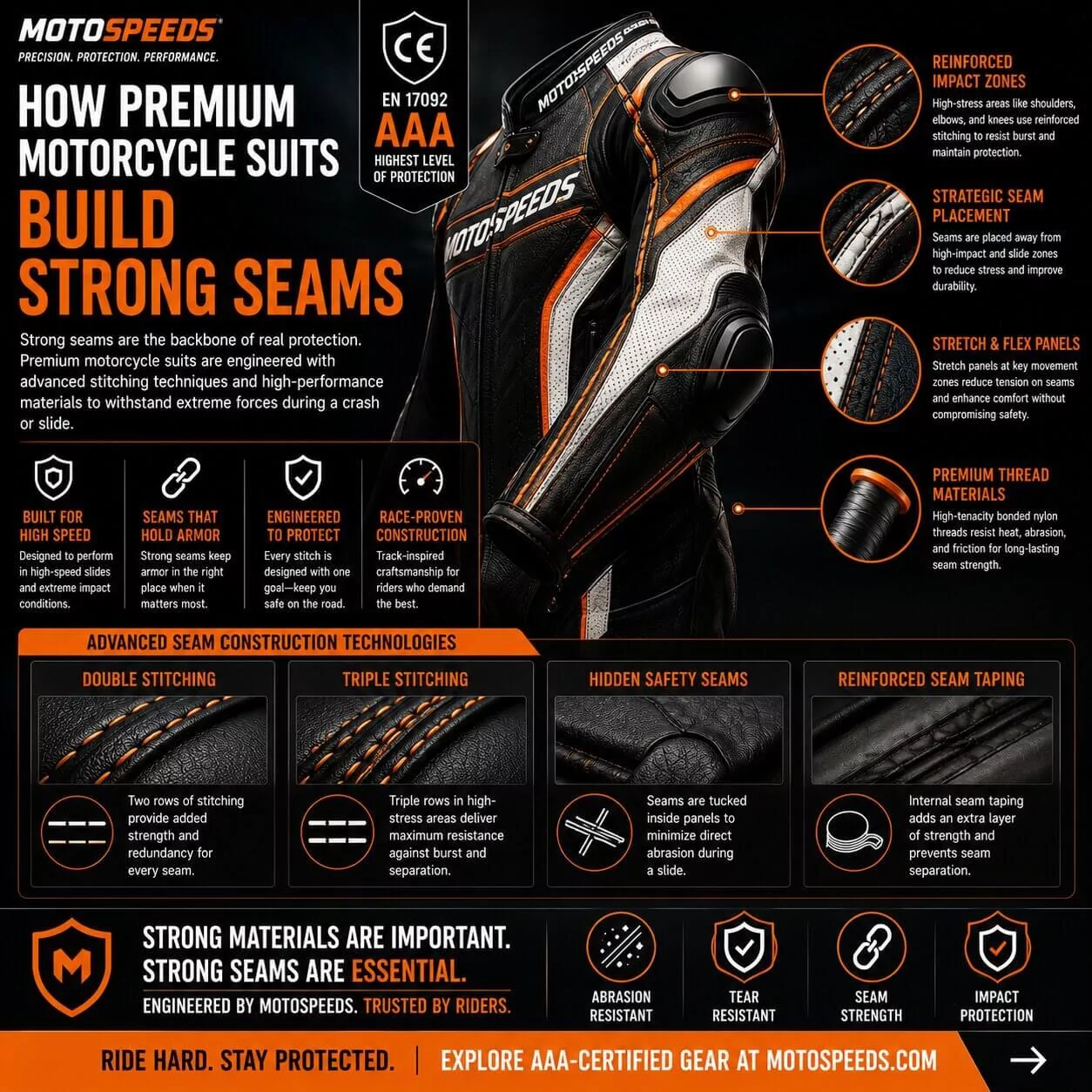
High-performance motorcycle gear uses multiple construction techniques to improve durability.
Double Stitching
Uses two stitch rows for additional redundancy.
Benefits:
Improved strength
Better load distribution
Triple Stitching
Often used in high-stress zones.
Benefits:
Greater resistance to separation
Improved durability during crashes
Reinforced Thread Materials
Performance gear often uses stronger thread materials designed to resist:
Heat
Friction
Stretching
Stretch Movement Panels
Motospeeds Stretch panels improve mobility while reducing seam stress around:
Knees
Elbows
Lower back
Explore performance-inspired riding gear
How Third-Party Testing Helps Riders
Safety claims alone are not enough.
Testing provides measurable results.
Independent laboratories evaluate:
Seam performance
Abrasion resistance
Tear resistance
Impact protection
Structural durability
Third-party testing helps riders compare products using standardized measurements.
This creates trust and consistency.
What Riders Should Look For
When shopping for performance motorcycle gear, look for:
✓ AAA certification where appropriate
✓ Reinforced impact zones
✓ Double or triple stitching
✓ Quality armor placement
✓ Strong construction around shoulders and knees
✓ Independent certification labels
Before buying, ask:
Does the gear follow EN testing standards?
Are critical areas reinforced?
Is the suit designed for your riding style?
Small construction details often make major differences.
Conclusion
Protection is more than leather thickness.
Protection is more than armor size.
Strong motorcycle gear depends on everything working together.
Seam strength is one of the hidden elements behind reliable performance because it keeps protective materials connected under real crash conditions.
AAA-certified gear earns its rating through a complete safety system that combines:
Abrasion resistance
Tear resistance
Impact protection
Reinforced construction
High seam integrity
The stitching may be one of the least visible parts of a motorcycle suit, but it can become one of the most important when the road pushes gear to its limits.
FAQs
What is motorcycle seam strength?
Motorcycle seam strength measures how much force stitched areas can withstand before separating.
Why do seams matter in motorcycle gear?
Seams keep panels connected and help maintain protective structure during crashes.
What is burst strength?
Burst strength measures the amount of pressure materials and seams tolerate before failure.
What is tear resistance?
Tear resistance measures how effectively materials stop damage from spreading.
Does AAA gear require stronger seams?
Yes. AAA-rated gear must meet higher performance requirements, including stronger seam construction.
Why is third-party testing important?
Independent testing validates safety claims and ensures gear meets established performance standards.