Table of Contents
Introduction
The first time I watched a MotoGP crash in slow motion, something struck me. Riders hit the ground at terrifying speeds, their bikes bounce away violently—yet the riders usually stand back up.
It wasn’t luck. It wasn’t magic.
It was engineering.
Modern motorcycle suits are not just pieces of leather—they’re science-built safety systems designed to manage energy, resist abrasion, and prevent your body from tearing under force. Every stitch, every panel, every pad is placed with purpose.
This guide explains the real science behind motorcycle racing suit safety, why CE armor matters, and how triple stitching keeps the suit from bursting open during a crash.
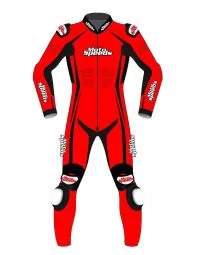
MotoSpeeds suits are designed to protect riders in real crashes—not just look appealing.
Explore the full category
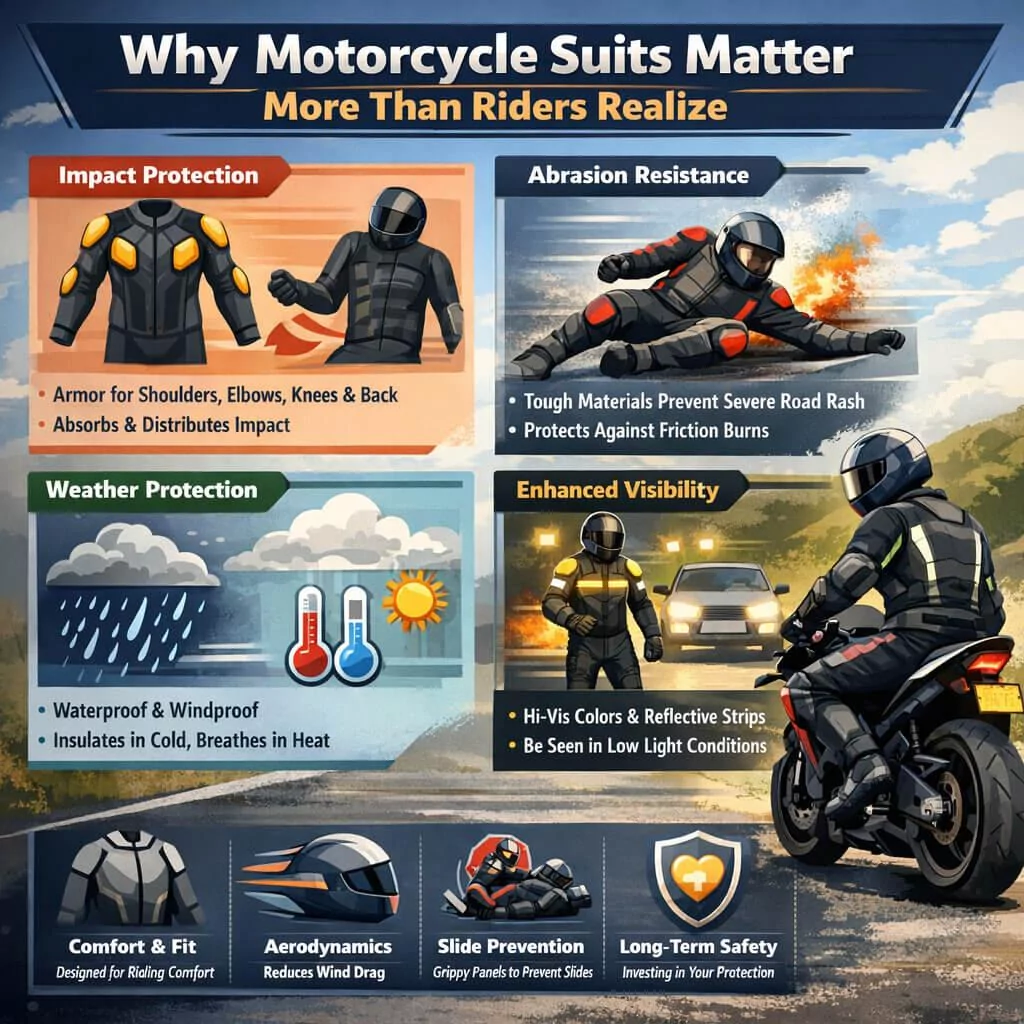
Why Motorcycle Suits Matter More Than Riders Realize
Most riders think a racing suit is just “thick leather with padding.”
But here’s what real data tells us:
At 60 mph, sliding on asphalt can shred denim in 0.3 seconds.
Cheap synthetic leather tears in under 0.7 seconds.
Premium cowhide racing leather lasts 3–4 seconds.
Kangaroo leather can last 4–6 seconds.
In MotoGP, riders often slide 90+ meters before stopping.
A racing suit must survive:
High-speed impacts
Long sliding distance
Severe twisting forces
Heat from friction
Abrasion from uneven surfaces
This is where CE armor, impact zone layout, and stitching become life-saving technologies.
The Hidden Science of Motorcycle Suit Safety
A motorcycle suit is a safety system made of:
✔ CE armor
✔ Premium leather
✔ Triple-stitched seams
✔ Reinforcement layers
✔ Stretch panels
✔ Aerodynamic structures
✔ Energy-distribution padding
Each part contributes to how the suit absorbs energy, resists tearing, and keeps the rider’s bones inside the protective shell during a crash.
Understanding Impact Zones
Your body isn’t equally vulnerable everywhere. Racing suits are built around impact zone mapping, proven through thousands of crash studies.
Impact Zones Breakdown:
Zone 1: High-Impact Areas
Where riders hit first:
Shoulders
Elbows
Knees
Hips
These require thick armor + extra layers of leather + strong stitching.
Zone 2: Sliding Areas
Where you slide along the asphalt:
Outer arms
Thighs
Side torso
These areas need:
Abrasion-resistant leather
Reinforced stretch panels
Extra padding
Zone 3: Flex Zones
Areas needing movement:
Inner arms
Groin
Behind knees
The suit uses:
Accordion stretch panels
Kevlar stretch fabric
This prevents tearing during twisting motions.
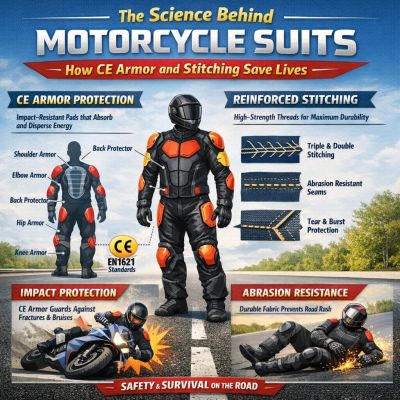
CE Armor: What It Is and How It Works
CE armor is the backbone of racing suit protection. CE (Conformité Européenne) is the European standard for impact protection.
CE Level 1 Armor
Basic protection
Lower impact absorption
Suitable for casual or street riding
CE Level 2 Armor
Highest level of impact protection
Mandatory in professional racing
Absorbs up to 50% more energy
Built for high-speed crashes
What Areas Get CE Armor?
A CE-certified suit includes armor in:
Shoulders
Elbows
Knees
Hips
Back
Chest (optional but recommended)
Some suits include external sliders to help riders slide smoothly instead of tumbling.
How CE Armor Works
CE armor reduces injury by:
Absorbing impact energy
Spreading energy across wider areas
Preventing bone fractures
Reducing penetration injuries
It is flexible during normal movement but hardens on impact, using non-Newtonian materials like D3O.
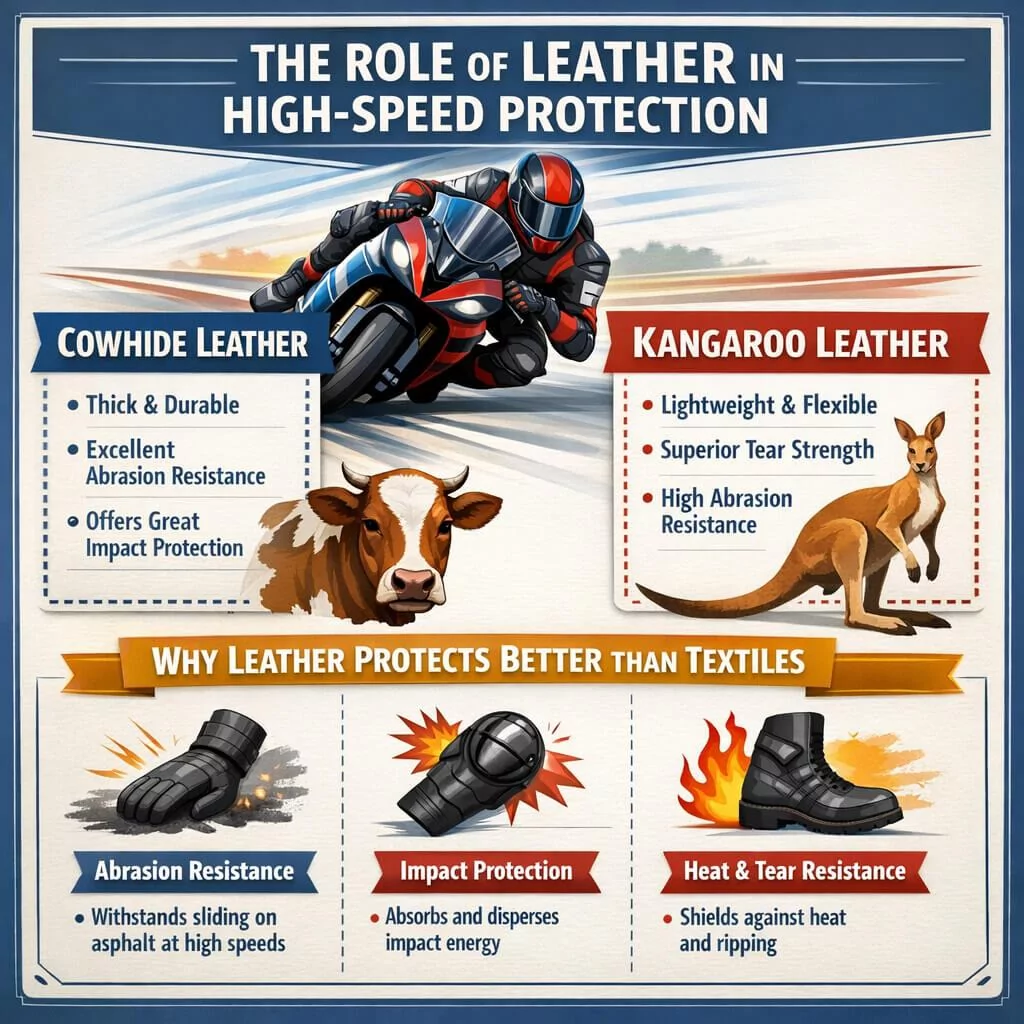
The Role of Leather in High-Speed Protection
Leather remains unbeatable for racing protection.
1. Cowhide Leather
The industry standard:
1.2–1.4 mm thickness
Strong abrasion resistance
Affordable and durable
2. Kangaroo Leather
MotoGP’s premium choice:
20–30% lighter
Stronger fiber structure
Superior abrasion resistance
Less bulk for better mobility
Why Leather Protects Better Than Textiles
Resists tearing under stress
Handles heat from sliding
Doesn’t melt
Stretches instead of ripping
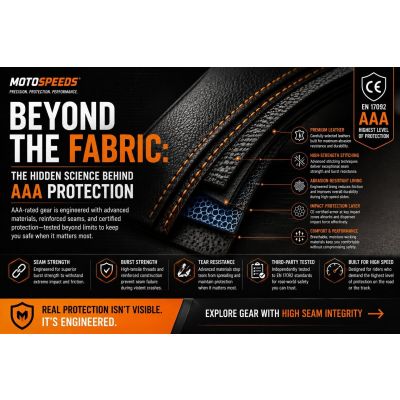
Why Triple Stitching Saves Lives
Many riders underestimate stitching. But stitching is often the first point of failure in a crash.
Triple stitching:
Uses three threads instead of one
Ensures seams do not burst
Holds leather panels together during extreme stretching
Reduces tear propagation
MotoSpeeds uses high-tensile bonded nylon thread, the same used in aviation-grade equipment.
A suit with weak stitching can split open—exposing skin to asphalt. A suit with strong stitching remains intact.
The Aerodynamic Function of Race Suits
Ever notice the hump on the back of a MotoGP suit?
It’s not for style—it’s science.
The Aerodynamic Hump:
Reduces turbulence at high speed
Stabilizes the head during straight-line acceleration
Houses hydration systems (for pro racing)
Provides extra impact protection for the spine
Wind resistance decreases fatigue and increases control.
Why Cheap Suits Fail: The Real Safety Gap
Many budget suits look similar to premium suits—but fail essential safety tests.
Cheap suits usually have:
Low-quality synthetic leather
Weak single stitching
Fake or uncertified armor
Incorrect impact zone reinforcements
Poor tear strength
This is why professional riders and safety experts insist on CE-certified, well-constructed racing suits.
A suit shouldn't be judged by looks. It should be judged by engineering.
MotoSpeeds Suit Engineering
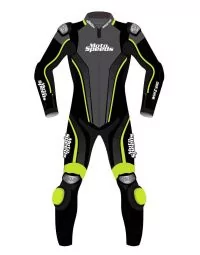
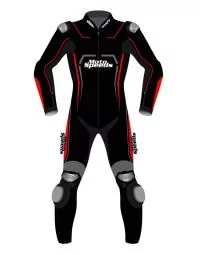
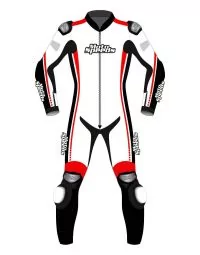
MotoSpeeds race suits such as the For Professionals are built with professional-level safety:
✔ CE Level 2 armor
✔ External sliders
✔ Triple and quadruple stitching
✔ Reinforced impact panels
✔ Accordion stretch zones
✔ Multiple leather layers in critical areas
✔ Aerodynamic hump
✔ Breathable interior lining
Conclusion
A motorcycle racing suit is one of the most advanced pieces of safety equipment a rider will ever own.
Its job is simple:
Absorb → Resist → Protect → Survive
Leather protects your skin.
CE armor protects your bones.
Triple stitching keeps the suit intact.
Aerodynamics stabilize your ride.
Racing suit safety is not opinion—it’s physics.
When you invest in a high-quality CE-certified suit, you aren’t buying gear. You’re buying time, protection, and a better chance to walk away from a crash.
FAQs
1. What makes a motorcycle racing suit safe?
A safe suit combines CE armor, premium leather, reinforced impact zones, and triple stitching. These elements absorb impact, prevent abrasion, and keep the suit intact during high-speed crashes.
2. Is CE Level 2 armor necessary for racing?
Yes. CE Level 2 armor offers the highest level of impact absorption and is recommended for all high-speed or track riding environments.
3. Why is leather preferred over textile for racing suits?
Leather has superior abrasion resistance, does not melt, stretches under force, and lasts longer during high-speed slides. Textiles cannot match its durability during crashes.
4. What is the purpose of the aerodynamic hump?
It improves stability at high speeds, reduces wind drag, protects the spine, and in pro suits, holds hydration systems.
5. Does stitching really matter in a racing suit?
Absolutely. Stitching is often the first point of failure. Triple stitching prevents seams from bursting open during impacts or sliding.