Motorcycle crashes happen in seconds. A rider slides across asphalt at 60 miles per hour. The chest hits a guardrail. A shoulder connects with the ground. Within milliseconds, the outcome is already decided.
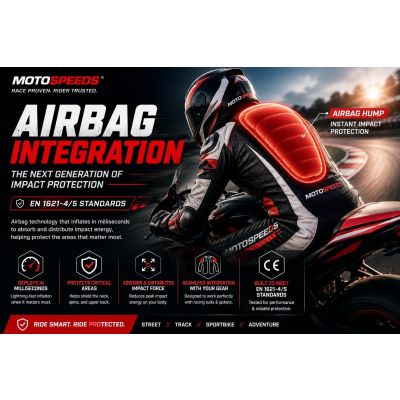
Traditional armor protects through layers of leather and foam. It works well. But modern motorcycle airbag systems take impact protection further. They deploy instantly during a crash, creating a cushion of air that spreads the force across your entire chest, back, and shoulders.
This article explains how motorcycle airbag technology works, what safety standards like EN 1621-4 and EN 1621-5 mean, and whether airbag integration is right for your riding style. You'll learn what riders should check before buying airbag-equipped gear, common mistakes to avoid, and how impact protection standards actually protect you on the road or track.
Quick Answer
Motorcycle airbag systems are protective devices built into racing suits, jackets, and vests that deploy automatically during a crash. They inflate within 10–20 milliseconds to cushion impact and reduce chest, back, and shoulder injuries. EN 1621-4 and EN 1621-5 are European safety standards that define airbag testing and performance requirements. Airbags work best when integrated with armor, fitted correctly, and used with intent—not as a replacement for armored leather gear. Many track riders and performance-focused street riders are adopting airbags because the additional impact protection makes a measurable difference in high-speed crashes.
Table of Contents
- What Does Motorcycle Airbag Integration Mean for Rider Safety?
- Why This Safety Feature Matters on the Road and Track
- How Motorcycle Airbag Technology Works During a Crash
- Understanding EN 1621-4 and EN 1621-5 Safety Standards
- Airbag Integration With Armor Placement and Stitching
- What Riders Should Check Before Buying Airbag-Equipped Gear
- Common Mistakes Riders Make With Impact Protection Gear
- How Fit, Comfort, and Airbag Performance Work Together
- When Should Riders Upgrade to Airbag-Protected Gear?
- Final Buying Advice From MotoSpeeds
What Does Motorcycle Airbag Integration Mean for Rider Safety?
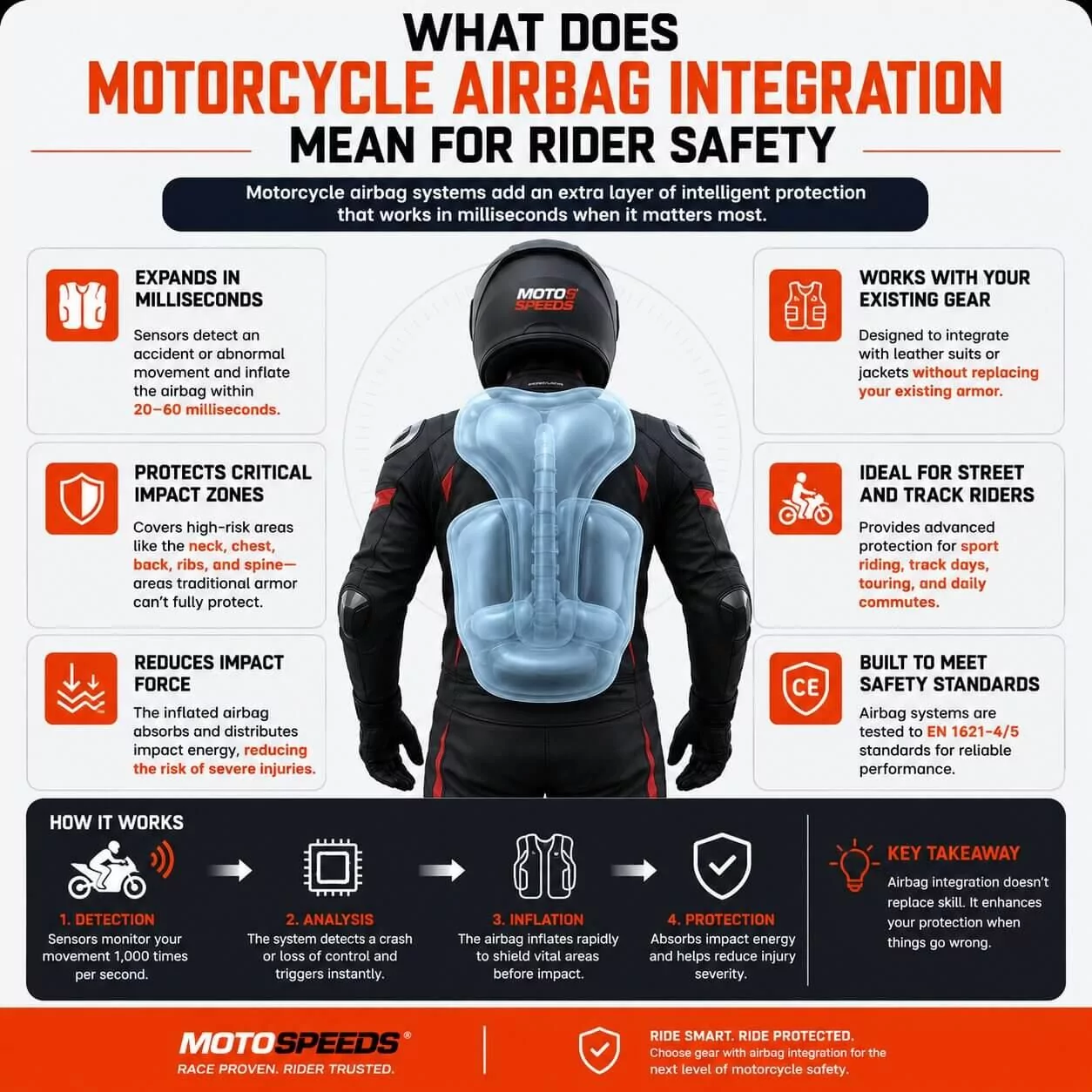
A motorcycle airbag system is a built-in safety device embedded in protective gear. It detects sudden deceleration during a crash and deploys an inflatable cushion. The cushion absorbs and distributes impact force across a wide area of your body rather than concentrating it in one spot.
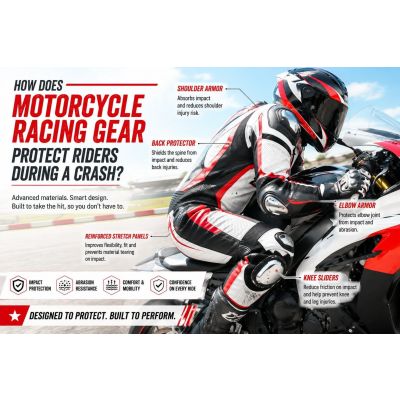
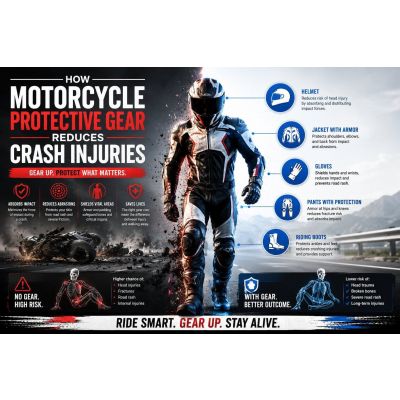
Traditional motorcycle gear protects through abrasion resistance and armor. Leather jackets and racing suits have CE-rated armor in the shoulders, elbows, knees, and back. That armor does its job: it stops sliding leather and absorbs some impact energy.
Airbags add a second layer. When you hit something hard and fast, the airbag deploys before your body fully makes contact. This means your chest, back, and shoulders hit an inflated cushion first, not hard armor or unprotected fabric.
Think of it this way: armor is like shock absorbers in a car. Airbags are like the airbags in a car. Both together provide better protection than either one alone.
Why This Safety Feature Matters on the Road and Track
Different riding styles create different crash scenarios. Understanding where airbag technology helps most will help you decide if it's right for you.
Track Riding and Sportbike Racing
Track days and club racing involve high speeds and potential high-impact crashes. A rider might enter a corner too fast, lose grip, and slide across multiple lanes. Another might lean too far and hit the ground at 80+ miles per hour.
In these scenarios, the impact force is concentrated. The chest hits first. The shoulders compress. The back takes a hit from the pavement. A motorcycle airbag system deploys in these exact moments and spreads that force across a wider area. Studies show that airbag-equipped gear reduces chest and rib injuries during high-speed impacts.
Street Riding and Urban Commuting
Street crashes are less predictable. A car hits you. You fall sideways. You slide. The impact angles are random. In these situations, traditional armor with good fit and placement still matters most. But airbags help in high-speed street crashes too. If you ride sportbikes on aggressive street routes or commute at highway speeds, airbag integration becomes more relevant.
Long-Distance and Tour Riding
Long rides mean hours in the saddle. Comfort and mobility matter. Some riders worry that airbag systems add bulk or restrict movement. Modern airbag-integrated gear is designed to feel like normal leather suits while still offering protection. This balance makes them practical for all-day riding.
Summer Riding and Heat Management
Summer gear needs ventilation. Heavy, layered armor can trap heat. Airbag systems are sometimes thinner than traditional multi-layer armor because the airbag itself provides impact cushioning. This can actually improve summer comfort while maintaining protection.
How Motorcycle Airbag Technology Works During a Crash
Motorcycle airbag systems deploy through one of two methods: sensor-based detection or mechanical impact sensors.
How the Airbag Detects a Crash
Most modern motorcycle airbags use accelerometers and gyroscopes (like a smartphone). These sensors measure sudden changes in motion and position. When the system detects a crash—rapid deceleration, rapid rotation, or both—it triggers an electric charge that ignites a pyrotechnic propellant.
This happens in 10–20 milliseconds. Your body has not yet made full contact with the ground. The airbag inflates to full size in that tiny window before impact.
The Airbag Inflation and Force Distribution
The airbag itself is a folded fabric compartment built into the suit, jacket, or vest. When ignited, an air-generating pyrotechnic charge fills the compartment with nitrogen gas. The compartment expands to cushion the impact zones: chest, back, and shoulders.
The larger surface area means the impact force is spread out. Instead of hitting a hard point of armor, your body contacts inflated fabric. The force distributes across your chest wall and shoulders, reducing peak pressure on any single spot.
What Happens After Deployment
Once deployed, the airbag stays inflated for a few seconds, then slowly deflates through vents. The rider is protected for those critical first moments of sliding and impact. After deployment, the airbag system is spent—it cannot re-inflate. The gear must be sent for inspection and likely replacement.
This is important: airbag-equipped gear is a one-time-use safety system per deployment. After a crash where the airbag deployed, you will need professional inspection or replacement. Do not assume the gear can be used again without verification.
Understanding EN 1621-4 and EN 1621-5 Safety Standards
EN 1621 is the European standard for protective gear testing. EN 1621-1 covers armor impact protection. EN 1621-2 covers abrasion resistance. EN 1621-4 and EN 1621-5 are newer standards that specifically test airbag systems.
What EN 1621-4 Covers
EN 1621-4 tests impact protection from airbag systems. It requires manufacturers to run drop tests on dummy torsos with airbag-equipped gear. The test drops a weight from specific heights onto the chest and back to measure force transmission.
The standard sets limits on how much force reaches the body. Lower transmitted force means better protection. Gear that meets EN 1621-4 has been tested and proven to reduce impact force below specific thresholds.
What EN 1621-5 Covers
EN 1621-5 tests the reliability and durability of airbag systems. It checks that sensors work correctly, that deployment happens on time, and that the system fails safely. It also tests aging: does the airbag still work after months of storage?
A suit certified to EN 1621-5 has been verified to deploy reliably during a real crash. The sensors have been tested hundreds of times. The pyrotechnic charge remains stable.
What These Standards Do NOT Guarantee
Certification does not mean the airbag will prevent injury in every crash. It means the system meets minimum performance thresholds when tested under controlled conditions. Real crashes are chaotic. Impact angles, speeds, and surfaces vary. Fit matters too. An airbag that deploys but does not have good body contact will not protect as well.
Standards are a baseline. They are valuable. But they are not a promise of injury prevention.
Airbag Integration With Armor Placement and Stitching
The best motorcycle airbag systems work because they integrate properly with traditional armor. A modern protective racing suit has multiple layers: leather outer shell, foam impact padding, CE-rated armor panels, and now, airbag compartments.
Where Armor and Airbags Work Together
In the chest and back, the airbag deploys behind the leather. The foam padding sits between the leather and airbag. The armor sits in the airbag compartment or just beneath it. When you impact something, the leather absorbs initial abrasion. The foam cushions some force. Then the airbag deploys and spreads remaining force further.
In the shoulders, the setup is similar. CE-rated shoulder armor sits in the impact zone. The airbag compartment wraps around the shoulder. During a crash, the airbag expands and creates a protective balloon around the shoulder joint.
The key is integration, not replacement. The leather, foam, and armor do not go away. They work alongside the airbag.
Stitching and Compartment Design
The airbag compartment is a sealed fabric section. It must be stitched securely so gas does not leak during inflation. The stitching must be strong enough to contain pressure from the pyrotechnic charge without bursting. Look for reinforced stitching at seams and compartment edges.
Poor stitching means the airbag inflates unevenly or leaks. This reduces protection. Good racing suit construction uses heavy-duty stitching, often double-stitched or reinforced with tape.
What Riders Should Check Before Buying Airbag-Equipped Gear
Not all airbag systems are created equal. Before spending money on an airbag-equipped suit, jacket, or vest, check these factors.
Certification Standards
Look for EN 1621-4 and EN 1621-5 certification. Some brands may use EN 1621-1 or EN 1621-2 (older standards for armor and abrasion). That is fine, but verify that the airbag itself is certified to the newer standards.
Ask the manufacturer: "Is this airbag certified to EN 1621-4 for impact protection and EN 1621-5 for reliability?" If they cannot answer clearly, consider another brand.
Sensor Type and Reliability
Ask about the airbag trigger system. Is it sensor-based or mechanical? How does it detect a crash? What is the false-alarm rate? A system that deploys when you are simply dropping your bike in the garage is frustrating and expensive. A system that fails to deploy during a real crash is dangerous.
Reputable brands publish false-alarm rates and testing data. If a brand will not share this information, be cautious.
Fit and Comfort
The airbag compartments add structure to the suit. Does it feel bulky? Does it restrict your movement? Can you lean forward on the tank? Can you move your shoulders freely? Try the suit on in the position you will ride. Sit on a bench bike or test fit at the shop.
A poorly fitting suit—airbag or not—will shift during a crash and lose its protective positioning. Fit is not optional.
Maintenance and Inspection Requirements
Ask what happens after deployment. Can the gear be re-armed, or does it need full replacement? How long does inspection take? What is the cost? Some systems can be re-packed at the shop. Others require shipping to the manufacturer.
This affects long-term cost of ownership. Budget accordingly.
Leather Quality and Abrasion Resistance
Do not let airbag features distract from basics. The leather must still be thick enough to resist abrasion. Seams must be reinforced. Panels must be placed to protect high-friction areas: shoulders, elbows, hips, and knees.
Riders who explore protective gear can find options that combine both airbag technology and excellent leather construction.
Temperature and Environmental Limits
Pyrotechnic charges are sensitive to temperature extremes. Does the manufacturer specify operating temperature limits? Will the system work in cold winter riding? What about hot summer storage? Some systems need to be stored in climate-controlled conditions.
Common Mistakes Riders Make With Impact Protection Gear
Even with the best technology, riders sometimes use protective gear incorrectly.
Buying the Wrong Size
The most common mistake is buying gear that does not fit. A large suit is easier to put on, but it shifts during a slide. The armor misaligns. The airbag does not make full contact with your body. Protection drops significantly.
Proper fit means the suit hugs your body without restricting movement. Your armor panels stay in place during normal riding. When you lean, the suit moves with you. Invest time in correct sizing. Get professional measurements if needed.
Ignoring Damage After Minor Crashes
A rider crashes but walks away. The suit has a scuff, but no rips. They assume the gear is fine and keep riding. This is risky. Even small damage can affect airbag reliability.
After any crash, inspect your gear carefully. Check for hidden tears. Have your airbag system professionally inspected. Do not guess.
Not Understanding Deployment Triggers
Some riders think airbags deploy only at extreme speeds. Others think they deploy anytime you fall. Neither is accurate. Airbags deploy when sensors detect rapid deceleration and rotation together—like a real crash, not a slow-speed tip-over.
Learn how your specific system works. Read the manufacturer documentation. Understand the threshold speeds and angles. This knowledge helps you use the gear with confidence.
Buying Airbag Gear as a Replacement for Fitness and Skill
Technology cannot replace rider skill or fitness. Airbags help in crashes, but the best protection is not crashing. Invest in training, fitness, and skill development. Use protective gear as backup, not as permission to ride beyond your abilities.
Not Checking Compartment Seals Regularly
Before each riding season, inspect your airbag suit for loose seams or damage around compartment edges. Tiny tears can grow. Check zippers and closures. Make sure nothing is compromised. Small maintenance now prevents disappointment later.
How Fit, Comfort, and Airbag Performance Work Together
A common objection to airbag gear is that it feels stiff or uncomfortable. This is only true if the suit does not fit properly.
Fit Directly Affects Protection
When an airbag deploys, it expands outward from your body. If the suit is too loose, the airbag expands into empty space instead of pressing against your chest and back. The protective benefit drops.
When the suit fits well, the airbag compartment is snug against your body. Deployment creates a cushion that pushes firmly into your impact zones. This is how protection works.
Stretch Panels Improve Comfort
Modern racing suits use stretch materials (often mixed with rigid leather) in zones where you bend: armpits, around the waist, behind knees. These allow movement without bulk. Airbag suits often have generous stretch panels precisely because the airbag compartments add structure elsewhere.
If your racing suit has good stretch panels and proper fit, it will feel more comfortable than you expect.
Break-In Period is Normal
New leather gear always needs a break-in period. The leather will soften. Seams will relax slightly. Zippers will move more smoothly. After 10–20 hours of riding, a properly fitted suit will feel much more comfortable. This is normal. Do not assume discomfort means poor fit.
Weight and Heat Considerations
Airbag compartments are mostly air. Once deployed, an airbag actually weighs almost nothing. The compartment itself adds minimal weight compared to thick multi-layer traditional armor. For summer riding, this can be an advantage. Thinner padding plus airbag deployment might actually mean better ventilation and heat management than heavier traditional gear.
When Should Riders Upgrade to Airbag-Protected Gear?
Airbag technology is proven, but it is not for every rider or every situation. Here is when an upgrade makes sense.
Track Riders and Club Racers
If you ride on track regularly—club races, track days, HPDE events—airbag integration is worth serious consideration. Track crashes are often high-speed impacts. Your body hits barriers or tarmac hard. An airbag provides measurable additional protection in these scenarios. Many track riders consider airbags a wise investment in crash protection.
Aggressive Street Riders
Riders who commute at highway speeds on sportbikes, ride canyons aggressively, or regularly push speed limits on public roads face higher-impact crash potential than casual riders. Airbag gear offers additional protection in these situations.
Riders with Previous Injuries
If you have a history of rib, chest, or shoulder injuries—from crashes or other causes—airbag technology might help reduce re-injury risk. The added impact cushioning helps protect previously damaged areas.
Riders Upgrading from Textile to Leather
If you are moving from textile gear to a custom racing suit, consider airbag integration as part of the upgrade. You are already investing in premium protective gear. Adding airbag technology is a logical step toward maximum protection.
When Upgrade is NOT Necessary
Casual weekend cruisers, slow-speed urban commuters, and riders on low-speed city bikes do not necessarily need airbag gear. Traditional armor-equipped leather gear offers plenty of protection for these riding styles. Upgrading makes financial and practical sense only if you ride in higher-risk scenarios regularly.
Final Buying Advice From MotoSpeeds
Motorcycle airbag systems represent a real advance in protective technology. They work. They reduce injury risk in high-impact crashes. But they are not a magic solution.
Start With the Basics
Even with airbag technology, your gear must fit well, be made from quality leather, and have properly placed armor. An ill-fitting airbag suit is less safe than a well-fitting traditional suit. Do not buy airbag gear just for the technology. Buy it because it combines airbag protection with excellent overall construction and fit.
Understand Your Riding and Your Risk
Be honest about your riding. Do you ride track regularly? Do you push speed on public roads? Do you live in an area with long highway commutes? Are you training to improve your craft? If yes, airbag gear makes sense. If you ride slowly around town on weekends, traditional armor is plenty.
Verify Certification and Standards
Before buying, confirm that the airbag system is certified to EN 1621-4 and EN 1621-5. Ask the manufacturer for testing data. Reputable brands will answer your questions transparently.
Test Fit Before Buying
Try the suit on. Sit on a bike. Lean forward. Rotate your shoulders. Move your arms. Make sure it fits well and feels comfortable enough to wear for 2+ hours. Fit is non-negotiable.
Riders who want better protection for track and road use can explore to find gear designed around safety, fit, and performance.
Build a Complete System
Do not buy just an airbag jacket and ignore gloves, boots, and pants. A complete protective system includes coordinated armor across chest, back, shoulders, elbows, wrists, knees, and hips. Airbag suit plus matching gloves, boots, and pants offer comprehensive protection.
Plan for Deployment Costs
Budget for inspection and re-packing or replacement after a crash where the airbag deploys. Some systems cost $500–$1,500 to re-arm. This is part of the ownership cost. Set money aside or look for insurance that covers gear replacement.
Maintain and Inspect Regularly
Before each season, inspect your suit for seam damage, zipper issues, or compartment leaks. Store in a cool, dry place. Follow manufacturer care instructions. Good maintenance keeps your airbag system reliable.
For riders comparing real protective gear, is a useful example of how armor placement, leather construction, and fit work together to create comprehensive protection.
Frequently Asked Questions
Do motorcycle airbags prevent all injuries during a crash?
No. Motorcycle airbags reduce impact force on your chest, back, and shoulders, which lowers the risk of serious rib, chest, and shoulder injuries. But they do not prevent all injuries. Abrasion injuries, fractures from extreme forces, and injuries to areas not covered by the airbag (hands, lower legs) can still occur. Airbags are one layer of protection, not a complete injury guarantee. The best protection is not crashing, combined with good gear, fit, and rider skill.
What happens to motorcycle airbag gear after it deploys?
Once deployed, the pyrotechnic charge is spent. The gear must be sent to the manufacturer or an authorized service center for inspection and re-packing. Some systems can be re-armed with a new charge cartridge; others require full replacement. This process typically costs $500–$1,500 and takes 1–3 weeks. It is a one-time cost per crash. Plan accordingly if you use airbag gear regularly on track.
How fast do you need to be going for a motorcycle airbag to deploy?
Most modern motorcycle airbag systems deploy when sensors detect rapid deceleration combined with rapid rotation—essentially the signature of a real crash. This typically happens at speeds above 20–30 mph, depending on the system. Slow-speed tips or low-impact slides usually do not trigger deployment. Each manufacturer specifies their deployment thresholds. Check with your gear manufacturer for exact details.
Are motorcycle airbag systems reliable in cold weather?
Most modern systems are tested for a range of temperatures (typically 0°C to 50°C or 32°F to 122°F), but extreme cold can affect reliability. Pyrotechnic charges are temperature-sensitive. If you ride in winter, verify that your airbag system is rated for cold-weather use. Store the suit indoors before and after riding. Do not leave your gear in an unheated garage overnight for extended periods.
Can you disable a motorcycle airbag system if it is too sensitive?
Some systems allow you to adjust sensitivity settings via a control module. Others do not. Check with the manufacturer. Be very cautious about disabling safety features. If the system is too sensitive, the issue is usually poor sensor calibration or incorrect setup, not inherent over-sensitivity. Have it professionally inspected before making changes.
Is airbag gear suitable for long-distance touring?
Yes. Modern airbag-equipped suits are designed for comfort and mobility. Because the airbag compartment itself is inflatable, the padding can be thinner than traditional multi-layer armor, which can actually improve ventilation. The key is proper fit. If the suit fits well, you can wear it for 8–10 hours comfortably. Test it on shorter rides first to confirm comfort before committing to a long tour.
How do you know if your motorcycle airbag system is working correctly?
Most modern airbag systems have a battery, control module, and indicator light. Check the indicator regularly to confirm the system is armed and ready. Some systems emit a beep when powered on. Store the gear in recommended conditions (usually room temperature). If your airbag suit has an app or diagnostic tool, use it to test the system regularly. If the indicator light shows a fault, contact the manufacturer before riding.
Conclusion
Motorcycle airbag systems represent a meaningful step forward in protective technology. When integrated into quality leather gear, they reduce impact injuries in crashes by spreading force across wider body areas. Standards like EN 1621-4 and EN 1621-5 ensure that airbag systems meet minimum performance and reliability requirements.
But technology alone does not protect riders. The suit must fit well. The leather must resist abrasion. Armor must stay in place. Sensors must detect real crashes. The rider must ride with skill and intention. Airbag technology works best as part of a complete system: proper fit, quality construction, comprehensive armor coverage, and responsible riding.
If you ride on track regularly, ride sportbikes aggressively, or commute at highway speeds, a motorcycle airbag system is worth serious consideration. If you ride casually on low-speed routes, traditional armor-equipped gear offers sufficient protection.
Your decision should be based on honest assessment of your riding, your risk, your budget, and your commitment to proper maintenance. Invest in quality. Prioritize fit. Ride responsibly. And know that every layer of protection—leather, armor, and airbags—matters when the worst happens.
Ready to explore your protective gear options? MotoSpeeds specializes in custom racing suits, leather jackets, and coordinated protective systems designed for maximum protection, comfort, and fit. Whether you choose traditional armor or airbag-integrated gear, our mission is to help you ride safer.