Celebrating Our Riding Journey: A Year of Motorcycle Gear Innovation at MotoSpeeds
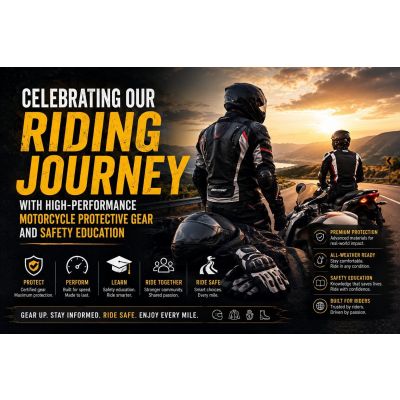
Every rider knows the feeling: that moment when you slip on a well-fitted leather suit, zip up a reinforced jacket, or pull on protective gloves before a ride. It's not just clothing—it's the gear that stands between you and the road or track. For the past year, MotoSpeeds has been celebrating our riding journey with you, sharing insights into protective gear, rider safety, and the real-world decisions that matter when you're choosing armor for your next adventure. This blog anniversary marks a milestone in our mission to help riders make smarter, safer gear choices.
Quick Answer
Celebrating our riding journey means recognizing how protective gear, fit, armor placement, and rider knowledge work together to reduce injury risk. Over the past year, we've shared stories about leather quality, CE armor standards, abrasion resistance, and the practical choices riders face when selecting jackets, suits, gloves, and boots. Whether you're a track-day racer, a city commuter, or a sportbike rider, understanding these safety fundamentals helps you ride with better awareness and confidence in your gear.
Table of Contents
- What This Year Taught Us About Rider Safety
- Why Protective Gear Matters on Every Ride
- Common Safety Questions We Answered
- How Fit and Protection Work Together
- Your Next Steps in Choosing Safer Gear
What This Year Taught Us About Rider Safety
Over twelve months of writing, testing, and listening to riders, one truth became clear: protective gear is not a guarantee against injury, but it is a proven way to reduce harm. Riders who wear CE-rated armor, reinforced leather, and properly fitted suits experience fewer serious injuries in crashes than those who wear casual clothing. This is not marketing—it is the lived experience of thousands of riders and the foundation of modern safety standards.
We learned that riders care most about three things: understanding what protection actually means, finding gear that fits their body and riding style, and knowing which safety features matter for their specific riding. A track-day racer needs different armor placement and abrasion resistance than a city commuter. A summer rider needs breathable construction without sacrificing impact protection. A beginner buying their first leather suit needs clear guidance on sizing and CE ratings.
Our blog has focused on answering these real questions honestly, without fear-based selling or empty promises.
Why Protective Gear Matters on Every Ride
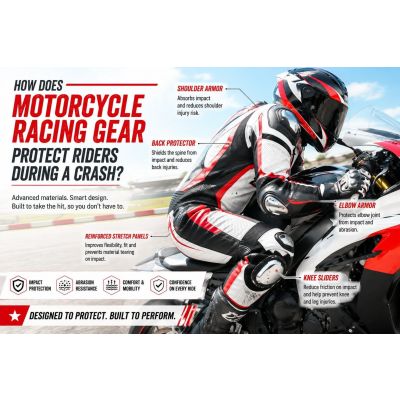
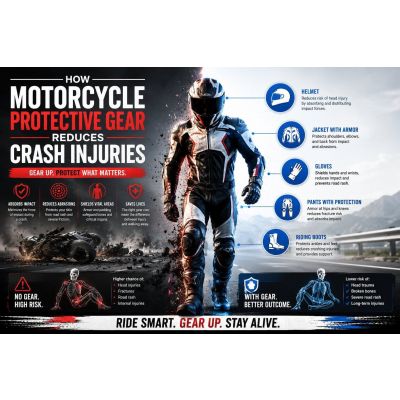
Protective gear reduces injury risk through three main mechanisms: abrasion resistance, impact protection, and proper fit. When a rider slides across pavement, abrasion-resistant leather and reinforced seams slow the damage to skin and muscle. When a rider strikes a hard object or the ground, CE-certified armor absorbs and redirects impact energy, reducing force transmitted to bones and organs. When gear fits correctly, armor stays positioned over vulnerable zones—shoulders, elbows, knees, hips, and back—instead of shifting during a crash.
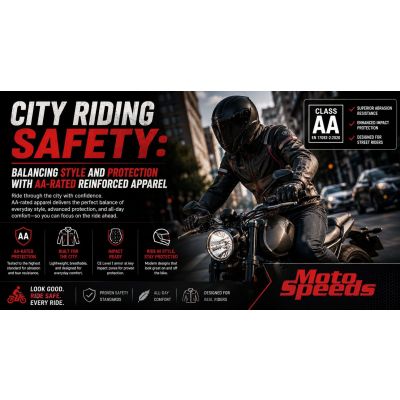
Riders who understand these three elements make better gear choices. They know that a cheap leather jacket might look similar to a reinforced racing suit but offer far less protection because the leather is thinner, the stitching is weaker, and the armor is minimal or missing. They know that a jacket with AA-class abrasion rating indicates tested tear strength and seam durability under EN 17092 standards—not a measure of impact protection, which comes from the armor itself and is certified separately under EN 1621.
Riders who understand gear know that protection is not one feature but a system: materials, construction, armor, fit, and rider behavior all work together.
Common Safety Questions We Answered
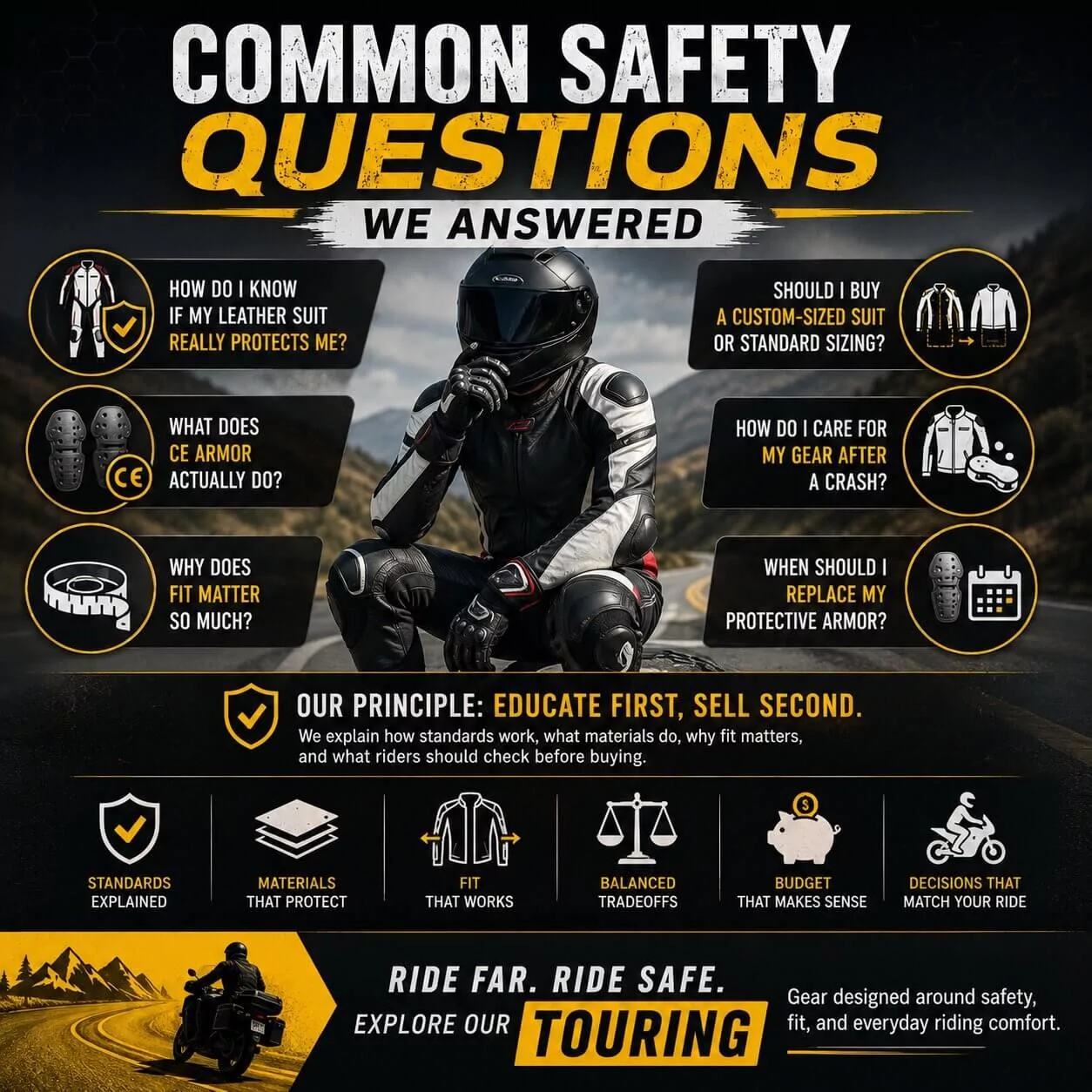
Throughout this year, we addressed the safety questions riders ask most often. How do I know if my leather suit really protects me? What does CE armor actually do? Why does fit matter so much? Should I buy a custom-sized suit or standard sizing? How do I care for my gear after a crash? When should I replace my protective armor?
Each question reflects a real rider concern. A track-day rider wants to know if their suit will handle a high-speed slide. A commuter wants to know if a jacket with Level 2 knee armor is worth the extra cost. A beginner wants to know if they should invest in custom sizing or start with off-the-rack gear.
Our answers have always centered on one principle: educate first, sell second. We explain how standards work, what materials do, why fit matters, and what riders should check before buying. We avoid claiming that any single product, material, or rating is the only right choice for every rider. Instead, we help riders understand the tradeoffs between protection, comfort, fit, and budget so they can make decisions that match their riding style and safety priorities.
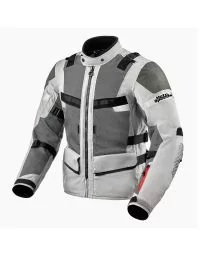
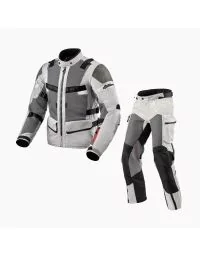
Riders who want better protection for city and road use can explore our
for gear designed around safety, fit, and everyday riding comfort.How Fit and Protection Work Together
One lesson this year reinforced: fit is not optional. A suit with excellent armor but poor fit will shift during a crash, leaving vulnerable zones unprotected. A custom-sized suit costs more upfront but keeps armor in place during impact and distributes pressure evenly across your body, reducing fatigue on long rides and improving protection when you need it.
Proper fit also means you will actually wear your gear. A jacket that is too restrictive or uncomfortable encourages riders to choose casual clothing instead. A suit that fits well feels like a second skin, allowing full movement on the bike while keeping you covered. This is why MotoSpeeds focuses on custom sizing and detailed fit guidance—because protection only works if the rider wears it consistently.
Fit also affects how you ride. When you feel confident in your gear, you can focus on technique, throttle control, and line choice instead of worrying about comfort or coverage. This awareness and confidence reduce risk more than any single armor upgrade.
Your Next Steps in Choosing Safer Gear
As we celebrate our riding journey, your next step is to apply what you have learned. Before buying your next jacket, suit, gloves, or boots, ask yourself: What is my primary riding style—track, street, city, long-distance, or mixed? What protection features matter most for that style? Does this gear fit my body correctly? Are the armor coverage and materials listed in the product details? Can I check the CE rating or safety certification on the label?
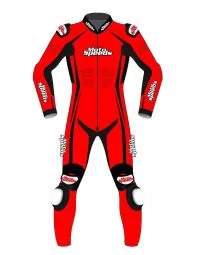
For riders comparing real protective gear, the
shows how armor placement, reinforced construction, and fit work together to support safer riding decisions.Take time to understand your gear before you ride. Check that armor is correctly positioned. Inspect stitching and leather for damage. Break in new suits and jackets on shorter rides before committing to long days or track sessions. After any crash or slide, inspect your gear for damage—reinforced seams, leather tears, or armor compression all require evaluation or replacement.
This is how riders celebrate their journey: by riding smarter, choosing gear intentionally, and understanding that protection is a partnership between the gear you wear and the decisions you make on the road or track.
Frequently Asked Questions
What does the AA rating on motorcycle gear actually mean?
The AA class under EN 17092 indicates that the garment has passed rigorous testing for abrasion resistance, tear strength, and seam durability. AA-rated gear resists longer abrasion distances and higher tear forces than lower-rated gear. However, the AA rating itself does not measure impact protection—that is certified separately through EN 1621 armor standards. Think of AA as a measure of how well the material and seams hold up during a slide, not how much force the armor absorbs.
Do I need custom sizing or can I buy standard-size motorcycle gear?
Standard sizing works well for many riders, especially if your body measurements fall within typical ranges. Custom sizing is worth considering if you have an unusual build, very long arms, short torso, or if you plan to wear the same suit for track days, street riding, and long trips. Custom sizing ensures armor stays positioned correctly during crashes and improves comfort on long rides. Check the product details and size chart before deciding—many riders find standard sizing sufficient if they choose the right size carefully.
Can motorcycle gear prevent injury in a crash?
No gear can prevent all injury, but protective gear significantly reduces the severity of injuries. Reinforced leather, CE armor, and proper fit work together to slow abrasion, absorb impact, and protect vulnerable zones. The outcome depends on crash speed, angle, surface, what you hit, and how your body moves during the slide. Gear is one layer of protection; rider skills, awareness, and speed choice are equally important.
What is the difference between Level 1 and Level 2 armor?
Level 1 and Level 2 refer to EN 1621 impact protector ratings. Level 1 armor absorbs impact energy at speeds up to roughly 7 meters per second. Level 2 armor is tested at higher speeds and provides greater impact absorption. For track-day riders and racers, Level 2 armor is common. For street and city riders, Level 1 armor is often sufficient, though the choice depends on your riding speed and risk tolerance. Check the product label to see which level your armor provides.
How do I know if my gear needs replacement after a crash?
After any crash or significant slide, inspect your gear for visible damage: leather tears, stitching separation, armor cracks, or compression. Even if damage is not visible, armor may have absorbed impact and lost some protective capability. Many riders have damaged gear inspected or serviced by the manufacturer. Some damage requires replacement of the entire suit or jacket; other damage can be repaired. Do not assume your gear is still protective after a crash—check the product care instructions and contact the manufacturer if you are unsure.
Why does fit matter more than the most expensive gear?
Fit determines whether armor stays in place during a crash and whether you will actually wear your gear consistently. Expensive gear with poor fit leaves you unprotected if armor shifts away from vulnerable zones. Properly fitted gear—even if less expensive—keeps you covered and encourages you to wear it on every ride. Custom sizing or careful standard sizing ensures that your shoulders, elbows, knees, and back are protected where they need to be.
What should I look for when comparing protective jackets or suits?
Compare these elements: leather thickness and quality, armor coverage and level (Level 1 or Level 2), reinforced seams and panels, CE rating or safety certification, fit and movement range, and ventilation for your climate. Read the product details to confirm armor placement and materials. Check if the suit or jacket fits your body without excess fabric or tight restrictions. Consider your primary riding style—track riders need different armor placement than city commuters. Take time to try on gear or use detailed size charts before buying.
Conclusion
Celebrating our riding journey means recognizing that protective gear, rider knowledge, and smart choices work together. Over this past year, we have shared honest, practical safety guidance without fear-based selling or empty promises. We have explained how standards work, why fit matters, and what riders should actually look for when choosing gear. This is the foundation of celebrating our riding journey: understanding that protection is not a guarantee but a system built on materials, construction, armor, fit, and the rider's commitment to wearing gear consistently.
As you continue your own riding journey, apply what you have learned. Choose gear that fits your body and riding style. Understand the safety features that matter for your priorities. Inspect your gear before and after rides. Take time to break in new suits and jackets. And remember that the best protective gear is the gear you actually wear every time you ride. Explore MotoSpeeds' collection of reinforced racing suits, protective jackets, gloves, and boots designed around safety, fit, and performance. Ride with a better understanding of how fit, armor, and abrasion resistance work together to support safer riding decisions.