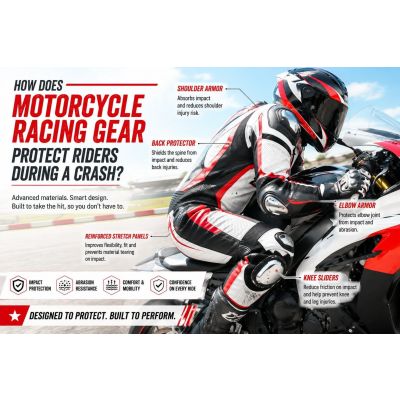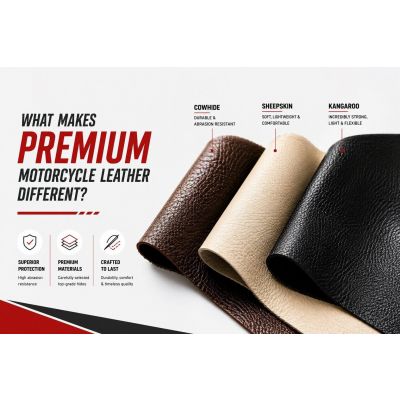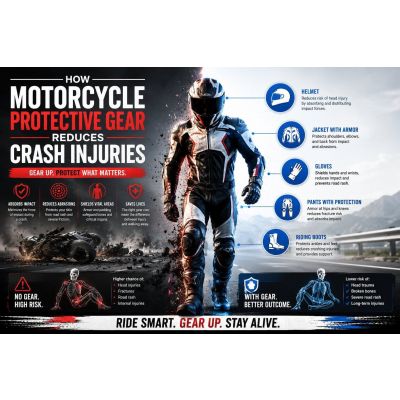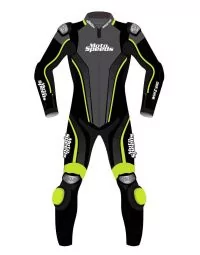
Motorcycle racing suits are engineered with purpose. Different parts of the suit face different crash forces and friction demands, so manufacturers use varying leather thicknesses to balance protection, fit, and movement. Understanding how racing leather thickness works helps riders make smarter choices about the gear they wear on the track or street.
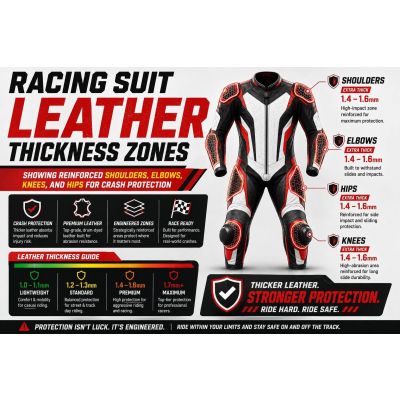
When you slide across pavement at speed, your body doesn't experience uniform impact. Your shoulders, elbows, knees, and hips absorb the hardest contact. Your torso and limbs need flexibility to grip the bike and move during cornering. Racing suit designers solve this problem by using thicker, more durable leather where crashes hit hardest, and thinner, more supple leather where riders need to move freely. This zoned approach is a practical safety strategy that serious riders should understand.
Quick Answer
Racing suits use thicker leather in high-impact zones like shoulders, elbows, knees, and hips because these areas absorb the most friction and force during a slide. Thinner leather is used on the torso, sides, and movement areas to allow the rider to bend, reach, and grip the bike without restriction. This combination reduces abrasion injury risk while maintaining the comfort and control a rider needs to perform. Check your suit's product details to see where reinforced leather is placed and confirm it covers your most vulnerable contact points.
Table of Contents
- What Racing Leather Thickness Means for Rider Safety
- Why Zoned Leather Thickness Matters on Track and Street
- How Leather Thickness Helps During a Crash or Slide
- What Riders Should Check Before Buying a Racing Suit
- Common Mistakes Riders Make About Suit Protection
- How Fit, Comfort, and Leather Thickness Work Together
- Final Buying Advice from MotoSpeeds
What Racing Leather Thickness Means for Rider Safety
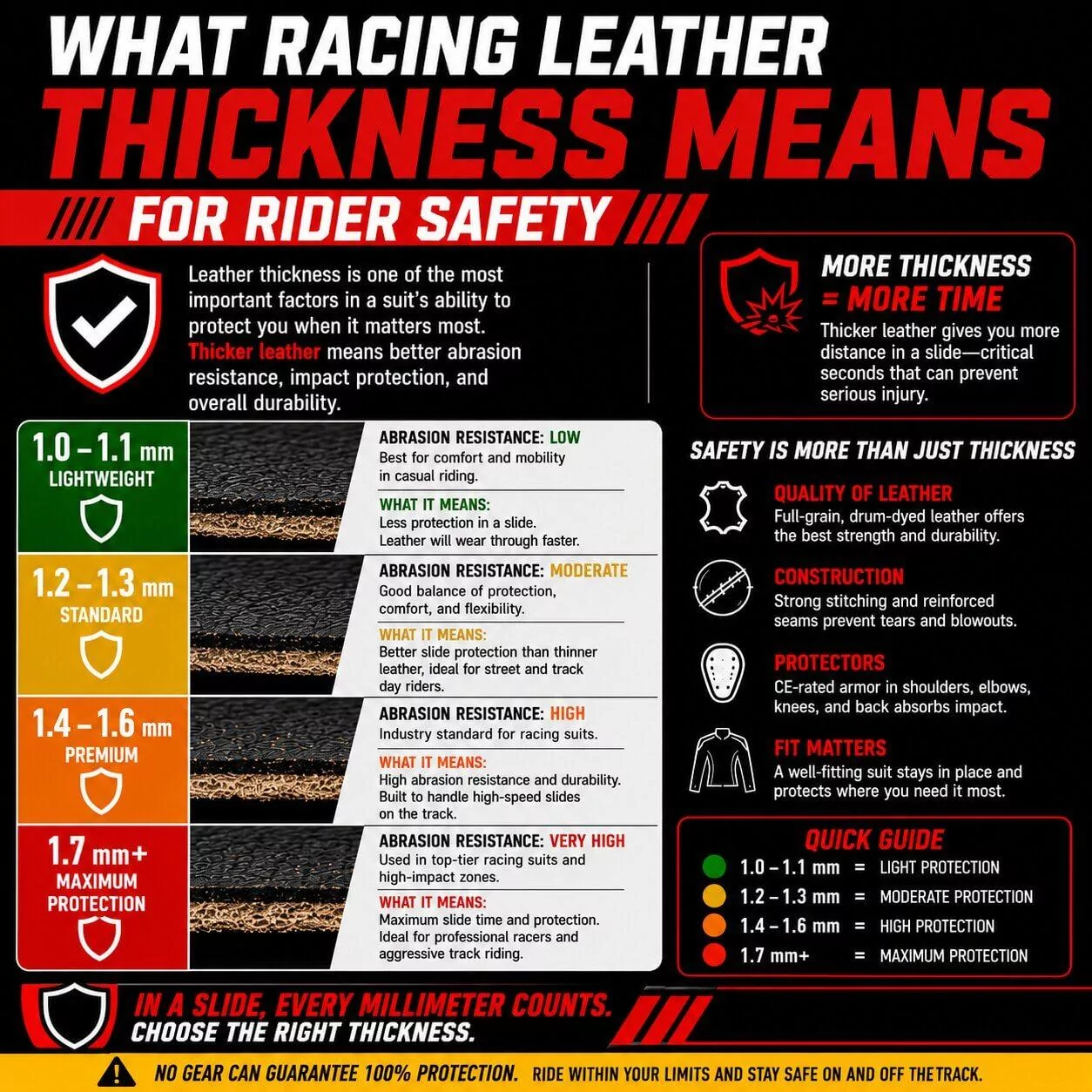
Racing leather thickness refers to the material's depth and density in different areas of a suit. Thicker leather resists abrasion longer when skin slides across pavement. Thinner leather allows movement and breathability without sacrificing protection where it matters most.
The relationship is straightforward: thicker leather in impact zones reduces the distance friction travels before protection fails. On the street or track, this difference can be the gap between a scrape and a serious abrasion injury. But thickness alone does not equal safety. The leather's quality, the stitching strength, and the armor underneath all contribute to how well a suit protects you.
Riders often ask whether a uniformly thick suit is better. It is not. A suit made entirely of heavy leather would restrict movement, overheat during long rides, and fatigue your arms and shoulders. Racing suit designers use zoned thickness to solve a real problem: protect hard-hit areas without sacrificing the fit and comfort that keep you in control on the bike.
Why Zoned Leather Thickness Matters on Track and Street
Track riders and sportbike riders experience predictable crash patterns. When a rider slides, they typically land on their shoulder, slide along the hip and thigh, and may impact their elbow or knee as they tumble. Road racers and city riders face different hazards—maybe a low-side slide, maybe a high-speed street crash—but the vulnerable zones remain the same.
Thicker leather in the shoulder area protects against the rotational forces and friction of a shoulder-first slide. Reinforced elbows and knees guard the bony points that contact pavement hardest. Thicker hip and thigh leather protects during the long, grinding slide that happens when a rider goes down at speed. Meanwhile, thinner leather on the torso, sides, and under the arms lets you move freely, lean into corners, and maintain the grip strength you need to control the bike.
Riders who want better protection for track and road use can explore our
to see how reinforced construction and zoned design work in real protective gear.How Leather Thickness Helps During a Crash or Slide
When you crash, leather thickness buys you time. Abrasion resistance is measured in how long the material lasts under friction before tearing or wearing through. Thicker leather in impact zones extends that window, reducing the chance that friction reaches your skin.
In a typical low-side crash, your shoulder hits first. If your suit has reinforced shoulder leather, that thickness absorbs the initial impact and resists the grinding friction as your body slides. The same principle applies to elbows, knees, and hips. Thinner leather on the torso and sides does its job too—it still provides abrasion resistance—but because these areas are less likely to be the primary contact point in a crash, the suit can use less material there without compromising safety.
Armor placement also matters. Thicker leather works best when paired with properly positioned CE-rated impact protectors underneath. Armor is tested separately under EN 1621 standards and rated Level 1 or Level 2 based on impact performance. The leather above the armor protects against abrasion, while the armor itself protects against impact force. Both layers matter.
What Riders Should Check Before Buying a Racing Suit
When shopping for a racing suit, look for product details that specify where thicker leather is used. Quality manufacturers list leather thickness or describe reinforced zones—shoulders, elbows, knees, hips, and sometimes the outer thigh. Ask yourself: do these zones match where you expect to slide? For track riders, shoulder and elbow reinforcement is critical. For street and city riders, hip and thigh protection may matter more.
Check the EN 17092 class rating if it is listed. This standard classifies whole garments into classes AAA, AA, A, B, and C based on abrasion resistance, tear strength, and seam strength. The class reflects how well the suit as a whole resists damage, but it does not tell you where the thicker leather is placed. You need to read the product description or contact the maker to understand the zoning.
Also confirm that armor is included and that it is CE-rated under EN 1621. Check whether the armor is removable or fixed, and whether you can upgrade it if needed. Verify that the suit fits snugly—loose leather does not protect well because it may shift during a crash, leaving vulnerable areas exposed.
Common Mistakes Riders Make About Suit Protection
One common mistake is assuming that thicker leather everywhere is always better. In reality, overly thick suits restrict movement, increase weight, and can cause fatigue during long rides. A well-designed suit balances thickness where you need it with flexibility where you ride.
Another mistake is ignoring fit. A suit with excellent leather thickness and armor placement will not protect you properly if it is too loose or too tight. Loose suits shift during a crash, moving armor away from impact zones. Tight suits restrict your movement and can cause muscle fatigue, which affects your control and decision-making on the bike. Custom sizing solves this problem for many serious riders.
A third mistake is believing that leather thickness alone prevents injury. It does not. Protective gear reduces injury risk, but crashes are unpredictable. A high-speed, high-energy crash can cause serious injury even in well-made, properly fitting gear. Gear is one layer of safety; rider skill, awareness, and speed control matter just as much.
How Fit, Comfort, and Leather Thickness Work Together
A suit with optimal leather thickness zones is only effective if it fits well. Fit affects how the leather contacts your body, how the armor stays in place, and how long you can wear the suit comfortably. A comfortable suit is one you will actually wear, which is a real safety benefit.
For track-day riders, a snug racing suit is ideal. It keeps the leather and armor in place during aggressive cornering and crashes. For street and city riders, a slightly more relaxed fit might feel better for longer rides, but the suit should still be close enough that it will not shift significantly in a crash.
Thinner leather in movement zones—the torso, sides, and under the arms—helps you stay comfortable during long rides without overheating. This is especially important in summer riding or on hot track days. The trade-off is that these thinner areas have less abrasion resistance than the reinforced zones, but because they are less likely to be primary contact points in a crash, this is an acceptable compromise.
Final Buying Advice from MotoSpeeds
Understanding racing leather thickness helps you choose a suit that matches your riding style and risk tolerance. Track riders should prioritize thick, reinforced shoulders, elbows, and knees. Street and city riders should ensure good coverage on the hips, thighs, and torso. All riders benefit from suits that balance protection with comfort and fit.
When you compare racing suits, ask the manufacturer where the thicker leather is located and why. Read the product details carefully. If the suit is EN 17092 rated, check the class. Confirm that armor is included and properly positioned. Try the suit on or measure carefully to ensure a snug fit.
The
demonstrates how reinforced leather zoning, armor placement, and custom fit work together to support safer riding. Explore MotoSpeeds' full range of protective gear to find a suit that matches your riding needs and helps you make informed decisions about the protection that matters to you.Frequently Asked Questions
Why is leather thicker on the shoulders and elbows?
Shoulders and elbows are common impact points in crashes. They are bony areas that contact pavement first in many slide scenarios. Thicker leather in these zones resists the grinding friction and abrasion that occurs when your body slides across the road. Reinforced shoulders and elbows reduce the risk of serious scrapes and deep abrasion injuries in these vulnerable spots.
Is thicker leather always better for protection?
No. Thicker leather provides more abrasion resistance, but a suit made entirely of heavy leather would be uncomfortable, restrict your movement, and may actually reduce safety by limiting your control on the bike. The best approach is thicker leather where crashes hit hardest and thinner, more flexible leather where you need to move freely and stay comfortable.
What does EN 17092 tell me about leather thickness?
EN 17092 is a standard that rates whole garments (jackets, suits, trousers) into classes AAA, AA, A, B, and C based on abrasion resistance, tear strength, and seam strength. The class indicates the overall durability of the suit, but it does not specify where thicker leather is located. You must check the product description or contact the manufacturer to learn about zoned thickness.
Can I wear a racing suit for street and city riding?
Yes, many riders wear racing suits for street and track riding. Racing suits are designed for high-performance protection and often have excellent armor and abrasion resistance. However, some racing suits are less comfortable for long city rides because they are tight and warm. Consider your riding style and comfort needs. Some riders prefer a protective jacket and pants for street use and reserve the full racing suit for the track.
How do I know if my suit fits correctly?
A racing suit should fit snugly without restricting your movement on the bike. When you sit in a riding position, the suit should not bunch or shift. Armor should stay in place over your shoulders, elbows, knees, and back. If the suit is too loose, it may slide during a crash, moving protection away from impact zones. If it is too tight, it will restrict your movement and cause fatigue. Custom sizing is a good option if standard sizes do not fit well.
Do I need to replace my suit after a crash?
Not always, but you should inspect it carefully. If the leather is torn or deeply abraded, or if the armor is cracked or dented, the suit's protective capability may be reduced. Minor scrapes and surface damage do not necessarily require replacement, but significant damage may need repair or replacement. Check your suit's care instructions or contact the manufacturer for guidance on whether your suit is safe to wear after a crash.
What is the difference between racing leather thickness and textile or mesh gear?
Leather generally offers better abrasion resistance than textile or mesh materials, but textile and mesh gear can be lighter, more breathable, and more comfortable for long rides. Some riders prefer textile jackets for street and city use because they are easier to move in and ventilate better in warm weather. Racing suits are typically leather because leather provides superior abrasion protection for high-speed crashes. Choose based on your riding conditions and comfort needs.