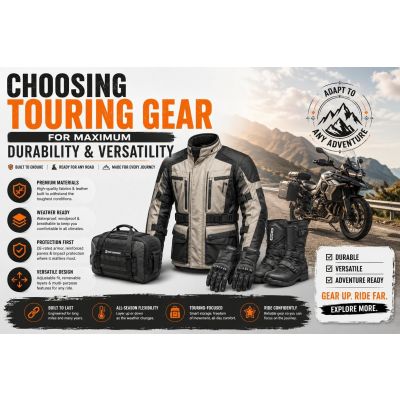
Choosing Durable Touring Gear for Maximum Protection on Long Rides
Long-distance riding demands gear that does more than look good in a parking lot. You'll spend hours in the saddle, crossing state lines, changing weather conditions, and dealing with fatigue. Your gear needs to protect you during that fatigue, stay comfortable when the temperature drops or humidity rises, and hold up under the abrasion and impact forces that come with high-mileage riding. Most riders buy touring gear based on aesthetics or price alone, then discover mid-trip that their suit is too restrictive for highway cruising, their armor has shifted out of position, or their leather is degrading after a few seasons. The right durable touring gear balances protection, fit, material quality, and construction in ways that actually matter for long rides.
Choosing durable touring gear is fundamentally different from selecting a track suit or a casual riding jacket. A track suit prioritizes crash protection for high-speed slides on a closed circuit. A touring suit must protect you across hundreds of miles, varied conditions, and unpredictable road hazards while keeping you comfortable enough to ride safely for six, eight, or twelve hours at a time. Fit affects both safety and comfort in ways many riders underestimate. Armor that shifts during a crash leaves critical areas unprotected. Leather that's too stiff causes shoulder and neck fatigue on long rides. Seams that aren't reinforced fail before the leather does. Understanding what separates a durable touring suit from a cheaper alternative will save you money, protect you better, and let you ride with confidence.
Quick Buying Advice:
Durable touring gear must prioritize fit first, then material quality and construction. A well-fitted suit in 1.0–1.2 mm cowhide with reinforced seams, properly positioned CE Level 1 armor, and a comfortable break-in period will outlast cheaper alternatives by years and protect you more effectively in a crash. Avoid oversized suits that shift during riding, undersized suits that restrict movement, and gear with thin leather or single-stitched seams. If your proportions fall outside standard size ranges, custom sizing adds real value. Most riders touring on standard sportbikes or middleweight cruisers do not need the heaviest armor available—Level 1 protection is sufficient for street riding—but they do need armor that stays in place and leather that resists abrasion.
- What Should Riders Know Before Buying Touring Gear?
- How to Choose Gear Based on Your Riding Style
- What Safety Features Should Buyers Check?
- How Fit and Sizing Affect Comfort and Protection
- Which Materials and Construction Details Matter?
- Standard Size vs Custom Size: Which Should You Choose?
- Final Buying Advice from MotoSpeeds
What Should Riders Know Before Buying Touring Gear?
Touring gear is built for endurance, not just impact protection. You will wear this suit for hours at a time across multiple riding sessions, sometimes in weather conditions you cannot predict. Unlike a race suit that gets worn for a few hours on a track, touring gear must balance protection with comfort, breathability, and flexibility. It must also age well—a touring suit should remain safe and functional after two, three, or more seasons of regular use.
The most common mistake touring riders make is buying gear that prioritizes appearance or price over fit and material quality. A $400 suit that looks professional but uses thin leather and single-stitched seams will fail faster and protect you less effectively than a $600 suit with proper leather thickness and reinforced construction. The cheaper suit might feel fine during a 30-minute test ride. After 50 hours in the saddle, the leather will start to crack, seams will fray, and you will have spent money on gear that needs replacement instead of gear that will last.
Durable touring gear also requires realistic expectations about what protection means. Armor rated to CE Level 1 (a standard for street and touring riding) meets specific impact absorption standards under controlled test conditions. It does not guarantee you will not be injured in a crash. What it means is that the armor has been tested and proven to reduce impact energy to a specific level. Leather's abrasion resistance significantly reduces the severity of road rash compared to unprotected skin in high-speed slides, but it does not eliminate injury risk. The goal of better gear is to shift the odds in your favor and reduce injury severity if a crash happens.
How to Choose Gear Based on Your Riding Style
Your riding style, typical speeds, and the roads you frequent should shape your gear choices. A rider who spends most time on interstate highways at steady speeds has different needs than a rider who navigates twisty mountain roads or urban streets with frequent stops and starts. Understanding your actual riding patterns helps you avoid buying gear optimized for scenarios that do not apply to you.
Highway touring riders benefit from suits that prioritize comfort and ventilation alongside protection. You will be in the saddle for extended periods, often at steady throttle. Your priority is gear that does not cause fatigue in the shoulders, neck, or lower back over hours of riding. Look for suits with articulated panels that follow your riding position, not your standing position. A suit that fits perfectly when you are standing may be too tight across the shoulders or back when you are gripped to the handlebars in a touring crouch. Test this by sitting on a motorcycle (or even a chair in a riding position) and checking that you can grip the bars comfortably without shoulder strain. Ventilation also matters for highway touring. If you are riding through varying climates or seasons, perforated leather panels in the chest, back, and sides will help manage heat without sacrificing protection.
Sport-touring riders who mix highway miles with twisty roads need armor positioned for both stability and impact protection. A one-piece suit with reinforced shoulder and elbow panels, plus CE Level 1 or Level 2 knee and hip armor, gives you better protection if you do lean hard into corners or encounter gravel on a technical road. The extra armor weight is minimal, and the protection gain is significant. Two-piece suits work well for sport touring if you prioritize the jacket fit over the pants fit—your jacket will get the most use and needs to feel right during aggressive riding.
Casual street riders and commuters who occasionally tour benefit from versatile gear that works in varied conditions. A two-piece suit in durable leather with reinforced seams and properly positioned armor gives you flexibility to ride in different weather, swap jackets if needed, and adjust your protection level based on the day. You do not need the heaviest armor or the most technical materials, but you do need leather thick enough to resist abrasion and construction solid enough to last years of regular use.
What Safety Features Should Buyers Check?
Armor certification and placement matter far more than the number of armor pieces or the marketing claims on a product page. A suit with five armor pieces that are poorly positioned or loosely secured offers less protection than a suit with three well-placed pieces that stay locked in position during a crash. Before buying, check what armor is included, where it is positioned, and whether it meets CE standards.
CE armor certification comes in two levels. CE Level 1 armor absorbs a minimum of 35 kilojoules of impact energy in EN 1621-1 and EN 1621-2 testing (standards that measure how well protectors absorb impact). CE Level 2 armor absorbs a minimum of 50 kilojoules, meaning it handles higher-energy impacts more effectively. For street and touring riding at normal speeds, Level 1 is sufficient and appropriate. Level 2 is worth considering if you ride sportbikes at higher speeds, navigate aggressive traffic, or have a history of crashes. The trade-off is that Level 2 armor is often bulkier and may reduce comfort on long rides.
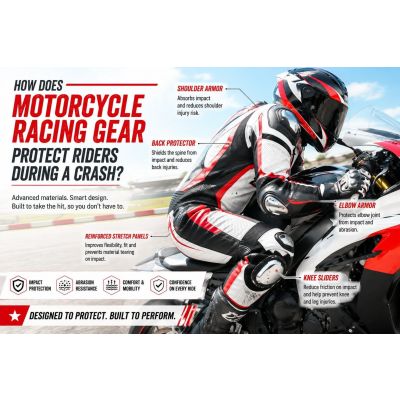
Check the armor placement in the suit. Shoulders, elbows, knees, and hips are the contact points in most crashes. A touring suit should have armor at all four locations. Back protectors are optional but valuable—a CE-certified back protector (EN 1621-2) adds minimal weight and bulk while protecting your spine in rear-impact crashes or falls. Some riders prefer a removable back protector so they can adjust protection based on the day's riding. Others prefer armor integrated into the suit so it cannot shift or be forgotten.
Armor must stay in place during a crash, not just while you are wearing the suit. Check how armor is secured. Armor should be glued and stitched to the suit, not just sitting in a pocket. If armor is removable (as with some back protectors or knee pads), it should have a secure pocket or attachment system that prevents it from shifting during impact. Poorly secured armor can migrate during a crash, leaving gaps in protection where you need it most.
Seam construction affects both durability and safety. A reinforced seam can withstand abrasion and impact stress better than a single-stitched seam. Look for suits with double-stitched or bar-tacked seams, especially at stress points like the shoulders, elbows, knees, and where the sleeves attach to the body. Count the thread lines if you can see them—two parallel lines of stitching is better than one. A suit with single-stitched seams will fail faster under crash forces and will degrade sooner from regular wear.
How Fit and Sizing Affect Comfort and Protection
Fit is the single most important factor in gear safety and comfort. A suit that fits poorly can shift during a crash, leaving armor out of position where you need protection. A suit that is too tight restricts movement and causes fatigue on long rides, which increases the risk of mistakes and decreases your ability to control the bike. A suit that is too loose allows your body to shift inside the gear, which also compromises protection. The right fit keeps armor in place, allows full range of motion in your riding position, and stays comfortable for hours.
Test fit by sitting in your riding position, not by standing up. Many riders buy a suit that feels fine standing in a shop, then discover it is too tight in the shoulders or back when they grip the handlebars. Sit on a motorcycle or a chair in your normal riding posture. Check that you can grip the bars without shoulder strain. Reach forward as if accelerating. Move your arms as if turning the bars. Bend forward as if looking into a corner. If you feel restriction or discomfort in any position, the suit is too tight in that area. You should be able to move freely in your riding position with minimal excess fabric.
Excess fabric is a problem on long rides and in crashes. A suit that is too large will bunch up around your waist and hips, creating pressure points and reducing comfort. In a crash, loose fabric allows your body to shift inside the suit, which can pull armor out of position. A suit that fits snugly but not tightly—with no excess fabric and no restriction—will keep armor in place and protect you more effectively.
Common sizing mistakes include buying a suit one size too large to accommodate "layering" underneath. Most touring riders do not need significant layering. A thin base layer under your suit is sufficient for cold-weather riding. A suit that is one size too large to accommodate thick layers will be uncomfortable and unsafe in normal conditions, and you will rarely actually use it for heavy layering. Buy the suit that fits your body without heavy layers, then add a base layer if you need extra warmth. If you ride in cold climates regularly, some manufacturers offer suits with removable thermal liners or compatible base layers that provide warmth without requiring oversizing.
Armor position depends on fit. If a suit is too large, armor will sit in the wrong place relative to your joints. If a suit is too small, armor may be pulled out of position when you move. The armor must sit directly over your knee, elbow, shoulder, and hip joints to protect those areas effectively. Check the armor position by sitting in your riding posture and checking that armor pieces align with your joints. If armor is off by an inch or two, it will not protect the contact point where you need it most.
Length and inseam affect both comfort and safety. A suit with pants that are too short will pull up when you sit down, exposing your lower back or ankles. A suit with pants that are too long will bunch at your ankles or drag on the ground. The right inseam should allow you to sit in your riding position with the waistband at your natural waist and the pant legs ending at the top of your boots without excess fabric. Sleeves should reach your wrist without excess length. A jacket that is too short will ride up when you lean forward. A jacket that is too long will bunch at your elbows and restrict movement.
Riders with non-standard proportions often struggle with standard sizes. If you are taller than average, shorter than average, have longer arms relative to your torso, or have a larger waist relative to your chest, standard sizing may not fit well. In these cases, custom sizing adds real value. A custom suit built to your exact measurements will fit better, keep armor in the right position, and be more comfortable on long rides than a standard size that compromises fit.
Which Materials and Construction Details Matter?
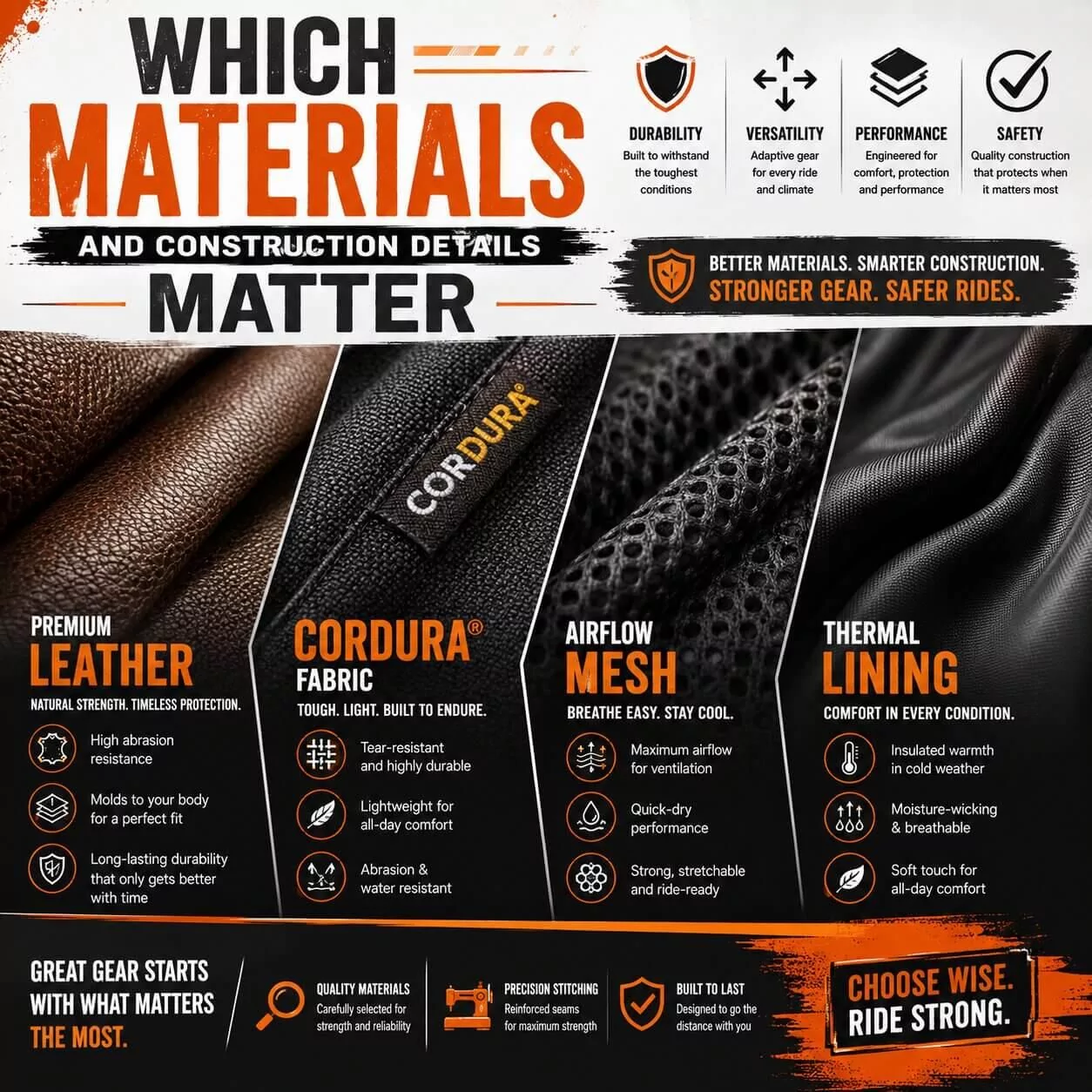
Leather thickness, type, and quality directly affect how long your gear will last and how well it protects you. Leather thickness is measured in millimeters. Most touring suits use leather between 1.0 and 1.3 mm thick. Thicker leather (1.2–1.3 mm) offers better abrasion resistance and durability but is heavier and may feel stiffer. Thinner leather (1.0–1.1 mm) is lighter and often more comfortable on long rides but may wear faster. For touring gear that will see regular use over multiple seasons, 1.1–1.2 mm is an ideal balance.
Cowhide is the most common leather used in touring suits. It is durable, affordable, and widely available. Cowhide resists abrasion well and ages gracefully—it actually becomes more supple with use if cared for properly. A cowhide suit in 1.1–1.2 mm thickness will last years of regular riding. Kangaroo leather is lighter and stronger per millimeter than cowhide, making it popular in racing suits where weight matters and crash speeds are high. For touring, cowhide is often the better choice because it is more comfortable, more affordable, and offers excellent durability for street speeds.
Leather quality varies significantly between manufacturers. High-quality leather is tanned and finished to resist cracking, fading, and degradation. Lower-quality leather may crack after a season or two, especially if exposed to sun and weather. Check reviews from riders who have owned the gear for at least a year. Ask whether the leather has developed cracks, whether the color has faded significantly, and whether the suit still feels supple and comfortable. If multiple reviews mention cracking or stiffening after a season, the leather quality is not suitable for durable touring gear.
Stitching and seam reinforcement determine how long a suit will last under stress. A single-stitched seam fails faster than a double-stitched seam. A bar-tacked seam (where stitches are reinforced with additional cross-stitches at stress points) is stronger than a simple double stitch. Stress points like the shoulders, elbows, knees, and sleeve attachments should all be reinforced. Count the visible stitch lines if you can see them, or ask the manufacturer about seam construction. A suit with reinforced seams will outlast a suit with single stitching by years.
Lining quality affects comfort and durability. A high-quality lining reduces chafing, wicks moisture, and holds up to repeated washing and wearing. A cheap lining will pill, tear, and degrade quickly. Check the lining by running your hand across it—it should feel smooth and durable, not thin or flimsy. Some riders prefer mesh linings for ventilation in warm weather, while others prefer cotton or synthetic blends for comfort and durability. The material matters less than the quality of construction.
Zippers, snaps, and closures should be secure and durable. A zipper that catches or fails mid-ride is frustrating and potentially unsafe. Check that zippers move smoothly without catching and that they have a secure slider lock to prevent accidental opening. YKK zippers are a good sign—they are widely considered the best-quality zippers available. Snaps should be reinforced and secure. Velcro closures should be industrial-grade and positioned where they will not catch on your skin or clothing.
Ventilation features matter for touring comfort. Perforated leather panels in the chest, back, and sides allow airflow while maintaining protection. Some suits have removable linings or mesh panels that you can swap for summer riding. Others have zippered vents that you can open for warm weather and close for cold weather. If you tour in varying climates or seasons, ventilation options add significant value to long-term comfort.
When is it worth paying more for touring gear? A higher price tag does not always mean better protection, but it often reflects better material quality, construction, and fit. A $400 suit in thin leather with single-stitched seams will need replacement after a couple of seasons. A $700 suit in quality leather with reinforced seams will last five or more years of regular riding. The per-year cost of the expensive suit is actually lower. Additionally, more expensive suits often offer better fit because manufacturers invest in better sizing and pattern design. A suit that fits better will be more comfortable on long rides and keep armor in the right position more reliably. If you tour regularly, spending more on a suit that will last years and fit well is a sound investment.
Standard Size vs Custom Size: Which Should You Choose?
Most riders fit standard sizes well. Manufacturers design standard sizes to fit a wide range of body types, and sizing charts are generally accurate. If you fall within typical height and weight ranges and do not have unusual proportions, a standard size will likely fit you well and offer excellent value. Standard sizing also means faster delivery, lower cost, and the ability to exchange or return if needed.
Custom sizing makes sense when your proportions fall outside standard ranges. If you are significantly taller or shorter than average, have a longer or shorter inseam relative to your height, have longer or shorter arms, or have a larger waist relative to your chest, custom sizing ensures the suit fits your body instead of forcing your body to fit the suit. A custom suit will keep armor in the right position, allow full range of motion in your riding posture, and be more comfortable on long rides.
Custom sizing also allows you to specify features and materials that match your needs. If you ride in a specific climate, you can request linings or ventilation tailored to that climate. If you have a history of injuries, you can request additional armor in specific areas. If you prefer a particular leather thickness or type, you can choose it. This level of customization adds value if you are building a suit you will wear regularly for years.
The trade-off with custom sizing is cost, lead time, and the inability to try the suit on before purchase. A custom suit typically costs 20–40% more than a standard size. Lead times are often 6–12 weeks or longer, depending on the manufacturer's backlog. You will not be able to try the suit on before it ships, so accurate measurements and clear communication with the manufacturer are essential. If the suit does not fit when it arrives, alterations may be expensive or impossible.
To decide between standard and custom sizing, start by checking the manufacturer's sizing chart. Take your measurements carefully and compare them to the chart. If your measurements fall within the range for a standard size, try that size first. If your measurements fall outside the range, or if you have unusual proportions, custom sizing is worth considering. If you have access to a physical location where you can try the suit on, that is the best option—you can confirm fit before committing to a purchase.
Final Buying Advice from MotoSpeeds
Buying durable touring gear comes down to three decisions: fit first, material quality second, and aesthetics last. A suit that fits well in your riding position, uses quality leather with reinforced seams, and has properly positioned armor will protect you better and last longer than a cheaper suit that looks professional but compromises on fit or construction. Do not let appearance or brand name drive your decision. Ride-tested fit and material quality are what matter.
Before you buy, check the reviews from riders who have owned the gear for at least a year. Ask specific questions: Does the leather crack or fade? Do seams hold up to regular use? Does the suit stay comfortable on long rides? Does armor stay in position? These questions reveal durability and real-world performance in ways that marketing claims cannot.
Riders who want better protection for city and road use can explore our
for gear designed around safety, fit, and everyday riding comfort.If you are still comparing options, test fit in your riding position before committing. A suit that feels fine standing may be uncomfortable or restrictive when you are gripped to the handlebars. Sit on a motorcycle or in a riding position and check shoulder, back, and elbow comfort. Confirm that armor sits over your joints when you are in that position. If you have any doubt about fit, ask the manufacturer or retailer for guidance—a few minutes of clarification now will save you from buying the wrong suit.
For riders comparing real protective gear,
shows how armor placement, reinforced construction, and fit work together to deliver protection that lasts.Break-in is normal for quality leather gear. A new suit will feel stiff initially. After a few hours of riding, the leather will soften and conform to your body. This is a sign of quality—cheap leather that feels soft immediately often lacks the durability you need. Expect a break-in period of 10–20 hours of riding before the suit reaches full comfort. If the suit is still uncomfortable after that break-in, the fit is probably wrong, not the leather quality.
Finally, care for your gear to extend its life. Clean leather regularly with a damp cloth and dry it thoroughly. Use leather conditioner every few months to keep the leather supple and prevent cracking. Store your suit in a cool, dry place away from direct sunlight. Avoid leaving it in a hot car or exposed to extreme temperature changes. A suit that is cared for will last years longer than a suit that is neglected. The investment in durable touring gear pays off when you treat it as a long-term asset, not a disposable item.
FAQs
What does CE armor certification actually mean?
CE certification means the armor has been tested according to EN 1621 standards and meets specific impact absorption requirements. CE Level 1 armor absorbs at least 35 kilojoules of impact energy; Level 2 absorbs at least 50 kilojoules. Certification does not guarantee injury prevention—it means the armor performed well in controlled test conditions and will reduce impact energy in a crash, which reduces injury severity. Street and touring riders benefit from Level 1; higher-speed or track-focused riders may prefer Level 2.
How much leather thickness do I actually need for touring?
For touring, 1.1–1.2 mm cowhide offers the best balance of protection, durability, and comfort. Thicker leather (1.2–1.3 mm) lasts longer but feels stiffer on long rides. Thinner leather (1.0–1.1 mm) is more comfortable initially but wears faster. A 1.1–1.2 mm suit in quality cowhide will last multiple seasons of regular riding and provide excellent abrasion resistance without excess weight or stiffness.
Should I buy a suit one size larger to accommodate layering?
No. Oversizing a suit for layering compromises both fit and protection. Armor will sit in the wrong position, and loose fabric allows your body to shift inside the suit during a crash. Instead, buy the suit that fits your body without heavy layers, then add a thin base layer for warmth. Most touring riders do not need thick layering. If you ride in cold climates regularly, look for suits with removable thermal linings or choose compatible base layers that provide warmth without requiring oversizing.
What is the difference between a one-piece and two-piece touring suit?
A one-piece suit offers better protection because armor is integrated across the full body and cannot separate during a crash. It is ideal for sport touring or aggressive riding. A two-piece suit (jacket and pants) offers more versatility—you can mix and match pieces, swap jackets for different conditions, and adjust your protection level. Two-piece suits are more practical for casual touring and commuting. Both styles can be equally durable if built with quality leather and reinforced seams; the choice depends on your riding style and versatility needs.
How do I know if armor will stay in place during a crash?
Armor must be glued and stitched to the suit, not just sitting in a pocket. Check how armor is secured by examining the suit or asking the manufacturer. Removable armor (like back protectors) should have a secure pocket or attachment system that prevents shifting. Test fit by sitting in your riding position and checking that armor aligns with your joints. If armor is loose or easily movable by hand, it will shift during a crash. Well-secured armor stays in place under impact.
Is custom sizing worth the extra cost for touring gear?
Custom sizing is worth the cost if your proportions fall outside standard size ranges. A custom suit will fit your body better, keep armor in the right position, and be more comfortable on long rides. Standard sizing works well for most riders—check the manufacturer's sizing chart and take careful measurements first. If your measurements fall within standard ranges, start with standard sizing. If you have unusual proportions or a history of fit problems with standard sizes, custom sizing is a sound investment for gear you will wear regularly.
How long should quality touring gear last?
Quality touring gear built with 1.1–1.2 mm leather, reinforced seams, and quality construction will last five or more years of regular riding if cared for properly. Cheaper gear with thin leather or single-stitched seams may need replacement after one or two seasons. The per-year cost of expensive gear that lasts is often lower than cheap gear that fails quickly. Additionally, well-made gear is more comfortable on long rides and keeps armor in the right position more reliably, which improves both safety and enjoyment.