When a motorcycle crashes, the rider's body meets the road at speed. Motorcycle racing gear safety is the difference between walking away with minor injuries and facing serious harm. Understanding how protective gear works—and its real limits—helps you make smarter buying decisions and ride with better awareness of what your equipment can and cannot do.
Whether you ride on city streets, weekend canyon roads, or the track, knowing how your suit, jacket, gloves, boots, and armor interact during a slide or impact is essential. This guide explains the safety features that matter, the standards behind them, and how to choose gear that supports safer riding.
Quick Answer
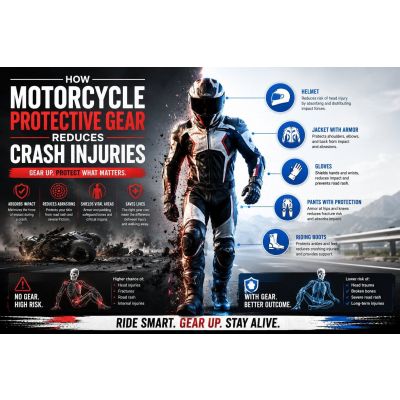
Motorcycle racing gear protects riders through multiple layers: abrasion-resistant leather or textile reduces skin damage during slides, while armor in the shoulders, elbows, knees, hips, and back absorbs impact energy. Reinforced stitching, sliders, and proper fit keep the gear in place during a crash. Protective gear reduces injury risk but does not prevent all crash injuries. Fit, armor placement, and rider behavior all matter. After a crash, damaged gear or armor may need inspection, repair, or replacement.
Table of Contents
- How Abrasion Resistance Protects Your Skin
- Why Impact Armor Matters in a Crash
- Why Fit and Positioning Are Critical for Protection
- Materials and Construction That Support Safety
- What to Check Before Buying Protective Gear
- Common Mistakes Riders Make When Choosing Gear
- When Should You Upgrade Your Motorcycle Gear?
- Final Buying Advice from MotoSpeeds
How Abrasion Resistance Protects Your Skin
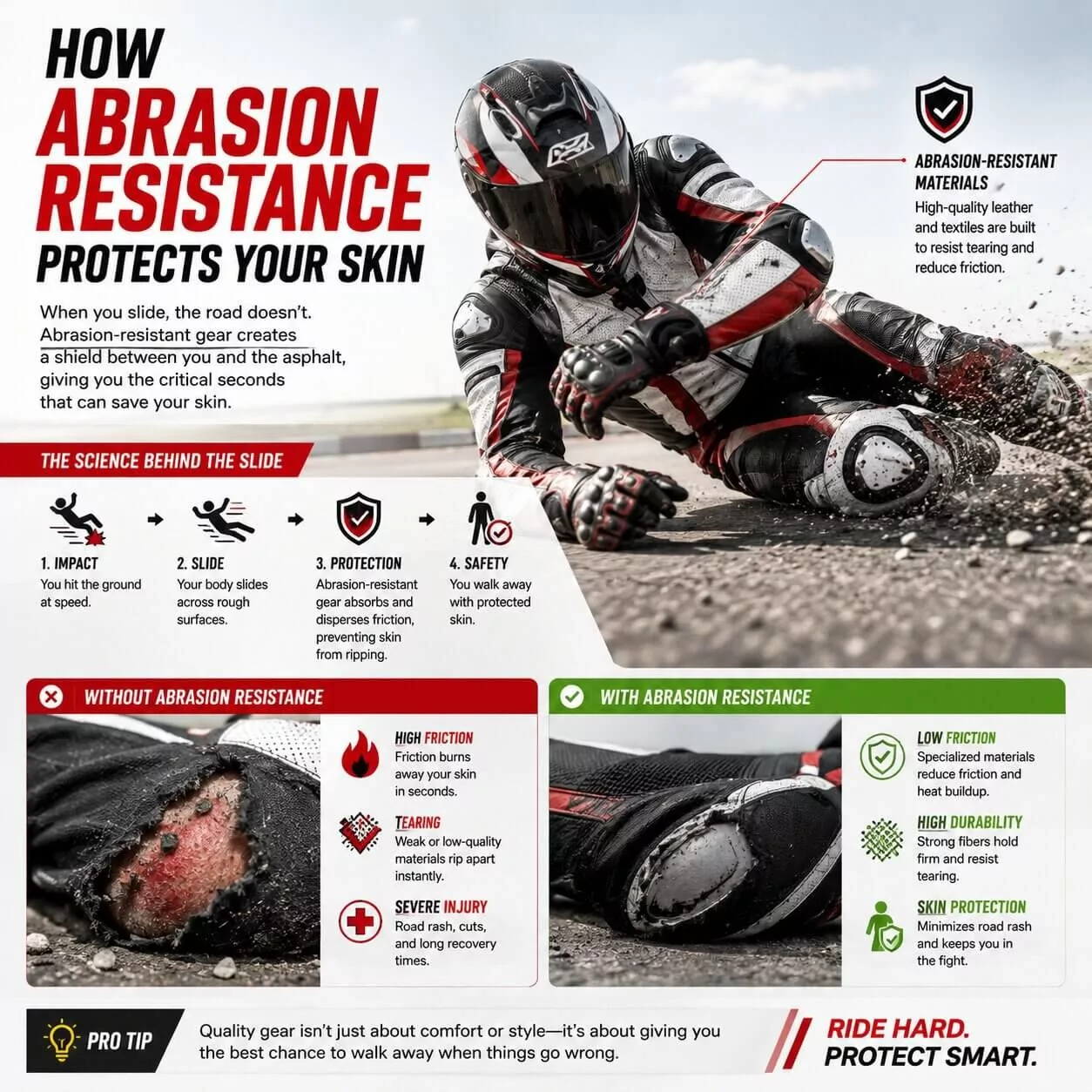
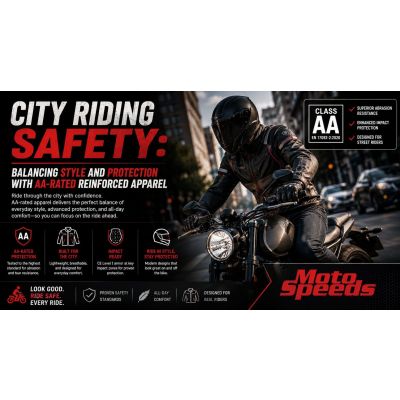
During a slide or crash, your gear contacts the road surface at speed. Abrasion resistance is the gear's ability to withstand that friction and prevent your skin from being scraped away. This is measured and tested under the EN 17092 standard, which classifies full garments—jackets, trousers, and racing suits—into classes AAA, AA, A, B, and C based on how long the material resists tearing and how strong the seams are.
An AA-rated jacket or suit indicates tested abrasion resistance under EN 17092. This means the leather or textile has been tested in a lab for tear strength, abrasion distance, and seam strength. Higher abrasion ratings (AAA and AA) mean the material lasted longer during standardized testing. For street and track riders, AA-rated gear or better provides a meaningful level of abrasion protection.
Leather thickness and quality matter here. Thicker, denser leather resists tearing and abrasion better than thin material. Full-grain leather typically performs better than split leather. Check the product details on the MotoSpeeds website to see the leather thickness, weight, and any abrasion rating listed by the manufacturer.
Reinforced stitching is equally important. Double or triple-stitched seams resist tearing during a slide better than single stitches. Many racing suits use reinforced stitching in high-impact zones like shoulders, elbows, and knees—areas most likely to contact the road during a crash.
Why Impact Armor Matters in a Crash
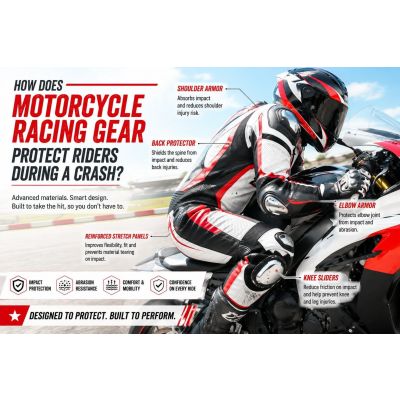
Abrasion resistance stops your skin from being scraped, but impact armor protects your bones and organs from blunt-force injury. Armor is the separate protective inserts placed inside your gear, usually in the shoulders, elbows, knees, hips, and back. Impact armor is tested and rated under the EN 1621 standard, which is separate from the EN 17092 garment rating.
EN 1621 rates armor in two levels: Level 1 and Level 2. Level 2 armor is tested at higher impact speeds and absorbs more force than Level 1. The level indicates how much impact energy the armor is designed to absorb, not whether it prevents all injury. Even Level 2 armor does not guarantee injury prevention—it is designed to reduce the severity of impact injuries.
For track-day riders and sportbike riders, back protection is critical. The back and spine are vulnerable during high-speed crashes. A CE-certified back protector (EN 1621-2) absorbs impact energy along the spine and reduces the risk of serious spinal injury. Many custom racing suits at MotoSpeeds include back armor or have pockets for removable back protectors.
Shoulder and elbow armor protects against collarbone fractures and arm injuries. Knee armor guards against fractures and ligament damage. Hip armor protects the hip bone and pelvis. During a typical slide, riders instinctively put their hands and arms down first, followed by their knees, hips, and shoulders. Armor in all these zones reduces injury severity across the entire impact zone.
Proper armor placement is essential. If armor shifts during a crash or is positioned incorrectly, it cannot protect the area it is meant to cover. Well-fitted gear keeps armor in place. Loose or oversized gear allows armor to move, reducing its protective value. This is why fit matters as much as the armor itself.
Why Fit and Positioning Are Critical for Protection
A racing suit or protective jacket can only protect you if it stays in the right position during a crash. Loose gear shifts, bunches, or rides up, leaving your body exposed. Tight gear restricts movement on the bike and causes discomfort on long rides. The right fit keeps armor aligned with your body while allowing enough freedom to move naturally on the motorcycle.
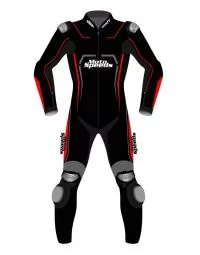
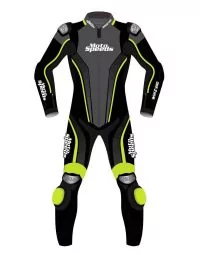
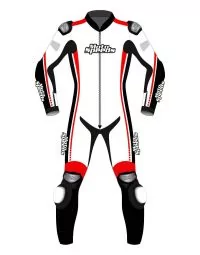
Custom-sized gear from MotoSpeeds is built around your measurements, ensuring armor stays where it needs to be. Off-the-shelf gear in standard sizes may not fit your frame perfectly. A suit that fits well at the shoulders might be loose at the waist, or tight in the chest but baggy in the sleeves. These fit issues compromise protection and comfort.
When trying on gear, move through riding positions. Sit on the bike. Reach forward to grip the handlebars. Lean into a turn. The suit should not ride up, bunch at the waist, or pull at the shoulders. Armor should sit directly over your joints—shoulders over shoulder joints, elbows over elbow joints, knees over knee centers. After sitting on the bike, check that armor has not shifted.
Stretch panels in the chest, sides, and back improve mobility and comfort without sacrificing protection. These panels allow the suit to move with your body while keeping the abrasion-resistant leather in the high-risk zones. A well-designed suit balances protection, fit, and flexibility for both street and track riding.
Materials and Construction That Support Safety
Leather is the traditional choice for motorcycle racing gear because of its natural abrasion resistance and durability. Full-grain leather, which retains the outer skin of the hide, is stronger and more abrasion-resistant than split leather. Thicker leather—typically 1.2 mm or more—provides better protection than thin material. Check the product specifications to see the leather thickness and grade.
Modern textile and mesh materials can also meet high abrasion standards. Some synthetic materials are engineered to resist tearing and abrasion as effectively as leather while offering better breathability for summer riding or longer rides. Both leather and textile gear can achieve AA or AAA ratings under EN 17092, so material choice depends on your riding style, climate, and preference.
Riders who want better protection for city and road use can explore our
for gear designed around safety, fit, and everyday riding comfort.Sliders are another critical safety feature. These are reinforced pads or inserts added to the outside of the suit at the hip, knee, elbow, or shoulder—areas most likely to contact the road first. Sliders are made from durable, low-friction materials that help the rider slide across the pavement rather than catching and rolling. Good sliders reduce the rotational forces that can cause more severe injuries during a crash.
Reinforced stitching throughout the suit—especially in high-stress areas like the crotch, underarms, and seams—prevents the gear from tearing apart during a crash. Double or triple stitching with heavy-duty thread is standard in racing suits. Check that seams are even and tight, not loose or fraying.
Zippers and closures should be sturdy and secure. A broken zipper during a crash can cause the suit to open, exposing your body. Metal zippers are more durable than plastic. YKK zippers are a common quality standard in protective gear.
What to Check Before Buying Protective Gear
Before purchasing a racing suit, jacket, or protective gear, verify the safety ratings and specifications. Check the product label or manufacturer documentation for the EN 17092 class (AAA, AA, A, B, or C). This tells you the abrasion rating of the full garment. Higher classes indicate better abrasion resistance.
Look for armor certification. Check whether the armor inside the suit is CE-certified under EN 1621. The product details should list the armor type, level (Level 1 or Level 2), and which body zones are protected. Back protectors should be listed as EN 1621-2 certified.
Measure yourself accurately. Take measurements of your chest, waist, hips, inseam, arm length, and shoulder width. Compare these to the size chart provided by the manufacturer. If you fall between sizes or have an unusual build, custom sizing is a smart investment. MotoSpeeds offers custom-sized racing suits built to your exact measurements, ensuring fit and armor placement are optimized for your body.
Try the gear on before committing if possible. Sit on a motorcycle or a chair in a riding position. Reach forward. Twist side to side. Check that the suit does not ride up, bunch, or pull at the seams. Make sure armor stays in place when you move. Comfort matters—gear you do not want to wear is gear you might skip, reducing your protection.
Consider your riding style. Track-day riders need maximum protection and may prioritize armor coverage and abrasion rating over breathability. City riders might choose lighter gear that breathes well for daily commuting but still meets safety standards. Sportbike riders often want custom racing suits with aggressive styling and track-focused protection. Choose gear that matches your actual riding.
Common Mistakes Riders Make When Choosing Gear
One common mistake is buying gear based on style or brand name without checking safety ratings. A flashy suit that looks fast might have a lower abrasion rating or cheaper armor than a less stylish option. Always check the EN 17092 class and EN 1621 armor certification, not just the brand or appearance.
Another mistake is choosing gear that is too large or too small. Oversized gear allows armor to shift during a crash. Undersized gear restricts movement and causes discomfort, which leads riders to skip wearing it. The right fit is a balance—snug enough to keep armor in place, loose enough to move naturally on the bike. This is why custom sizing is valuable for riders who do not fit standard sizes well.
Some riders assume that more armor is always better. In reality, too much bulk or weight in the wrong places can reduce comfort and mobility without improving protection. Armor should be positioned over joints and vulnerable zones, not scattered everywhere. A well-designed suit places armor strategically and balances protection with wearability.
Ignoring damage after a crash is risky. Even if you walk away without injury, your gear may have been compromised. Torn leather, cracked armor, or bent sliders reduce the protective value of the suit. After a crash, inspect your gear carefully. Damaged armor may need replacement. Torn leather or seams may need repair. Do not assume the suit is still fully protective if it has visible damage.
Neglecting fit checks during the buying process is another mistake. Many riders buy gear online based on size charts alone, without trying it on or verifying fit. This often results in gear that does not protect as well as intended because armor does not align properly with the rider's body. Take time to check fit before finalizing your purchase.
When Should You Upgrade Your Motorcycle Gear?
If your current gear is damaged from a crash, it is time to upgrade. Even if the damage looks minor, compromised leather, cracked armor, or worn seams reduce protection. Replacement is safer than repair in most cases, especially for armor, which may not perform at its rated level after impact.
If your gear no longer fits, consider upgrading. Weight changes, body development, or simply outgrowing your current suit are good reasons to invest in new gear that fits properly. Ill-fitting gear does not protect as well and is uncomfortable to wear, which means you might skip wearing it.
If you are moving to a higher-intensity riding style—from casual street riding to track days, for example—upgrading to gear with higher abrasion ratings and better armor placement makes sense. Track-focused racing suits are engineered for higher speeds and more aggressive riding than general street gear.
If your current gear is several years old and shows signs of wear—faded leather, loose stitching, worn sliders—it may be time to replace it. Gear quality degrades over time, especially if exposed to sun, heat, or frequent crashes. New gear with current safety ratings and better materials offers improved protection.
Seasonal upgrades are also common. Many riders own both a heavy leather racing suit for cooler months and lighter textile or mesh gear for summer. This allows you to stay protected while managing heat and comfort across different riding seasons.
Final Buying Advice from MotoSpeeds
Choosing protective motorcycle racing gear is an investment in your safety. The best gear combines high abrasion ratings, well-placed impact armor, excellent fit, and quality construction. It should feel comfortable enough to wear consistently, because gear you skip wearing offers no protection.
Start by understanding your riding style and environment. City commuters need different gear than track-day racers. Long-distance riders prioritize comfort alongside protection. Sportbike riders often want custom racing suits built for aggressive styling and maximum track performance.
Verify safety ratings. Check the EN 17092 class for abrasion resistance and the EN 1621 armor certification for impact protection. Do not assume a higher price means better protection—always check the actual ratings and specifications.
Prioritize fit. Well-fitted gear keeps armor in place and protects you better than expensive gear that does not fit. Custom sizing from MotoSpeeds ensures your suit is built around your exact measurements, optimizing both protection and comfort.
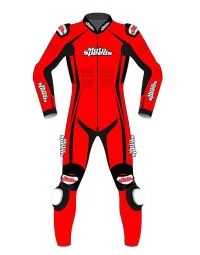
For riders comparing real protective gear and looking to understand how armor placement, reinforced construction, and fit work together, the
demonstrates how quality racing suits are engineered for both safety and performance.Remember that motorcycle racing gear safety reduces injury risk but does not eliminate crash danger. Proper fit, regular inspection, and responsible riding behavior all matter. After a crash, inspect your gear for damage and replace or repair it as needed. Ride with a better understanding of how your gear works, and make informed decisions that support safer riding on the road or track.
Frequently Asked Questions
What does the EN 17092 rating mean for my protective gear?
EN 17092 is a European standard that tests and classifies full motorcycle garments (jackets, trousers, and racing suits) based on abrasion resistance, tear strength, and seam strength. Gear is rated into classes AAA, AA, A, B, and C, with AAA being the highest. The rating indicates how long the material resisted tearing during lab testing. AA-rated gear or better is recommended for street and track riders. Check your product label or manufacturer documentation to see the EN 17092 class of your gear.
Is Level 2 armor better than Level 1 armor?
Level 2 armor is tested at higher impact speeds than Level 1 and is designed to absorb more force. Level 2 provides a higher level of impact protection. However, neither level prevents all injuries. The level indicates the armor's tested performance under EN 1621 standards, not a guarantee of injury prevention. For track-day riders and sportbike riders, Level 2 armor in critical zones like the back, shoulders, and knees is recommended. Always check the product specifications to see which armor level is included in your gear.
Why does fit matter more than I thought?
Fit directly affects how well your gear protects you. If your suit is too loose, armor shifts during a crash and may not cover the area it is meant to protect. If it is too tight, you feel restricted on the bike and may choose not to wear it, eliminating protection entirely. Proper fit keeps armor aligned with your joints and body zones, ensures the abrasion-resistant material stays in contact with your skin during a slide, and makes the gear comfortable enough to wear consistently. Custom sizing ensures your gear is built for your body, not a generic average.
Can I repair my gear after a crash, or do I need to replace it?
Minor damage like small tears in the leather can sometimes be repaired by a professional. However, damaged armor should be replaced, not repaired, because its protective properties may be compromised after impact. After a crash, inspect your gear carefully for cracks in the armor, torn leather, broken stitching, or bent sliders. If the damage is extensive or affects protective zones, replacement is safer than repair. Always check with the manufacturer or a professional gear repair service before deciding whether repair or replacement is the right choice.
What is the difference between leather and textile motorcycle gear?
Leather is traditional, durable, and naturally abrasion-resistant. Full-grain leather is stronger than split leather. Textile and mesh materials are engineered to meet the same abrasion standards as leather (EN 17092) and often offer better breathability for hot weather. Both can be AA-rated or AAA-rated. Your choice depends on your climate, riding style, and personal preference. For summer riding, textile gear may be more comfortable. For maximum abrasion protection and durability, thicker leather is a solid choice. Check the product specifications to compare abrasion ratings and thickness regardless of material.
How do I know if my gear is still protective after a crash?
After a crash, visually inspect your gear for damage: torn or scraped leather, cracks or dents in armor, broken stitching, or bent sliders. Even if you walked away without injury, your gear may have been compromised. Damaged armor loses its protective value and should be replaced. Torn seams or leather can be repaired by a professional, but extensive damage usually means replacement is safer. If you are unsure, contact the manufacturer or a professional gear repair service. Do not assume your suit is still fully protective if it shows visible damage.
Should I buy custom-sized gear or standard sizes?
If you fit a standard size well, off-the-shelf gear works fine. However, if you are taller, shorter, wider, or have an unusual build, custom sizing is a smart investment. Custom gear is built to your exact measurements, ensuring armor aligns perfectly with your joints and body zones, fit is optimized for your frame, and comfort is maximized. MotoSpeeds offers custom-sized racing suits that are engineered for your body. The cost is higher than standard sizes, but the fit, protection, and comfort benefits are significant for riders who do not fit standard sizes well.