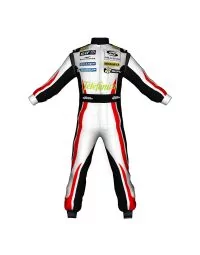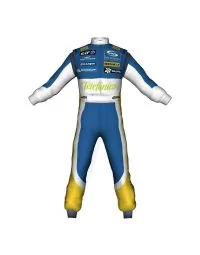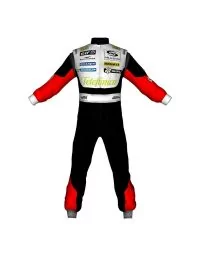
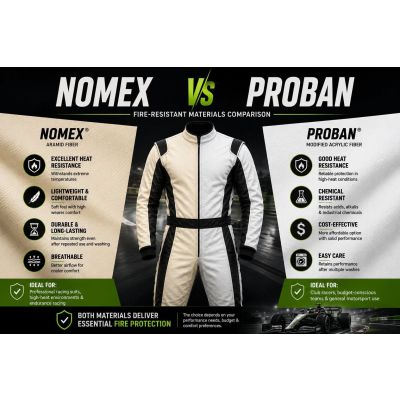
When you're shopping for a racing suit, you'll quickly notice that fire-resistant materials come in different types. The two most common options are Nomex and Proban-treated fabrics. Both are designed to support driver protection in the cockpit, but they work differently and suit different racing situations. Understanding the differences between Nomex and Proban helps you choose gear that matches your racing discipline, event rules, budget, and comfort needs.
This comparison guide walks you through the key differences, certification considerations, fit and comfort factors, and practical decision-making advice. Whether you're buying your first racing suit or upgrading to better gear, knowing how these materials compare helps you make a smarter purchase.
Quick Comparison Answer
Nomex is an inherently fire-resistant aramid fiber built into the fabric itself. It provides consistent flame resistance throughout the material's life and is commonly used in professional and club racing gear. Proban is a chemical treatment applied to cotton or cotton-blend fabrics to make them fire-resistant. Both options can meet motorsport safety standards when properly certified, but they differ in durability, heat feel, cost, and best-use scenarios. Entry-level drivers often start with Proban-treated gear for affordability and basic event compliance. Frequent racers or drivers in hotter cockpits may prefer Nomex for better long-term durability and consistent protection. The right choice depends on your racing frequency, event requirements, cockpit comfort, and budget.
Table of Contents
- What Is the Main Difference Between Nomex and Proban?
- How Do Certification and Event Rules Affect Your Choice?
- Which Option Offers Better Fire-Resistant Protection?
- Which Option Fits Better in the Cockpit?
- Do You Need a Full Racing Gear Setup?
- Which Option Gives Better Long-Term Value?
- Pros and Cons of Each Option
- Common Comparison Mistakes Buyers Should Avoid
- Which Option Should You Choose?
- Final Comparison Advice from MotoSpeeds
What Is the Main Difference Between Nomex and Proban?
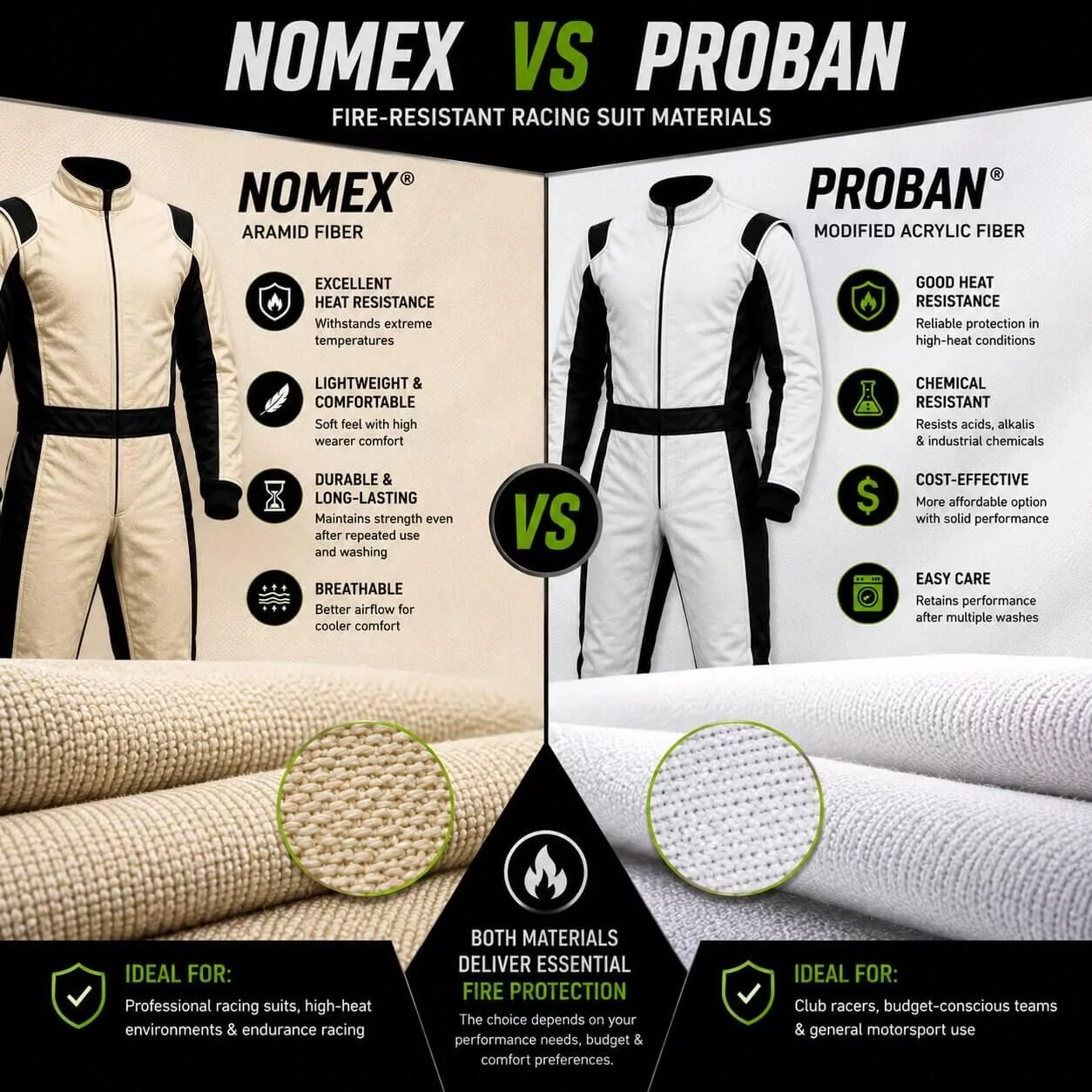
The core difference is how each material becomes fire-resistant. Nomex is an aramid fiber manufactured to be inherently fire-resistant from the start. The flame resistance is built into the fiber structure itself, not applied later. This means Nomex maintains its protective properties throughout the suit's life, even after many wash cycles.
Proban is a chemical treatment applied to regular cotton or cotton-blend fabrics to make them fire-resistant. The treatment is added during manufacturing, but it can gradually reduce with repeated washing and use. This is an important distinction when thinking about long-term durability and how often you'll wash your gear.
Both materials can meet motorsport safety standards when properly constructed and certified. The difference is not about which one is inherently safer, but rather how they age, feel in the cockpit, and suit different racing situations.
How Do Certification and Event Rules Affect Your Choice?
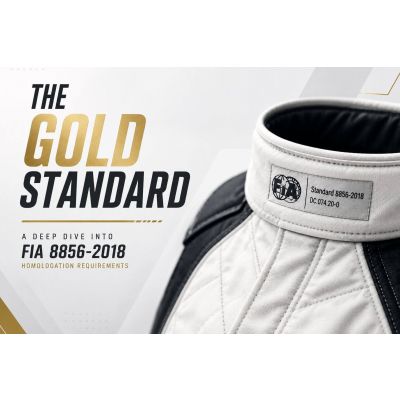
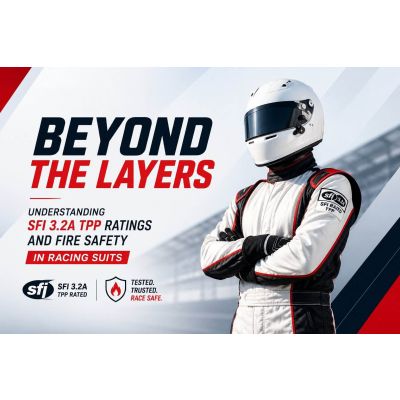
Before you buy any racing suit, check your event rulebook. Many racing organizations require SFI or FIA certification for competition use. These are common motorsport safety certification systems that test gear against defined standards. Event rules may specify which rating or certification label your suit must carry.
Both Nomex and Proban suits can be certified to meet these standards. The certification label on your suit shows it has been tested and meets the required standard, but certification does not mean the suit is legal for every event. Different events may require different ratings or certification types. Always check the event rulebook, product label, certification patch, and manufacturer documentation before buying.
This is where many buyers get confused. A suit certified for one racing series may not meet the requirements for another. Neither Nomex nor Proban automatically qualifies you for any event. You must verify the specific certification your event requires and confirm the suit carries that label.
Which Option Offers Better Fire-Resistant Protection?
Both Nomex and Proban are designed to slow heat transfer and support driver protection in a fire event. Neither material is fireproof or completely prevents burn risk. Protection depends on material quality, construction, fit, layers, condition, and the racing environment.
Nomex's inherent fire resistance means it does not degrade with washing. If you race frequently and wash your suit regularly, Nomex maintains more consistent protective properties over time. Proban's chemical treatment can diminish with repeated washing and extended use, which may reduce its protective performance if the suit is used heavily for many seasons.
For occasional drivers or those in cooler racing environments, Proban-treated gear can work well when properly maintained and inspected before race day. For drivers in hot cockpits or those who race frequently, Nomex may offer more reliable long-term performance because the fire resistance does not degrade.
In either case, protection also depends on proper fit, correct layers, condition before racing, and what happens after an incident. A damaged suit may need inspection, servicing, or replacement depending on the damage. Neither material eliminates burn risk or makes racing risk-free.
Which Option Fits Better in the Cockpit?
Fit is where real comfort and coverage happen. A suit that does not fit well in the cockpit can shift during driving, leave gaps at the wrists or ankles, or restrict your movement on the pedals and steering wheel. This is where many buyers focus too much on material and not enough on actual wear.
Nomex suits tend to have a slightly stiffer feel when new, but they soften with use. Proban-treated suits often feel softer and more flexible right out of the box, which some drivers prefer for immediate comfort. However, both materials can be constructed in ways that feel good or restrictive depending on the suit's design, seams, and panel layout.
The real test is trying the suit on while seated. Check how the suit feels with your hands on the steering wheel, your feet on the pedals, and your body in your car's driving position. Look for gaps at the wrists, cuffs, and ankles. Make sure the suit does not bunch up or pull when you move. If the suit is made to order, you can specify custom sizing for better cockpit fit.
Drivers comparing fire-resistant suits, gloves, shoes, and related motorsport apparel can explore our
for car racing gear built around fit, comfort, and safety awareness.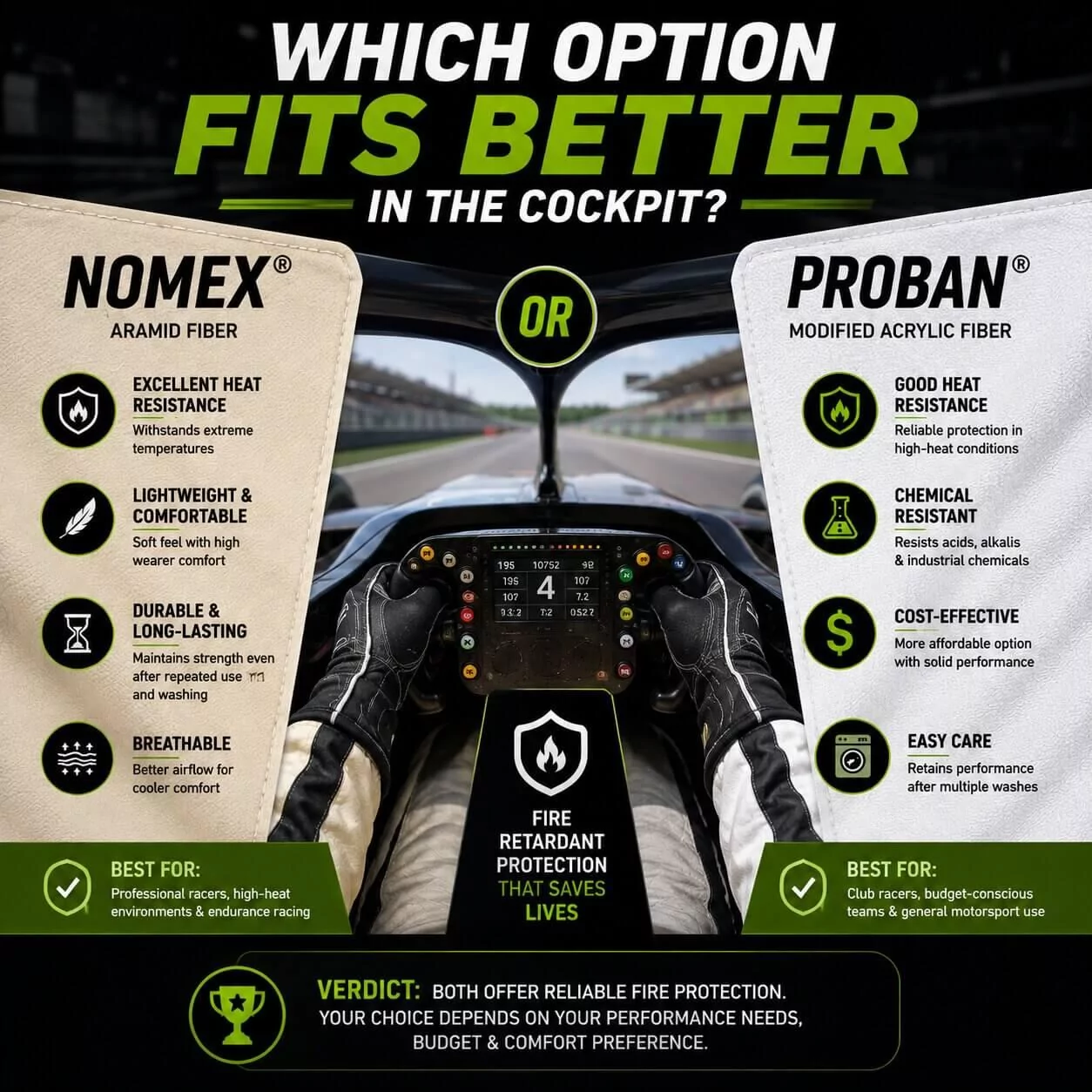
Do You Need a Full Racing Gear Setup?
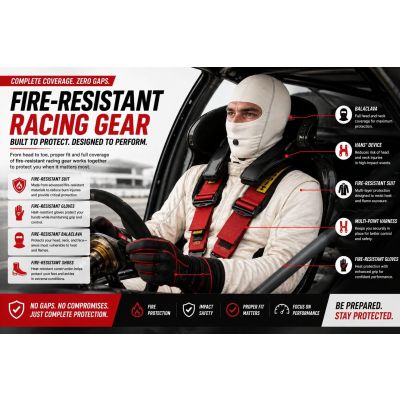
Your racing suit is one piece of a complete protective system. Depending on your event rules and racing discipline, you may also need racing gloves, racing shoes, a balaclava, racing socks, and fire-resistant underlayers. Each piece should work together with your suit for proper coverage and comfort.
For example, your gloves should overlap with your suit cuffs to eliminate gaps at the wrists. Your shoes should fit comfortably on the pedals and overlap with your pant legs. Your balaclava should fit under your helmet and work with your suit's neck opening. If your event requires fire-resistant underlayers, you'll want them to be compatible with your suit's fit and heat management.
This is where entry-level and upgraded gear setups differ. Entry-level options may give you a suit that meets basic event requirements, but you may need to buy gloves, shoes, and other gear separately. Upgraded or custom gear setups let you match your suit, gloves, shoes, and underlayers for better overall coverage and cockpit comfort.
Before buying, check your event rulebook to see what gear is required. Some events require full coverage including suit, gloves, shoes, balaclava, and socks. Others may have fewer requirements. Knowing this helps you plan your complete gear purchase and budget.
Which Option Gives Better Long-Term Value?
Long-term value depends on how often you race, how you care for your gear, and how long you expect to use it. A cheap suit that does not fit well and does not meet event requirements is not a good value, even if it costs less. A more expensive suit that fits perfectly, meets all event requirements, and lasts many seasons is better value.
Nomex suits generally offer better long-term value for frequent racers because the fire-resistant properties do not degrade with washing. If you race multiple times per season and wash your suit regularly, Nomex maintains consistent protective performance. This means you can race for many seasons with the same suit without worrying that the fire resistance is wearing out.
Proban-treated suits offer good value for occasional drivers or those on a tighter budget. If you race a few times per season and take care of your gear, Proban can work well for several seasons. However, if you race very frequently or in very hot conditions, you may find that Proban-treated gear needs replacement sooner than Nomex.
Value also depends on construction quality, seam durability, zipper strength, and how well the suit holds up to regular use and washing. A well-made suit in either material lasts longer than a poorly constructed suit. Check the construction details, not just the material name.
Pros and Cons of Each Option
Nomex Racing Suits
Pros:
- Inherent fire resistance does not degrade with washing or use
- Better long-term value for frequent racers
- Consistent protective performance throughout the suit's life
- Widely available in professional and club racing gear
- Works well in hot cockpits or long race sessions
- Many custom sizing and upgrade options available
Cons:
- Often costs more than Proban-treated alternatives
- May feel stiffer when new, though softens with use
- Wider range of options can make comparison harder
- Still depends on proper fit, certification, and condition
- Custom sizing may take longer if made to order
Proban-Treated Racing Suits
Pros:
- Often more affordable than Nomex alternatives
- Typically feels softer and more flexible right away
- Can meet event requirements when properly certified
- Good starting point for entry-level drivers
- Lighter weight may feel more comfortable in mild conditions
- Easier to find standard sizing options
Cons:
- Fire-resistant treatment can diminish with repeated washing
- May not be ideal for very frequent racers or hot cockpits
- Protection may degrade faster than Nomex with heavy use
- Fit and certification details vary by product
- May need replacement sooner if raced frequently
- Less customization available in some product lines
Common Comparison Mistakes Buyers Should Avoid
Mistake 1: Choosing based only on price. The cheapest suit is not always the best value. A suit that does not fit, does not meet your event requirements, or falls apart after a few seasons costs more in the long run. Compare fit, certification, construction, and durability, not just the price tag.
Mistake 2: Ignoring certification labels. Just because a suit is fire-resistant does not mean it meets your event's specific certification requirements. Check the product label, certification patch, and event rulebook before buying. A suit certified for one racing series may not qualify for another.
Mistake 3: Assuming all suits fit the same. Suit fit varies widely by brand, model, and construction. A suit that fits perfectly for one driver may be too tight, too loose, or uncomfortable for another. Always try the suit on while seated in a driving position if possible. If buying online, check the return policy and sizing details carefully.
Mistake 4: Forgetting about gloves, shoes, and underlayers. Your suit is one piece of a complete protective system. If your event requires gloves, shoes, balaclava, or underlayers, factor these into your total gear budget and compatibility. A suit alone does not meet all event requirements for many racing disciplines.
Mistake 5: Not checking the suit's condition before race day. Before every race, inspect your suit for damage, wear, or loose seams. If the suit has been in an incident, it may need inspection, servicing, or replacement. A suit that looks fine on the hanger may have hidden damage that affects its protective performance.
Mistake 6: Choosing based on brand name or looks alone. A suit that looks cool but does not fit your cockpit or meet your event rules is not a smart choice. Focus on fit, certification, construction quality, and how the suit performs in your specific racing situation.
Mistake 7: Not considering your racing frequency. If you race once or twice a year, Proban-treated gear may work fine. If you race multiple times per season, Nomex may offer better long-term value and consistent protection. Match your gear choice to how often you actually race.
Which Option Should You Choose?
Choose Proban-Treated Gear If...
You're buying your first racing suit and want an affordable option that meets basic event requirements. Proban works well for entry-level drivers, occasional racers, and those on a tighter budget. It's a practical starting point that helps you build a first gear setup without a large investment. Make sure the suit is properly certified for your event, fits well while seated, and comes with clear care instructions to maintain the fire-resistant treatment.
You race in mild or cool conditions and do not need heavy protective coverage. Proban-treated gear often feels lighter and more flexible, which some drivers prefer for comfort in lower-heat environments. If your cockpit stays relatively cool and you race occasionally, Proban-treated gear can work well for several seasons with proper care.
You want immediate comfort and flexibility without a break-in period. Proban-treated suits tend to feel softer right away, while Nomex suits may feel stiffer when new. If comfort out of the box matters to you, Proban is worth considering.
Choose Nomex Gear If...
You race frequently or compete in multiple events per season. Nomex's inherent fire resistance does not degrade with washing, so you get consistent protective performance throughout the suit's life. This makes Nomex better value for racers who use their gear regularly and expect it to last many seasons.
You race in a hot cockpit or during long race sessions. Nomex is commonly used in professional and high-heat racing environments because it maintains its protective properties even in demanding conditions. If your racing involves extended time in the car or high cockpit temperatures, Nomex is a solid choice.
You want better long-term durability and do not want to worry about fire-resistant treatment degrading. With Nomex, you know the protective properties stay consistent. You can focus on fit, comfort, and condition rather than worrying about the material aging.
You're willing to invest more upfront for better long-term value. Nomex costs more initially, but for frequent racers, the investment pays off over many seasons. If you plan to race seriously for years, Nomex is often the smarter financial choice.
You need custom sizing or want to match your suit with custom gloves, shoes, and underlayers. Nomex gear is more commonly available in custom options, which helps you build a complete, well-fitted gear system.
Final Comparison Advice from MotoSpeeds
The choice between Nomex and Proban comes down to your racing frequency, event requirements, cockpit needs, and budget. Neither option is inherently unsafe or wrong. Both can meet motorsport safety standards when properly certified and maintained. The better choice is the one that matches your specific racing situation.
Entry-level drivers often start with Proban-treated gear because it offers a clear, affordable entry point that meets basic event requirements. This helps you get on the track without a large investment while you figure out what you need.
Frequent racers and drivers in demanding cockpits typically benefit from Nomex because the consistent fire-resistant properties and long-term durability make it better value over time. If you plan to race seriously for many seasons, Nomex is often the smarter choice.
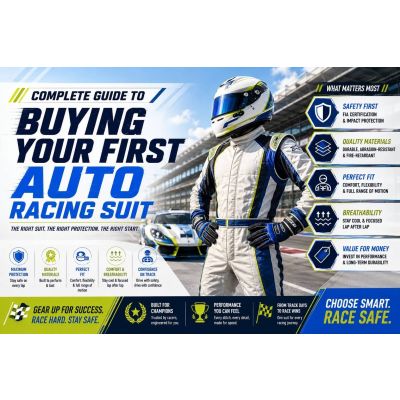
Before buying any racing suit, take these steps: Check your event rulebook for specific certification requirements. Try the suit on while seated in a driving position if possible. Verify the certification label matches your event's requirements. Plan your complete gear setup, including gloves, shoes, and underlayers. Inspect the suit's construction, seams, and zipper quality. Factor in long-term care and washing instructions.
For drivers comparing real gear details before ordering, the shows how material, fit, and protective features work together in real racing gear.
Remember, the right racing suit is the one that fits your cockpit, meets your event rules, matches your racing frequency, and supports your comfort and protection needs. Whether you choose Nomex or Proban, focus on fit, certification, construction quality, and how well the gear performs in your specific racing situation. MotoSpeeds is here to help you compare car racing gear by focusing on what actually matters: fit, durability, safety awareness, and real motorsport performance.
Frequently Asked Questions
What car racing gear do beginners need first?
Beginners typically need a racing suit that meets their event's certification requirements, racing gloves, racing shoes, and a balaclava if required by event rules. Start by checking your event rulebook to see exactly what gear is mandatory. Many entry-level drivers begin with a Proban-treated suit because it's affordable and meets basic requirements. As you race more, you can upgrade to better-fitting gear or add layers for improved comfort. Do not buy based on looks or brand alone. Focus on fit while seated, proper certification, and whether the gear meets your specific event rules.
Is a fire-resistant racing suit the same as a fireproof suit?
No. Fire-resistant and fireproof are very different. A fire-resistant racing suit is designed to slow heat transfer and support driver protection in a fire event, but it does not make you fireproof or eliminate burn risk. Fire-resistant materials are tested to standards that define how they perform under specific conditions, but no racing suit is completely fireproof or prevents all burns. Proper fit, layers, condition, and care all matter. Always inspect your suit before racing, and understand that protection depends on many factors beyond just the material.
How do SFI and FIA labels affect buying decisions?
SFI and FIA are common motorsport safety certification systems. A label on your suit shows it has been tested to a defined standard, but certification does not mean the suit is legal for every event. Different racing series require different ratings or certification types. Before buying, check your event rulebook to see which specific certification your event requires. Verify the suit carries that exact label. A suit certified for one racing series may not meet the requirements for another. Always check the product label, certification patch, and manufacturer documentation before competition use.
Should I buy standard size or custom car racing gear?
Standard sizing works well for many drivers and is usually faster to order and less expensive. Custom sizing is worth considering if you have non-standard proportions, a very tight or very loose cockpit fit, or want a perfectly tailored suit. Custom gear takes longer to make and costs more, but it can provide significantly better comfort and coverage if standard sizes do not fit well. Try standard options first if possible. If standard sizes consistently feel uncomfortable or leave gaps, custom sizing may be worth the investment for long-term racing comfort.
Do I need racing gloves, shoes, and balaclava with my suit?
It depends on your event rules. Some racing series require full coverage including suit, gloves, shoes, balaclava, and socks. Others may have fewer requirements. Check your event rulebook before buying. Even if not required, many drivers choose to buy gloves, shoes, and a balaclava to complete their protective setup and improve cockpit comfort. Make sure gloves overlap with suit cuffs, shoes fit comfortably on pedals and overlap with pant legs, and the balaclava works with your helmet fit. A complete gear system works better together than individual pieces bought separately.
What should I check before buying car racing gear?
Before buying, check your event rulebook for specific certification requirements. Try the suit on while seated in a driving position to verify fit and movement. Look for gaps at the wrists, cuffs, ankles, and neck. Check that the suit does not restrict steering or pedal movement. Verify the certification label matches your event's requirements. Inspect the construction, seams, zipper quality, and overall durability. Read care instructions to understand how to wash and maintain the gear. Compare fit, construction, and certification, not just price. If buying online, check the return policy in case the suit does not fit as expected.
How do I know if my racing gear fits correctly in the cockpit?
The best way to check fit is to wear the suit while seated in your car in your actual driving position. Place your hands on the steering wheel and your feet on the pedals. Check that there are no gaps at the wrists, cuffs, ankles, or neck. Make sure the suit does not bunch up, pull, or restrict your movement. Verify that gloves overlap with suit cuffs and shoes overlap with pant legs for proper coverage. Move your arms and legs to confirm full range of motion. A suit that fits well standing up may feel uncomfortable or restrictive when seated. Always test cockpit fit before committing to a purchase.