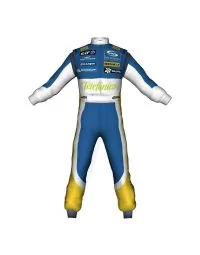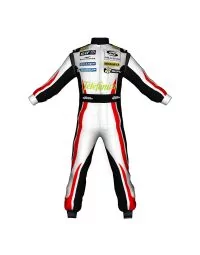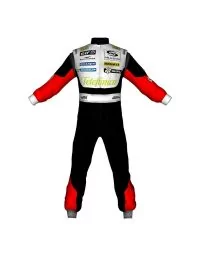
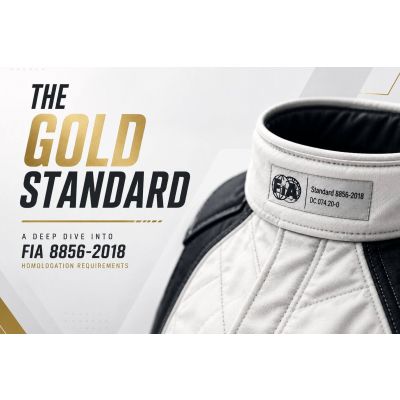
When you're preparing for your first race or upgrading your gear, understanding the FIA 8856-2018 standard becomes crucial to making informed safety decisions. This internationally recognized homologation requirement sets the performance criteria for fire-resistant racing suits, gloves, shoes, balaclavas, and underlayers used in motorsport competition. The FIA 8856-2018 standard ensures that your car racing gear has undergone rigorous testing to meet defined safety benchmarks, but it's important to know that certification alone does not eliminate risk or guarantee injury prevention. Learning what this standard covers, how to verify compliance, and why it matters for your specific racing discipline helps you select gear that meets event requirements and supports driver protection. This guide explains the FIA 8856-2018 standard, what homologation means, what to look for on certification labels, and how to ensure your racing apparel meets your event's safety rules.
Quick Safety Summary
The FIA 8856-2018 standard is a motorsport homologation specification that tests fire-resistant racing apparel for flame resistance, heat protection, and material durability. Gear certified to this standard has been tested to defined performance criteria, but certification does not guarantee protection or prevent injury. Drivers should verify that their complete gear system—suit, gloves, shoes, balaclava, and underlayers—carries appropriate FIA certification markings, matches their event requirements, and fits correctly while seated in the car. Proper layering, gear condition, and correct use all affect how well protective equipment performs. Always check product labels, event rulebooks, and manufacturer documentation before competition use.
Table of Contents
- Why Car Racing Gear Matters for Driver Safety
- Understanding Homologation and the FIA 8856-2018 Standard
- Fire-Resistant Materials and Certification Checks
- Fit, Layers, and How They Affect Protective Performance
- Inspection, Maintenance, and Common Mistakes
- How MotoSpeeds Supports Car Racing Gear Buyers
- Final Safety Guide Before You Buy
Why Car Racing Gear Matters for Driver Safety
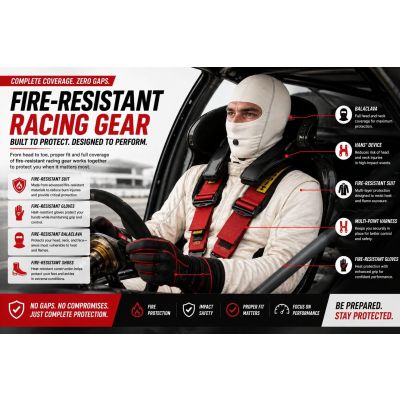
Car racing gear serves a specific purpose in motorsport: to reduce burn risk and protect against abrasion and contact hazards in the cockpit. Unlike street clothing, fire-resistant racing suits are engineered from materials designed to slow heat transfer and resist ignition. Racing gloves, shoes, balaclavas, and underlayers work together as a layered system to support overall driver protection.
Motorsport environments present unique risks that regular clothes cannot address. Cockpit fires, fuel spills, hot surfaces, and sharp edges create hazards where fire-resistant racing apparel can provide additional protection time. Fire-resistant racing suits are designed to withstand exposure to flame and heat longer than conventional fabric, potentially giving drivers critical seconds to exit a vehicle or for rescue personnel to respond. Event safety rules require specific certification levels precisely because this protection matters—most sanctioning bodies mandate FIA 8856-2018 compliance or equivalent standards for competition.
Gear condition, fit, and compatibility between suit components also affect protective performance. A suit that is too loose may allow air gaps that reduce insulation; one that is too tight restricts movement and can tear during an incident. Worn seams, damaged zippers, or faded certification labels may indicate gear that no longer meets standard requirements. Understanding why these details matter helps you evaluate gear before you buy and before you race.
Understanding Homologation and the FIA 8856-2018 Standard
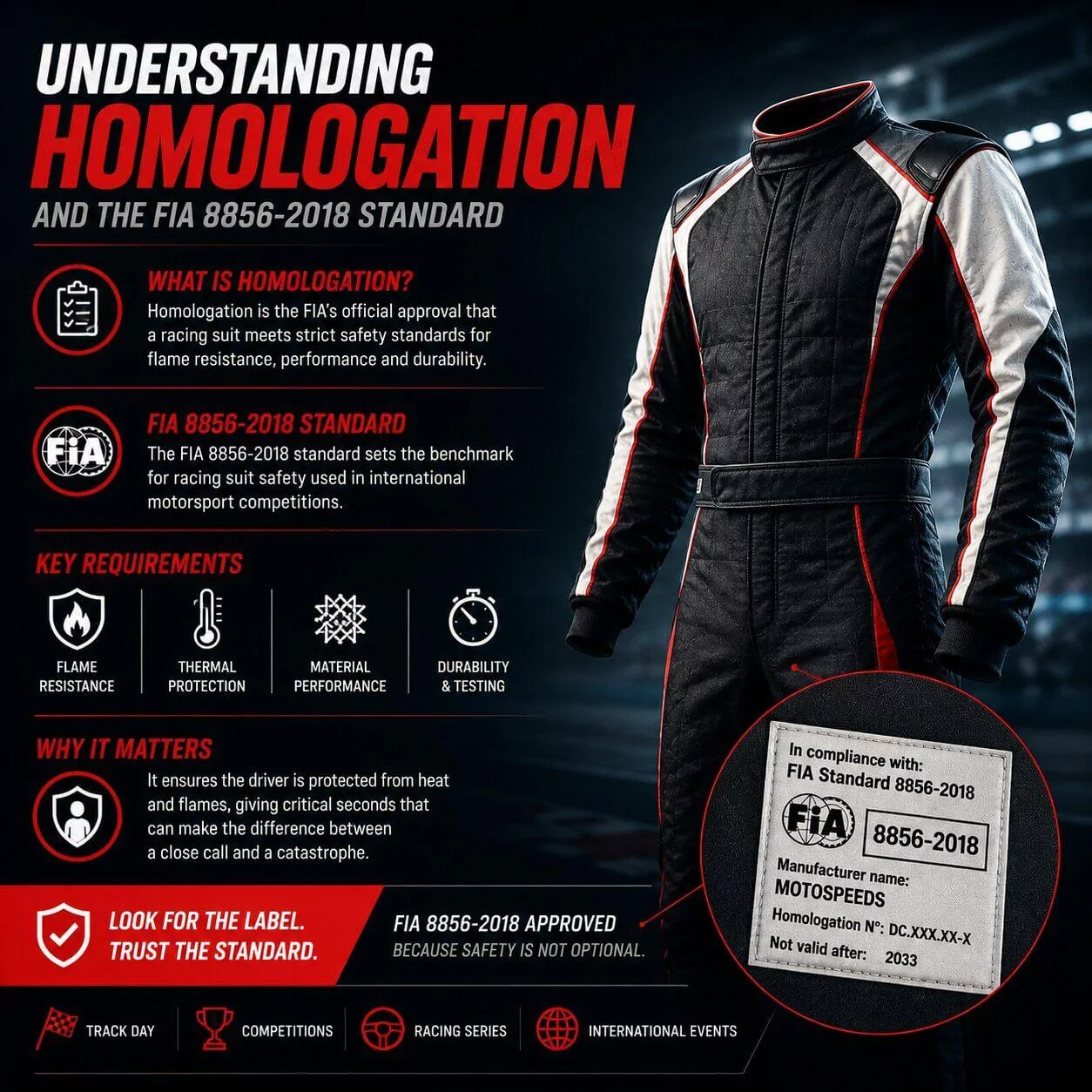
Homologation is the process of testing and certifying that equipment meets a defined safety standard. The FIA 8856-2018 standard sets specific criteria for how fire-resistant racing apparel should perform when exposed to flame, heat, and contact. Manufacturers test their products against these criteria in independent laboratories, and when gear passes, it receives certification with an FIA label or patch sewn into the garment.
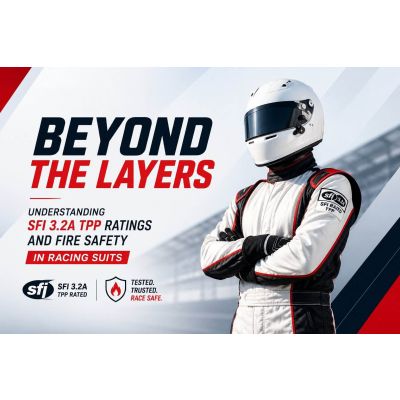
The FIA 8856-2018 standard evaluates fire-resistant materials for their ability to resist ignition, limit flame spread, and manage heat transfer. It tests how well fabrics maintain their protective properties and how they perform in multi-layer configurations. Certification helps show that gear has been tested to a defined standard, but it does not guarantee injury prevention. Protection depends on the correct rating, fit, condition, layers, and racing environment.
Different racing disciplines may have different homologation requirements. Circuit racing, drag racing, rally, and karting might require specific FIA ratings or validity periods. Some events require annual recertification or have specific rating requirements that change over time. Always check your event rulebook or contact your sanctioning body before ordering gear to confirm which certification standards are required for your racing discipline. Using non-compliant gear in sanctioned events can result in disqualification or safety violations, so verification is essential.
Fire-Resistant Materials and Certification Checks
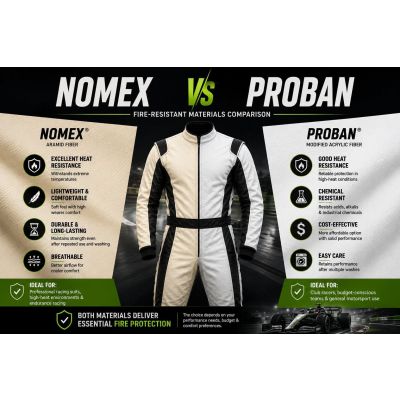
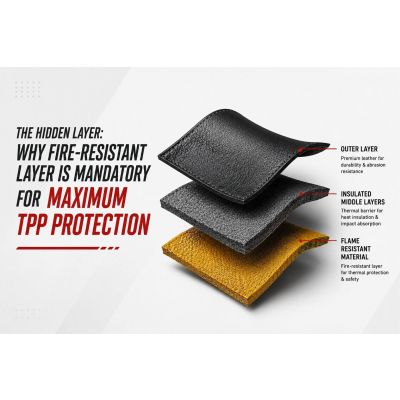
Fire-resistant materials like Nomex and other aramid fabrics are commonly used in FIA 8856-2018 certified racing apparel because they naturally resist ignition and slow heat transmission. Multi-layer construction—combining outer shells, intermediate layers, and liners—provides better heat protection than single-layer designs. However, not all racing gear uses the same materials or construction methods, so checking product documentation is essential.
When examining a racing suit or other gear for FIA 8856-2018 compliance, look for the certification label or patch. This label is typically sewn into the suit, gloves, shoes, or balaclava and displays the FIA logo along with certification details. The label confirms that the product has been tested and approved to meet the standard's performance requirements. Check the label for the FIA logo, standard number, manufacturer name, and any expiration or validity date. Some events require current certification, so knowing when your gear was certified and whether it meets current event rules is important.
Do not assume all racing gear is FIA 8856-2018 certified. Some products may be certified to other standards or may not carry any motorsport certification at all. Always ask the seller or manufacturer to confirm certification status before ordering. If a product listing does not clearly state FIA 8856-2018 compliance, request documentation or product details that show the certification. A certified racing suit works best when paired with certified gloves, shoes, and a balaclava that meet the same or similar standards. Mixing certified and non-certified layers can reduce overall protective performance.
Fit, Layers, and How They Affect Protective Performance
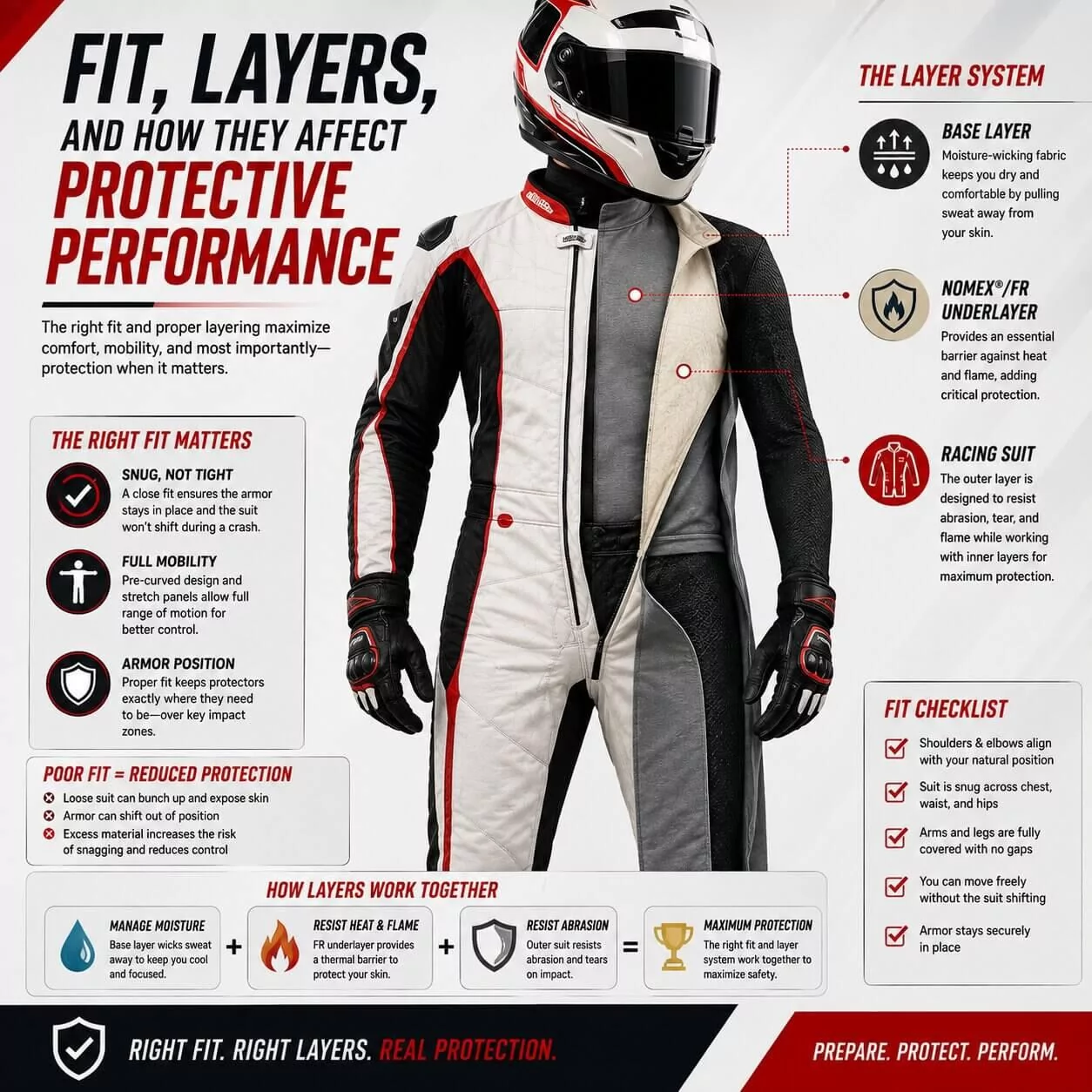
Fit is not just about comfort—it directly affects how well protective gear works. A racing suit must fit snugly while you are seated in your race car, with sleeves that cover your wrists when your arms are at the steering wheel and pant legs that cover your ankles. Cuffs should overlap with your gloves to prevent skin exposure at the wrists. Shoes should fit securely so they do not slip during hard acceleration or braking, and the pant leg should cover the top of your shoe.
Many drivers make the mistake of trying on a racing suit while standing. This can hide fit problems that become obvious once you sit down. Sleeves may be too long or too short; the suit may bunch at the waist or restrict shoulder movement. If possible, sit in a race seat or simulate a driving position when trying on a suit. Check that you can grip the wheel, shift gears, and move your arms without the suit pulling or bunching.
Layering affects both comfort and protection. Base layers (racing underwear) wick moisture and add insulation. A balaclava protects your neck and face and should fit under your helmet without creating pressure points. Racing gloves should allow enough grip and feel to operate the car safely. The right combination of layers keeps you comfortable during long races and supports the protective performance of your outer suit. All layers should be designed to work together as a system and should carry appropriate FIA certification.
Inspection, Maintenance, and Common Mistakes
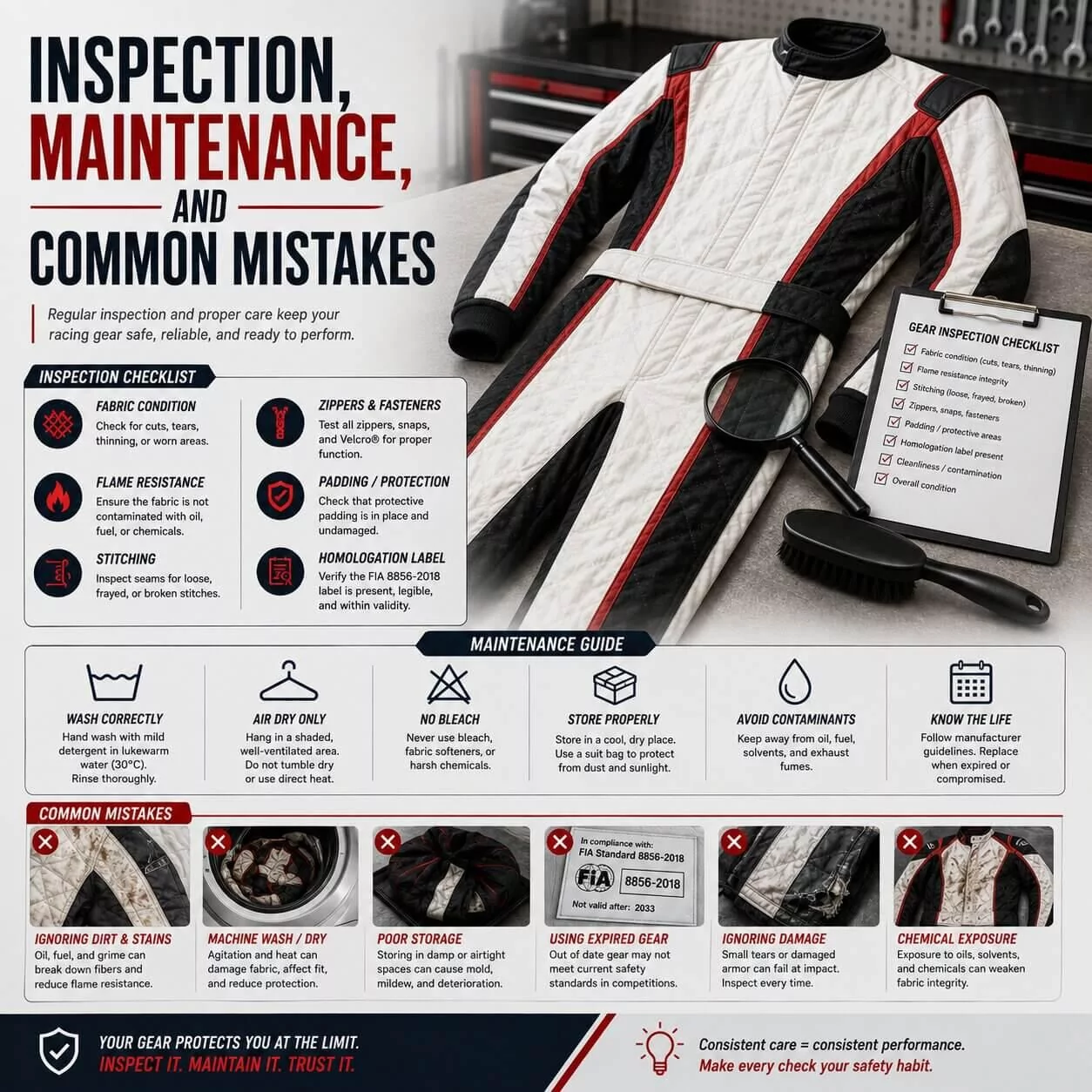
Before every race, inspect your gear for damage. Check seams, zippers, and cuffs for tears or separation. Look for discoloration, stains, or chemical contamination that might indicate the suit has been exposed to fuel, oil, or other substances. A damaged or contaminated suit should not be worn in competition. If your suit or gloves have been exposed to fire or high heat during a previous incident, they should be inspected by the manufacturer or replaced—fire-resistant materials can lose effectiveness after heat exposure.
Store your gear in a cool, dry place away from direct sunlight, heat sources, and chemicals. Follow the care label instructions carefully; some gear requires hand washing while others can be machine washed. Never dry-clean fire-resistant racing apparel unless the manufacturer specifically approves it, as some cleaning chemicals can damage protective coatings or fibers. Proper storage and care help your gear maintain its protective properties and certification validity throughout the racing season.
Common mistakes that reduce the effectiveness of FIA 8856-2018 certified gear include:
- Choosing by looks only: Check certification labels, material composition, and fit in a driving position, not just appearance.
- Ignoring certification labels: Always verify that your suit, gloves, shoes, and balaclava carry FIA 8856-2018 certification appropriate for your event.
- Wearing the wrong underlayers: Use racing underwear and balaclavas designed to work with your suit; street clothing can reduce protective performance.
- Buying the wrong fit: A suit that fits well standing up may be too tight or too loose while seated; always test fit in a driving position.
- Skipping inspection: Damaged, worn, or contaminated gear should be reviewed before use and replaced if necessary.
How MotoSpeeds Supports Car Racing Gear Buyers
MotoSpeeds offers a wide range of car racing gear designed for drivers who want to compare fit, materials, comfort, and protective features before ordering. The selection includes fire-resistant racing suits, auto racing suits, racing gloves, racing shoes, balaclavas, and racing underwear. Many options feature custom sizing or made-to-order options to ensure that your suit fits correctly while seated in your car.
When shopping for FIA 8856-2018 compliant gear, review product details carefully. Look for certification information, material composition, layer count, care instructions, and sizing guidance. MotoSpeeds provides detailed product descriptions to help you understand how each piece of gear is designed and what to expect in terms of fit and protective performance. Product pages should clearly state whether gear carries FIA 8856-2018 certification and provide information about compatibility with other gear components.
Drivers comparing fire-resistant suits, gloves, shoes, and related safety apparel can review
to explore gear options and product details before ordering.MotoSpeeds offers car racing gear options for drivers who want to compare fit, materials, comfort, and protective features before ordering. Buyers should always review product details, certification information, sizing guidance, and event requirements before competition use. If you are uncertain about sizing, certification needs, or how different pieces of gear work together, contact support. Getting the right fit and the right certification before you buy saves time and helps ensure that your gear meets your event requirements.
Final Safety Guide Before You Buy
Preparing to buy car racing gear that meets the FIA 8856-2018 standard starts with understanding your racing discipline and event requirements. Identify whether you are racing circuit, drag, rally, karting, or track day, because different events may have different certification requirements. Check your event rulebook or contact your sanctioning body to learn which certification standards are required, what rating levels are acceptable, and whether gear must be recertified annually.
Once you know your event requirements, choose a suit type and material that matches those needs. Verify that the suit carries the FIA 8856-2018 certification label and that the certification is current. Confirm that gloves, shoes, and a balaclava are available in compatible sizes and that they carry matching certification. Try on the suit while seated, check that cuffs overlap with gloves, and verify that movement is comfortable and unrestricted.
Before your first race, inspect your gear thoroughly. Check for loose seams, damaged zippers, faded labels, or any sign of wear or contamination. Read the care label and follow storage instructions. Keep your gear in good condition between races, and replace any damaged pieces before competition.
Drivers who want to review a real gear example can check
to compare fit, material, and protective feature details.When you are ready to explore fire-resistant racing apparel that meets FIA 8856-2018 homologation requirements, MotoSpeeds offers options designed for drivers who prioritize fit, protection, and performance. Review the available selections to find the gear that matches your racing needs and event requirements.
Frequently Asked Questions
What is car racing gear designed to do?
Car racing gear is designed to reduce burn risk during a fire event and protect against abrasion and contact hazards in the cockpit. Fire-resistant racing suits, gloves, shoes, and balaclavas are engineered to slow heat transfer and provide additional escape time. Gear does not prevent injury or eliminate risk, but FIA 8856-2018 certification shows that equipment has been tested to defined performance criteria. Proper fit, layering, and gear condition all affect how well protective apparel performs during use.
Is fire-resistant race gear the same as fireproof gear?
No. Fire-resistant and fireproof are not the same. Fireproof means something will not burn under any conditions, which is not possible for clothing. Fire-resistant means the material resists ignition and slows heat transfer when exposed to flame. FIA 8856-2018 certified gear is fire-resistant, designed to withstand flame exposure longer than street clothing and provide additional protection time. Always check product labels to confirm the correct term and certification status.
What should I check before buying a car racing suit?
Before buying, verify that the suit carries FIA 8856-2018 certification and that the label is clearly visible and current. Check the product documentation for material composition, layer count, and care instructions. Confirm that the suit fits correctly while you are seated in a driving position, with sleeves that cover your wrists and pant legs that cover your ankles. Review sizing guidance and consider custom or made-to-order options if needed. Verify that compatible gloves, shoes, and a balaclava are available in your size.
Do I need racing gloves, shoes, balaclava, and underlayers too?
Yes. Racing gloves, shoes, a balaclava, and racing underwear work together as a layered system to support overall driver protection. A suit alone does not provide complete coverage if skin is exposed at the wrists, neck, or ankles. Gloves should overlap with suit cuffs, shoes should be secured and covered by pant legs, and a balaclava should protect your neck and face under your helmet. All components should carry appropriate FIA certification and be designed to work together as a system.
How should car racing gear fit in the cockpit?
Racing gear should fit snugly while you are seated in your race car. Sleeves should cover your wrists when your arms are at the steering wheel, and pant legs should cover your ankles. Cuffs should overlap with gloves to prevent skin exposure. The suit should not restrict movement or bunch at the waist, shoulders, or thighs. Always try on gear while seated in a driving position, not just standing, to verify proper fit. A suit that fits well standing may be too tight or too loose while seated.