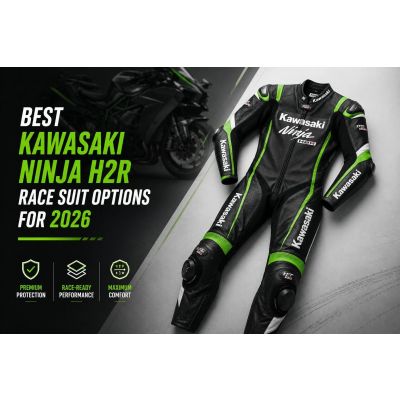
Best Kawasaki Ninja H2R Race Suit Options for 2026
- What Is a Kawasaki Ninja H2R Race Suit?
- Why Construction and Fit Matter for Track Suits
- Leather Construction and Performance Characteristics
- How Fit and Armor Positioning Affect Your Choice
- Comfort, Durability, and Long-Term Value
- What Makes a Suit Track-Ready for the H2R
- Custom Sizing and Personalization
- Common Mistakes When Buying Racing Suits
- How to Choose the Right Kawasaki Ninja H2R Race Suit
- Final Buying Guidance
What Is a Kawasaki Ninja H2R Race Suit?
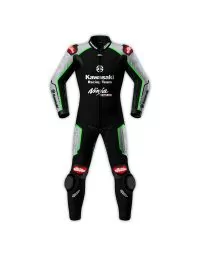
A Kawasaki Ninja H2R race suit is a purpose-built, single-piece or two-piece leather suit designed specifically for high-speed track riding and competitive racing. The H2R is one of Kawasaki's most extreme superbikes—a track-focused machine with extraordinary acceleration and top-end performance. A race suit designed for the H2R must match that performance level with construction, fit, and protective features engineered for serious track work, not casual street riding.
The Kawasaki Ninja H2R race suit differs fundamentally from street motorcycle jackets or casual leather apparel. These suits are engineered with race-oriented construction including reinforced panels, stretch zones, ergonomic shaping, and armor positioning that supports the aggressive riding posture required on a high-performance track bike. The material, stitching, and hardware are chosen specifically to withstand the demands of extended track sessions, high-speed cornering, and the repetitive stress of competitive riding.
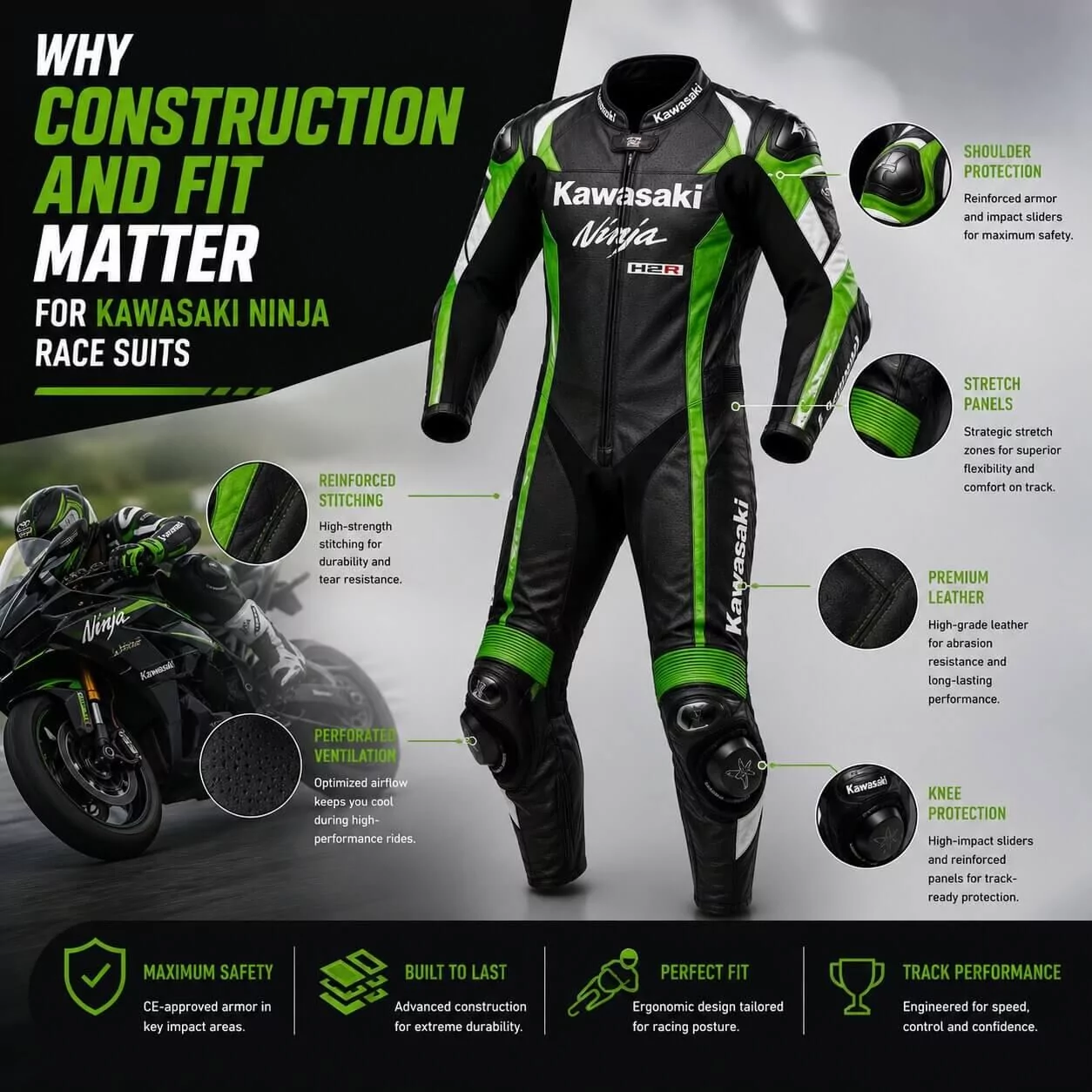
Why Construction and Fit Matter for Track Suits
When you're riding a Kawasaki Ninja H2R at track speeds, the suit must perform as part of your control system. The right fit allows you to move freely in the aggressive forward lean and cornering angles that the H2R demands, while poor fit creates restriction, discomfort, and compromised control. Construction quality directly affects how the suit holds up to the friction, impact, and repetitive motion of track work.
Race suit construction includes features that street apparel simply doesn't require. Panel shaping follows the racing posture rather than a standing position. Stretch zones are positioned at the shoulders, elbows, knees, and waist to support movement without excess material bunching. Seams are reinforced with multiple stitch lines and heavy-duty thread. Armor pockets are positioned to keep protectors in place during hard cornering and braking. Closures—whether zippers, snaps, or Velcro—are engineered to stay secure under g-forces and movement.
The difference between a casual leather jacket and a true race suit becomes obvious when you put the suit on in a riding position. A race suit should feel snug but not restrictive, with the chest slightly forward, arms positioned for cornering, and legs shaped to the riding posture. Street jackets feel loose and uncomfortable in that position because they're not designed for it.
Leather Construction and Performance Characteristics
Most high-end Kawasaki Ninja H2R race suits use leather as the primary material because of its combination of abrasion resistance, durability, and performance characteristics in a track environment. The quality and construction of that leather directly affects how the suit performs and how long it lasts.
Race-grade leather is typically thicker and more densely constructed than casual leather apparel. The leather chosen for a race suit is selected for abrasion resistance—its ability to withstand friction and sliding. The grain structure, tanning method, and finish all contribute to how the leather behaves under stress. Premium race suits often use leather that has been specifically treated to enhance durability without sacrificing flexibility.
The construction includes reinforced panels in high-stress areas. The shoulders, elbows, knees, and seat typically feature additional leather layers or strategically placed panels to provide extra protection and durability where friction is greatest during track riding. The seams connecting these panels are sewn with heavy-duty thread in multiple passes to ensure they don't fail under the stress of track use.
Lining material matters significantly. A quality race suit uses durable, breathable lining that supports comfort during extended riding sessions and allows moisture to move away from your skin. The lining also affects how easily you can slip the suit on and off, which becomes important when you're changing between practice sessions or moving quickly in the paddock.
How Fit and Armor Positioning Affect Your Choice
Fit is the single most important factor when choosing a Kawasaki Ninja H2R race suit. A suit that doesn't fit correctly will compromise your control, comfort, and the protective positioning of armor. Unlike casual apparel where fit preferences vary widely, race suit fit has specific requirements.
For track riding, the suit should fit snugly in the chest and shoulders without restricting breathing or arm movement. The sleeves should position your arms naturally in the cornering posture—slightly bent and ready for input. The chest should feel secure but not tight, allowing you to breathe deeply and control the bike through your core. The suit should not shift or bunch when you're in the forward lean position.
Waist and hip fit is critical for armor positioning. The suit must hold knee armor directly over the kneecap and elbow armor precisely over the elbow joint. If the suit is too loose, armor will shift during cornering or braking, moving away from the areas it's designed to protect. If it's too tight, the armor won't sit properly, and you'll experience discomfort and reduced mobility.
Sleeve length should position elbow armor correctly and allow your hands to reach the grips without the cuff pulling at your wrist. Pant length should place knee armor at the correct height, with the crotch seam sitting properly when you're seated on the bike in a racing position. These measurements differ from casual apparel sizing because the riding posture is more aggressive and forward-leaning.
Custom sizing options become valuable here. If you have proportions that don't fit standard sizing—longer arms, shorter torso, wider shoulders, or other variations—a custom race suit can be tailored to your exact measurements and riding posture. This ensures armor positioning is precise and the suit performs as intended.
Comfort, Durability, and Long-Term Value
Track suit comfort is different from casual apparel comfort. You're wearing the suit for extended periods in an aggressive riding position, often in warm conditions with high physical exertion. The suit must support that use without creating hot spots, restriction, or distraction.
Ventilation becomes important for track work. Many race suits include mesh panels, perforations, or strategic venting to allow airflow while maintaining the structural integrity and abrasion resistance of the suit. The placement of these vents affects how effectively they work—vents positioned at the chest, underarm, and back allow heat to escape where you generate the most body heat during intense riding.
Break-in behavior affects initial comfort. New leather may feel stiff or restrictive until it conforms to your body and the riding position. Higher-quality leather typically breaks in more smoothly and maintains its shape better over time. Lower-quality leather may become baggy or develop creases that affect fit and comfort.
Durability depends on the combination of material quality, construction, how frequently you ride, and how well you maintain the suit. A race suit used regularly on the track will wear faster than one used occasionally. Proper cleaning and conditioning of the leather extends its life significantly. Seams, zippers, and armor inserts may need replacement or repair over time, so choosing a suit from a manufacturer that supports repairs and replacement parts matters for long-term value.
The cost of a quality Kawasaki Ninja H2R race suit reflects the construction, material, and engineering involved. Higher price typically correlates with better leather quality, more refined construction, superior fit, and longer durability. However, the most expensive suit isn't necessarily the best choice for your specific needs—the best choice is the suit that fits correctly, matches your riding style and track environment, and offers the features you actually use.
What Makes a Suit Track-Ready for the H2R
The Kawasaki Ninja H2R is an extreme machine—it's a track-only superbike with extraordinary power and performance. A race suit designed for H2R riding should reflect that capability with construction and features engineered for serious track work.
A track-ready suit includes comprehensive armor coverage. This typically means elbow protectors, knee protectors, and often a back protector integrated into or compatible with the suit. The armor should be positioned correctly for the H2R's aggressive riding posture and should be substantial enough to provide meaningful protection during high-speed track work. The suit's construction should securely hold the armor in place during hard cornering and braking.
The suit should feature reinforced seams throughout, with particular attention to high-stress areas like the shoulders, elbows, and seat. Double or triple stitching with heavy-duty thread ensures seams don't fail under the demands of track riding. Panel construction should support the aggressive H2R riding posture without creating bunching or restriction.
Closure systems should be secure and reliable. Zippers should be heavy-duty and positioned to prevent accidental opening. Velcro and snap closures should hold firmly under g-forces and movement. Any connection points between suit pieces—for two-piece suits—should be secure and easy to manage when you're changing between sessions.
The suit should be designed for the forward-leaning, aggressive posture of a superbike like the H2R, not the more upright position of a standard sport bike. This affects panel shaping, armor positioning, sleeve length, and overall fit proportions.
Custom Sizing and Personalization
If you can't find a stock race suit that fits correctly, custom sizing offers a solution. A custom Kawasaki Ninja H2R race suit can be tailored to your exact measurements, body proportions, and riding posture preferences.
To order a custom suit, you'll provide detailed measurements: chest, waist, hip, sleeve length, inseam, shoulder width, and often additional measurements for specific fit preferences. You'll also specify your riding posture—how much forward lean you typically ride in, any asymmetries or injuries that affect fit, and your preferences for tightness or looseness in specific areas.
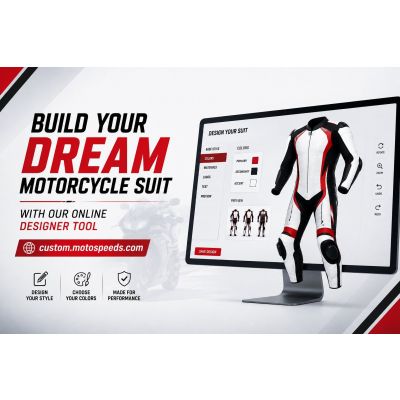
Custom suits allow you to choose material, color, panel design, armor type and positioning, and closure systems. You can also request specific features like additional venting, custom padding, or personalized design elements. The lead time for a custom suit is typically longer than stock options, so plan accordingly if you need the suit by a specific date.
The investment in a custom suit is higher than stock options, but for riders with non-standard proportions or specific performance requirements, the improved fit and functionality justify the cost. A properly fitted custom suit will perform better, feel more comfortable, and last longer than a poorly fitting stock suit.
Common Mistakes When Buying Racing Suits
Many buyers make predictable mistakes when choosing a race suit. Understanding these helps you avoid them.
Choosing based on appearance alone. A race suit that looks great in photos may not fit your body or match your riding style. The suit's performance depends on fit and construction, not just aesthetics. Choose based on fit and features first, then confirm the appearance works for you.
Ignoring fit and armor positioning. Buying a suit that's close to your size but not exact creates problems. Armor won't position correctly, the suit will shift during riding, and you'll be uncomfortable. Take time to verify fit before purchasing. If stock sizing doesn't work, consider custom options.
Prioritizing price over construction quality. The cheapest race suit often has lower-quality leather, weaker stitching, and less robust construction. You get what you pay for. A mid-range suit with solid construction will outperform a budget suit and last significantly longer.
Not considering your actual riding environment. If you ride in warm conditions, you need ventilation. If you ride in cooler weather, you need insulation and wind resistance. Choose a suit designed for your climate and track conditions, not just based on general reputation.
Assuming all leather is identical. Leather quality varies significantly. Premium race-grade leather outperforms budget leather in durability, abrasion resistance, and how it breaks in. Don't assume two suits with similar prices have equivalent leather quality—check the specifications and material descriptions.
Ignoring lining quality. The lining affects comfort, durability, and how easily you can put the suit on and off. Poor lining tears easily, doesn't breathe well, and creates friction against your skin. Quality lining is an indicator of overall suit quality.
Not checking armor specifications. Different armor types offer different levels of protection and comfort. Verify the armor included with the suit matches your preferences and the suit's design supports proper armor positioning.
How to Choose the Right Kawasaki Ninja H2R Race Suit
Start by prioritizing fit above all other factors. Take accurate measurements of your chest, waist, hip, sleeve length, and inseam. Compare these to the manufacturer's size chart. If you fall between sizes or have proportions that don't align with standard sizing, strongly consider custom options.
Next, verify the suit's construction. Check for reinforced seams, quality lining, and heavy-duty hardware. Read reviews from other track riders who use the suit in similar conditions. Look for feedback on how the suit breaks in, how well armor stays positioned, and how durable it proves to be over time.
Consider your specific track environment. If you ride in warm conditions, prioritize ventilation. If you ride in cooler weather, verify the suit provides adequate wind resistance and insulation. If you ride year-round, a suit with removable or adjustable venting offers flexibility.
Verify armor positioning and options. The suit should have armor pockets or integrated armor that positions protectors correctly for your body and riding style. If you prefer specific armor types, confirm the suit is compatible.
Check what support is available after purchase. Can you get replacement armor? Can the suit be repaired if seams fail or zippers break? Does the manufacturer offer custom modifications? These services add long-term value.
Finally, if you're between options, reach out to the manufacturer or retailer with your measurements and questions. A quality brand will help you find the right fit rather than pushing you toward the most expensive option.
Final Buying Guidance
The Kawasaki Ninja H2R race suit you choose should be engineered for serious track work, fit your body and riding posture correctly, and support the performance demands of the H2R. Fit matters more than brand name, appearance, or price. Construction quality directly affects durability and how well the suit performs under track conditions. Armor positioning depends entirely on proper fit, so don't compromise on sizing.
A well-chosen race suit becomes part of your control system on the track. It should feel like an extension of your body, not a constraint. The material should be durable and appropriate for your climate. The construction should be robust enough to handle regular track use. The armor should stay positioned and provide meaningful coverage.
If you're serious about H2R track riding, invest in a suit designed specifically for that purpose. Stock options work well for many riders, but if you have non-standard proportions or specific performance requirements, custom sizing ensures you get exactly what you need. The improved fit and performance justify the additional cost.
Frequently Asked Questions
Is a one-piece or two-piece Kawasaki Ninja H2R race suit better?
Both designs can work well for track riding. One-piece suits offer seamless construction and no gap at the waist, which some riders prefer for aggressive cornering. Two-piece suits offer flexibility—you can wear just the jacket for warm-up sessions or the pants for testing. Two-piece suits are also easier to adjust between sessions. Choose based on your riding style and how you prefer to manage gear changes during track days.
What should I look for in race suit armor?
Armor should be substantial enough to provide meaningful protection during high-speed track work. Elbow and knee protectors should be rigid or semi-rigid rather than soft foam. Back protectors should be integrated into the suit or compatible with it. The suit's construction must hold armor firmly in place during cornering and braking. Verify the armor type matches the suit's design and positioning.
How does a race suit differ from a sport touring jacket?
Race suits are designed for the aggressive forward-leaning posture of track riding, with reinforced panels, stretch zones, and armor positioning optimized for cornering and braking at high speeds. Sport touring jackets are designed for longer-duration riding in varied conditions with more upright posture. Race suits are more restrictive and less versatile but perform better on the track. Choose based on your primary use.
Do I need a custom race suit if I'm between standard sizes?
If you're between sizes, custom sizing is worth considering. Armor positioning depends on proper fit, and a suit that's too loose or too tight will compromise both comfort and protection. Stock sizing that's not quite right creates problems that persist throughout the suit's life. Custom suits cost more upfront but often prove more cost-effective because they fit better and last longer.
How should I care for a leather race suit?
After each track session, allow the suit to dry completely in a cool, well-ventilated area. Wipe away dirt and debris with a damp cloth. Periodically clean the leather with appropriate leather cleaner and condition it with quality leather conditioner to maintain flexibility and durability. Avoid excessive heat, direct sunlight, and prolonged moisture exposure during storage. Have seams and zippers inspected regularly and repaired if needed.
Can I wear a race suit for street riding?
Race suits are designed specifically for track work and may not be practical for street riding. They're typically stiff, restrictive in an upright position, and not designed for the varied movements of street riding. For street use, choose a motorcycle jacket designed for that purpose. If you ride both track and street, consider a sport touring jacket for street use and keep the race suit for the track.
What's the typical lifespan of a quality race suit?
Lifespan depends on how frequently you ride, how well you maintain the suit, and the quality of construction. A frequently used suit may show wear after 2–3 years of regular track sessions. A suit used occasionally may last 5+ years. Proper cleaning, conditioning, and timely repairs extend the suit's life significantly. Quality construction and materials support longer durability than budget alternatives.