You've decided to invest in proper motorcycle gear. But standing in front of dozens of options—one-piece or two-piece, standard sizing or custom-fitted, different leather types and armor configurations—you realize the choice is more complex than it first appeared. A suit that looks right online might feel wrong on the bike. Armor might not sit where it needs to when you're in full lean. Sleeves that fit your shoulders might be too long in the arms, or you might have proportions that fall between standard sizes. The stakes matter: a poor fit compromises both comfort and safety. The right custom motorcycle suit needs to match your body, your riding style, your speed range, and your protection needs. This is where understanding your options becomes critical.
Quick Buying Advice:
How do I ensure proper fit for my custom race suit? Provide accurate chest, waist, hips, inseam, and sleeve measurements using our Size Guide. Our team reviews measurements and may request clarifications before production begins. What protection do custom race suits include? All suits feature CE-rated armor pockets; you select internal or external placement and padding level. How long does production take and what are shipping times? Standard sizes ship in 10-15 working days from order confirmation. Made-to-measure orders ship in 4-6 weeks from spec confirmation. Check Shipping and Delivery for your country and timeframes. Proper leather care with conditioning every 6-12 months extends usable life and maintains flexibility.
- What Should Riders Know Before Buying a Custom Motorcycle Suit?
- How to Choose Gear Based on Your Riding Style
- What Safety Features Should Buyers Check?
- How Fit and Sizing Affect Comfort and Protection
- Which Materials and Construction Details Matter?
- Standard Size vs Custom Size: Which Should You Choose?
- Final Buying Advice from MotoSpeeds
What Should Riders Know Before Buying a Custom Motorcycle Suit?
The first decision is understanding that a motorcycle suit exists to protect you in a crash and keep you comfortable while riding. A proper suit is not an accessory—it's crash protection that stays with you. When you slide across pavement at 40 mph or higher, your skin will not protect you. Leather, at the right thickness and quality, provides abrasion resistance that significantly reduces the severity of road rash compared to unprotected skin or textile gear in a high-speed slide. Armor (protective padding made from foam, gel, or plastic) absorbs impact energy at points where your body is most vulnerable: shoulders, elbows, hips, knees, and back. Neither leather nor armor eliminates injury risk. But together, they raise your survival odds and reduce injury severity.
A custom motorcycle suit lets you control how all these protection elements fit your specific body. Rather than accepting a standard size that might be loose at the hips and tight in the shoulders, you specify exact measurements for sleeve length, torso length, chest width, and armor positioning. This matters because gear that is too loose shifts during a crash and leaves gaps in protection. Gear that is too tight restricts your movement, fatigues you during long rides, and can actually increase injury risk by limiting your ability to move fluidly on the bike.
Before you commit to custom sizing, know that it takes longer to produce and costs more than standard sizes. Most custom suits take 4–8 weeks from order to delivery. If you need gear urgently or are still experimenting with your riding style, a well-fitted standard size might be the better choice. But if you've been riding for a year or more, know your body's proportions, and plan to keep the suit for several years, custom sizing becomes a worthwhile investment.
How to Choose Gear Based on Your Riding Style
Your riding style determines what gear makes sense for you. A track-day rider, a club racer, a sportbike commuter, and a long-distance road tourer all have different protection needs and priorities. Understanding where you ride and how fast you ride helps you choose the right balance of protection, comfort, and features.
Track-day and club racing riders spend hours on a closed course at high speeds, often in aggressive lean angles. These riders need one-piece racing suits with CE Level 2 armor at the shoulders, elbows, hips, and knees. A one-piece suit keeps armor in place during high-speed slides better than a two-piece because there is no gap at the waist where armor can shift. Leather thickness of 1.2–1.3 mm cowhide or kangaroo leather is standard for racing suits. The suit should allow a full range of motion in the shoulders and hips so you can grip the tank and move your body fluidly through corners without restriction. Many track riders also add back protectors and custom padding at high-impact zones.
Sportbike street riders who spend time at moderate to high speeds on public roads need protection that balances safety with wearability. A two-piece suit (jacket and pants worn together) or a one-piece suit both work well, depending on whether you value the flexibility of separating pieces for different weather or prefer the unified protection of a one-piece. CE Level 1 armor is often sufficient for street riding, though Level 2 is better if you ride aggressively or frequently at track days. Leather thickness of 1.0–1.2 mm is adequate for street use. Ventilation becomes more important if you ride in warm weather—look for perforated leather panels or mesh sections that allow airflow while maintaining abrasion resistance.
Beginner riders buying their first leather suit should prioritize fit and comfort first, protection features second, and aesthetics last. A poorly fitted suit will be uncomfortable and will discourage you from wearing it. A suit that is too tight will fatigue you and restrict your movement; a suit that is too loose will shift in a crash. Many first-time buyers benefit from trying standard sizes first to understand what fit feels right before investing in custom sizing. Start with a suit that has CE Level 1 armor at minimum and 1.0–1.1 mm leather. As you ride more and your priorities become clearer, you can upgrade to a custom suit with more specific features.
Long-distance road riders need comfort over hours in the saddle. A two-piece suit allows you to remove the jacket in traffic or at rest stops while keeping your legs protected. Ventilation matters significantly—look for mesh-lined leather or perforated panels that let air circulate without reducing abrasion resistance. Armor should be present but not so thick or bulky that it creates pressure points during extended riding. Fit is critical because even small pressure points or restricted movement in the shoulders or hips will become painful after two hours of riding.
Weekend recreational riders who cruise at moderate speeds and prioritize comfort might choose a textile suit or a leather-textile hybrid. These are lighter, more flexible, and often more affordable than full leather. However, leather offers superior abrasion resistance in a slide. If you ride mostly in good weather, at moderate speeds, and rarely push into aggressive lean angles, a textile option is reasonable. If you ride year-round or at higher speeds, leather is worth the investment.
What Safety Features Should Buyers Check?
CE armor certification is the standard you should look for in any motorcycle suit. CE (Conformité Européenne) certification means the armor met specific impact absorption standards under controlled test conditions. There are two levels: CE Level 1 armor absorbs impact energy up to a defined threshold; CE Level 2 armor absorbs more energy under the same test conditions and is better for high-speed riding and racing. Neither guarantees injury prevention, but Level 2 provides better protection in high-impact scenarios.
Armor placement matters as much as certification level. Your shoulders, elbows, hips, and knees are the most common impact points in a crash. A quality suit has CE-certified armor at all four locations. Some suits also include back protectors, which are especially valuable for track riding and aggressive street riding. Check that armor is securely attached to the suit and cannot shift during a crash. Loose pocket armor or armor held only by velcro can migrate during impact and leave you unprotected.
Leather thickness and quality affect both abrasion resistance and durability. Leather is measured in millimeters: 1.0–1.1 mm is suitable for street riding, 1.2–1.3 mm is standard for racing. Cowhide is the most common choice—it is durable, widely available, and relatively affordable. Kangaroo leather is lighter and stronger per millimeter than cowhide, which means a 1.0 mm kangaroo leather suit provides abrasion resistance similar to a 1.2 mm cowhide suit, but it is more expensive and less common. For a first suit, cowhide is a practical choice. For a racing suit where weight and flexibility matter, kangaroo leather is worth the extra cost.
Stitching and seam reinforcement determine how well the suit holds together under stress. Look for double or triple-stitched seams, especially at high-stress points like the shoulders, underarms, and crotch. Thread count matters—higher count means stronger seams. Reinforced panels at high-wear areas (inside the thighs, at the elbows) extend the suit's life and improve protection. A suit with only single stitching will fail faster and may not hold armor in place during a crash.
Zipper quality and lockability affect both safety and durability. A quality zipper should lock at the top so the suit cannot separate during a crash. Cheap zippers separate easily and allow the suit to open up, exposing your body. Check that the zipper has a substantial pull tab and a locking mechanism at the top. A YKK or similar high-grade zipper is a sign of quality construction.
Lining quality impacts comfort and durability. A suit with a quality mesh or cotton lining will breathe better and feel more comfortable against your skin than a suit with cheap plastic lining. If you plan to wear the suit for hours, lining quality becomes noticeable. Mesh lining is best for ventilation; cotton is comfortable but retains moisture; plastic is cheap but uncomfortable in warm weather.
How Fit and Sizing Affect Comfort and Protection
Fit is the most important factor in both comfort and safety, and it is also the most commonly misjudged aspect of buying a motorcycle suit. A suit that looks right in a photo or feels okay when you stand still might be completely wrong when you are in riding position on your bike. This is why measuring yourself in your actual riding posture is essential.
When you sit on your bike in full riding position—bent forward, hands on the handlebars, body in the aggressive lean you actually use—your measurements change from your standing measurements. Your inseam becomes shorter, your torso compresses, your shoulders rotate forward, and your arms bend. A suit that fits perfectly when you stand still might be too long in the torso or too short in the sleeves when you are riding. Conversely, a suit that feels tight when you stand might be perfect in riding position.
To measure correctly, sit on your bike in full riding posture and have someone measure you with a soft tape measure. Measure your inseam from the inside of your thigh to your ankle while seated and bent forward. Measure your chest while in riding position (not standing upright). Measure your shoulder width, sleeve length from the center of your back to your wrist while arms are bent, and torso length from the base of your neck to your hip bone while seated. Write these measurements down and compare them to the size chart before ordering. Standard sizes are designed for average proportions, so if your measurements fall between sizes or outside the typical range, custom sizing becomes valuable.
Armor placement during riding position is different from armor placement when standing. When you are bent forward on the bike, your elbows move forward and your knees rotate slightly. Armor that sits perfectly on your knees while you stand might sit too high or too low when you are in riding position. This is why trying on a suit and sitting on your bike (or a test bike if you are ordering online) is worth the effort. If the suit is too tight in the shoulders, you will feel restricted when gripping the handlebars. If it is too loose at the hips, armor will shift during acceleration and braking. If the sleeves are too long, your wrists will be restricted; if too short, your wrists will be exposed.
Common buying mistakes happen because riders either ignore fit in favor of size labels or they choose a size based on their street clothes measurements rather than their actual riding measurements. A rider who wears a Large shirt might need a Medium motorcycle suit because the suit is cut tighter and shorter than street clothes. Another rider with a long torso and short legs might need a Large jacket with Medium pants. Standard sizing forces compromises. This is where custom sizing shines: you specify exact measurements for every dimension, and the suit is built to those measurements rather than forcing you into a standard size that is close but not quite right.
If you choose standard sizing, expect to spend time trying on multiple sizes and sitting on a bike to verify fit before buying. If you order online, choose a retailer with a clear return policy so you can try the suit on at home and exchange it if the fit is not right. If you choose custom sizing, provide your measurements carefully and consider ordering a sample or test piece first if the retailer offers it. Custom suits cannot be returned as easily as standard sizes, so accuracy in measurement is critical.
Which Materials and Construction Details Matter?
Leather quality is the foundation of a good motorcycle suit. Not all leather is equal. Leather is graded by the number and size of natural marks, scars, and imperfections on the hide. Grade A leather has few imperfections and is more expensive; Grade B has more marks but is still strong and is more affordable. For a racing suit where every inch counts, Grade A might be worth it. For a street suit where durability and protection matter more than perfect appearance, Grade B is a practical choice.
Leather thickness is measured in millimeters. Full-grain leather (the top layer of the hide) is thicker and more durable than split leather (lower layers). A quality suit uses full-grain leather throughout. Thickness recommendations depend on riding style: 1.0–1.1 mm for street riding, 1.2–1.3 mm for track use. Thicker leather provides better abrasion resistance but is heavier and less flexible. Thinner leather is lighter and more comfortable but wears faster. The right thickness balances protection and wearability for your specific use.
Cowhide and kangaroo leather are the two main options. Cowhide is thicker, heavier, more affordable, and widely available. It is the practical choice for most riders and is standard for entry-level and mid-range suits. Kangaroo leather is lighter, stronger per millimeter, and more flexible. It is the choice for racing suits and for riders who prioritize weight and mobility. Kangaroo leather costs 30–50% more than cowhide and is less common, so it is not the best choice for a first suit unless you are building a racing suit or have specific reasons to prioritize weight.
Construction details separate a suit that will last five years from one that will last ten. Double or triple stitching at stress points (shoulders, underarms, crotch, hip seams) means the suit will hold together under strain. Reinforced panels at high-wear areas extend durability. A suit with only single stitching will develop tears faster, especially at the underarms and crotch where there is constant flex. If you plan to wear the suit regularly and expect it to last, construction quality is worth paying for.
Lining choices affect comfort and maintenance. A mesh lining breathes well and is comfortable in warm weather but requires more care during cleaning. A cotton lining is comfortable and easy to maintain but retains moisture. A plastic lining is cheap but uncomfortable and does not breathe. If you ride in warm weather or for long hours, mesh lining is worth the extra cost. If you ride mostly in cool weather or for short trips, cotton lining is sufficient.
When is it worth paying more for a suit? If you ride more than 5,000 miles per year, plan to keep the suit for more than three years, or ride at speeds above 80 mph, investing in higher-quality leather, better construction, and superior armor placement pays off. A suit that costs 30% more and lasts twice as long is actually cheaper per year of use. If you ride casually, use the suit for one or two seasons, or ride mostly at moderate speeds, a mid-range suit offers good value. The most expensive suits often add features like custom colors, premium leather grades, or racing-specific designs that are not necessary for most riders.
Standard Size vs Custom Size: Which Should You Choose?
Standard sizing works well for riders whose measurements align with typical proportions: average arm length, average torso length, and proportional shoulders and hips. If you measure yourself in riding position and your measurements match a standard size chart, a standard suit will fit you well and will arrive in 1–2 weeks instead of 4–8 weeks. Standard sizing is also more affordable—you save the custom design fee and the extended production time.
Custom sizing is worth the investment if your proportions fall outside the typical range. If you have very long arms and a short torso, very wide shoulders and narrow hips, or measurements that fall between two standard sizes, custom sizing solves the compromise. A custom suit is built to your exact measurements rather than forcing you into a size that is close but not quite right. The extra comfort and fit precision is worth the wait and the additional cost if you plan to wear the suit regularly and keep it for several years.
Custom sizing also allows you to specify armor placement precisely. If you have a previous injury or a specific vulnerability, you can request additional padding in that area. If you want a back protector integrated into the suit, custom production allows that. If you prefer a specific color combination or design element, custom sizing gives you control. Standard sizes offer limited customization options—you get what is in stock.
The decision comes down to urgency, budget, and how well your body matches standard proportions. If you need gear in the next two weeks, standard sizing is your only option. If you have time and your measurements are outside the typical range, custom sizing is worth the investment. If your measurements align with a standard size and you are budget-conscious, a well-fitted standard suit is a smart choice. Many riders start with a standard size to understand what fit feels right, then move to a custom suit later when they know exactly what they want.
Final Buying Advice from MotoSpeeds
The most important buying decision is prioritizing protection and fit over aesthetics. A suit that looks amazing but fits poorly or lacks proper armor is worse than a suit that looks basic but protects you well and fits your body. Choose a suit that fits your riding style, your body proportions, and your protection needs first. Then choose materials and construction quality that will last. Aesthetics matter last.
Before you buy, visit a retailer and try on multiple sizes in your actual riding position. Sit on a bike and verify that your shoulders are not restricted, your sleeves are the right length, your torso is not too long or too short, and armor sits where it should. If you are ordering online, use a size chart based on riding position measurements, not street clothes size. Take your time with measurements. A few minutes of careful measuring now saves weeks of returns and frustration later.
If your measurements align with a standard size, start there. Standard suits are faster to receive and more affordable. If you have non-standard proportions or know exactly what you want, custom sizing is worth the investment. Either way, the suit should feel comfortable and protective when you are in riding position on your bike, not when you are standing still in a showroom.
Riders who want to build a suit that matches their exact body and riding needs can use our
to explore standard and custom options side by side.Once you have chosen your suit style and sizing approach, consider matching gloves and boots that fit the same way. Protective gear works best as a system where all pieces fit well and work together. Gloves should allow full grip and wrist movement; boots should protect your ankles and allow full foot movement on the pegs. A complete set of matching gear from one brand often ensures consistent fit and protection standards.
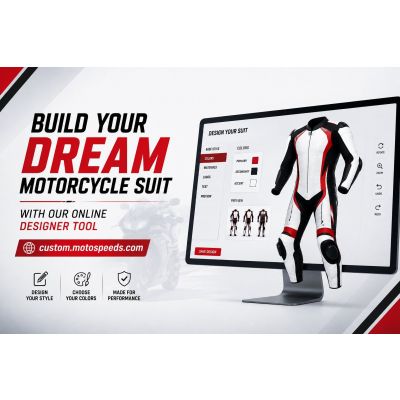
Design Your Custom Motorcycle Suit Now using our online designer tool. Specify your exact measurements, choose your armor configuration, select your leather type and color, and see your suit come to life before it is built. The tool walks you through each decision and shows you how your choices affect fit and protection. You can save your design and return to it later, or proceed directly to order.
After you receive your suit, spend time wearing it around the house and on short rides before committing to long trips. Check that armor stays in place during movement and acceleration. Verify that seams feel comfortable against your skin and do not create pressure points. If anything feels wrong, contact the retailer within the return window. A suit that feels wrong in the first week will not feel better after a month of riding.
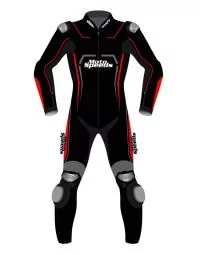
For riders comparing real protective gear and construction quality, the
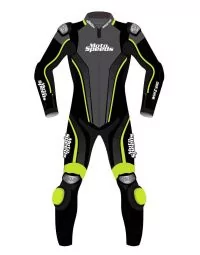
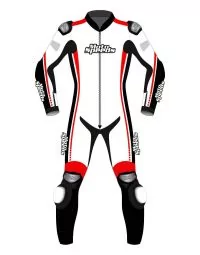
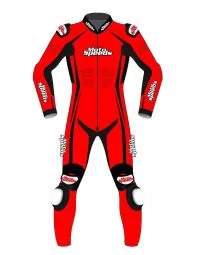
demonstrates how armor placement, reinforced construction, and custom fit work together to balance protection and comfort.The right custom motorcycle suit is an investment in your safety and comfort. It should fit your body, match your riding style, provide the protection level you need, and last for years. Take time to understand your options, measure carefully, and choose based on protection and fit first. The suit you choose today might protect you in a crash you hope never happens. Choose well. Choose MotoSpeeds
Frequently Asked Questions
What is the difference between CE Level 1 and CE Level 2 armor?
CE Level 2 armor absorbs more impact energy than Level 1 under the same standardized test conditions. Level 1 is suitable for street riding at moderate speeds; Level 2 is better for track days, racing, and aggressive street riding. Both meet safety standards, but Level 2 provides additional protection margin in high-impact crashes. For track-day riders, Level 2 is the standard choice. For casual street riders, Level 1 is often sufficient, though Level 2 is better if you ride aggressively or frequently at higher speeds.
How long does it take to receive a custom motorcycle suit?
Most custom suits take 4–8 weeks from order to delivery, depending on the manufacturer's production schedule and current order volume. Some makers offer expedited production for an additional fee, which can reduce the timeline to 2–3 weeks. Standard sizes typically ship within 1–2 weeks. If you need gear urgently, a standard size is your only option. If you have time and want a suit built to your exact measurements, the wait is worth it for the fit precision and protection customization you gain.
Can I return a custom motorcycle suit if it does not fit?
Return policies for custom suits vary by retailer. Most custom suits have limited or no return rights because they are built specifically for you. Some makers offer a fit guarantee where they will remake the suit once if the fit is significantly off due to their error, but this is not universal. Before ordering, confirm the retailer's return and remake policy. If fit is critical to your decision, consider ordering a standard size first to understand what fit feels right, then moving to custom sizing once you know your preferences.
Should I choose cowhide or kangaroo leather for my first suit?
Cowhide is the practical choice for most first suits. It is durable, widely available, affordable, and provides excellent abrasion resistance. Kangaroo leather is lighter and stronger per millimeter, which is valuable for racing suits and for riders who prioritize weight and flexibility, but it costs 30–50% more and is less common. For a first suit where you are still learning what fit and features matter, cowhide offers better value. Once you know your preferences and riding style, you can upgrade to kangaroo leather if weight and flexibility become priorities.
What measurements do I need to provide for a custom suit?
You need to measure yourself in your actual riding position on your bike. Essential measurements include inseam (inside thigh to ankle while seated and bent forward), chest circumference (while in riding posture), shoulder width, sleeve length (center of back to wrist while arms are bent), and torso length (base of neck to hip bone while seated). Some makers also request hip circumference, thigh circumference, and calf circumference for a more precise fit. Measure carefully with a soft tape measure, and consider having someone else take the measurements to avoid pulling the tape too tight or too loose. Accuracy in measurement is critical for custom fit.
Is a one-piece or two-piece suit better for street riding?
Both work well for street riding, depending on your priorities. A one-piece suit offers unified protection and armor that stays in place better during high-speed slides, making it ideal for track days and aggressive riding. A two-piece suit (jacket and pants) allows you to remove the jacket in traffic or at rest stops, making it more practical for commuting and everyday use. Two-piece suits are also easier to adjust for weather—you can wear the jacket alone in cool weather and the pants alone in warm weather. For pure protection, one-piece is better. For versatility and everyday practicality, two-piece is better. Choose based on how you actually ride.
How do I know if a suit is too tight or too loose?
A suit is too tight if your shoulders feel restricted when you grip the handlebars, your arms feel squeezed at the underarms, or you cannot move your hips fluidly on the bike. Tightness causes fatigue during long rides and can actually restrict your movement in a crash. A suit is too loose if armor shifts when you accelerate or brake, if there are gaps at the waist or hips, or if the suit bunches up when you are in riding position. Looseness compromises protection because armor moves away from where it needs to be during impact. The right fit allows full movement while keeping armor in place—test it by sitting on your bike and moving through your normal riding motions.
SEO Metadata
Meta Title: Custom Motorcycle Suit: Fit, Armor & Designer Tool Guide
Meta Description: Learn how to choose a custom motorcycle suit with proper fit, CE armor, and protection. Use our designer tool to build your ideal leather suit for track or street.
Short Content: Build your perfect custom motorcycle suit with guidance on fit, armor certification, leather quality, and our online designer tool for riders.
Meta Keywords: custom motorcycle suit, customize leather suit, leather suit fit, motorcycle armor, CE armor certification, motorcycle gear sizing, track day suit, custom riding gear, motorcycle protective gear, racing suit
Suggested URL Key: custom-motorcycle-suit-designer-guide
Suggested Image Alt Text: custom motorcycle suit designer tool showing armor placement and fit options for leather suits
Suggested Featured Image Concept: Split-screen showing a rider using the online designer tool on one side and the finished custom leather suit on the bike on the other side, emphasizing the personalization and fit customization process