
Table of Contents
Introduction
In motorsports, your racing suit is more than just gear—it is a critical safety system designed to protect you in extreme conditions. However, even the most advanced SFI/FIA approved car racing suits can fail to perform properly if they do not fit correctly.
A poorly fitted suit can restrict movement, create pressure points, or even reduce the effectiveness of safety features such as fire protection layers and impact zones. That is why understanding custom racing suit measurement is essential for every driver.
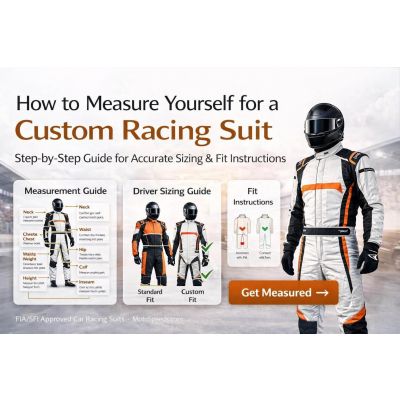
This guide will walk you through a complete driver sizing guide and fit instructions, helping you achieve a professional-level fit that enhances both safety and performance.
If you're planning to upgrade your gear, explore our collection:
Why Proper Fit Matters in Racing Suits
A racing suit must fit like a second skin—not too tight, not too loose.
When properly fitted, a suit:
Maintains correct positioning of protective layers
Allows full range of motion while driving
Prevents excess fabric from bunching during movement
Improves comfort during long races
On the other hand, a poor fit can:
Reduce thermal protection effectiveness
Cause discomfort or fatigue
Restrict steering and pedal control
Increase injury risk in crashes
A custom-fit suit ensures that every part of the suit aligns with your body structure.
Tools You Need Before Measuring
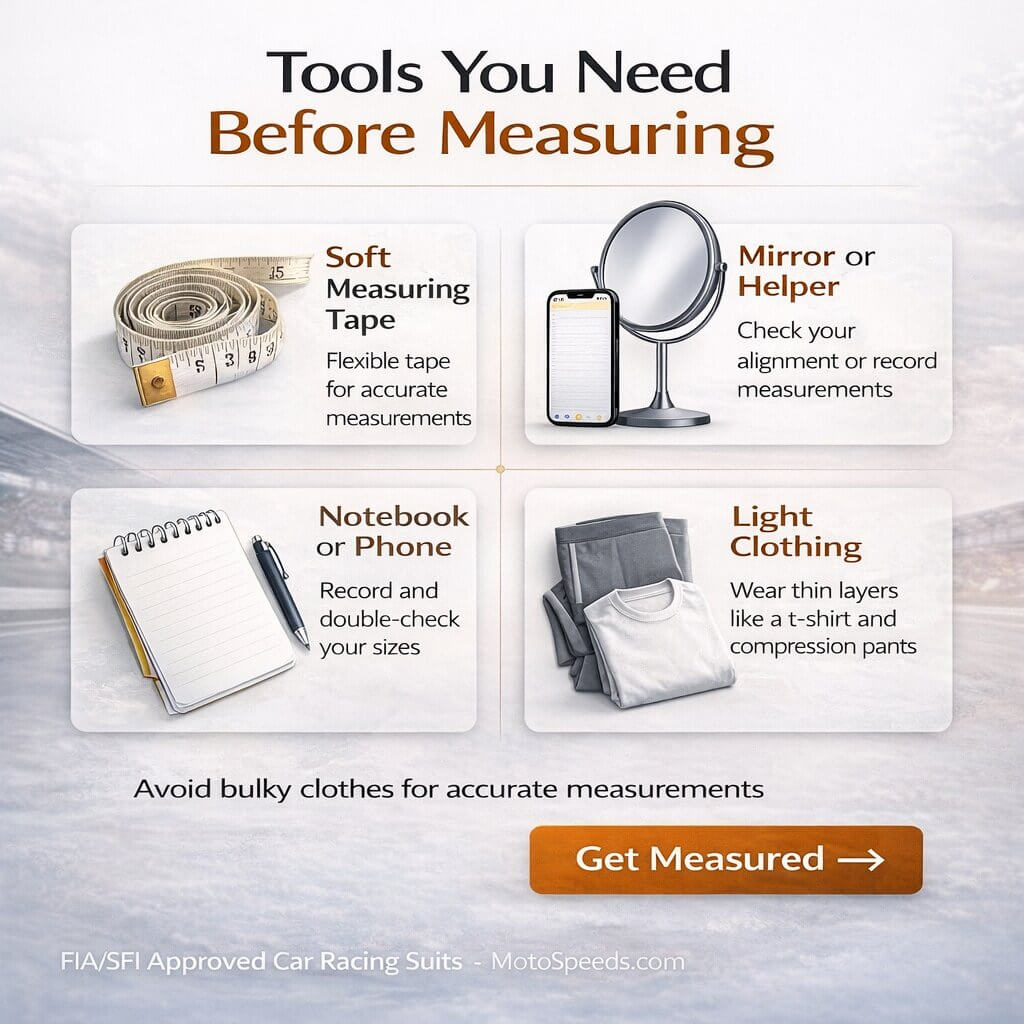
Before starting your measurements, prepare the following:
A soft measuring tape
A mirror or helper (recommended)
A notebook or phone to record measurements
Wear light clothing (like a t-shirt and compression pants)
Avoid measuring over bulky clothes, as this will affect accuracy.
Key Measurements for a Custom Racing Suit
To achieve the perfect fit, several body measurements must be taken precisely.
Upper Body Measurements
Neck circumference
Chest girth
Shoulder width
Sleeve length
Core Measurements
Waist circumference
Hip circumference
Torso length
Lower Body Measurements
Inseam (crotch to ankle)
Thigh circumference
Knee circumference
Calf circumference
Full Body Measurements
Overall height
Weight (for reference)
These measurements ensure that the suit fits correctly across all movement zones.
Step-by-Step Measurement Guide
A. Chest
Measure around the fullest part, under the armpits, keeping the tape horizontal.
B. Waist
Measure around the natural waist line, inline with the navel, keeping the tape horizontal.
C. Hip
Measure around the fullest part of your hips, about 20 cm below waist line, keeping the tape horizontal.
D. Thigh
Measure around the thigh just below the crotch, keeping the tape horizontal.
E. Inner Leg
Stand against a wall, ask someone else to measure from the crotch to the bottom of your leg.
F. Outer Arm
Measure from shoulder (Humerus) to wrist.
G. Height
Stand against a wall, ask someone else to measure from the floor to the top of your head, keeping the tape vertical.
Common Measurement Mistakes to Avoid
Even small errors can lead to poor fit.
Avoid these common mistakes:
Measuring too tightly or too loosely
Wearing thick clothing while measuring
Skipping key measurements like torso length
Not keeping the tape level
Measuring alone without a helper
Accuracy is everything when ordering a custom suit.
Understanding Driver Sizing Guide Standards
A driver sizing guide helps translate body measurements into suit dimensions.
Standard sizes (S, M, L) often do not account for:
unique body proportions
athletic builds
height vs weight variations
That is why professional racers prefer .
Custom sizing ensures:
precise alignment with body shape
improved comfort and flexibility
better safety performance
SFI/FIA Suit Fit Requirements
Both SFI and FIA standards require suits to fit properly for safety compliance.
Key Fit Requirements:
No excessive looseness
No restriction in movement
Proper placement of protective layers
Comfortable fit in seated driving position
A racing suit must be tested in a driving posture, not just standing.
How a Perfect Fit Improves Performance
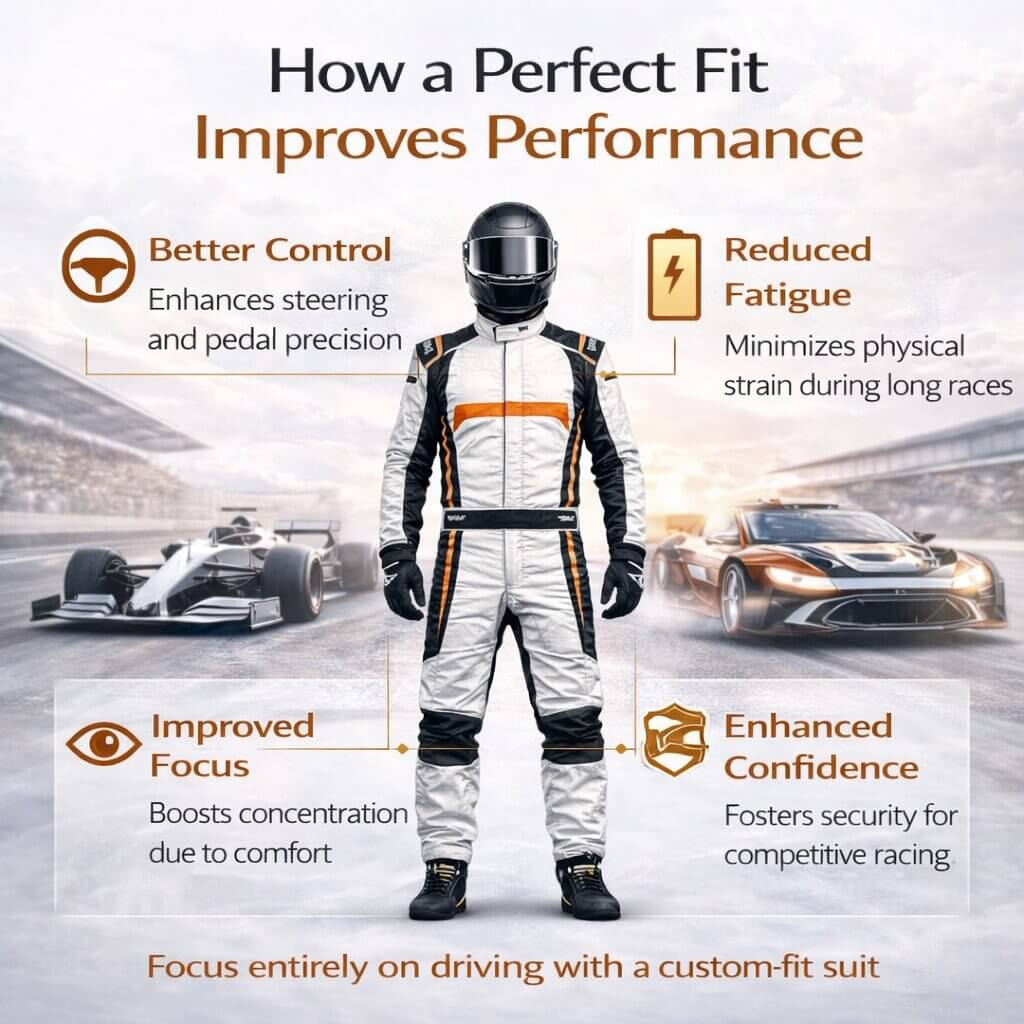
A well-fitted racing suit directly impacts driver performance.
Benefits include:
Better control over steering and pedals
Reduced fatigue during long races
Improved focus due to comfort
Enhanced confidence on track
When your gear fits perfectly, you can focus entirely on driving.
Custom vs Standard Size: What’s Better?
Standard Size Suits
Ready to wear
Lower cost
Limited fit precision
Custom Racing Suits
Tailored to your body
Maximum comfort and safety
Ideal for professional and serious drivers
For serious racing, custom suits are always the better choice.
Final Fit Checklist Before Ordering
Before placing your order, confirm:
All measurements are accurate
You measured with light clothing
You double-checked key areas (chest, waist, inseam)
You included height and weight
You reviewed sizing guidelines
You can explore custom-ready racing suits here:
Conclusion
A racing suit is one of the most important pieces of safety equipment in motorsports. But even the best suit cannot perform effectively without the right fit.
By following this custom racing suit measurement guide, you ensure that your gear delivers maximum protection, comfort, and performance.
Taking accurate measurements is the first step toward a professional racing experience.
FAQs
How tight should a racing suit fit?
A racing suit should fit snugly without restricting movement. It should allow full mobility while keeping protective layers in place.
Can I measure myself for a custom racing suit?
Yes, but it is recommended to have someone assist you to ensure accuracy.
What is the most important measurement?
Torso length is one of the most critical measurements, as it affects overall comfort and mobility.
Are custom racing suits worth it?
Yes, custom suits provide better fit, safety, and performance compared to standard sizes.
Do FIA and SFI suits require different sizing?
No, both use similar measurement methods, but certification requirements may affect suit design.