All-Weather Motorcycle Touring Gear: How to Choose the Right Suit and Protective Gear
Choosing all-weather motorcycle touring gear is about more than picking a suit that looks good. When you're ready to buy, you need to know whether standard sizing or custom fit works better for your body, what armor and construction matter most, and how comfort affects your ability to wear the gear consistently. This guide helps you decide what type of all-weather motorcycle touring gear suits your riding style, body shape, protection needs, and budget before you order.
Quick Buying Recommendation
Riders who tour in mixed weather and changing temperatures should prioritize ventilation, weather resistance, and comfort over speed-focused features. If your body measurements fall between standard sizes, custom sizing can improve fit and armor placement. If your measurements match a size chart exactly, standard sizing can work well. First-time touring suit buyers should focus on fit in riding position, armor coverage, and construction quality before choosing color or style. Experienced riders upgrading gear should compare armor type, stretch panels, and weather protection features based on the routes and seasons they ride most often.
Table of Contents
- Choose Gear Based on Your Riding Style
- Fit, Sizing, and Features to Check
- Safety, Comfort, and Movement
- Buying Mistakes and Why Consider MotoSpeeds
- Final Buying Guide and Next Steps
Choose Gear Based on Your Riding Style
Different riding styles demand different gear features. Tour riders who spend long hours in the saddle need ventilation, weather resistance, and comfort that allows movement without restriction. Sport riders who mix road and track use may need a balance between protection and flexibility. Street riders who ride in urban traffic and varied weather benefit from gear that transitions easily on and off the bike. Track-day riders need secure fit, strong material, and armor alignment in a riding-position stance. First-time buyers should focus on fit, armor placement, and construction before worrying about style. Experienced riders upgrading gear often know their body measurements and can compare new features like improved armor, stretch panels, or weather-resistant linings more effectively than first-time buyers.
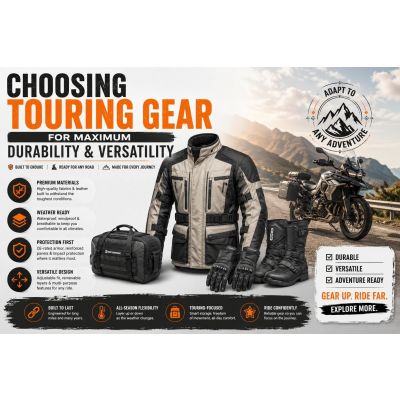
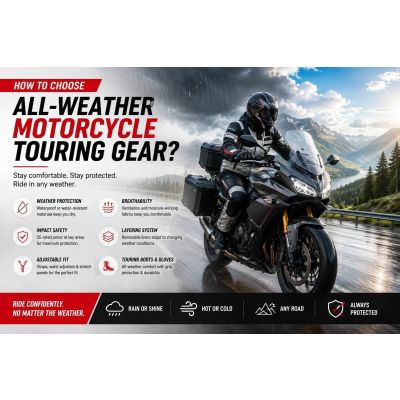
For touring specifically, weather protection matters as much as abrasion resistance. Riders who encounter rain, wind, and temperature changes need gear with water-resistant or waterproof linings, sealed seams where possible, and enough ventilation to prevent sweat buildup during warm riding. Armor placement should support impact protection for the shoulders, elbows, knees, and back—areas most at risk in a crash. Comfort features like stretch panels, adjustable waist closures, and removable thermal liners help touring riders adapt to changing conditions without stopping to change gear completely.
Fit, Sizing, and Features to Check
Fit is the foundation of every buying decision. Gear that fits correctly allows armor to stay in place during a crash, supports comfortable movement during long rides, and encourages you to wear it consistently. Gear that fits poorly may cause armor to shift, restrict breathing, or feel so uncomfortable that you ride in it less often. Before you choose standard or custom sizing, understand how each option works and what your body measurements tell you.
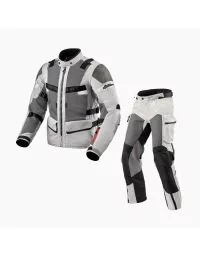
One-piece suits keep the jacket and pants connected as a single garment, which prevents gaps at the waist and keeps armor alignment stable. One-piece suits work best for track-day riders and sport-focused riders who value consistent fit and protection in a racing stance. Two-piece suits split the jacket and pants, making them easier to remove and more practical for street riders who need flexibility for mixed riding and non-riding situations. If you choose a two-piece suit, check that the jacket-to-pants connection uses a full-length zipper that keeps both pieces secure when zipped together.
Standard sizing works well when your body measurements match the size chart provided by the manufacturer. Take measurements carefully: chest across the back, waist at the narrowest point, inseam from crotch to ankle, and sleeve length from the shoulder joint to the wrist. If your measurements fall exactly on a size boundary, order that size. If your measurements fall between two sizes, custom sizing can help you choose the right fit without compromising comfort or armor placement.
Custom sizing can improve fit when measurements are accurate and when you take time to describe your body shape, riding position, and comfort priorities. Custom options may include adjusted sleeve length, waist tapering, inseam adjustment, and armor placement based on your specific proportions. Custom sizing takes longer to produce than standard sizing, so plan ahead if you choose this option.
Check these key features before ordering any all-weather motorcycle touring gear:
- Material: Look for textile fabrics like Cordura or D600 Cordura for abrasion resistance. Weather-resistant or waterproof linings help protect against rain and wind. Check the product details for fabric weight and construction quality.
- Armor: Confirm that CE-certified armor is included or available as an option. Check the armor type (foam, gel, or composite), placement (shoulders, elbows, knees, back), and certification level (EN 1621-1 for limbs, EN 1621-2 for back). Armor should fit snugly against your body without moving when you move in riding position.
- Construction: Look for reinforced stitching at stress points like seams, zippers, and connection areas. Check that zippers are smooth and durable. For two-piece suits, confirm the jacket-to-pants zipper is full-length and secure.
- Comfort: Stretch panels in the shoulders, elbows, and sides improve movement and reduce restriction during long rides. Ventilation panels or mesh lining help manage heat and moisture. Removable thermal liners allow you to adjust for temperature changes.
- Compatibility: Confirm that glove cuffs fit inside the jacket sleeves and that boot shafts fit inside the pants legs. This overlap prevents gaps that expose skin in a crash.
Try on the gear in your riding position, not standing upright. Sit on the bike, lean forward, and move your arms and legs as you would during riding. Armor should stay aligned with your shoulders, elbows, knees, and back. Seams should not dig into your skin. Zippers should not catch fabric or pinch. If the fit feels off while sitting, it will feel worse after an hour of riding.
Safety, Comfort, and Movement
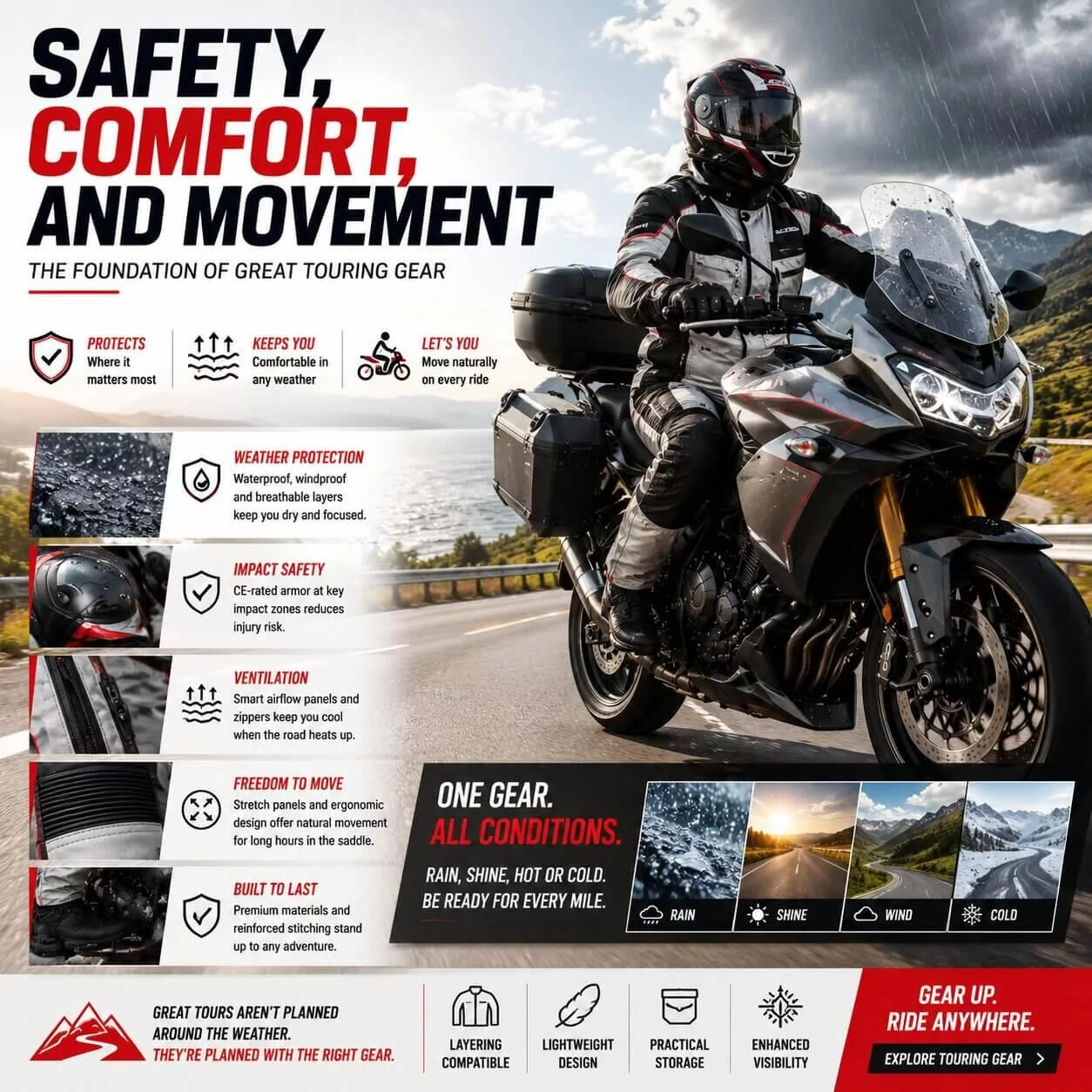
Motorcycle gear safety depends on fit, construction, armor type, and riding use—not on a single rating or certification. EN 17092 classifies whole motorcycle garments into classes AAA, AA, A, B, and C based on abrasion resistance, tear strength, and seam strength. This classification does not measure impact protection. Impact protection comes from EN 1621 armor, which rates impact protectors in Level 1 and Level 2 categories. A garment with an AA classification and Level 2 armor offers broader protective coverage and stronger armor integration than a garment with an A classification and Level 1 armor, but the difference depends on how well the armor fits your body and stays in place during riding.
Comfort matters because uncomfortable gear may be worn less often or in ways that reduce protection. Ventilation, stretch panels, and quality lining affect how long you can wear the gear comfortably during touring. If you ride in summer heat, look for ventilation options. If you ride in cold weather, look for thermal liners or layering compatibility. If you ride in rain, look for water-resistant or waterproof features. The right balance of protection and comfort supports better protection and comfort over time.
Movement should feel natural in your typical riding position. Reach forward to the handlebars—your shoulders and arms should move freely without the suit bunching or pulling. Lean into a turn—your torso should rotate without restriction. Bend your knees—your pants should allow full leg movement without tightness at the thighs or knees. If movement feels restricted while sitting, the fit may not be right for your body shape or riding position.
Value should not be measured by price alone. A cheaper suit with poor fit, weak construction, and basic armor may cost less upfront but may need replacement sooner, provide less consistent protection, or cause discomfort that leads you to ride in it less often. A more expensive suit with strong construction, quality armor, custom sizing support, and features matched to your riding needs may cost more initially but can provide better long-term value if it fits well, lasts longer, and encourages consistent wear.
Buying Mistakes and Why Consider MotoSpeeds
Common buying mistakes can lead to poor fit, wasted money, and gear that doesn't meet your actual riding needs:
- Choosing by design only: Buy based on fit, armor, and construction. Style matters, but protection and comfort matter more.
- Ignoring riding-position fit: Try on gear in your riding position, not standing upright. Fit that works standing may feel wrong on the bike.
- Guessing size: Take accurate body measurements. Guessing can lead to poor fit and armor misalignment.
- Ignoring armor placement: Check that armor sits directly on your shoulders, elbows, knees, and back. Armor that sits too high, too low, or off to the side offers less consistent protection.
- Buying too loose for comfort: Loose fit allows armor to move and reduces protection. A slightly snug fit is better than loose.
- Buying too tight for style: Tight gear restricts movement, causes discomfort, and may reduce protection by limiting blood flow and causing you to ride in pain.
- Ignoring glove and boot compatibility: Check that your gloves fit inside the jacket sleeves and your boots fit inside the pants legs. Gaps expose skin in a crash.
- Not checking product details: Read the product description, armor specifications, material type, and construction details before ordering.
- Not checking return or custom order policy: Know the return window and custom order timeline before you buy. Custom gear takes longer and may have different return policies.
- Assuming every product has the same armor: Armor varies by product and customization. Check what is included or available as an option.
- Not checking ventilation needs: Touring gear for summer riding needs different ventilation than gear for winter riding. Match ventilation to your climate and season.
MotoSpeeds focuses on made-to-order motorcycle gear, custom sizing options, protective armor features, reinforced construction, and rider-focused fit. The brand offers custom motorcycle suits, textile jackets, gloves, boots, and matching gear options designed around the specific needs of track riders, touring riders, sportbike riders, and street riders. MotoSpeeds provides support for buyers comparing fit, sizing, armor options, and features before ordering, which helps reduce the uncertainty that comes with buying motorcycle gear online.
When you shop at MotoSpeeds, you can choose standard sizing or custom sizing based on your body measurements and comfort priorities. The brand's focus on made-to-measure options means you can adjust fit details, armor placement, material type, and weather features to match your riding style. If your measurements fall between sizes or if you have questions about fit, MotoSpeeds support can help you compare options before you order, rather than discovering fit issues after the gear arrives.
Riders ready to compare protective gear for track and road use can review
to find options built around fit, safety, and performance.Final Buying Guide and Next Steps
Choosing the right all-weather motorcycle touring gear starts with understanding your riding style, body measurements, and protection priorities. Follow these practical steps before you order:
First, identify your riding style and primary use. Are you touring long distances, mixing street and track riding, or focusing on sportbike performance? Your primary use shapes which features matter most—ventilation for touring, armor alignment for track riding, or flexibility for street use.
Second, choose the right product type. One-piece suits offer consistent fit for track and sport riding. Two-piece suits offer flexibility for street and touring use. Both can provide strong protection when they fit correctly and include quality armor.
Third, measure your body carefully using the manufacturer's size chart. Take chest, waist, inseam, and sleeve measurements. Compare your measurements to the size chart. If measurements match a size exactly, standard sizing can work. If measurements fall between sizes, consider custom sizing.
Fourth, compare standard sizing versus custom sizing for your specific body shape and comfort needs. Custom sizing takes longer but can improve fit and armor placement if your measurements are accurate. Standard sizing is faster and works well when measurements match the chart.
Fifth, check armor and construction details. Confirm CE armor is included, check the armor type and placement, and review stitching quality and zipper durability. For two-piece suits, verify the jacket-to-pants connection is full-length and secure.
Sixth, review comfort features like ventilation, stretch panels, and lining based on your climate and riding season. Touring gear for mixed weather should balance protection with breathability.
Seventh, compare product details across options. Read descriptions, check armor specifications, review material type, and compare customization options. Do not assume all products include the same features.
Eighth, choose matching gloves and boots if needed. Confirm compatibility with your jacket and pants so cuffs and shafts overlap properly.
Ninth, review the return or custom order policy before ordering. Custom gear takes longer to produce and may have different return terms than standard sizing.
Tenth, contact support if your measurements fall between sizes. MotoSpeeds and other quality brands can help you choose the right size or custom option before you order, rather than after.
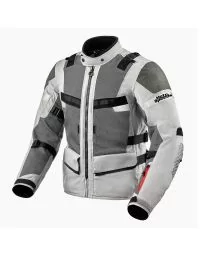
For buyers who want to review a real product example before ordering,
shows how protection, fit, and riding design can work together.Well-chosen all-weather motorcycle touring gear can help support comfort, armor placement, and protective coverage for your riding style. Take time to measure accurately, compare features thoughtfully, and choose fit over appearance. The right gear makes long rides more enjoyable and supports consistent protection when you need it most.
Frequently Asked Questions
Is custom motorcycle gear better than standard size gear?
Custom sizing is not automatically better—it depends on your body measurements and comfort needs. If your measurements match a standard size chart exactly, standard sizing can work well and arrives faster. If your measurements fall between sizes or if you have specific fit concerns, custom sizing can improve fit and armor placement. Custom sizing takes longer to produce and may cost more. Choose custom sizing if your measurements are accurate and if you want to adjust fit details like sleeve length, waist tapering, or armor placement.
Should I choose a one-piece or two-piece motorcycle racing suit?
One-piece suits keep the jacket and pants connected, preventing gaps at the waist and maintaining stable armor alignment. They work best for track-day and sport-focused riding. Two-piece suits split into separate jacket and pants, making them easier to remove and more practical for street and touring use. Two-piece suits require a full-length zipper connection to keep both pieces secure when zipped together. Choose based on your primary riding use, not on appearance alone.
How tight should motorcycle gear fit?
Motorcycle gear should fit snugly but not restrict movement or cause discomfort. In riding position, you should be able to move your arms, shoulders, and legs freely without bunching or pulling. Armor should sit directly on your body without moving when you move. Seams should not dig into skin. Zippers should not pinch. If gear feels tight while sitting on the bike, it will feel worse after an hour of riding. A slightly snug fit is better than loose fit because it keeps armor in place and improves protection.
What armor should I check before ordering?
Check that CE-certified armor is included or available as an option. Confirm the armor type (foam, gel, or composite), placement (shoulders, elbows, knees, back), and certification level (EN 1621-1 for limbs, EN 1621-2 for back). Check that armor sits directly on your body in riding position without shifting. Not all products include the same armor, so read product details carefully. If armor is optional, compare the cost and protection difference before deciding whether to add it.
What should I do if my measurements are between two sizes?
If your measurements fall between two sizes, contact brand support before ordering. Many brands offer custom sizing options or can recommend which standard size works better for your specific measurements and body shape. Custom sizing can adjust fit details to match your proportions. If custom sizing is not available or too expensive, ask support which standard size is more likely to fit your body shape and riding position. Do not guess—accurate fit advice before ordering prevents costly returns or poor fit.