Laminated vs. Drop Liner: Which Waterproofing Works Best for All-Weather Touring
When you ride into unexpected rain on a long tour, the difference between staying dry and soaked comes down to one thing: how your protective gear handles water. Laminated membranes and drop liners are two completely different approaches to keeping water out while you ride, and choosing between them affects not just comfort but also how well your armor stays in place and how your suit protects you during a slide. Understanding laminated versus drop liner construction helps you make a smarter gear decision before you commit to a full touring suit or jacket.
Quick Answer
Laminated membranes bond a waterproof layer directly to the outer fabric, creating a single, permanent barrier that resists water while maintaining breathability and durability. Drop liners are removable waterproof panels or linings that sit inside your gear, offering easy adjustment but requiring careful positioning to prevent water from finding gaps. For touring, laminated construction typically offers better reliability and protection, while drop liners suit riders who want flexibility and prefer to add or remove waterproofing based on weather.
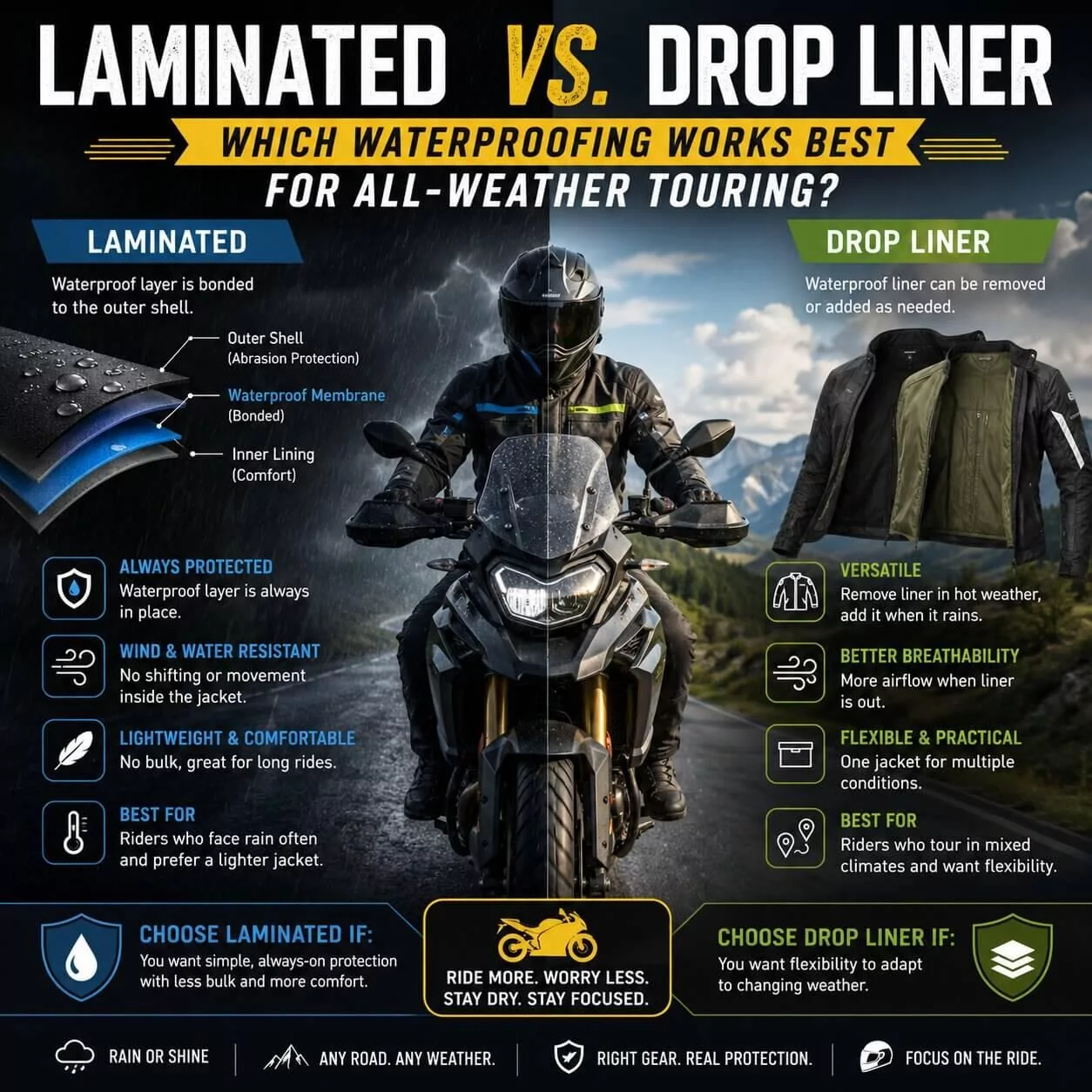
Table of Contents
- What Does Waterproofing Mean for Rider Safety and Comfort?
- How Laminated Membranes Work in Motorcycle Gear
- How Drop Liners Work and When Riders Choose Them
- Why Waterproofing Matters During Long Touring Rides
- How Waterproofing Affects Fit, Armor, and Movement
- What Riders Should Check Before Choosing Waterproofing
- Common Mistakes Riders Make When Selecting Waterproof Gear
- Final Buying Advice from MotoSpeeds
What Does Waterproofing Mean for Rider Safety and Comfort?
Waterproofing in motorcycle gear serves two purposes: keeping water out and maintaining comfort during long rides. Water that seeps into your protective suit can chill you, reduce visibility through fogged visors, and distract you on the road. More importantly, water can affect how well armor stays positioned and how the fabric moves with your body during a crash. A wet suit may slide differently on pavement than a dry one, and water trapped inside can affect the performance of impact protectors.
Waterproofing is not about making your gear completely waterproof in a swimming pool sense. Real touring gear is designed to shed water during typical riding conditions—rain, spray, puddles—while still allowing some breathability so you don't overheat. The goal is to keep water out during normal touring conditions without sacrificing comfort or the protective fit of your suit.
How Laminated Membranes Work in Motorcycle Gear
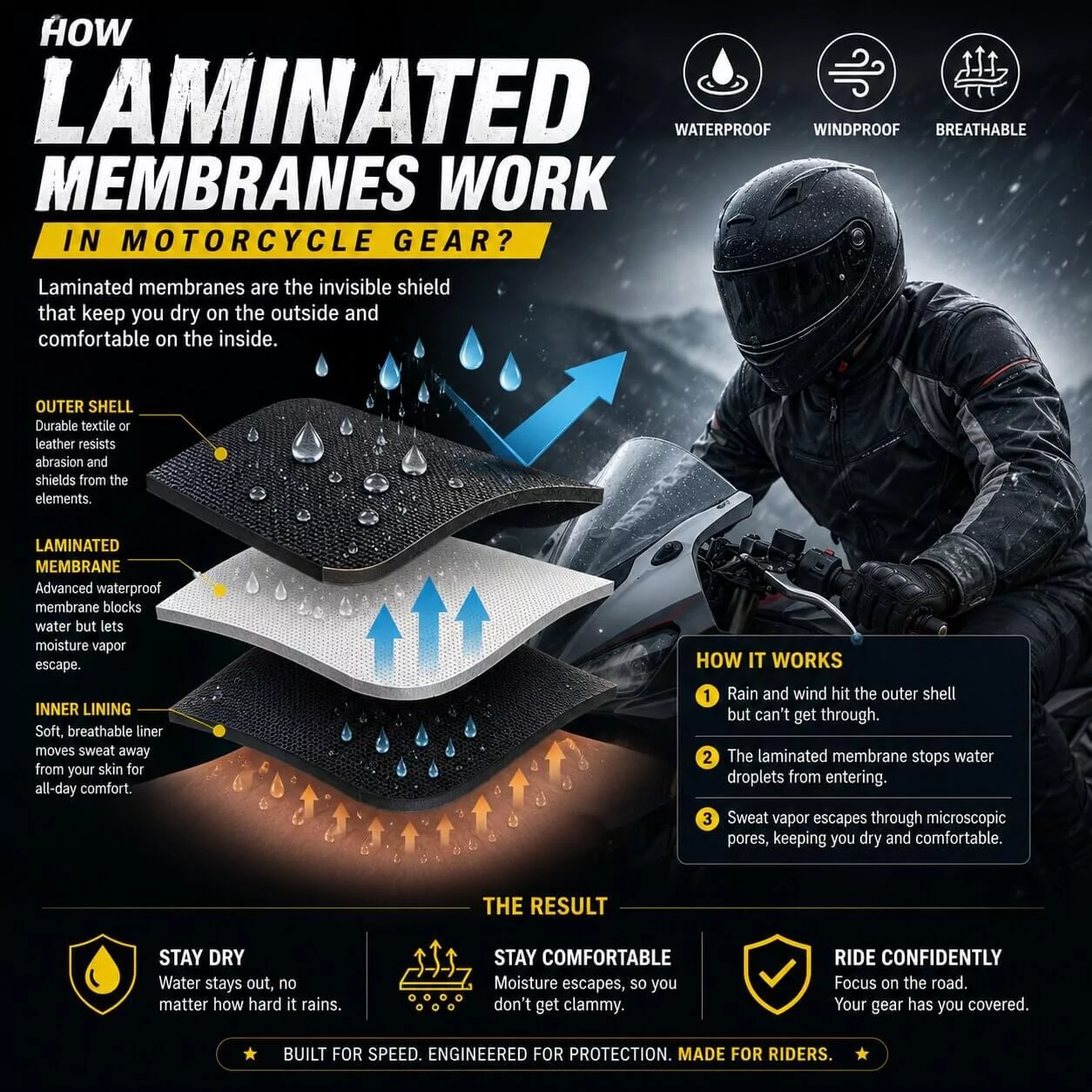
A laminated membrane is a thin, waterproof layer bonded directly to the inside of your outer fabric. Think of it as a permanent, integrated second skin. The membrane is typically made from polyurethane or other synthetic materials and is fused to the fabric during manufacturing. This creates one unified layer that resists water while still allowing moisture vapor to escape, which helps with breathability.
Laminated construction offers several advantages for touring riders. Because the membrane is permanently attached, there are no seams or edges where water can sneak in. The barrier stays in place no matter how you move or how your suit shifts during riding. You don't have to adjust or reposition anything—the waterproofing is always where it needs to be. For long touring days, this consistency means less worry about water finding its way past a loose panel or forgotten seam.
The trade-off is that laminated membranes cannot be removed or adjusted. If you ride in summer and want less protection, the membrane is still there, which can reduce breathability on hot days. Some riders also find that laminated gear feels slightly stiffer at first because the membrane adds structure to the fabric. However, quality laminated gear becomes more flexible with use as the membrane settles.
How Drop Liners Work and When Riders Choose Them
A drop liner is a separate, removable waterproof panel or full lining that sits inside your gear. It typically hangs from the shoulders or collar and can be pulled out when you don't need it or inserted when rain arrives. Drop liners are usually made from nylon or other lightweight waterproof materials and are designed to move with your suit without adding bulk.
Drop liners appeal to riders who want flexibility. You can ride in summer without the extra layer, then add waterproofing for autumn or winter touring. They're also useful for riders in variable climates where weather changes throughout the day. If your tour takes you from dry morning riding into afternoon rain, a drop liner lets you adapt without changing gear.
The challenge with drop liners is positioning. If the liner shifts, bunches, or doesn't cover the right areas, water can find gaps and soak through. Seams and edges in the drop liner can become leak points if they're not sealed or positioned carefully. Some riders also find that drop liners add bulk or create friction inside the suit, which can affect how the gear moves during a slide. A poorly positioned drop liner might also interfere with armor placement, preventing impact protectors from staying in the correct position on your body.
Why Waterproofing Matters During Long Touring Rides
On a multi-day touring ride, weather rarely stays consistent. You might start in dry conditions, encounter rain by midday, and face wind and spray in the evening. Waterproofing that works reliably across these changing conditions reduces stress and keeps you focused on the road instead of worrying about water seeping in.
For street touring and long-distance riding, laminated membranes typically offer more reliable protection because they have no moving parts and no seams to manage. The barrier is consistent throughout the ride, and you don't have to stop to adjust or reposition anything. Drop liners work well for riders who are disciplined about checking and adjusting them regularly, but they require more attention during the ride.
Track-day riders and sportbike riders doing road racing may prioritize different factors than touring riders. A track suit designed for racing may use laminated construction to ensure maximum protection and minimal shifting during aggressive movement. A touring suit, where comfort over eight hours matters as much as protection, might use either approach depending on the rider's priorities.
How Waterproofing Affects Fit, Armor, and Movement
The way your suit is waterproofed directly affects how it fits and how your armor stays in place. Laminated membranes add minimal bulk because the waterproof layer is bonded to the fabric itself. This means your suit's fit remains true to design, and armor placement is predictable and stable. The membrane doesn't shift or move, so your shoulder armor, elbow armor, knee armor, and back protector stay exactly where the manufacturer designed them.
Drop liners, because they're separate, can create extra layers in some areas and gaps in others. If the liner bunches at the elbow, your elbow armor might sit slightly differently than intended. If the liner shifts during riding, the coverage changes. For riders with custom-sized gear or those who have had armor fitted to their body, this variability can affect protection.
Both approaches can work for city riding, where speeds are lower and movement is less aggressive. On a sportbike or during track riding, where your body position changes dramatically and impacts can occur from multiple angles, consistent armor positioning becomes more critical. Laminated construction naturally supports this consistency.
Riders who want better protection for touring and road use can explore our
for gear designed around safety, fit, and all-weather riding comfort.What Riders Should Check Before Choosing Waterproof Gear
When comparing laminated versus drop liner gear, check the manufacturer's product details for specific information about waterproofing coverage. Does the membrane or liner cover the entire suit, or only certain areas like the chest and back? Are seams sealed? What materials are used, and how durable are they over time?
For laminated gear, ask whether the membrane is breathable and how it performs in different temperatures. Some laminated membranes are designed for racing and prioritize protection over breathability, while others balance both. Check the care instructions—some laminated gear requires specific washing or storage to maintain the membrane's effectiveness.
For drop liner gear, confirm that the liner is easy to insert and remove without damaging the suit. Check whether seams are sealed and whether the liner is designed to work with your armor placement. Some drop liners are designed for specific suit models, so compatibility matters. Ask whether the liner stays in place during aggressive riding or if you need to adjust it during the ride.
Consider your typical riding conditions. If you tour in consistent weather or ride mostly in summer, a drop liner might give you the flexibility you want. If you ride year-round or spend long days in variable weather, laminated construction typically offers more reliable protection with less adjustment needed.
Common Mistakes Riders Make When Selecting Waterproof Gear
Many riders assume that any waterproofing is equally effective. In reality, the quality of the membrane or liner, the coverage area, and how well it's sealed make huge differences. A cheap drop liner with unsealed seams might offer almost no real protection, while a quality laminated membrane from a reputable manufacturer provides consistent water resistance.
Another common mistake is choosing waterproofing based on marketing language alone. Words like "waterproof" or "weather-resistant" don't tell you whether the gear is suitable for your riding style. A suit designed for dry track racing with minimal waterproofing might not suit a touring rider, even if it's labeled "protective." Read the product details and check what the manufacturer actually says about waterproofing coverage and performance.
Riders also sometimes overlook fit when choosing between laminated and drop liner gear. A laminated suit that fits perfectly will protect better than a drop liner suit that's too loose, because fit affects how armor stays positioned and how the fabric moves during a slide. Custom sizing matters more than the waterproofing method itself.
Finally, some riders buy waterproof gear and then neglect maintenance. Both laminated membranes and drop liners can degrade over time if the gear is stored improperly, washed incorrectly, or exposed to excessive heat. Check the care label and follow the manufacturer's instructions to keep your waterproofing effective for years.
Final Buying Advice from MotoSpeeds
For riders comparing real protective gear, the
shows how waterproofing integration, armor placement, reinforced construction, and fit work together to support safer touring decisions.The choice between laminated and drop liner comes down to your riding style, climate, and how much adjustment you're willing to do during rides. Laminated membranes offer consistent, reliable waterproofing that requires no adjustment and works well for long touring days. Drop liners offer flexibility for riders who want to add or remove waterproofing based on weather, but they demand more attention to positioning and maintenance.
Neither approach fully prevents water from entering your gear under extreme conditions, and neither method alone determines your overall protection in a crash. Waterproofing works alongside armor, fit, abrasion resistance, and reinforced stitching to support safer riding. Your choice of waterproofing method should fit your actual riding conditions and the amount of gear management you're comfortable doing.
Start by understanding your typical riding conditions. Do you tour in rain regularly, or do you ride mostly in dry weather? Do you value flexibility and the ability to adjust gear, or do you prefer set-it-and-forget-it reliability? Once you know what matters to you, you can evaluate specific suits and jackets with confidence. MotoSpeeds gear is designed to help riders understand their options and make informed decisions about protection, fit, and comfort. Explore our protective gear collection and find the waterproofing approach that works best for your riding style and touring goals.
Frequently Asked Questions
What's the difference between a laminated membrane and a drop liner?
A laminated membrane is a waterproof layer bonded directly to the fabric during manufacturing—it's permanent and doesn't move. A drop liner is a separate, removable waterproof panel that sits inside your gear and can be taken out or repositioned. Laminated membranes offer consistent protection with no adjustment needed. Drop liners offer flexibility but require careful positioning to prevent water from finding gaps.
Is laminated or drop liner better for touring?
Laminated construction typically works better for long touring days because it requires no adjustment and provides consistent waterproofing throughout the ride. Drop liners work well for riders in variable climates or those who want to add waterproofing only when needed. Your choice depends on your climate, how much weather variability you encounter, and how much gear management you're comfortable doing during rides.
Can a drop liner shift during riding and affect armor placement?
Yes, drop liners can shift if they're not secured properly or if the suit moves significantly during riding. A shifted liner might affect how your armor sits and could create gaps where water enters. Laminated membranes don't have this problem because they're permanently bonded to the fabric and move as one unit with your suit.
Does laminated waterproofing reduce breathability?
Quality laminated membranes are designed to be breathable, allowing moisture vapor to escape while blocking liquid water. However, the breathability depends on the specific membrane used. Some racing-focused membranes prioritize protection over breathability, while touring-focused membranes balance both. Check the manufacturer's specifications for the gear you're considering.
How do I maintain waterproofing in my motorcycle gear?
Both laminated membranes and drop liners require proper care to stay effective. Follow the manufacturer's washing and storage instructions carefully. Avoid excessive heat, direct sunlight, and harsh chemicals that can degrade the waterproof layer. Store your gear in a cool, dry place, and inspect it regularly for damage. If your gear gets wet, allow it to dry completely before storing it.
Will waterproofing protect me if I crash?
Waterproofing helps keep you dry and comfortable during riding, which supports focus and safety on the road. However, waterproofing itself does not provide impact protection or abrasion resistance. Protection in a crash depends on armor, leather quality, reinforced stitching, fit, and how the gear performs during a slide. Waterproofing is one part of overall gear protection, not the entire solution.
Can I add a drop liner to gear that wasn't designed for one?
Some aftermarket drop liners exist, but they work best when designed for your specific suit model. Improvised or poorly fitting liners can bunch, shift, or interfere with armor placement. If you want to add waterproofing to existing gear, check whether the manufacturer offers a compatible liner or consider consulting a gear specialist. For new gear purchases, it's better to choose a suit designed with your preferred waterproofing method from the start.