Introduction: The Rider's Eternal Dilemma
Every motorcyclist knows the feeling: you set out on a beautiful day, the sun on your back, the open road ahead. But then, without warning, the skies darken. A few drops turn into a drizzle, and before you know it, you're caught in a downpour. In moments like these, the quality of your gear isn't just about comfort—it's about safety and the difference between a memorable adventure and a miserable, potentially dangerous ordeal.
The market for motorcycle apparel is flooded with terms like "water-resistant," "rainproof," and "waterproof." While these terms might sound similar, their performance in real-world conditions can be drastically different. Misunderstanding these distinctions is a common mistake that can leave you soaked, cold, and utterly frustrated.
In this comprehensive guide, we'll cut through the jargon to clearly define the crucial differences between "rainproof" and truly . We'll delve into the technologies behind each, discuss the nuances of weatherproof touring, explore the vital role of a dedicated rain liner, and explain how breathable fabrics keep you dry from the inside out.
Understanding the Basics: Degrees of Water Protection
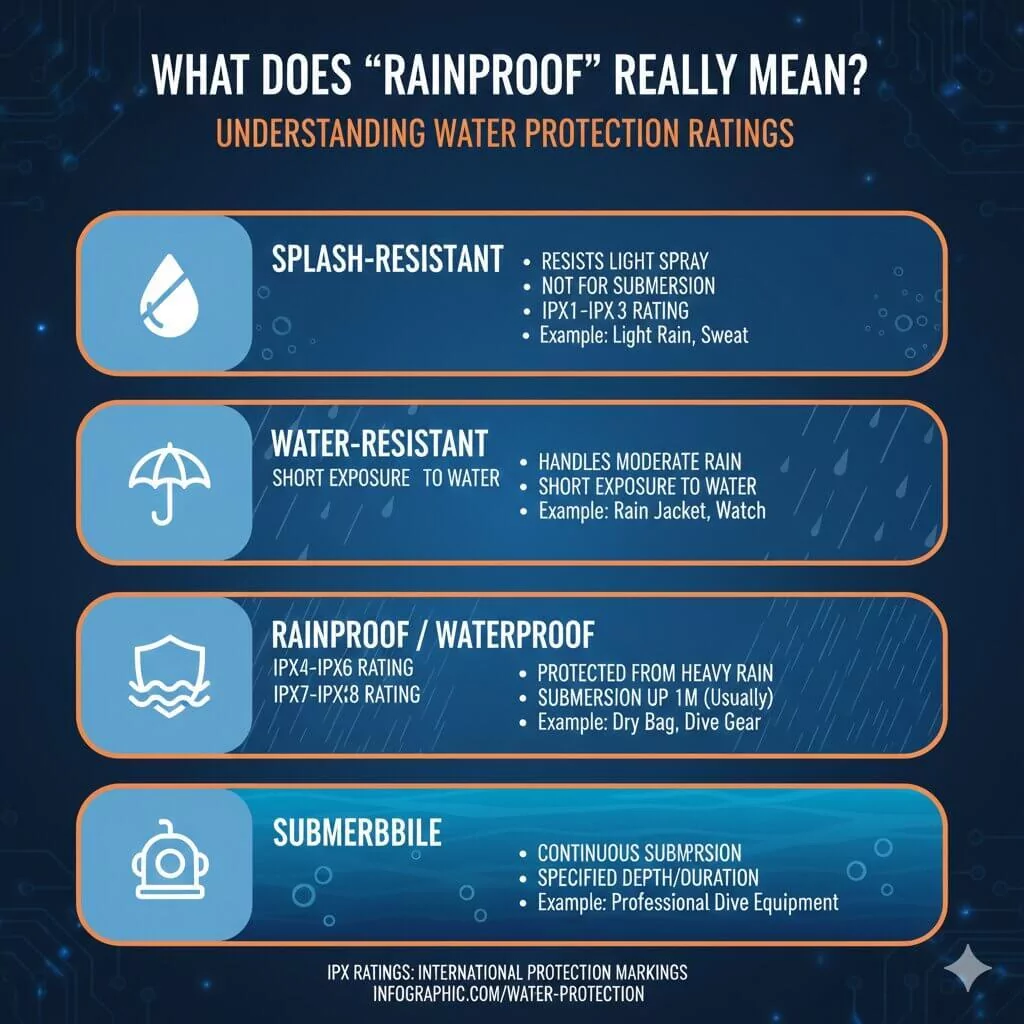
Before diving into the specifics, it's essential to understand that water protection in gear exists on a spectrum. It's not simply a binary "yes" or "no" answer.
- Water-Repellent: Often refers to a fabric treated with a Durable Water Repellent (DWR) coating. Water beads up and rolls off initially, but the fabric will eventually "wet out."
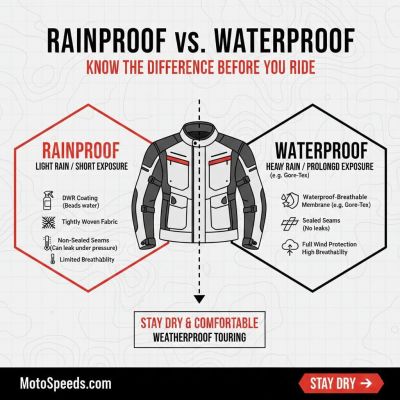
- Rainproof: Offers a higher level of protection than water-repellent, often involving tightly woven fabrics. It's designed to withstand light rain or short showers.
- Waterproof: The highest level of protection, designed to prevent any water ingress, even under heavy, sustained rain and pressure. This almost always involves a specialized waterproof membrane and sealed seams.
The key takeaway is that marketing terms can be tricky. A jacket labeled "rainproof" might keep you dry during a quick dash to the cafe, but it won't be sufficient for an hour-long ride in a torrential downpour at highway speeds.
What Does "Rainproof" Really Mean?
The term "rainproof" often implies a certain level of resistance to water, but it's crucial to understand its limitations. Gear labeled as rainproof is typically designed for light precipitation rather than high-speed riding through wet conditions.
Features of Rainproof Gear
- Tightly Woven Fabrics: Materials like densely woven polyester or nylon.
- Basic Coatings: A less advanced or thinner coating applied to the fabric.
- Non-Sealed Seams: Water can easily seep through the needle holes in the seams under pressure.
- Less Robust Zippers: Zippers might be water-resistant but not fully waterproof.
When is Rainproof Gear Sufficient?
Rainproof gear can be adequate for commuting in mild climates where showers are brief, urban riding at lower speeds, or as an initial layer of defense that you expect to augment with a dedicated rain liner.
Limitations of Rainproof Gear
The primary limitations include a lack of pressure resistance at highway speeds, limited duration of effectiveness, and often reduced breathability due to basic coatings.
The Gold Standard: True Waterproof Motorcycle Gear
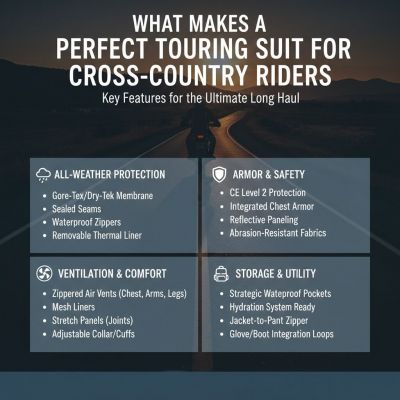
For any serious touring, waterproof motorcycle gear is not just a luxury; it's a necessity. True waterproofing provides an impenetrable barrier against water.
The Science of Waterproof Membranes
The key lies in specialized membranes—thin, porous layers made from PTFE or polyurethane. These feature billions of microscopic pores. These pores are too small for liquid water droplets to pass through, but large enough for water vapor (sweat) molecules to escape.
Types of Waterproofing Technology
- Gore-Tex: The industry standard for high performance and durability.
- Drystar (Alpinestars): Highly breathable membrane integrated into specific gear lines.
- D-Dry (Dainese): Proprietary waterproof and breathable membrane.
- Reissa/Hipora: Common polyurethane-based membranes offering good value.
Seam Sealing: The Unsung Hero of Waterproofing
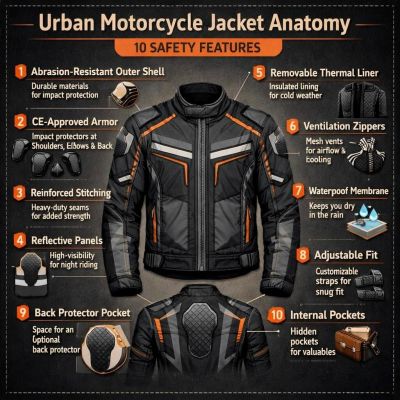
Even the best membrane is useless if water seeps through stitching. All seams in truly waterproof garments are sealed with a special tape, ensuring every needle hole is blocked.
The Importance of a DWR Coating
Durable Water Repellent (DWR) causes water to bead up, preventing the outer fabric from "wetting out." This maintains breathability and keeps the gear lighter.
Weatherproof Touring: A Holistic Approach
Weatherproof touring extends beyond your jacket. A single weak point can compromise your entire comfort levels.
Waterproof Boots: Your Foundation Against the Wet
Look for boots with an integrated membrane and a height that prevents water from running down your legs. This keeps your feet dry and maintains a critical feel for the controls.
Gloves: Maintaining Grip and Warmth
Wet hands lose dexterity. Waterproof gloves incorporate membranes and often include insulation. Ensure the cuff design works with your jacket to prevent "wicking" into the sleeve.
Stay Dry on Your Next Adventure
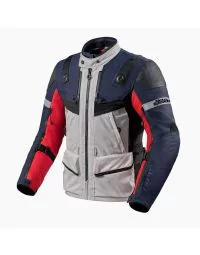
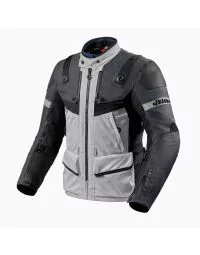
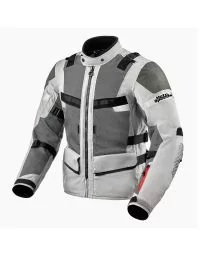
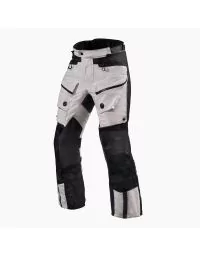
Don't let the rain stop your journey. For a full suite of protection, explore the range of motorcycle touring gear designed to handle all weather conditions..
The Role of the Rain Liner
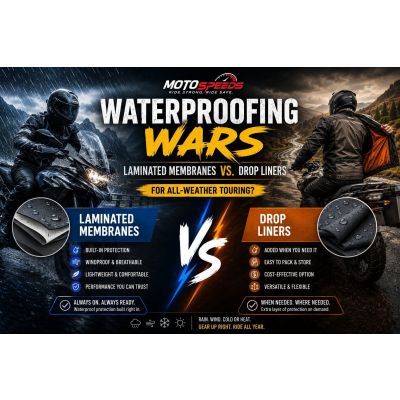
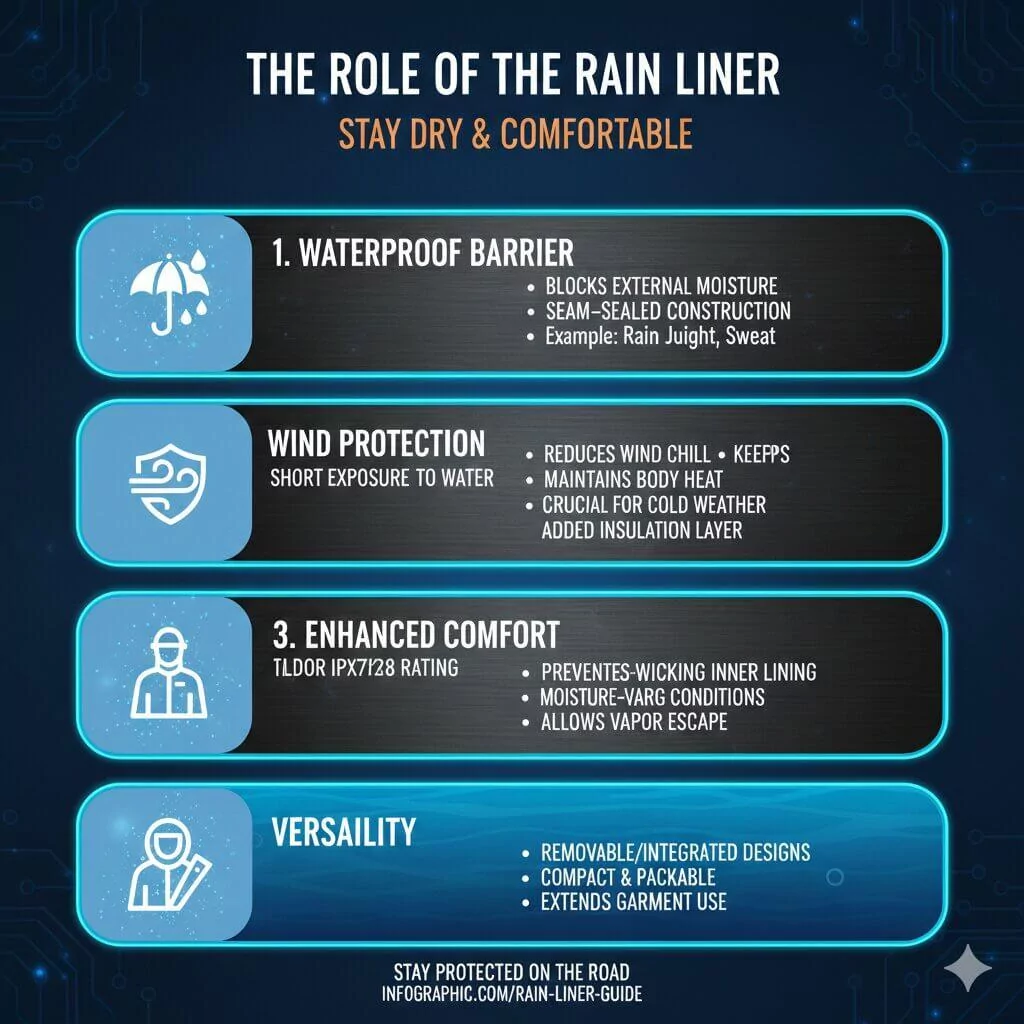
A rain liner is a dedicated waterproof layer worn either under or over your primary gear.
Integrated vs. Standalone Rain Liners
Integrated liners like those found in the are convenient and fit perfectly. Standalone "over-suits" keep your primary gear completely dry and are excellent for emergency rain protection.
How Rain Liners Work with Your Outer Shell
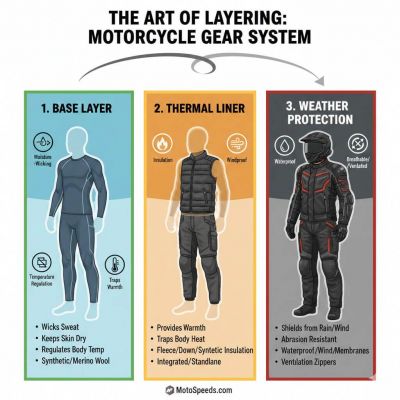
When worn inside, the outer shell absorbs water while the liner keeps you dry. When worn outside, the entire suit remains dry and light. Weatherproof touring often utilizes the outer method for long-duration rain.
The Breathable Fabrics Factor: Staying Dry from the Inside Out
The paradox of waterproofing is staying dry from your own sweat. High-quality breathable fabrics allow moisture vapor to escape. Without this, you encounter the "trash bag effect," where you end up soaked from the inside due to condensation.
FAQs About Waterproof and Rainproof Gear
- Is water-resistant the same as waterproof?
- No. Water-resistant gear repels water for a short time, while waterproof gear is designed to stay dry indefinitely under pressure.
- How do I wash waterproof gear?
- Use specific technical washes (like Nikwax) and avoid standard detergents or fabric softeners that can clog the membrane pores.
Conclusion: Ride Confidently, Come What May
Understanding the difference between rainproof and waterproof motorcycle gear is the first step toward better touring. By investing in the right membranes, ensuring sealed seams, and utilizing a reliable rain liner, you can turn a stormy ride into just another part of the adventure.