From Blueprint to Burnout: Inside the Motospeeds Manufacturing Masterclass
In the high-stakes arena of professional motorcycle racing, the difference between a podium finish and a trip to the medical center often comes down to millimeters. When you are leaning into a corner at 160 mph, your gear cannot just be "good enough"—it must be an extension of your biological frame.
At Motospeeds, we don't just "make" suits; we engineer them. Whether we are crafting the elite or a personalized track suit for a local enthusiast, our manufacturing process is a rigorous journey of technical precision.
Let’s pull back the curtain on how we transform raw, premium hides into the world’s most advanced racing armor.
Phase 1: The Digital Blueprint (Design & Measurement)
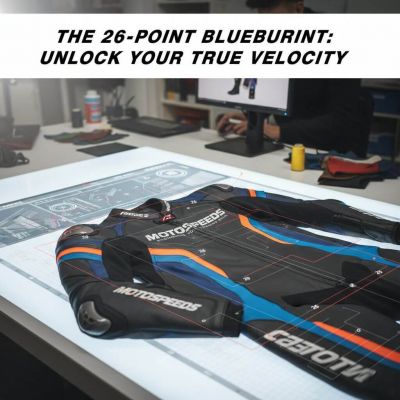
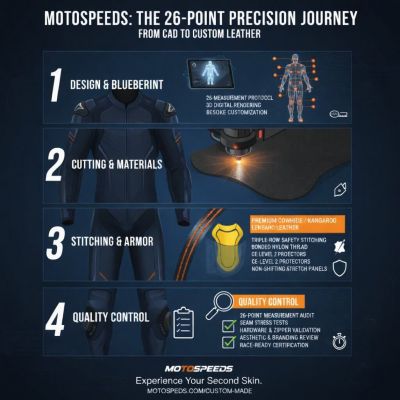
Every masterpiece begins with a plan. At Motospeeds, that plan is rooted in our industry-leading 26-measurement precision system. While the industry standard often relies on generic sizing, our About Custom-Made philosophy dictates that the suit must fit the rider's unique geometry in a "tucked" racing position.
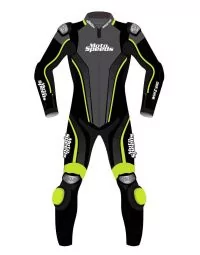
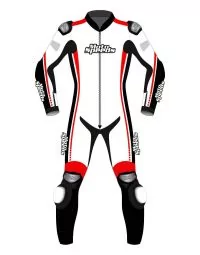
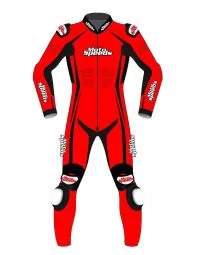
Once a rider submits their measurements, our design team creates a CAD (Computer-Aided Design) Render. This is where science meets style. We map out:
Anatomic Pivot Points: Ensuring the leather doesn't bunch behind the knees or pinch at the armpits.
Aerodynamic Sculpting: Designing the speed hump and torso profile to minimize drag.
Bespoke Aesthetics: Integrating custom colors, sponsor logos, and rider names into the digital pattern.
This digital file acts as the "DNA" for the suit, ensuring that when the leather is eventually cut, it accounts for every muscle contour and limb length.
Phase 2: Material Selection & Precision Cutting
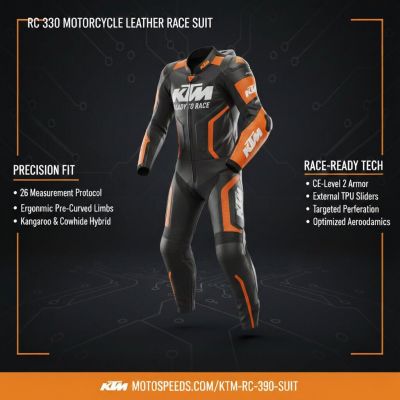
The integrity of a suit is only as strong as the hide it's made from. We source only the finest Top-Grain Cowhide and Kangaroo Leather. Kangaroo is often the choice for professional racers (like those wearing the Savitar Pro) because it offers higher tensile strength and superior abrasion resistance at a much lighter weight and thinner gauge than cowhide.
The Cutting Process:
Our master craftsmen inspect every hide for natural imperfections. Using the digital blueprint, we utilize automated precision cutting alongside traditional hand-finishing. This ensures that every panel—from the large back pieces to the small finger gussets—is cut to an accuracy of within 0.5mm.
We also cut our specialized stretch components here: Schoeller-Keprotec and accordion leather panels. These are the "active" parts of the suit that allow you to move across the bike with zero resistance.
Phase 3: The Architecture of Protection (Stitching & Assembly)
This is the most critical stage of the manufacturing process. A suit can have the best leather in the world, but if the seams fail during a slide, the leather is useless.
At Motospeeds, we employ Triple-Row Safety Stitching. This isn't just about durability; it's about redundancy.
The Hidden Seam: An internal stitch that holds the panels together, protected from road friction.
The Structural Seam: A heavy-duty bonded nylon thread that provides the primary strength.
The Top Stitch: Adds a final layer of reinforcement and aesthetic finish.
During assembly, we integrate our CE-Level 2 Armor. Unlike off-the-rack suits where armor can move around in loose pockets, Motospeeds armor is "locked" into the internal mesh lining. This ensures that in the event of a high-side or low-side, the protection stays exactly over your joints.
Phase 4: Technical Integration (The Savitar Pro Standard)
For high-performance models like the Savitar Pro, we add specialized technical features that go beyond standard construction:
External TPU Sliders: We bolt high-density Thermoplastic Polyurethane sliders onto the shoulders, elbows, and knees. These are designed to encourage a "slide" rather than a "tumble," significantly reducing the risk of broken collarbones or rotational neck injuries.
Hydro-Ready Aerodynamics: The speed hump is hollowed and reinforced to accommodate a hydration bladder and tube, essential for the physical demands of a race like the Isle of Man TT.
Laser Perforation: We use CNC lasers to create thousands of micro-perforations in specific "low-impact" zones to ensure maximum airflow without compromising the structural integrity of the leather.
Phase 5: Quality Control (The Final Gauntlet)
Before a Motospeeds suit is cleared for the track, it must pass a multi-point inspection. Our Quality Control (QC) team operates like a pit crew—fast, thorough, and unforgiving of errors.
The Motospeeds QC Checklist:
Measurement Audit: Every suit is measured against the original 26-point chart submitted by the rider. If it’s off by more than a few millimeters, it doesn't ship.
Seam Stress Test: We manually inspect every inch of stitching for consistency and tension.
Hardware Validation: We test every YKK zipper, snap, and Velcro fastener to ensure they operate smoothly under the pressure of a tight fit.
Logo & Aesthetic Review: We ensure the colors are vibrant and the branding is perfectly aligned as per the rider’s approved render.
The Result: Your Second Skin
The transition from a raw hide to a finished takes dozens of man-hours and years of expertise. When you choose Motospeeds, you aren't just buying a suit; you are investing in a manufacturing process that has been refined on the world's most dangerous race tracks.
Precision isn't just a buzzword for us—it's our manufacturing philosophy. From the first measurement to the final stitch, we build every suit with one goal in mind: to let you ride faster, safer, and with more confidence than ever before.