
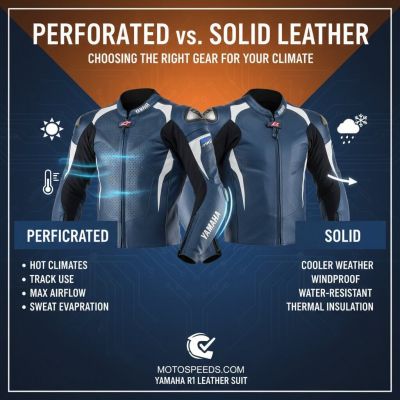
When it comes to high-performance motorcycle gear, leather remains the gold standard. It offers unparalleled abrasion resistance, a "second skin" fit, and a timeless aesthetic that textile simply cannot match. However, once you decide to invest in a premium leather setup—such as the iconic Yamaha R1 Leather Suit—you are faced with a critical choice: Perforated or Solid leather?
This decision isn't just about looks; it’s about thermal regulation, rider fatigue, and geographical suitability. Choosing the wrong type of leather for your local climate can turn an exhilarating ride into an exhausting ordeal. In this guide, we’ll break down the technical differences to help you choose the right for your specific environment.
Understanding the Technical Difference
Before diving into climate specifics, it is important to understand what "perforation" actually is. Perforated leather features thousands of tiny, laser-cut holes across the surface of the hide. These holes are strategically placed in areas that are not primary impact zones (like the chest, inner arms, and thighs) to allow air to pass through the suit and reach the rider’s body.
Solid leather, by contrast, is a continuous hide. It acts as a total barrier against the elements—blocking wind, moisture, and debris. While both offer identical levels of slide protection, their "breathability" profiles are polar opposites.
The Case for Perforated Leather: The Summer Warrior
If you live in a region where summer temperatures frequently climb above 80°F (27°C), perforated leather is almost a necessity.
1. Thermal Regulation and Sweat Evaporation
Motorcycling is a physical sport. Between the heat of the engine beneath you and the sun beating down from above, your core temperature rises quickly. Perforated gear allows for "evaporative cooling." As you move, air flows through the tiny holes, wicking moisture away from your skin. This prevents the "greenhouse effect" inside your suit, where heat becomes trapped against your body.
2. Reducing Rider Fatigue
Heat exhaustion is a genuine safety risk for motorcyclists. When you overheat, your reaction times slow down, and your focus wavers. A perforated keeps you fresher for longer, allowing you to maintain the mental sharpness required for technical cornering and high-speed maneuvers.
The Trade-off: Perforated leather is a "one-way street" for air. If the temperature drops or if you get caught in a rain shower, you will feel it instantly. Even a 65°F (18°C) morning can feel freezing when you have wind blasting through your suit at 60 mph.
The Case for Solid Leather: The All-Season Protector
Solid leather is the traditional choice for riders in temperate or cooler climates, such as Northern Europe or the Pacific Northwest.
1. Wind and Cold Protection
The primary enemy of a rider in cool weather is wind chill. Solid leather provides an impenetrable shield that keeps your body heat contained. By blocking the wind, you prevent the rapid cooling of your muscles, which can lead to cramping and stiffness.
2. Water Resistance
While no leather suit is truly "waterproof" without a specialized coating, solid leather is significantly more water-resistant than perforated leather. In a light drizzle, water will bead off solid leather, whereas perforated leather will allow moisture to seep directly through the holes onto your base layers.
The Trade-off:
In the height of summer, solid leather can feel like a sauna. Without airflow, sweat builds up, making the suit heavy, sticky, and difficult to remove at the end of the day.
Which Climate Are You Riding In?
To make the best choice from the Motospeeds race gear collection, look at your typical riding season:
-
Hot & Humid (e.g., Florida, Southeast Asia, Australia): 100% Perforated. The humidity makes sweat evaporation difficult, so you need every bit of airflow possible.
-
Dry Heat (e.g., Arizona, Southern Spain): Perforated. Even though the air is dry, the sheer intensity of the sun will overheat you in solid leather.
-
Temperate/Variable (e.g., UK, Northern USA, Canada): Solid Leather (paired with a base layer) or "Partial Perforation." Many riders in these zones prefer solid leather because it is easier to add a cooling vest in the summer than it is to seal up thousands of holes in the winter.
-
Track-Only Use: Perforated. Racing is high-intensity. Even in cool weather, the physical exertion of track riding will generate significant body heat. Most professional suits, including the Yamaha R1 bespoke models, come with standard perforation for this reason.
The Motospeeds Bespoke Solution: Hybrid Customization
The beauty of choosing Motospeeds is that you don't have to settle for a binary choice. Through our bespoke measurement and design service, we can customize the level of perforation based on your specific needs.
For example, a rider in a "Mixed Climate" might opt for:
-
Zoned Perforation: Perforated chest and inner arm panels for cooling, but solid leather on the back and outer limbs to maintain warmth and structural rigidity.
-
Removable Liners: Our suits can be equipped with removable thermal or wind-blocking liners. This allows you to wear a perforated suit in the morning with the liner in, and zip it out as the afternoon sun heats up.
Conclusion: Comfort is Safety
At the end of the day, the best gear is the gear that keeps you comfortable. If you are shivering or sweating excessively, you are not riding at your best.
When selecting your next Yamaha R1 Leather Suit, consider your "comfort zone." If you primarily ride in the heat, go perforated and enjoy the breeze. If you are a year-round rider who braves the chill, solid leather is your best friend.
Explore our full range of motorbike race gear and customize your perforation levels today to match your environment perfectly.