Table of Contents
Introduction
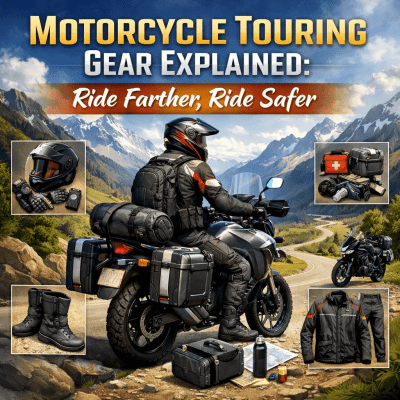
Long-distance riders will tell you one truth—touring is more than riding. Touring is endurance. It is weather, fatigue, road conditions, body stress, and hours of nonstop movement.
And the gear you choose decides whether your journey feels like freedom…
or a slow battle against discomfort.
Touring motorcycle gear isn’t the same as everyday jackets or city commuting outfits.
It’s built for comfort, protection, weather adaptability, ventilation, storage, and long-term durability.
Whether you're planning a multi-day adventure, a cross-country ride, or simply leveling up your weekend trips, this guide gives you every detail you need to choose touring gear that keeps you safe — and keeps you riding longer.
What Makes Touring Motorcycle Gear Different?
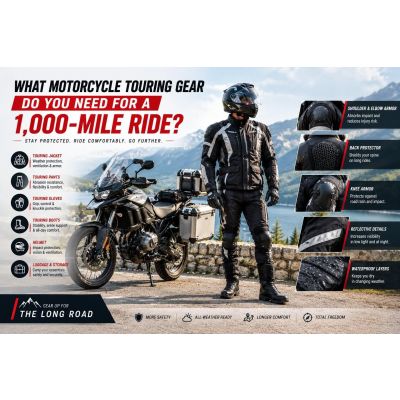
Touring gear focuses on long hours in the saddle. Unlike racing gear or city gear, touring outfits must handle:
Changing weather
Long-distance fatigue
Temperature swings
Heavy luggage
Vibration and wind buffeting
Multi-day wear
That’s why touring motorcycle gear blends comfort with high-level protection.
The right gear should allow you to:
Move freely
Stay dry
Stay warm or cool
Resist impact
Carry essentials
And last for years of hard use. Explore the full collection.
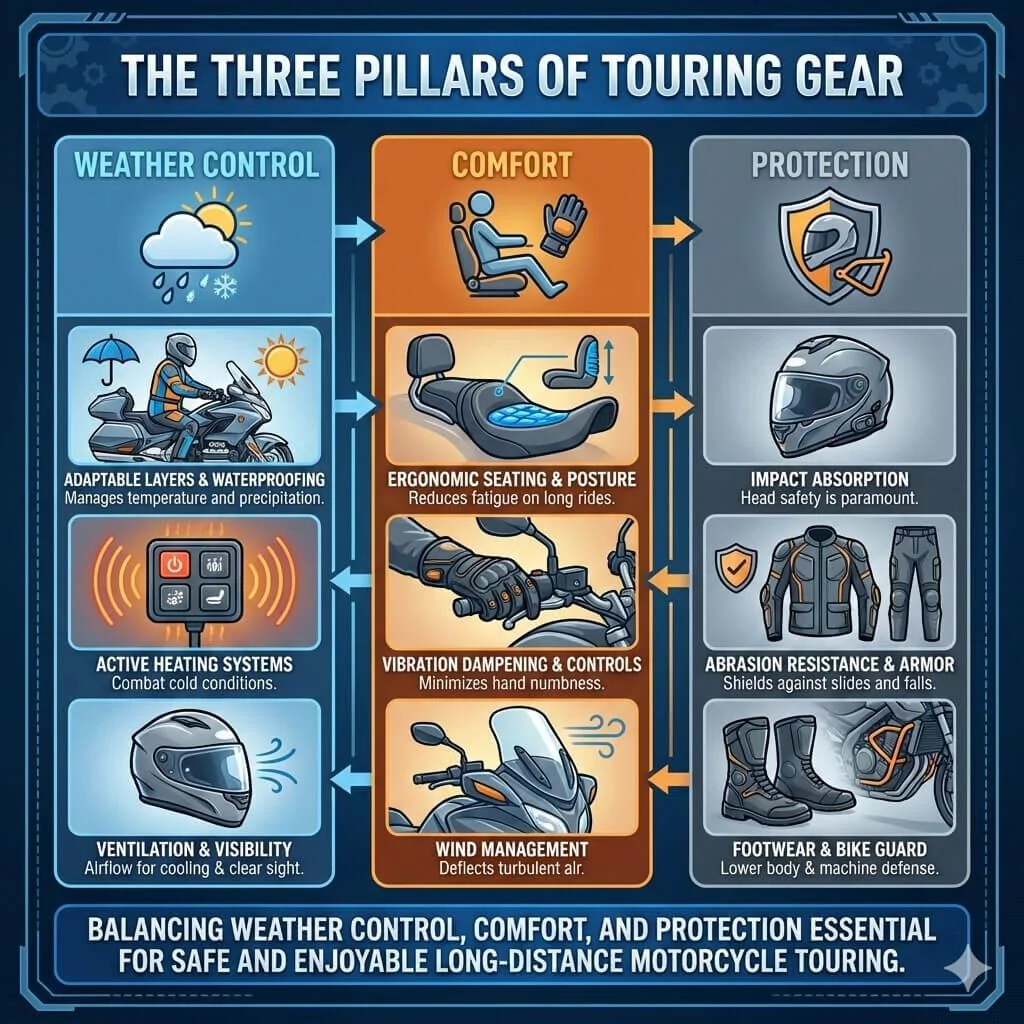
The Three Pillars of Touring Gear
For long-distance riding, every decision comes down to:
1. Protection
CE armor, abrasion-resistant materials, reinforced stitching.
2. Comfort
Ventilation, temperature control, soft liners, room to stretch.
3. Weather Control
Waterproofing, wind resistance, layering systems.
If your gear fails in even one of these pillars, your touring experience becomes harder — and more dangerous.
Touring Jackets Explained
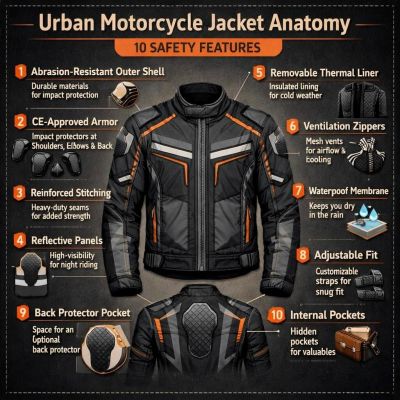
A proper touring jacket includes:
✔ Multiple protective layers
Outer shell, waterproof membrane, thermal liner.
✔ CE-approved armor
Shoulders, elbows, and back protect you during unexpected falls.
✔ Vented designs
Long rides require airflow. Touring jackets use zippered vents for intake and exhaust.
✔ Multiple adjustment straps
Keeps the jacket fitted as you change layers.
✔ Large storage pockets
Maps, gloves, wallets — everything needs space.
✔ Reflective panels
Night visibility is essential on rural roads.
Touring jackets are built for the long haul.
Touring Pants & Suits
Touring pants must match the jacket in durability and comfort.
Look for:
Reinforced knee and hip armor
Heavy-duty textile or leather options
Waterproof zippers
Adjustable waist
Heat-resistant inner leg material
Air vents for cooling
Many riders prefer a one-piece waterproof for maximum weather protection and minimal hassle.
Weather Protection: Waterproof Touring Gear
Rain is the enemy of comfort.
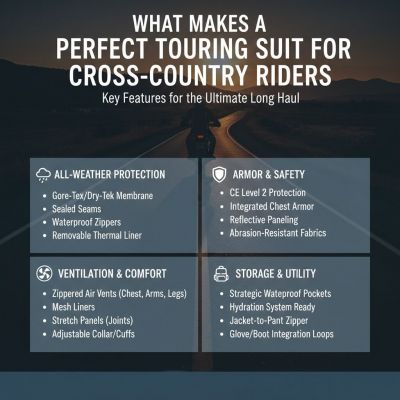
That’s why the waterproof touring suit is the most crucial part of touring motorcycle gear.
What waterproof touring suits must include:
✔ Laminated waterproof membrane
Not simply an inner liner — laminated designs prevent soaking.
✔ Sealed seams
Stops wind and water penetration.
✔ Storm flaps over zippers
Waterproofing is useless if the zippers leak.
✔ High collar with soft lining
Stops rain from entering the chest area.
✔ Waterproof pockets
Protects devices and documents.
Your comfort on long rides depends heavily on waterproof performance.
Comfort Gear for Long-Distance Riding
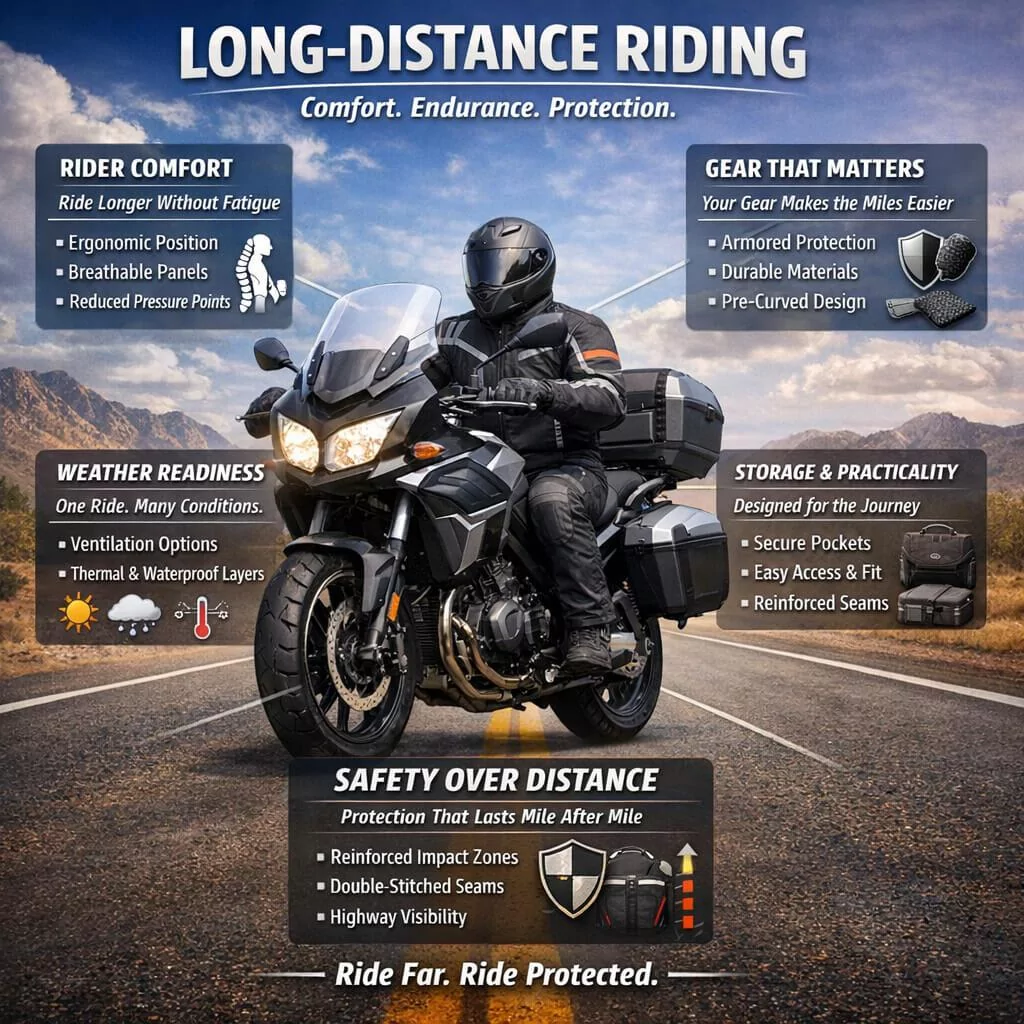
You can ride in any jacket for an hour.
But ride six hours — and comfort becomes survival.
Touring comfort gear includes:
1. Soft-touch inner liners
Prevents skin irritation during long hours.
2. Stretch panels
Allow easier movement when shifting position.
3. Thermal liners
Cold rides drain your energy. Thermal liners trap heat effectively.
4. Moisture-wicking material
Sweat buildup can become unbearable inside waterproof gear.
5. Padded neck and wrist openings
Reduce fatigue and wind irritation.
Comfort is a large part of safety.
A distracted rider is a vulnerable rider.
Armor, Safety, and Impact Protection
Touring gear must be built with crash protection in mind.
CE Armor in Touring Motorcycle Gear
High-quality gear includes:
CE Level 1 or Level 2 armor
Back protector pocket
Reinforced shoulder caps
Elbow impact zones
Hip and knee armor
Unlike racing, touring accidents often involve:
Low-to-medium speed falls
Wet roads
Unpredictable surfaces
Proper armor reduces injury risk massively.
Ventilation Systems for Varying Climates
Long-distance trips often include multiple climates in one day.
That’s why touring gear uses:
✔ Chest vents
✔ Sleeve vents
✔ Rear exhaust vents
✔ Mesh ventilation zones
Air enters through the front, circulates inside, and exits through the back — regulating temperature.
Tip:
Never rely on a suit without rear exhaust vents.
They prevent heat buildup and sweating during warm rides.
Storage & Utility: Touring Gear Features
Touring gear must be functional.
Common touring storage features:
Waterproof inner pocket
Large chest pockets
Cargo-style thigh pockets
Hidden back pocket for documents
Easy-access pockets for maps or snacks
Cord outlet for intercom or phone
These pockets reduce the need to stop and unpack.
Choosing the Right Touring Gear for Your Riding Style
Different riders need different gear.
For Highway Riders
Look for:
High wind protection
Full-length waterproof suits
Strong thermal liners
For Mixed Off-Road Touring
Choose:
Abrasion-resistant textiles
Shoulder and knee reinforcement
Dust-proof zippers
High ventilation levels
For Cold Weather Touring
Focus on:
Windproof shell
Thick thermal liners
Tall collar and wrist seals
For Hot Climate Touring
Important features:
Maximum mesh ventilation
Lightweight construction
Breathable moisture-wicking fabric
Touring gear should match your riding environment.
MotoSpeeds Touring Gear Recommendations
MotoSpeeds builds touring gear for both safety and comfort, offering:
Waterproof textile suits
CE-approved armor
Breathable mesh panels
Adjustable touring fits
Lightweight but tough designs
All-weather functionality
Conclusion
Touring isn’t about distance — it’s about preparation.
If your gear fails, your journey becomes harder, riskier, and less enjoyable.
But when your gear supports you with waterproofing, comfort liners, strong armor, ventilation, and utility pockets, every mile becomes easier.
The right touring motorcycle gear lets you:
Ride longer
Ride safer
Ride comfortably
Ride confidently
Before your next adventure, upgrade your touring gear — and upgrade your experience.
FAQs
1. What is touring motorcycle gear?
Touring motorcycle gear is specialized equipment designed for long-distance riding. It offers comfort, weather resistance, and stronger protection than everyday motorcycle gear.
2. Why is waterproof touring gear important?
Rain can cause discomfort, hypothermia, and distraction. Waterproof gear keeps you dry, warm, and focused throughout your ride.
3. What armor should touring gear have?
High-quality touring gear includes CE Level 1 or Level 2 armor for shoulders, elbows, knees, hips, and optionally a back protector.
4. How does ventilation help in long-distance riding?
Ventilation prevents overheating by allowing air to circulate inside your jacket or suit, keeping you comfortable through warm climates or long hours on the road.
5. What is the best touring gear for all-weather riding?
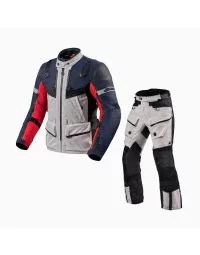
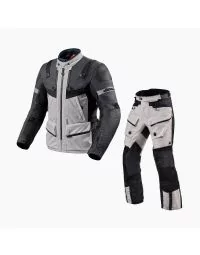
A waterproof textile touring suit with CE armor, removable liners, and good ventilation — like the MotoSpeeds Revolt Textile Suit — is ideal for all-weather conditions.