Table of Contents
Introduction
When it comes to motorsport safety, not all racing suits are created equal. Whether you're a beginner entering track days or a professional competing at high levels, choosing the right certified racing suit is critical.
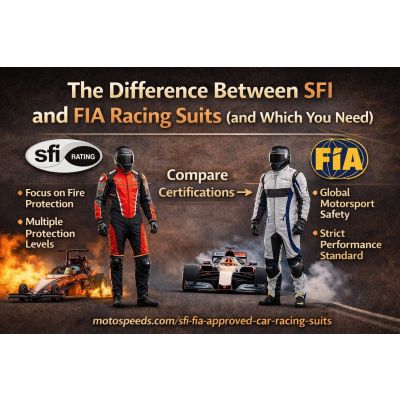
Two major certification systems dominate the racing world:
SFI (Safety Foundation Inc.)
FIA (Fédération Internationale de l'Automobile)
Understanding the difference between SFI vs FIA suits is essential for selecting gear that meets your racing requirements, safety expectations, and competition rules.
Both certifications are designed to protect drivers from fire, heat, and impact—but they differ in testing standards, performance levels, and global usage.
If you're looking for , explore MotoSpeeds’ professional collection:
What Are Racing Suit Certifications?
Racing suit certifications ensure that a suit meets specific safety standards for fire resistance, heat protection, and durability.
These standards are created by governing bodies to:
Reduce burn injuries during fires
Ensure consistent quality across manufacturers
Set minimum safety requirements for competitions
Without certification, a racing suit cannot be trusted to perform under extreme conditions.
What Is SFI Certification?
Overview of SFI Standards
The SFI Foundation is a U.S.-based organization that sets safety standards for motorsports equipment.
The most common standard for racing suits is:
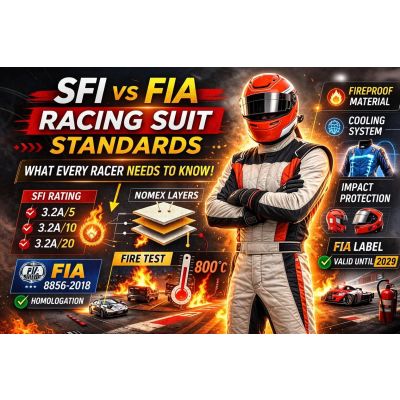
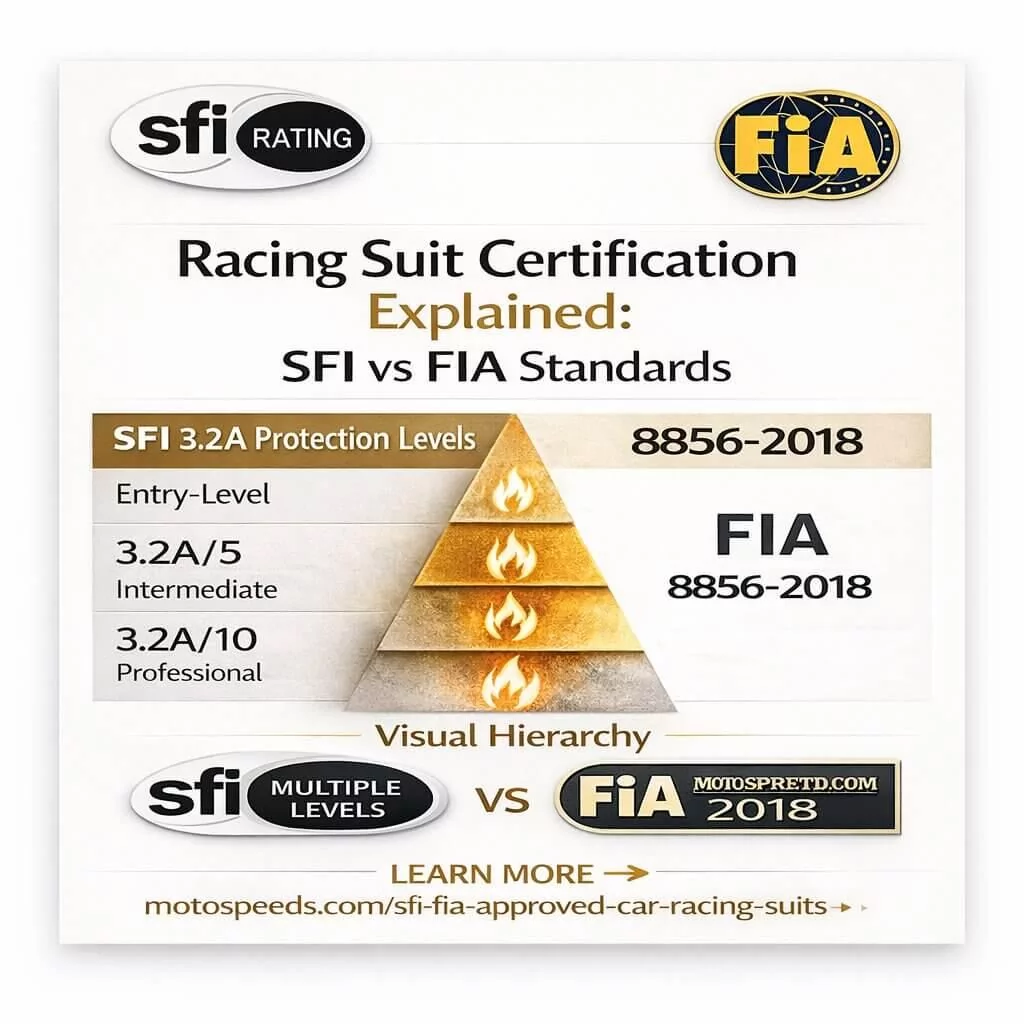
SFI 3.2A
This standard focuses primarily on fire resistance and thermal protection.
SFI Rating Levels
SFI suits are categorized by protection levels:
| SFI Rating | Protection Level |
|---|---|
| 3.2A/1 | Entry-level |
| 3.2A/5 | Intermediate |
| 3.2A/10 | Professional |
| 3.2A/15+ | Advanced racing |
Higher numbers indicate greater fire protection and longer exposure resistance.
Key Features of SFI Suits
Measured using TPP (Thermal Protective Performance)
Focus on heat exposure time
Often used in:
- drag racing
- stock car racing
- grassroots motorsports
What Is FIA Certification?
Overview of FIA Standards
The FIA (Fédération Internationale de l'Automobile) governs international motorsport competitions.
The most common racing suit standard is:
FIA 8856-2018
This certification is more comprehensive than SFI and includes:
fire resistance
heat transfer
abrasion resistance
structural integrity
Key Features of FIA Suits
FIA-certified suits are required in:
Formula racing
endurance racing
GT racing
rally racing
These suits undergo strict testing for real-world crash scenarios, not just fire resistance.
Key Differences Between SFI vs FIA Suits
Understanding the difference between SFI vs FIA suits helps you choose the right gear.
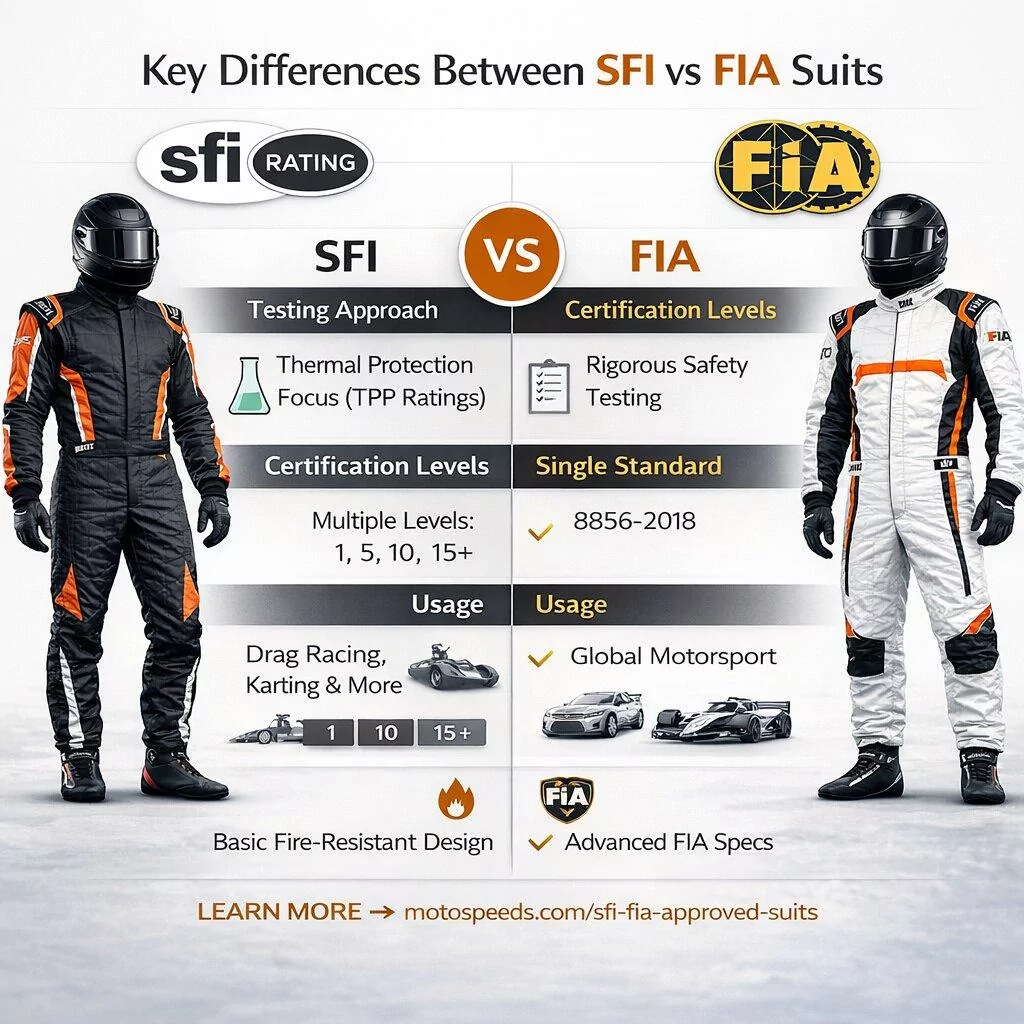
1. Testing Approach
SFI: Focuses on fire resistance using TPP rating
FIA: Tests fire, abrasion, tear strength, and durability
2. Protection Scope
SFI: Primarily thermal protection
FIA: Full-body protection including impact and wear resistance
3. Certification Levels
SFI: Multiple numeric levels (3.2A/1 → 3.2A/15)
FIA: Single strict standard (8856 series)
4. Usage
SFI: Common in North America
FIA: Required in international racing
5. Suit Design
SFI suits: Often thicker (to increase TPP rating)
FIA suits: Lightweight but highly engineered
Fire Protection & TPP Ratings Explained
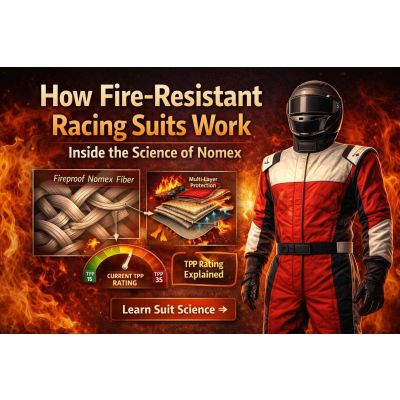
SFI suits rely heavily on TPP (Thermal Protective Performance).
What Is TPP?
TPP measures how long a suit can protect against heat before causing second-degree burns.
Formula:
TPP rating × 2 = seconds of protection
Example:
TPP 10 = ~20 seconds protection
TPP 20 = ~40 seconds protection
FIA vs TPP
FIA does not rely solely on TPP. Instead, it evaluates:
flame spread resistance
heat transfer delay
material durability
This results in more balanced safety performance.
Suit Construction & Material Differences
SFI Suit Construction
Multi-layer Nomex or fire-resistant fabric
Focus on thermal insulation
Thicker construction
FIA Suit Construction
Lightweight multi-layer fabrics
Advanced material engineering
Optimized for both:
protection
comfort
Key Materials Used
Nomex (fire-resistant fiber)
Aramid blends
reinforced stitching
stretch panels
Which Racing Suit Do You Need?
Choosing between SFI vs FIA suits depends on your racing environment.
Choose SFI If:
You race in:
drag racing
club-level racing
Your series requires SFI certification
You want cost-effective fire protection
Choose FIA If:
You compete in:
professional motorsports
international racing
Your series requires FIA certification
You want maximum overall protection
Motorsport Safety: Why Certification Matters
are your last line of defense during accidents.
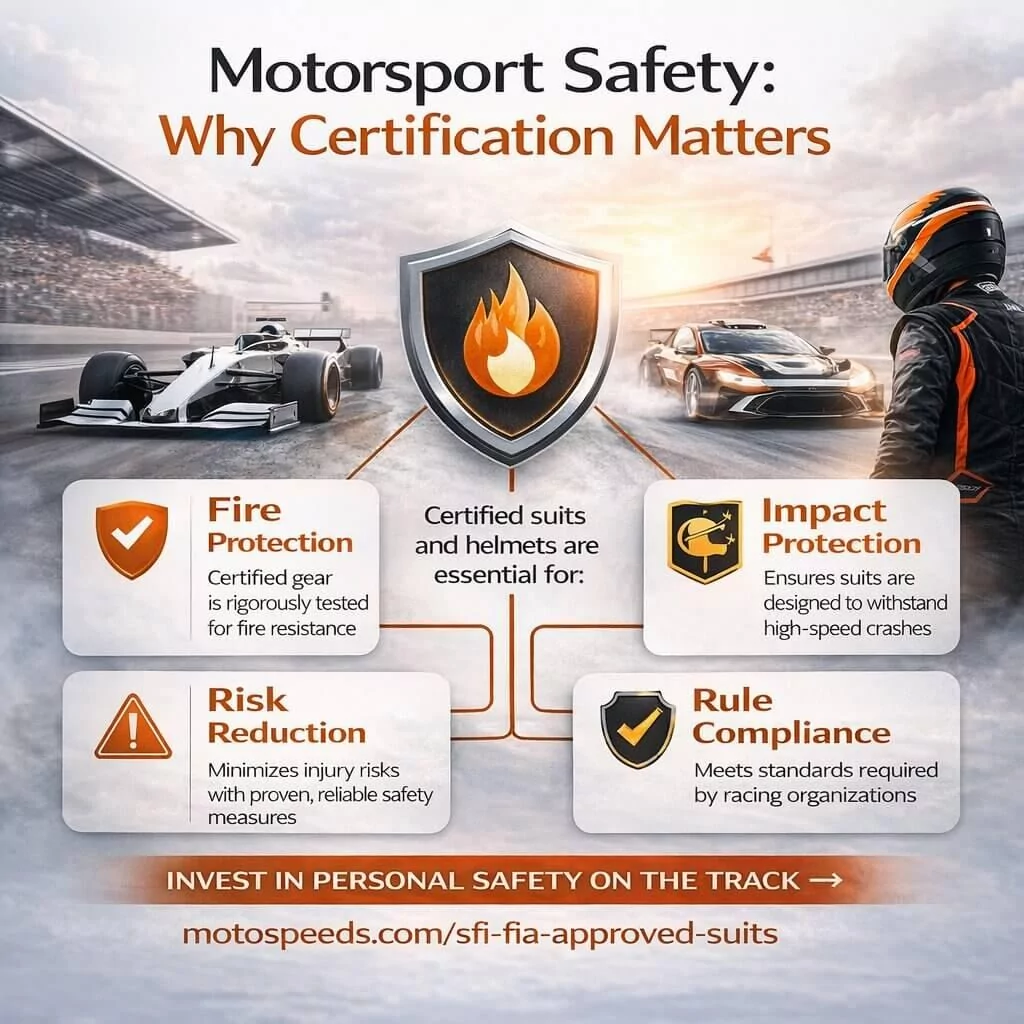
Certification ensures:
reliable fire resistance
tested durability
standardized safety performance
Without certified gear, the risk of severe injury increases significantly.
Modern motorsport safety combines:
certified racing suits
helmets
gloves
boots
fireproof underlayers
Choosing the Right Certified Racing Suit
When buying a racing suit, consider:
1. Certification Requirement
Always check your racing series rules.
2. Fit & Comfort
A proper fit improves both:
safety
performance
3. Material Quality
Look for:
Nomex construction
reinforced seams
breathable layers
4. Custom Options
For professional racers, custom suits offer:
perfect fit
personalized design
optimized performance
Conclusion
The choice between SFI vs FIA suits ultimately comes down to your racing level, safety needs, and certification requirements.
SFI suits are ideal for entry-level and North American racing
FIA suits provide advanced, globally recognized protection
Both standards play a critical role in motorsport safety, but FIA certification offers a more comprehensive approach to protection.
If you’re serious about racing, investing in a high-quality certified suit is not optional—it’s essential.
FAQs
What is the main difference between SFI and FIA suits?
SFI suits focus on fire resistance using TPP ratings, while FIA suits provide broader protection including abrasion and durability testing.
Are FIA suits safer than SFI suits?
FIA suits generally offer more comprehensive protection, but both certifications are safe when used in their intended racing environments.
Can I use an SFI suit in FIA racing?
No, FIA competitions require FIA-certified suits.
What does SFI 3.2A mean?
It is a fire-resistance standard used to classify racing suits based on thermal protection levels.
Why are FIA suits more expensive?
FIA suits undergo more extensive testing and use advanced materials, making them more expensive than SFI suits.