
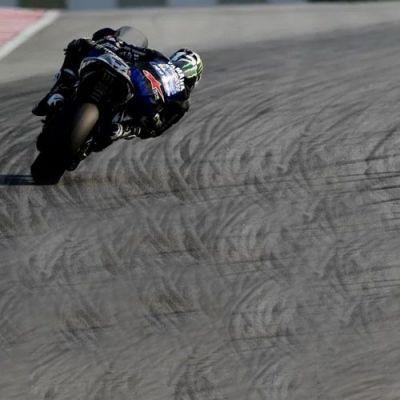
In the high-stakes world of MotoGP™, split-second decisions on the track are often followed by careful adjudication off the track. Penalties can make or break a rider’s race weekend, but who exactly has the authority to apply these sanctions—and how is the appeals process structured? In this blog post, we’ll pull back the curtain and explain who applies penalties in MotoGP™, what kinds of penalties exist, and how disputes climb through the system.
Who Holds the Power? The FIM MotoGP™ Stewards Panel
The core authority for sporting rulings in MotoGP lies with the FIM MotoGP Stewards panel.
The FIM (Fédération Internationale de Motocyclisme) is the governing body for motorcycle racing worldwide, and it holds the ultimate mandate over rules, regulations, and disciplinary procedure in MotoGP.
The Grand Prix Commission—a collective body involving FIM, Dorna (commercial rights holder), IRTA (teams’ association), and MSMA (manufacturers’ association)—is responsible for creating and updating the regulations.
During each race weekend, the FIM MotoGP Stewards Panel reviews incidents and applies penalties consistent with the Sporting Regulations.
Composition & Independence
The Stewards panel typically includes three members: two Stewards (nominated by FIM) and a Chairman (nominated by IRTA). Dorna, while approving the nominations, does not directly participate in disciplinary decisions.
These stewards are independent of teams, and their mandate is to apply the rules impartially based on the evidence, telemetry, video review, rider statements, and other inputs gathered during a Grand Prix.
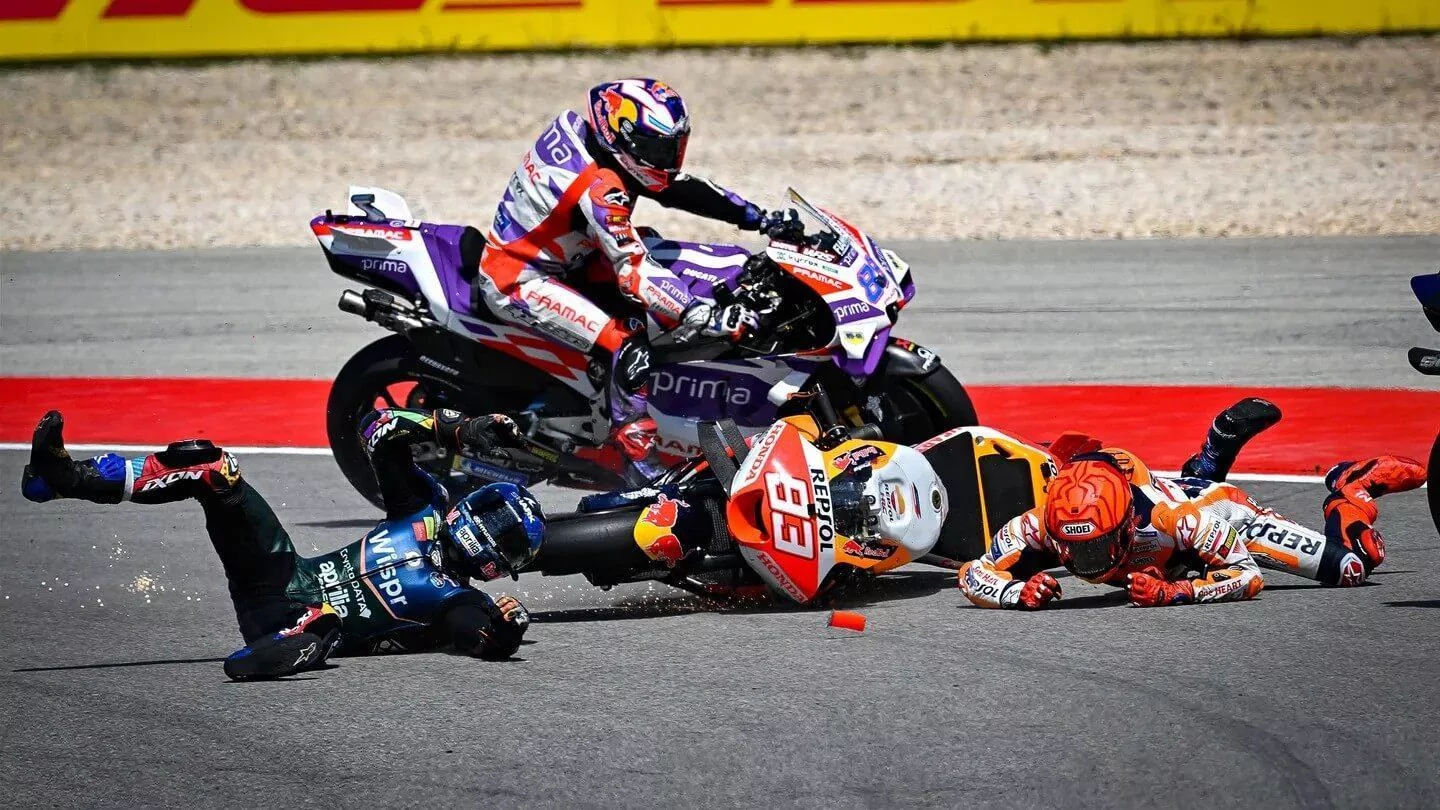
Types of Penalties in MotoGP
Penalties in MotoGP vary from mild admonishments to severe sanctions, depending on the infringement. Some of the common ones include:
- Warnings — Minor breaches (e.g. track limits) may result in a warning.
- Fines — Monetary penalties (up to €50,000) may be imposed even without a hearing for some infractions.
- Change of Position — A rider may be required to give up positions they unfairly gained.
- Long Lap Penalty — The rider must take a longer route at a designated corner, costing precious seconds.
- Ride-Through Penalty — Rider must ride through the pit lane (respecting speed limits), losing time on track.
- Time Penalty — Time is added to the rider’s final race time (or lap times removed) to penalize rule breaches.
- Grid Penalty — For infractions in qualifying or practice, riders may be dropped positions on the starting grid or forced to start from pit lane.
- 8. Disqualification / Exclusion — In severe cases, a rider’s result can be invalidated or they may be barred from participation.
- Withdrawal of Championship Points, Suspension — For persistent or serious offences, points may be stripped or a rider may be suspended.
Some penalties—like long laps and ride-throughs—are regarded as “immediate” and generally not open to appeal.
Appeals & Escalations: The Dispute Ladder
When a rider or team disagrees with a Steward’s decision, there is a structured path for appeals:
First line: FIM Appeal Stewards — a two-person panel drawn from the FIM Circuit Racing Commission. They can confirm, overturn or impose a different penalty.
If the appeal stewards conclude that the case is particularly complex, they can refer it to the MotoGP Court of Appeal, with judges appointed by the FIM Legal Director.
As a final recourse, teams or riders may take the case to the Court of Arbitration for Sport (CAS), an external body independent of FIM.
Each step is bound by procedural rules, deadlines, and permitted grounds for appeal. [Paddock GP]
Why This Matters
In MotoGP™, margins are razor thin. A few seconds (or even a position change) can alter championship standings or a rider’s entire season. Because of this:
- The independence and authority of the Steward panel is vital for credibility and fairness.
- The appeals process ensures checks and balances so that decisions are not made arbitrarily or without recourse.
- Ultimately, penalties enforce safety, fairness, and sporting conduct, helping maintain the integrity and excitement of MotoGP.
So the next time you hear that a rider has been demoted, disqualified, or issued a long lap penalty, you’ll know exactly who made that call—and how any challenge can be raised.