
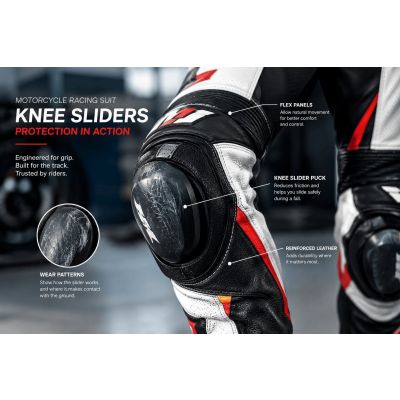
Motorcycle knee sliders are a critical piece of track-day and performance riding gear. They protect your knees during aggressive cornering, slides, and crashes by absorbing friction and impact energy before your skin and bones take damage. If you ride sportbikes on the track or push hard on canyon roads, understanding how motorcycle knee sliders work and when to replace them can mean the difference between a minor gear repair and a serious injury.
This guide explains the purpose of knee sliders, how they protect you, what to look for when choosing them, and practical signs that it's time for replacement. Whether you're a beginner exploring track days or an experienced racer upgrading your suit, this information will help you make informed decisions about your protective gear.
Quick Answer
Motorcycle knee sliders are replaceable plastic or composite pucks attached to the outside of racing suits and protective pants. During high-speed cornering, they contact the track surface instead of your knee, spreading impact force across a wider area and reducing abrasion risk. Sliders are designed to wear down over time. You should replace them when they become thin, cracked, or unevenly worn, or after any slide or crash that damages them. Regular inspection before track days helps you catch wear early and ride with confidence.
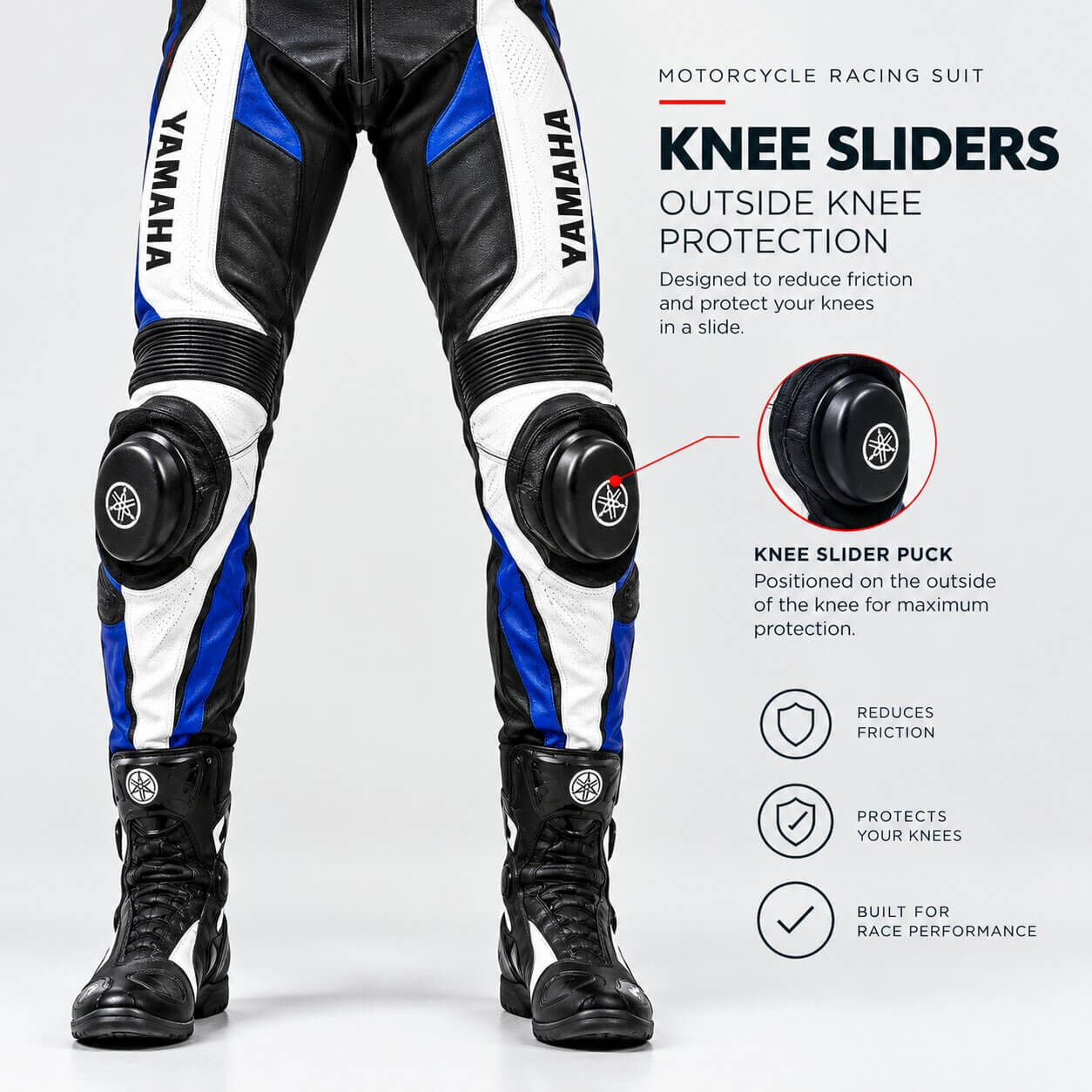
Table of Contents
- What Motorcycle Knee Sliders Do for Rider Safety
- How Knee Sliders Work During a Slide or Crash
- Slider Materials and Durability
- When to Replace Your Knee Sliders
- Fit and Positioning Matter for Protection
- Common Mistakes Riders Make with Knee Sliders
- Frequently Asked Questions
What Motorcycle Knee Sliders Do for Rider Safety
Motorcycle knee sliders serve one primary purpose: they take the impact and friction that would otherwise hit your knee joint directly. When you lean hard into a corner at high speed, your body weight and momentum push outward. On the track, this lean angle can reach extreme angles—sometimes 60 degrees or more on a sportbike. At these angles, your knee approaches the track surface.
Without sliders, your knee skin and joint would make direct contact with asphalt or track surface. The friction would cause severe abrasion in milliseconds, and the impact force could injure the knee joint itself. Sliders absorb that friction and spread the force across a larger surface area, reducing the risk of deep cuts, road rash, and impact trauma to the knee.
Sliders are not armor in the traditional sense. They do not contain foam or gel impact protection like elbow or shoulder armor. Instead, they work by sacrificing themselves—the slider material wears away so your skin does not. This is why sliders are replaceable and why they wear down over time.
How Knee Sliders Work During a Slide or Crash
During normal street or track riding, your knee sliders may never touch the ground. They exist as preventive protection. But when you lean deeply into a corner, accelerate hard, or experience a crash or slide, the sliders engage.
Here's what happens: As your body leans outward and your knee approaches the surface, the slider makes contact first. The slider material is harder and more abrasion-resistant than human skin. As it slides across the track or pavement, it experiences friction and wear. This friction generates heat and gradually removes material from the slider puck.
The slider spreads the impact force across its entire surface rather than concentrating it on a small area of your knee. This distribution helps reduce the intensity of the impact and the speed at which your skin is exposed. In a high-speed crash, the slider may wear completely through during the slide, but by that time it has already protected your knee from the worst damage.
The effectiveness of this protection depends on slider thickness, material quality, fit, and how the slider is positioned on your suit or pants. A thicker, harder slider will last longer and provide more protection during a long slide. A poorly fitted slider that moves during a crash may not protect as effectively.
Slider Materials and Durability
Motorcycle knee sliders are typically made from one of two materials: hard plastic or composite compounds. Hard plastic sliders are common on entry-level racing suits and are affordable to replace. Composite sliders—often made from materials like resin-based compounds or specialized plastics—are more durable and may resist wear better over multiple track days.
The material choice affects how long a slider lasts and how well it performs. Harder materials resist abrasion longer but may feel less smooth during a slide. Softer composites may wear faster but can provide a slightly smoother contact with the track surface. Neither is universally better—the right choice depends on your riding style, track surface, and budget.
Slider thickness also matters. Thicker sliders provide more material to wear away before you need replacement. Thinner sliders are lighter and may fit more comfortably in tight racing suits, but they wear faster and need more frequent replacement. When shopping for replacement sliders, check the manufacturer's specifications or product details to understand the material and thickness before buying.
When to Replace Your Knee Sliders
Knowing when to replace your motorcycle knee sliders is essential for maintaining protection and comfort. Here are the key signs that replacement is needed:
Visible Wear and Thinning: Inspect your sliders before each track day. If the slider has worn down to half its original thickness or less, it's time to replace it. You can feel the slider with your hand to gauge thickness, or compare it visually to a new slider if you have one available.
Cracks or Chunks Missing: If the slider surface is cracked, splintered, or has chunks missing, replacement is urgent. Damaged sliders no longer provide smooth, even protection and can catch on the track during a slide, potentially destabilizing your body position.
Uneven Wear: If one slider is much more worn than the other, it may indicate a fit issue or riding technique that puts more pressure on one knee. Uneven wear still requires replacement, but it's also a signal to check your suit fit and riding posture.
After Any Crash or High-Speed Slide: After you experience a crash or extended slide, inspect both sliders immediately. Even if they look intact, internal damage or stress fractures may have occurred. A slider that took a hard impact may fail unexpectedly during your next track session. When in doubt, replace it.
Seasonal or Annual Replacement: If you ride the track regularly—multiple times per month—you may need to replace sliders every few months or annually, depending on intensity. Casual track-day riders might replace sliders once a year or less frequently. The more you ride, the more often you'll replace them.
Fit and Positioning Matter for Protection
A slider can only protect you if it's positioned correctly on your knee. This is why suit fit matters so much. If your racing suit is too loose, the sliders may sit too high or too low on your knee, missing the impact zone during a crash. If the suit is too tight, the sliders may not align properly with your knee joint as you lean into corners.
When you lean hard on the track, your knee should naturally contact the slider first. The slider should sit on the outer side of your knee, positioned so that when you're in your aggressive riding position, the slider is the first point of contact with the track surface. This positioning ensures maximum protection during high-speed cornering and crashes.
Custom-fitted racing suits, like those from MotoSpeeds, allow you to specify knee slider placement based on your body dimensions and riding style. A proper fit means the sliders stay in position during aggressive riding and provide consistent protection. If you're using a standard-size suit, check that the sliders align with your knee when you're in your typical riding position on the bike.
Common Mistakes Riders Make with Knee Sliders
Ignoring Slider Wear Until It's Too Late: Many riders don't inspect their sliders until they feel discomfort or notice visible damage. By then, protection has already been compromised. Make slider inspection part of your pre-track-day routine, just like checking tire pressure.
Replacing Only One Slider: If both sliders are wearing at similar rates, replace both at the same time. Replacing only one can create an imbalance in protection and may feel uneven during aggressive cornering. If wear is uneven, address the fit issue while you're replacing the sliders.
Buying Low-Quality Replacement Sliders: Cheap aftermarket sliders may not fit your suit properly or may wear much faster than OEM (original equipment manufacturer) sliders. Invest in quality replacement sliders from the suit manufacturer or a trusted protective gear brand. The cost difference is minimal compared to the protection benefit.
Not Checking Slider Positioning After Replacement: After you install new sliders, verify that they're positioned correctly and secured tightly. Loose sliders can shift during riding, reducing protection and potentially causing discomfort. Many suits use adhesive backing, screws, or rivets to secure sliders—make sure the attachment is secure before you ride.
Forgetting That Sliders Are Not Armor: Knee sliders reduce abrasion risk and help distribute impact force, but they do not prevent all knee injuries. They work best as part of a complete protective gear system that includes impact armor, proper fit, and safe riding technique. Do not rely on sliders alone for knee protection.
Frequently Asked Questions
Can I Ride the Track Without Knee Sliders?
Technically, yes—many street riders and casual track-day participants ride without sliders. However, if you're leaning hard enough to approach your knee limit, sliders provide important abrasion protection. For aggressive track riding or racing, sliders are considered essential. If your suit has slider pockets but no sliders installed, adding them is a simple way to increase protection without buying new gear.
How Long Do Motorcycle Knee Sliders Last?
Slider lifespan depends on riding frequency, track surface, lean angle, and material quality. Casual track-day riders might get 10–20 track days from a set of sliders. Aggressive racers or riders who spend multiple days per month on the track may need replacement every few months. Inspect sliders regularly and replace them when they show signs of significant wear, cracks, or damage.
Are Thicker Knee Sliders Always Better?
Thicker sliders last longer and provide more material to wear away during a slide, which is generally beneficial. However, thicker sliders add weight and bulk to your suit, which can affect comfort and mobility. For most riders, a medium-thickness slider offers a good balance between durability, comfort, and protection. Check your suit manufacturer's recommendations for the optimal thickness.
What's the Difference Between Knee Sliders and Knee Armor?
Knee sliders are hard plastic or composite pucks that reduce abrasion during slides. Knee armor is foam or gel impact protection that absorbs crash force. Many racing suits have both: armor inside the suit for impact protection, and sliders on the outside for abrasion protection. Together, they provide more comprehensive knee protection than either alone.
Do I Need to Replace Sliders If My Suit Has Never Touched the Ground?
No. If your sliders have never made contact with the track and show no visible wear, cracks, or damage, they do not need replacement. However, plastic and composite materials can degrade over time from UV exposure and temperature changes. If your suit is several years old and the sliders feel brittle or cracked, replacement may be wise as a preventive measure before you ride aggressively.
Can I Replace Knee Sliders Myself?
Many riders can replace sliders themselves if the suit uses adhesive-backed sliders or simple screw attachment. However, if your suit uses riveted sliders, professional replacement is safer—removing rivets requires drilling, which risks damaging the suit material. Check your suit manufacturer's instructions or contact them about replacement options. Some shops offer professional slider replacement service.
Should I Use Knee Sliders for Street Riding?
Knee sliders are designed for track riding and high-speed cornering where you approach extreme lean angles. For normal street riding at moderate speeds, sliders are not necessary and may add unnecessary bulk. However, if you ride sportbikes aggressively on canyon roads or regularly push your lean angle, sliders can provide useful protection. Choose based on your actual riding intensity and lean angle.
Protecting Your Knees: A Complete Approach
Motorcycle knee sliders are one part of a complete knee protection strategy. They work best when combined with proper knee armor, a well-fitted racing suit, and safe riding technique. Before you ride the track, inspect your sliders, check your suit fit, and verify that your knee armor is positioned correctly and secured.
Riders who want to compare related MotoSpeeds protective gear can explore
for options built around fit, protection, and riding use.Understanding how motorcycle knee sliders work and when to replace them helps you ride with confidence and maintain your gear properly. Sliders are affordable, replaceable, and essential for track-day protection. By staying on top of slider wear and replacing them when needed, you're taking an active role in your safety.
For riders comparing a real gear example,
shows how construction, fit, and protective features can work together.Ready to upgrade your track-day protection? Start by inspecting your current sliders, replace them if needed, and ensure your racing suit fits properly. MotoSpeeds offers custom-fitted racing suits with high-quality slider options designed for performance riders who take protection seriously. Explore your options, ask questions about fit and slider placement, and invest in gear that supports your riding goals and safety.