Table of Contents
Introduction
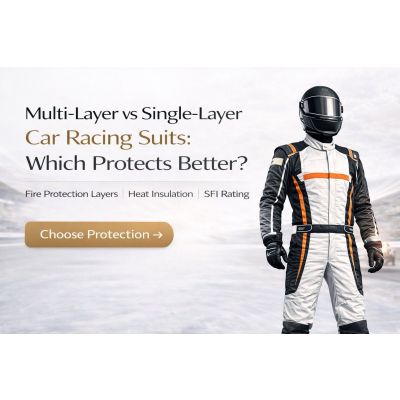
A racing suit is not just part of your gear—it’s your first line of defense in a fire.
Many drivers focus on design, brand, or price when buying , but the real difference lies in something more critical: how many layers of protection the suit provides.
If you’ve ever wondered whether a single-layer suit is enough or if a multi-layer racing suit is worth the investment, you’re asking the right question.
This guide breaks down the science behind fire protection layers, heat insulation, and SFI ratings, so you can make a smart, safety-focused decision.
By the end, you’ll know:
Which suit protects better
How insulation actually works
What professionals use—and why
What Are Car Racing Suits?
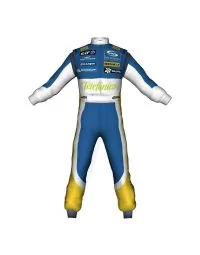
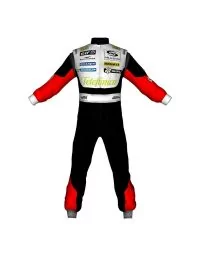
Car racing suits are fire-resistant garments designed to protect drivers from heat, flames, and abrasion during motorsport accidents.
They are made using materials like:
Nomex (aramid fiber)
Fire-resistant cotton blends
Multi-layer composite fabrics
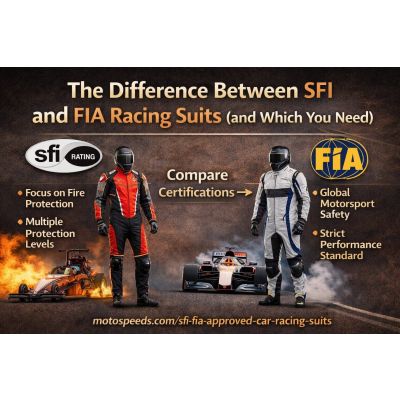
These suits are tested under strict safety standards like SFI and FIA, ensuring they can withstand high temperatures and delay heat transfer.
Understanding Single-Layer Racing Suits
What Is a Single-Layer Suit?
A single-layer racing suit uses one layer of fire-resistant material.
It is the simplest form of race car driver suit.
Key Features
Lightweight and flexible
Affordable option
Basic fire resistance
Ideal for entry-level use
When to Use Single-Layer Suits
Single-layer suits are best for:
Karting
Track days
Amateur racing
Low-risk environments
Limitations
The biggest drawback is limited heat insulation.
In a fire:
Heat transfers quickly
Protection time is shorter
Higher burn risk
What Is a Multi-Layer Racing Suit?
Structure of Multi-Layer Suits
Multi-layer suits use 2 to 3 layers of fire-resistant fabric, creating a protective barrier between heat and the body.
Each layer serves a purpose:
Outer layer → flame resistance
Middle layer → insulation
Inner layer → comfort and moisture control
Why Professionals Use Multi-Layer Suits
Professional drivers choose multi-layer racing suits because they provide:
Higher thermal protection
Longer escape time
Compliance with FIA standards
Better performance in real fire scenarios
Fire Protection Layers Explained
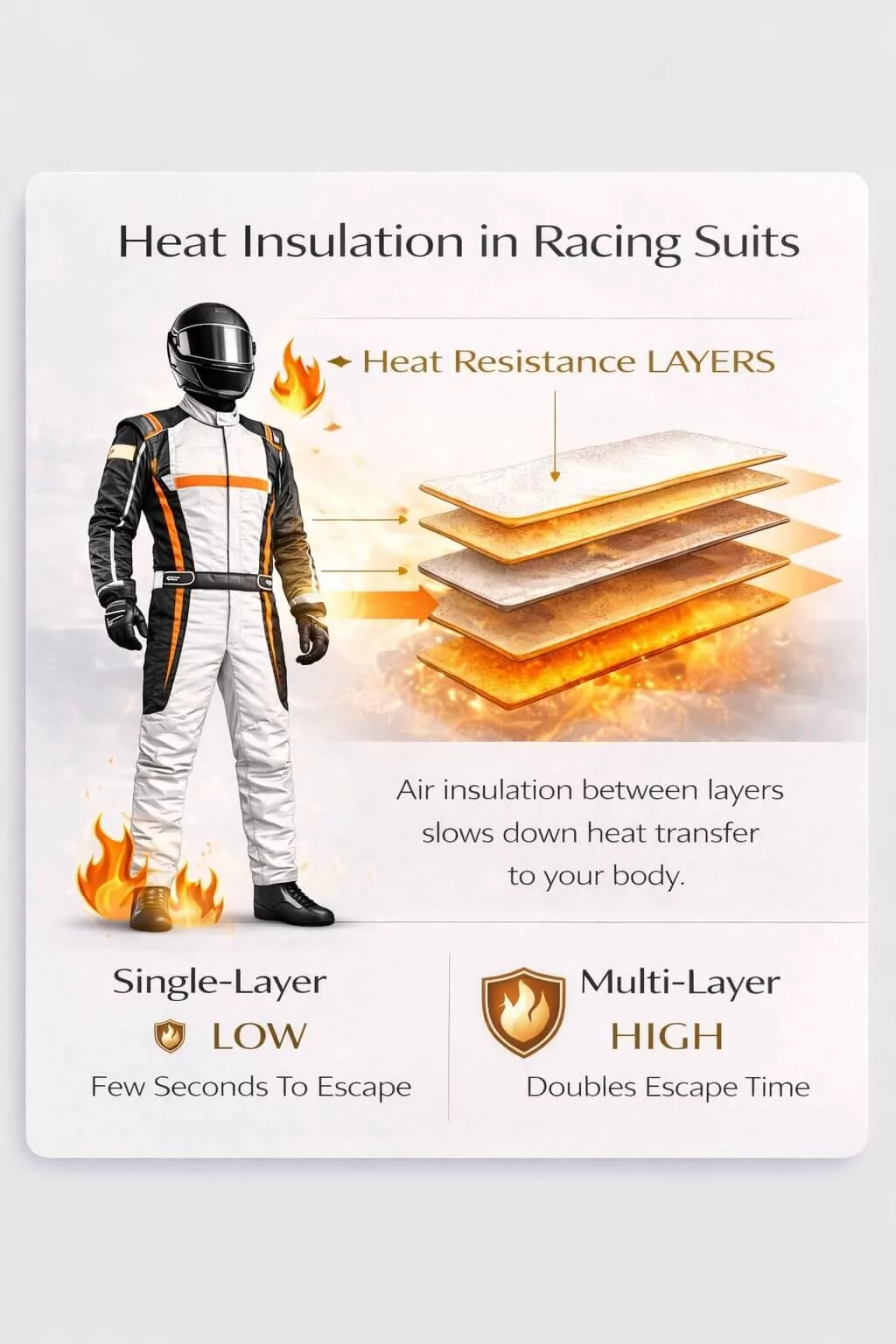
The key difference between suits lies in how layers manage heat.
How Layers Work
Each additional layer:
Traps air
Slows heat transfer
Reduces skin exposure
Air acts as a natural insulator.
Example
Single-layer → minimal delay
Multi-layer → significantly longer protection
That delay can mean the difference between:
Minor injury
Severe burns
Heat Insulation: Why It Matters
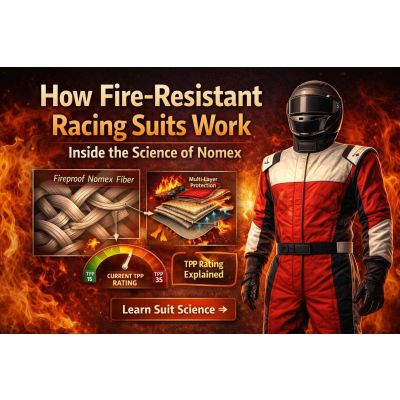
Heat insulation is the core safety feature of any racing fire suit.
What Happens During a Fire
When exposed to flame:
Outer layer blocks direct fire
Inner layers slow heat penetration
Driver gains time to escape
Real Insight
Most racing accidents don’t involve long fires—but even 5–10 extra seconds of protection can be life-saving.
That’s where multi-layer suits outperform single-layer suits.
SFI Rating and Safety Standards
What Is SFI Rating?
SFI (Safety Foundation Inc.) rating measures fire resistance performance.
Common SFI Levels
| Rating | Protection Level |
|---|---|
| 3.2A/1 | Entry-level |
| 3.2A/5 | Intermediate |
| 3.2A/10 | Professional |
| 3.2A/15+ | Advanced |
Higher rating = more protection time.
Why SFI Matters
SFI ratings ensure:
Consistent safety performance
Tested fire resistance
Compliance with racing rules
Multi-layer suits typically achieve higher SFI ratings.
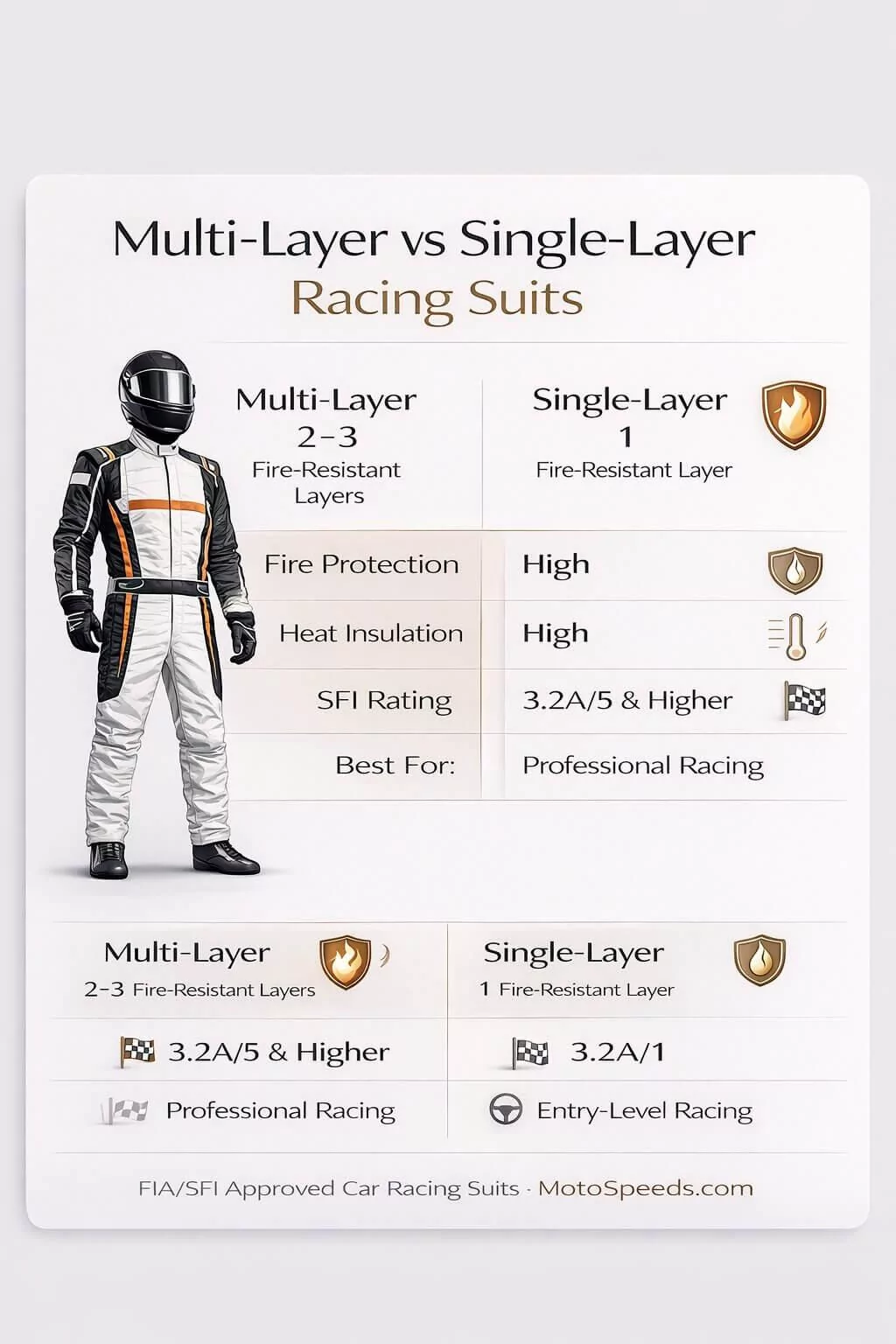
Multi-Layer vs Single-Layer: Detailed Comparison
Fire Protection
Single-layer → Basic protection
Multi-layer → Advanced protection
Heat Insulation
Single-layer → Low insulation
Multi-layer → High insulation
Comfort
Single-layer → More breathable
Multi-layer → Slightly warmer but improved design
Weight
Single-layer → Lightweight
Multi-layer → Slightly heavier
Usage
Single-layer → Entry-level racing
Multi-layer → Professional racing
Real-World Racing Scenarios
Scenario 1: Track Day Driver
A driver using a single-layer suit during a low-speed track session is generally safe due to lower risk.
Scenario 2: Professional Race Driver
A driver in endurance racing uses a multi-layer suit because:
Fuel loads are higher
Fire risk increases
Protection time is critical
Scenario 3: Rally Racing
Rally drivers prefer multi-layer suits due to unpredictable conditions and crash risks.
Step-by-Step: How to Choose the Right Suit
Step 1: Understand Your Risk Level
Ask:
What type of racing do you do?
How fast do you go?
Step 2: Check Certification Requirements
Some events require:
SFI 3.2A/5 or higher
FIA-approved suits
Step 3: Decide Between Comfort and Protection
Comfort → single-layer
Safety → multi-layer
Step 4: Consider Long-Term Use
If you plan to race seriously, invest in a professional racing suit.
Step 5: Choose a Trusted Source
Explore high-quality trusted options for your car race suit.
Why Custom Fit Matters in Racing Safety
Even the best suit fails if it doesn’t fit properly.
Benefits of Custom Car Racing Suit
Better mobility
Proper layer positioning
Reduced fatigue
Improved comfort
A ensures maximum protection and performance.
Common Mistakes Drivers Make
Avoid these:
Choosing based on price only
Ignoring SFI ratings
Buying incorrect size
Using single-layer suits in high-risk racing
Overlooking custom fit
Conclusion
When it comes to safety, multi-layer racing suits clearly provide better protection.
They offer:
Superior heat insulation
Higher SFI ratings
Longer escape time
Single-layer suits still have their place—but only in low-risk environments.
If you are serious about racing, investing in a multi-layer, professionally fitted suit is the smartest decision.
FAQs (Schema-Ready)
Which racing suit is safer?
Multi-layer racing suits are safer because they provide better insulation and longer protection against heat and fire.
What is the purpose of layers in racing suits?
Layers trap air and slow down heat transfer, giving drivers more time to escape during fires.
Are single-layer suits still useful?
Yes, but only for low-risk activities like karting or beginner track days.
What SFI rating should I choose?
For serious racing, SFI 3.2A/5 or higher is recommended.
Do professional drivers use multi-layer suits?
Yes, almost all professional drivers use multi-layer suits due to higher safety standards.
Does a thicker suit mean better protection?
Not always. Protection depends on layer design and insulation, not just thickness.