Table of Contents
Introduction
Motorsports is one of the most thrilling forms of competition, but it also comes with serious safety risks. High speeds, mechanical stress, and flammable fuels mean that fires can occur during crashes or technical failures. For this reason, professional racing organizations require drivers to wear fire-resistant racing suits designed to protect them from extreme heat and flames.
Among the most trusted materials used in motorsport safety gear is Nomex, a specialized fire-resistant fiber developed to withstand high temperatures without melting or igniting. Nomex racing suits are widely used in professional motorsports including Formula racing, NASCAR, endurance racing, and rally competitions.
These suits are not simply thick clothing. They are highly engineered protective systems that combine fireproof materials, multi-layer construction, and thermal protection performance testing to provide drivers with crucial seconds to escape a fire.
In this guide, we will explore the science behind Nomex racing suits, how they work, how TPP ratings measure heat protection, and how SFI and FIA certifications ensure driver safety.
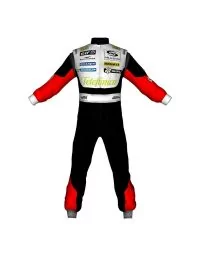
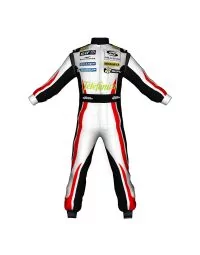
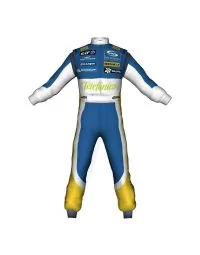
If you're looking to upgrade your racing gear, explore our collection:
What Are Nomex Racing Suits?
Nomex racing suits are specialized fire-resistant garments worn by motorsport drivers to protect them from heat and flame exposure during accidents.
Nomex is an aramid fiber, a class of synthetic fibers known for their strength and thermal stability. Unlike regular fabrics, Nomex fibers are engineered at the molecular level to resist combustion.
Key characteristics of Nomex racing suits:
Resistant to ignition
Does not melt or drip
Maintains structural integrity under extreme heat
Lightweight and breathable
Durable for professional racing environments
Unlike traditional flame-retardant clothing that relies on chemical treatments, Nomex fibers are inherently flame resistant. This means the protection is built directly into the fabric rather than applied afterward.
This property makes Nomex ideal for fireproof racing suits used in professional motorsports.
The Science Behind Fireproof Materials
How Nomex Resists Fire
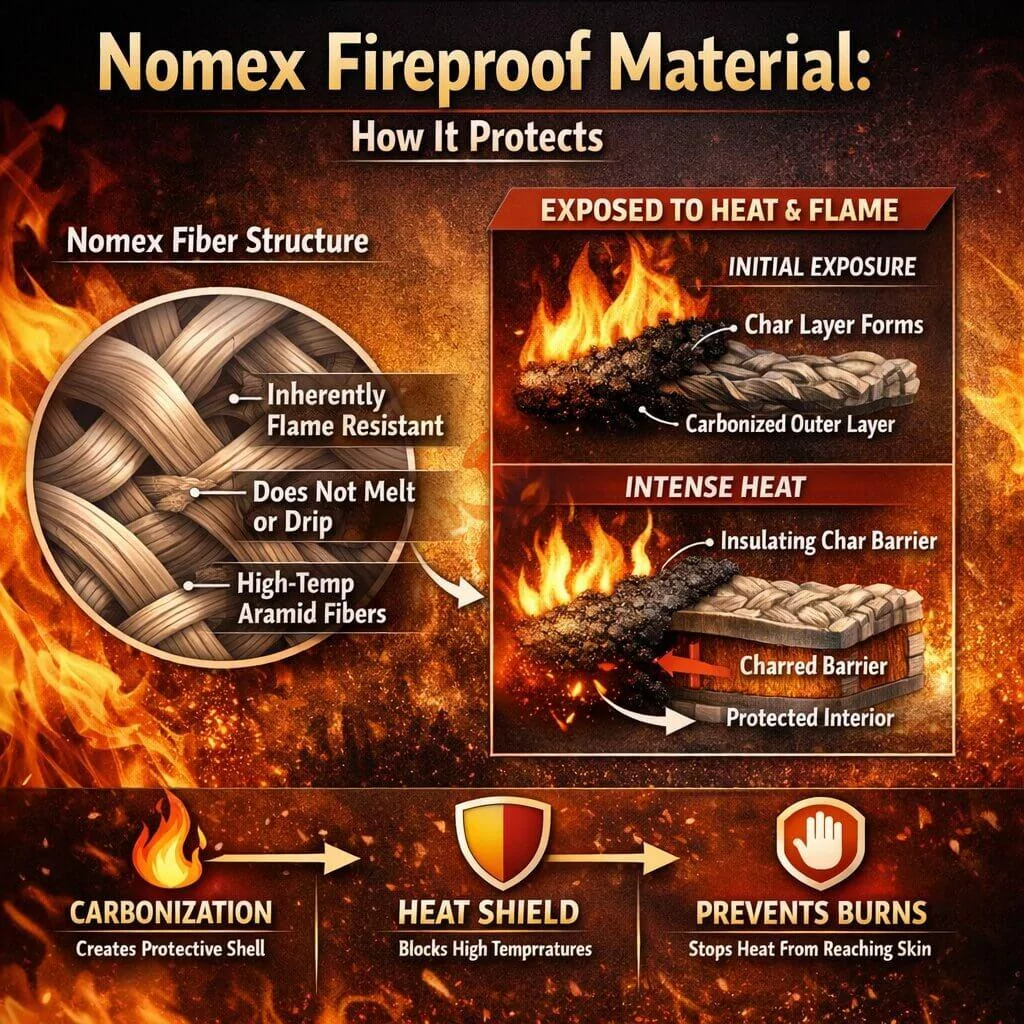
The effectiveness of Nomex comes from its molecular structure. The fibers contain strong aromatic polyamide chains that remain stable at extremely high temperatures.
When exposed to flame:
Nomex does not melt
It does not drip molten material
The fibers carbonize and thicken, forming a protective barrier
This barrier slows down heat transfer and prevents flames from reaching the driver’s skin.
Heat Resistance Mechanism
Instead of burning, Nomex undergoes a process called carbonization, where the outer layer becomes charred and insulates the inner layers.
This means that the suit does not ignite even when exposed to intense fire.
Advantages Over Conventional Materials
Regular fabrics like cotton or polyester can ignite quickly and melt onto the skin, causing severe burns. Nomex avoids this risk entirely.
Benefits include:
Self-extinguishing properties
Long-term heat resistance
Protection from flash fires
Reduced burn injury risk
Because of these properties, Nomex has been widely adopted in motorsport, aerospace, and firefighting equipment.
How Multi-Layer Racing Suits Protect Drivers
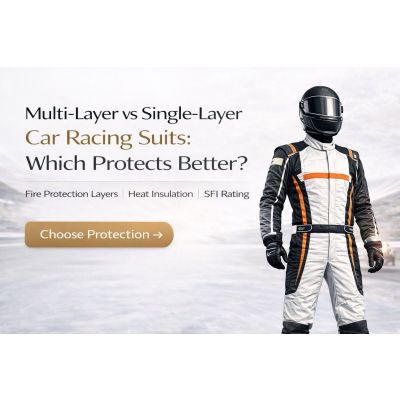
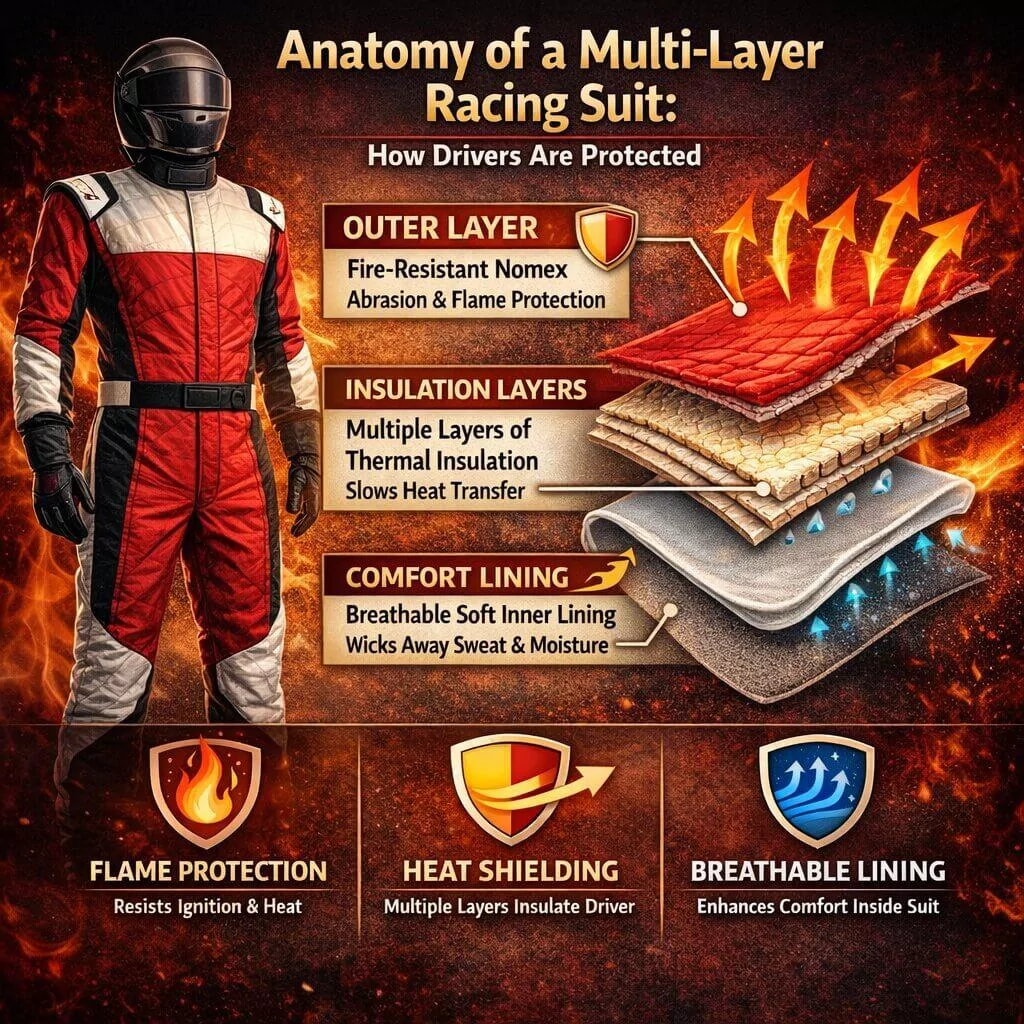
One of the most important features of professional racing suits is multi-layer construction.
Instead of relying on a single layer of fabric, racing suits combine multiple protective layers to maximize safety.
Outer Layer
The outer layer is designed to resist abrasion and direct flame contact. It is typically made from Nomex or other fire-resistant aramid blends.
This layer also protects against:
Fuel exposure
Mechanical wear
Debris during crashes
Middle Layers
Middle layers provide additional insulation and slow heat transfer.
These layers create air pockets between fabrics. Air acts as a natural thermal barrier, significantly reducing the speed at which heat reaches the skin.
Inner Layer
The inner layer focuses on comfort and moisture management. Drivers experience extreme heat during races, so the inner lining must:
Absorb sweat
Improve airflow
Reduce skin irritation
The combination of these layers creates a thermal shield that protects drivers during fire incidents.
Understanding TPP Ratings in Racing Safety
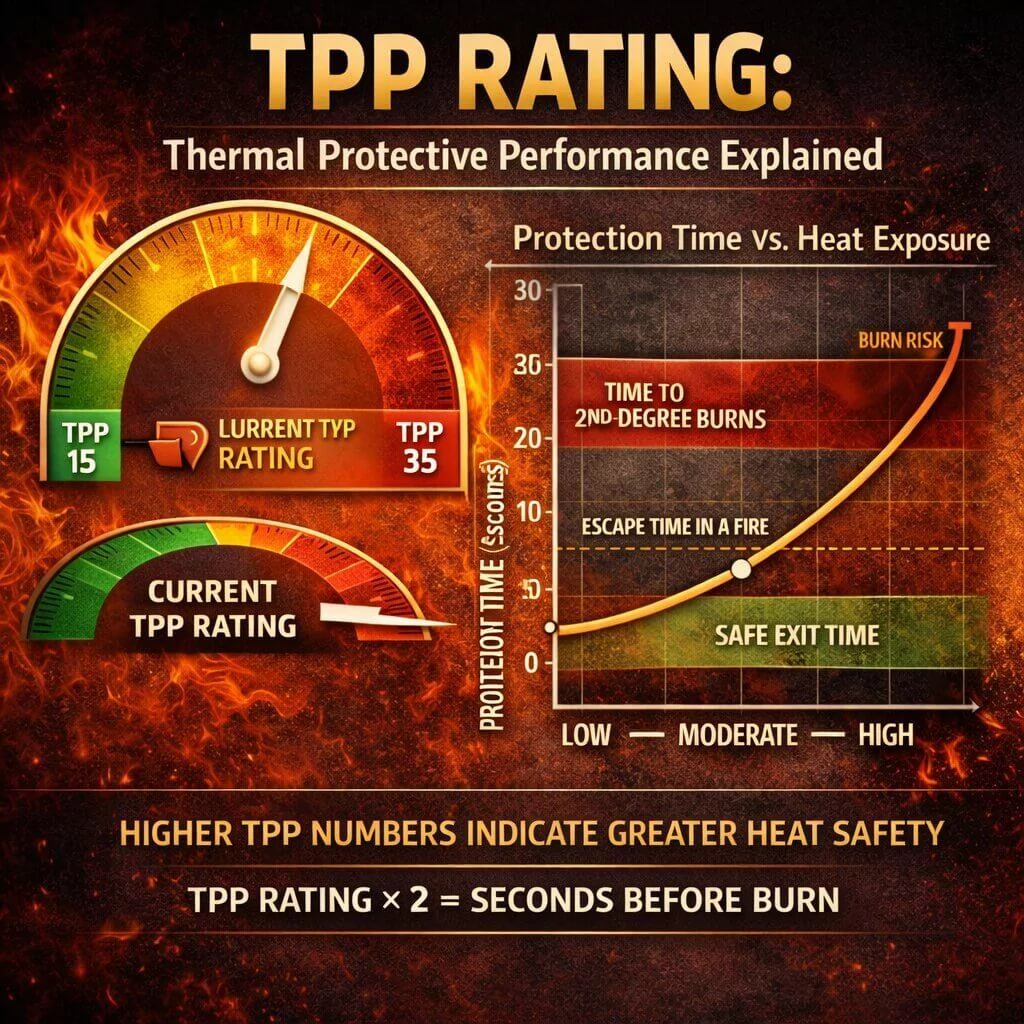
A critical measurement used to evaluate racing suit safety is the Thermal Protective Performance (TPP) rating.
The TPP rating measures how long a racing suit can protect a driver from severe burns when exposed to heat and flame.
How TPP Ratings Work
During testing, suit materials are exposed to a controlled heat source. Sensors measure how quickly heat passes through the fabric layers.
The final TPP number represents the heat resistance performance of the material.
Example
A suit with a TPP rating of 19 provides approximately 19 seconds of protection before second-degree burns occur.
This escape window is critical for drivers trapped in a burning vehicle.
Why TPP Matters
Higher TPP ratings mean:
Greater thermal protection
More time to exit a fire
Better safety in high-risk racing environments
However, higher protection often means thicker suits. Therefore manufacturers balance protection, comfort, and mobility.
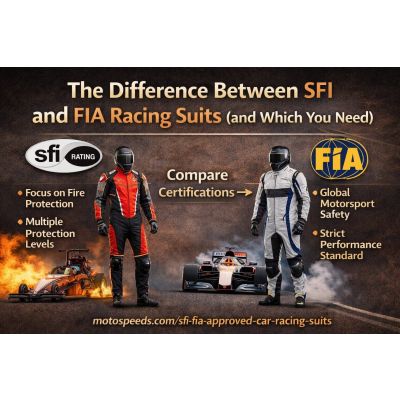
SFI and FIA Racing Suit Standards Explained
To ensure driver safety, motorsport organizations require racing suits to meet strict certification standards.
Two major governing bodies regulate racing suit safety:
SFI Foundation
The SFI Foundation sets safety standards used primarily in North American motorsports.
The most common standard is:
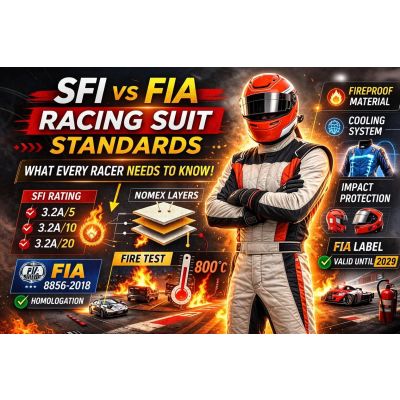
SFI 3.2A
This certification includes multiple levels depending on fire protection capability.
Examples:
| Rating | Protection Level |
|---|---|
| SFI 3.2A/1 | Entry-level protection |
| SFI 3.2A/5 | Intermediate racing |
| SFI 3.2A/10 | Professional racing |
Higher numbers indicate greater thermal protection.
FIA Standards
The FIA (Fédération Internationale de l'Automobile) governs international motorsports.
The most common certification is:
FIA 8856-2018
This standard tests:
Flame resistance
Heat transfer
Suit durability
Structural integrity
FIA suits are required in professional racing series including:
Formula racing
GT racing
endurance racing
rally competitions
Why Fire Protection Matters in Motorsport
Racing accidents can involve high-impact crashes and fuel leaks, which increase the risk of fires.
Historically, several tragic racing incidents highlighted the need for improved fire-resistant gear. These events led to the development of modern Nomex-based racing suits.
Fire-resistant suits provide drivers with critical escape time during emergencies.
Even a few extra seconds can mean the difference between minor injuries and severe burns.
Modern racing safety systems now combine:
Nomex racing suits
Fireproof gloves
fire-resistant underwear
helmets
head and neck restraints
Together, these components create a complete driver safety system.
Choosing the Right Fire-Resistant Racing Suit
Selecting the right racing suit depends on several factors.
Certification
Always choose suits that meet SFI or FIA safety standards required by your racing series.
Number of Layers
Professional drivers often prefer two-layer or three-layer suits for improved protection.
Comfort and Mobility
A suit must allow freedom of movement for steering, braking, and shifting.
Fit
A properly fitted suit improves both safety and comfort.
Drivers who want a personalized fit can explore our here:
Custom suits allow racers to select:
sizing
color schemes
logos
racing patches
advanced materials
Conclusion
Fire-resistant racing suits are one of the most important pieces of safety equipment in motorsports. Built with advanced Nomex fibers, multi-layer construction, and strict safety certifications, these suits provide critical protection during fire emergencies.
By slowing heat transfer and preventing flame spread, Nomex racing suits give drivers valuable seconds to escape dangerous situations.
Modern racing suits combine science, engineering, and safety standards to deliver the highest level of protection while maintaining comfort and mobility.
Whether you are a professional racer or just starting out, investing in a high-quality fire-resistant suit is essential for safe motorsport participation.
Explore professional racing gear designed for safety and performance:
Frequently Asked Questions (FAQs)
What are Nomex racing suits made of?
Nomex racing suits are made from aramid fibers that are inherently flame resistant. These fibers do not melt or ignite, making them ideal for motorsport fire protection.
How long can a racing suit protect against fire?
Protection depends on the suit’s TPP rating. Higher-rated suits provide longer protection times before heat reaches the skin.
Are all racing suits fireproof?
Most professional racing suits are fire resistant, not completely fireproof. They are designed to slow heat transfer and provide escape time during fires.
What certification should a racing suit have?
Common certifications include SFI 3.2A for North America and FIA 8856-2018 for international motorsports.
How many layers should a racing suit have?
Professional racing suits usually contain two to three layers of fire-resistant materials to provide effective thermal protection.