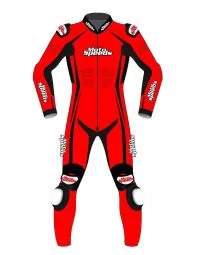
Motorcycle racing suit safety is more than just thick leather — it’s advanced engineering. From CE-certified armor and carefully designed impact zones to triple-stitched seams, every element protects you when milliseconds count. Learn how these technologies save lives.
Table of Contents
Introduction
The Science of Motorcycle Racing Suit Safety
Understanding CE Certification
What Is a CE-Certified Suit?
CE Levels: Level 1 vs. Level 2
Impact Zones: Where Protection Matters Most
The Role of Leather and Protective Materials
Cowhide, Kangaroo, and Synthetic Blends
Abrasion Resistance Explained
Why Triple Stitching Saves Lives
Ergonomics, Fit, and Airflow Safety
Maintenance Tips for Long-Term Protection
Conclusion
FAQs (Schema-Ready)
Introduction
When you ride at 200 km/h, the difference between a bruise and a broken bone often comes down to the science of your motorcycle suit. Modern racing leathers are not just fashion statements — they’re life-saving armor.
A motorcycle racing suit’s safety relies on several engineering layers:
CE-certified armor tested for impact absorption
Protective leather gear resistant to abrasion and tearing
Strategically mapped impact zones covering vital body parts
Triple stitching that prevents seam burst during slides
MotoSpeeds brings this science to the street and track with precision-crafted suits that balance comfort, performance, and protection.
The Science of Motorcycle Racing Suit Safety
A racing suit acts as your second skin — its main goal is to minimize injury in a crash. Engineers design it to distribute impact, prevent friction burns, and allow sliding rather than tumbling.
The combination of armor, materials, stitching, and fit creates a unified system that works together to:
Absorb energy during falls
Reduce rotational forces
Prevent skin abrasion on asphalt
Maintain suit integrity after impact
At MotoSpeeds, every suit follows this principle: "Protection first, performance always."
Understanding CE Certification
What Is a CE-Certified Suit?
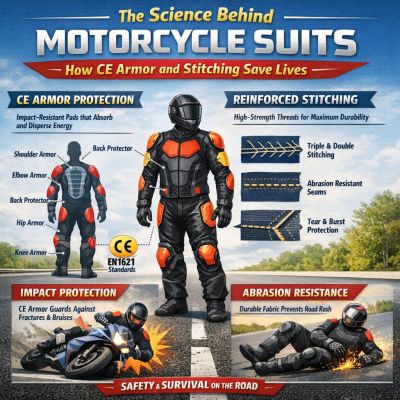
CE (Conformité Européenne) certification is the European standard that ensures protective motorcycle gear meets strict impact and abrasion tests. A CE-certified suit means each armor component has passed laboratory testing under controlled conditions.
Each protector — for the shoulders, elbows, knees, hips, and back — must meet defined performance limits.
CE Levels: Level 1 vs. Level 2
| CE Level | Max Force Transmission | Best For | Characteristics |
|---|---|---|---|
| Level 1 | ≤ 35 kN | Street & casual racing | Lighter, more flexible |
| Level 2 | ≤ 20 kN | Professional & track racing | Maximum shock absorption |
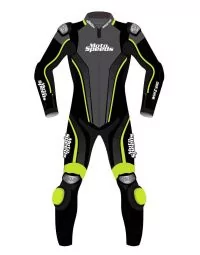
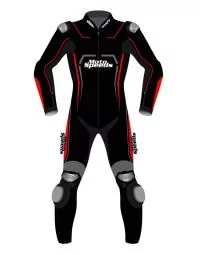
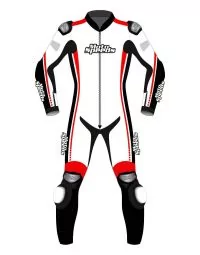
MotoSpeeds’ premium suits like the integrate Level 2 CE armor across all key areas for superior impact protection.
Impact Zones: Where Protection Matters Most
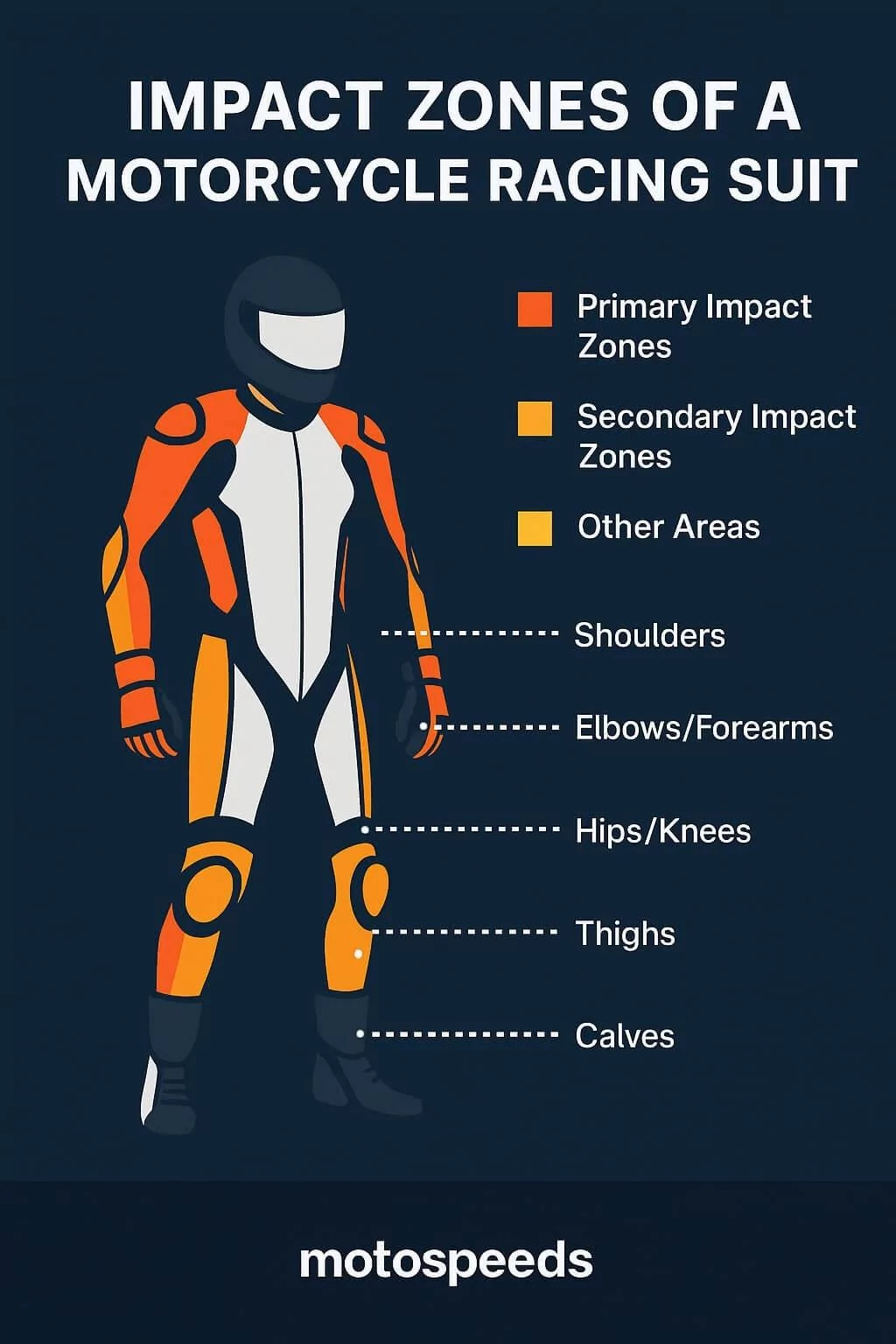
During a crash, not all body areas experience equal force. Engineers divide the body into impact zones to focus protection where it’s needed most.
Primary Impact Zones
These areas hit first and hardest:
Shoulders — first contact during slides
Elbows & Forearms — frequent points of impact
Hips & Knees — absorb rotational energy
Back & Chest — vulnerable to blunt trauma
Secondary Zones
Include thighs, calves, and collarbone areas, where additional padding or stretch panels support comfort and energy dispersion.
MotoSpeeds suits use multi-density armor, foam reinforcements, and external sliders to enhance safety without restricting movement.
The Role of Leather and Protective Materials
Cowhide, Kangaroo, and Synthetic Blends
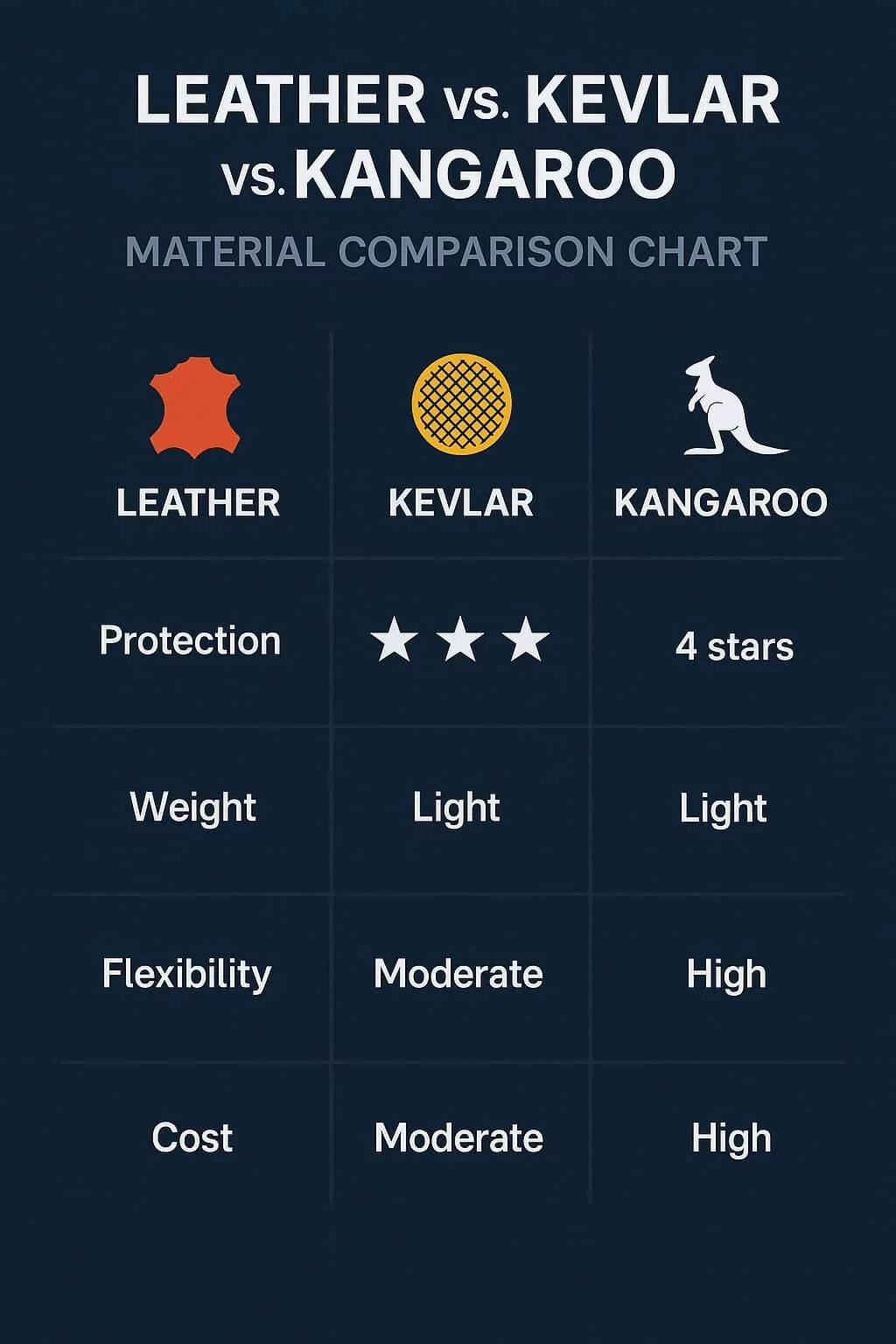
The material determines how long the suit lasts during abrasion.
Cowhide Leather: Durable and cost-effective; offers strong tear resistance.
Kangaroo Leather: Lightweight and up to 30% stronger than cowhide per thickness — ideal for racers who need agility.
Synthetic Panels (Kevlar, Cordura): Used in stretch areas for flexibility and heat management.
MotoSpeeds combines these materials for balanced protection and comfort, ensuring that riders don’t have to choose between safety and speed.
Abrasion Resistance Explained
When sliding, asphalt friction can exceed 100 °C — enough to burn through fabric in seconds. Premium leathers resist wear for 3–5 seconds or more, buying you life-saving time.
Why Triple Stitching Saves Lives
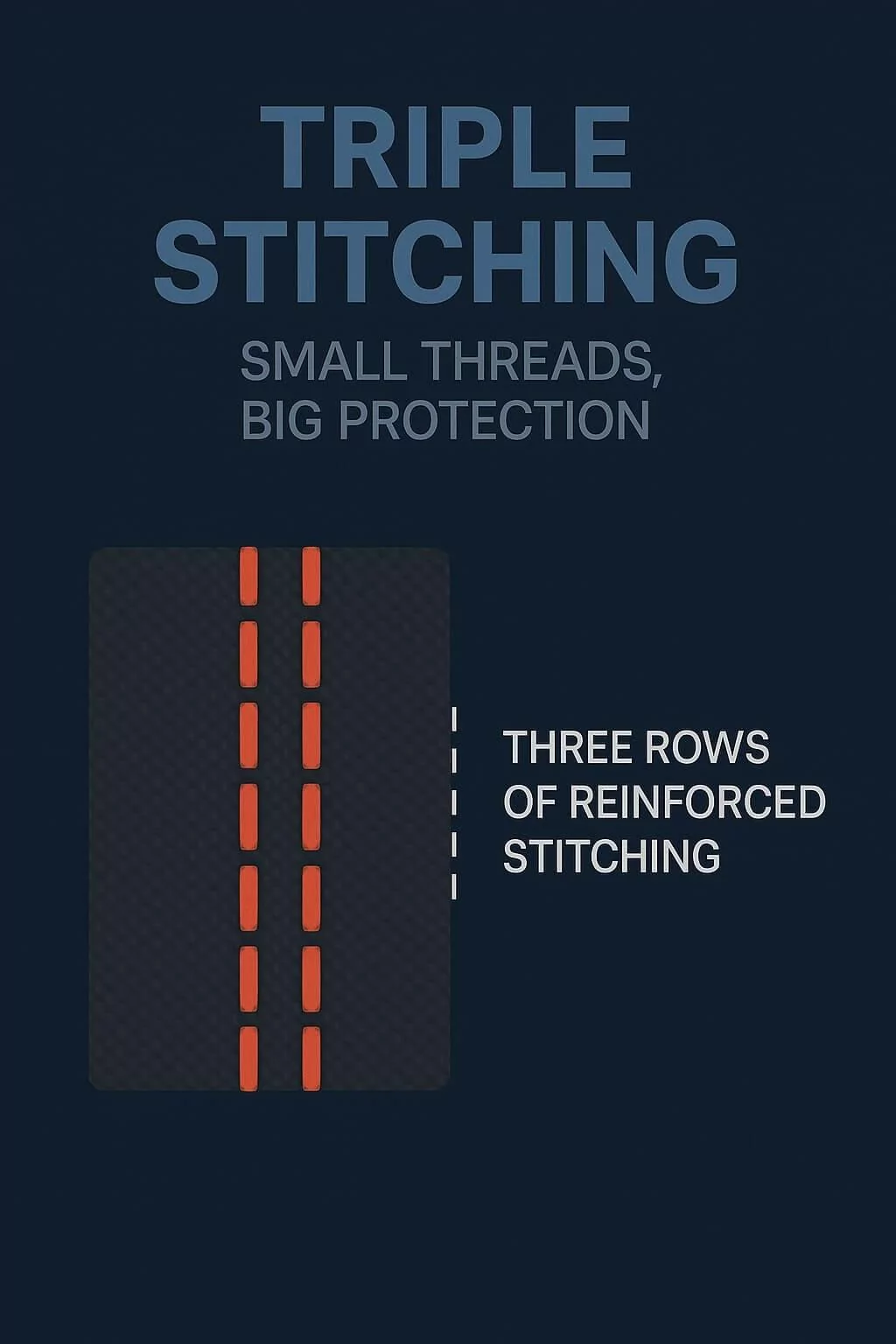
Triple stitching may seem like a minor detail, but it’s one of the most critical safety features in any racing suit.
How It Works
Each seam consists of three parallel rows of high-tensile thread — usually bonded nylon or Kevlar — locking the leather layers together.
If one thread fails, the remaining two hold the structure intact. In high-speed crashes, where pressure exceeds 100 kg at impact points, single or double stitches can burst, exposing the rider’s skin.
Benefits of Triple Stitching
Prevents seam separation under stress
Improves durability through repeated use
Enhances suit flexibility in motion
Provides redundancy during abrasion
MotoSpeeds technicians hand-stitch each suit in critical zones such as shoulders, elbows, knees, and seat panels, ensuring race-ready strength.
Ergonomics, Fit, and Airflow Safety
Protection works only when the suit fits perfectly. A loose or tight suit can misalign armor, reducing its effectiveness.
MotoSpeeds suits feature:
Pre-curved arms and legs for racing posture
Accordion stretch panels for freedom of movement
Perforated leather and ventilation zippers for airflow
Aerodynamic humps that stabilize head and neck at speed
A CE-certified suit isn’t just armor — it’s a performance tool engineered to keep you protected without sacrificing agility.
Maintenance Tips for Long-Term Protection
Proper care ensures your investment lasts and performs at its best.
Clean regularly with mild leather cleaner — avoid soaking.
Dry naturally — never under direct heat.
Check stitching and zippers for wear every few months.
Replace armor inserts if they deform or harden.
Store in a cool, ventilated area.
A well-maintained suit can last years and continue offering the same level of motorcycle racing suit safety as day one.
Conclusion
Motorcycle suit safety isn’t luck — it’s science, craftsmanship, and engineering precision. From CE-certified armor to reinforced impact zones and triple stitching, every element of a MotoSpeeds suit is designed to save lives when it matters most.
When choosing your next suit, look beyond the style — understand the science behind it. Ride smarter, safer, and faster with MotoSpeeds’ .
FAQs (Schema-Ready)
Q1: What makes a CE-certified motorcycle suit safer?
A CE-certified suit is tested for impact absorption, abrasion resistance, and seam strength. It ensures that each protective element meets international safety standards.
Q2: Is Level 2 armor necessary for street riders?
Level 2 armor provides maximum impact reduction and is ideal for high-speed or track use, though many safety-conscious street riders also prefer it.
Q3: Why is triple stitching important?
Triple stitching prevents seams from tearing during a crash. Even if one thread fails, two remain intact — ensuring structural safety.
Q4: Can I wash a leather racing suit?
Never submerge it. Use a damp cloth and leather-safe cleaner. Always air dry naturally, away from heat.
Q5: How often should I replace my suit?
Replace it after any severe crash or when the leather shows deep abrasions, split seams, or hard armor plates.