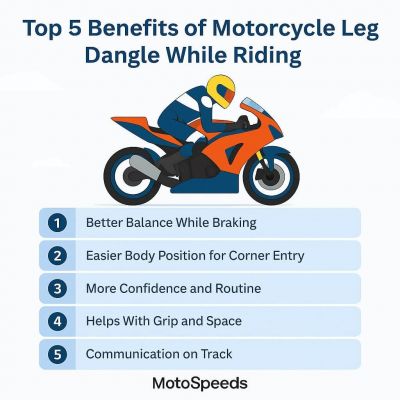
Ever watched MotoGP and seen riders stick one leg out before a corner? That move is called the motorcycle leg dangle. It looks cool, but it’s not just for style. Riders use it for balance, control, and confidence. Let’s explore the top five benefits of this unique move — and why riders in the USA and beyond are trying it on the track.
1. Better Balance While Braking
When a rider brakes hard before a turn, the front of the bike dips. That can make it feel shaky. By using the motorcycle leg dangle, the rider moves some body weight forward and to the side.
This helps the bike stay balanced. The leg acts like a mini air brake, adding drag and stability. Imagine opening your car door a little while slowing down — it catches air, right? That same air pressure helps calm the motorcycle’s movement during heavy braking.
Riders say it gives them more control right before the toughest turns. It’s especially handy when entering fast corners on race tracks like Laguna Seca or COTA in the USA.
2. Easier Body Position for Corner Entry
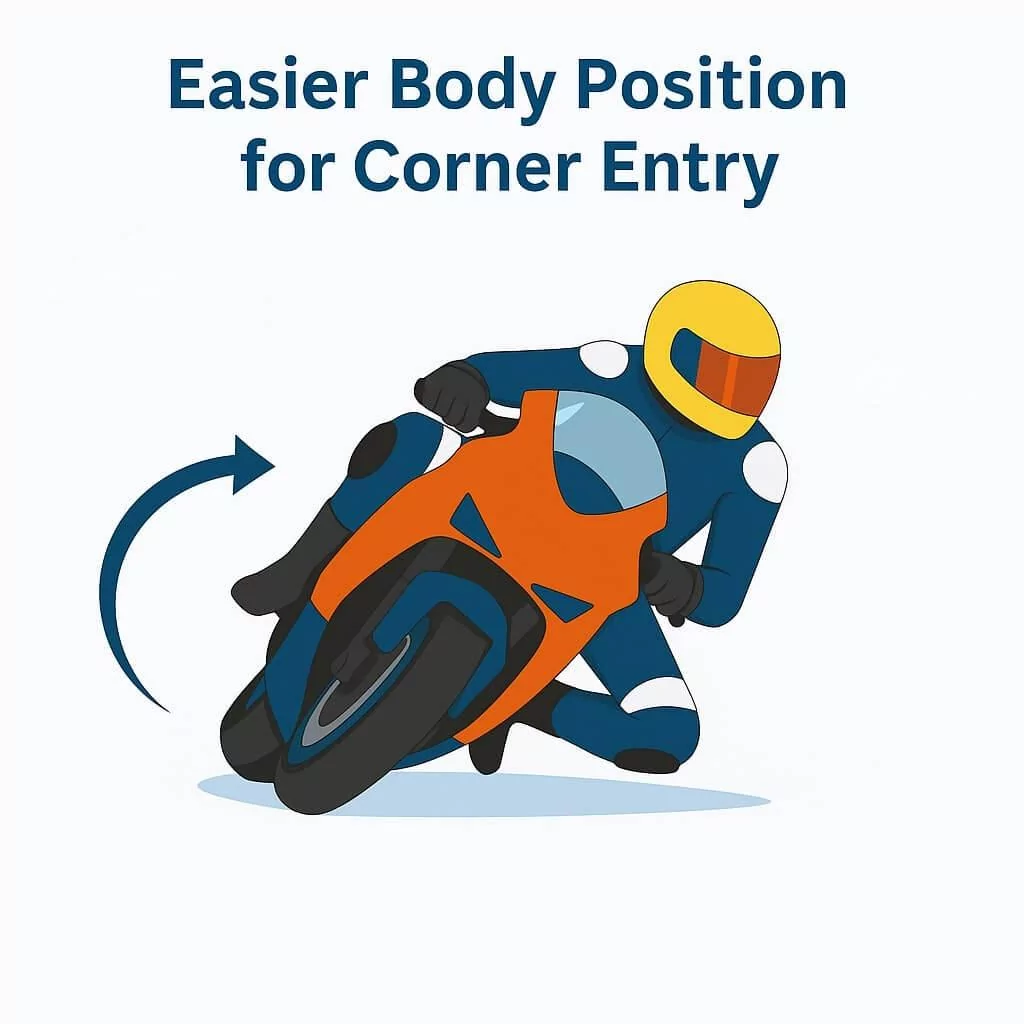
The leg dangle helps a rider get into the right body shape for turning. When you swing your inside leg out, it naturally opens your hip and points your body toward the corner.
This makes it easier to lean in smoothly. Riders can shift their weight quickly and prepare their eyes and shoulders for the curve ahead.
It’s like stretching before a jump — your body feels ready. Tall riders often love this trick because it gives them more space and comfort when shifting around the bike.
3. More Confidence and Routine
Racing needs rhythm. Every corner comes fast, and each move must be timed perfectly. The motorcycle leg dangle gives riders a repeatable step. It becomes part of their rhythm — brake, dangle, turn, gas.
This steady pattern keeps the mind calm under pressure. When you’re moving at 150 mph, any small mental cue helps focus. Riders say it’s almost like muscle memory. They don’t even think about it — their body just does it.
When you ride with routine, confidence grows. You trust your timing. You trust your bike. That’s the secret behind those smooth MotoGP laps.
4. Helps With Grip and Space
When cornering, there’s not much room to move. Boots scrape, knees touch the ground, and hips press the tank. The leg dangle gives a rider a second to adjust before leaning in.
By lifting one foot off the peg, the rider gains more freedom to reposition. Once the leg comes back up, it lands exactly where it should — firm on the peg, ready to push out of the corner.
This tiny moment helps keep the body stable and connected. Riders say it reduces lower-body strain and helps maintain grip on both seat and tank.
For everyday riders on the track, that means less fatigue and smoother control through multiple laps.
5. Communication on Track
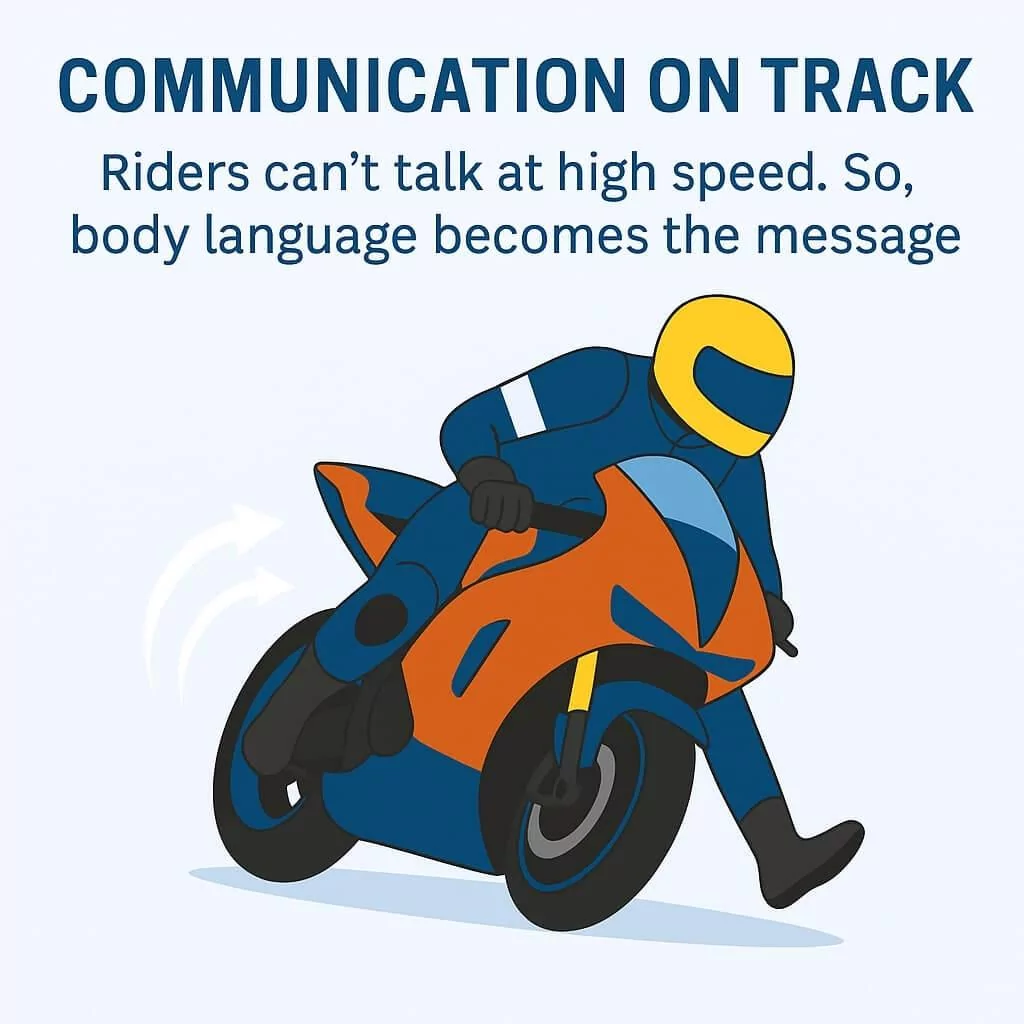
Riders can’t talk at high speed. So, body language becomes the message. The motorcycle leg dangle can signal to others that a rider is braking or preparing to turn.
On a crowded track, that tiny signal helps prevent collisions. Other riders see the leg drop and know — “Okay, they’re slowing for the inside line.”
It’s like a blink of a turn signal for racers. Of course, this isn’t an official rule, but among experienced riders, it’s a form of track etiquette.
Should You Try It on the Street?
Short answer: No.
The motorcycle leg dangle works best on closed tracks, not public roads. Streets are full of traffic, gravel, and surprises. You need both feet ready to react.
Using the leg dangle on highways or city streets doesn’t make sense and can be unsafe. But on a track, with good coaching and the right gear, it’s a great skill to explore.
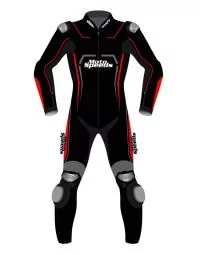
Always wear full riding gear — helmet, gloves, boots, and a CE-protected suit from MotoSpeeds. Safety first, always.
How to Practice the Motorcycle Leg Dangle
Start slow. Choose a safe track or riding school. Ask a coach for guidance before you try.
Begin with gentle braking on straight lines.
As you slow down, let your inside leg drop slightly.
Keep your upper body relaxed.
Bring the leg back just before you lean in.
The goal is not to kick the ground or stretch too far. You want balance, not drama. With time, your body learns when and how to use it naturally.
Real Example: Valentino Rossi’s Signature Move
The motorcycle leg dangle became famous thanks to Valentino Rossi. Around 2005, fans noticed him dropping his leg before corners. Soon, many MotoGP stars followed.
Some say he discovered it by accident — trying to steady the bike under heavy braking. Others believe it helped him focus before each turn.
Whatever the reason, it worked. Rossi showed that control can come from creative, natural movement — not just strict rules.
Final Thoughts
The motorcycle leg dangle is more than a flashy move. It helps with braking balance, body setup, and race rhythm. It gives the mind a steady cue and improves comfort in sharp turns.
But like every skill, it needs practice, patience, and proper gear. Don’t rush it, and never try it on public roads.
If you ride in the USA and want to explore advanced techniques, find a local track school. Gear up with quality protection from MotoSpeeds and take the time to learn safely.
In the end, every move — even something as small as a leg dangle — can make you a smoother, smarter, and safer rider. And who knows? You might just find your own race-day rhythm out there.
FAQs
Q1. What is the motorcycle leg dangle?
The motorcycle leg dangle is when a rider sticks one leg out just before a corner.
It usually happens under hard braking.
You see it a lot in MotoGP and track riding.
It helps with balance, body position, and timing.
Q2. Why do riders use the motorcycle leg dangle?
Riders use the leg dangle to feel more stable while braking.
The leg catches some air and adds a bit of drag.
It also helps the rider turn their hips toward the corner.
That makes it easier to lean in and steer with confidence.
Q3. Does the motorcycle leg dangle make you faster?
By itself, the move does not give “free speed.”
It helps the rider feel more in control during hard braking.
Better control can lead to smoother laps.
Smoother laps can mean better times over a full session.
Q4. Is motorcycle leg dangle safe on the street?
No, it is not safe for street riding.
On public roads you need both feet ready on the pegs.
Traffic, gravel, and sudden stops make street riding risky.
Keep the leg dangle for closed tracks only.
Q5. Should beginner riders try motorcycle leg dangle?
New riders should focus on basics first.
Work on smooth braking, vision, and clean lines.
Once you feel solid with those, you can ask a coach about leg dangle.
It’s an advanced tool, not a starting skill.