
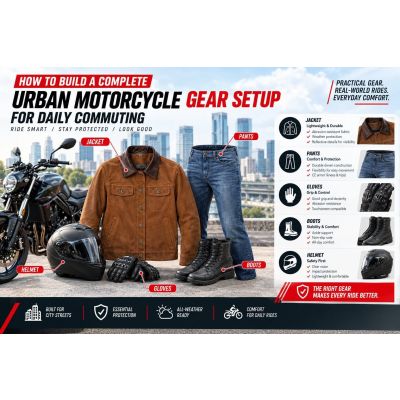
How to Build a Complete Urban Motorcycle Gear Setup for Daily Commuting
Urban motorcycle commuting demands gear that balances protection with practicality. Unlike track-focused riding, city riders need gear that works during stop-and-go traffic, frequent parking, weather changes, and the reality of wearing protective equipment to work and back. Building a complete urban motorcycle gear setup means choosing pieces that protect you without sacrificing comfort, mobility, or everyday usability. This guide explains what urban motorcycle gear you actually need, which features matter most for city riding, and how to evaluate options before making a purchase decision.
Quick Answer
A practical urban motorcycle gear setup includes a protective jacket, gloves, boots, and pants or riding jeans—each chosen for abrasion resistance, proper fit, and comfort during daily commuting. Prioritize gear that fits correctly and stays in place during riding, offers weather adaptability for your local climate, and balances protection with the mobility you need for city traffic. Start by identifying your primary riding conditions (summer heat, rain, cooler weather), then select individual pieces designed for those conditions rather than buying a single-piece track suit. Budget, comfort during extended wear, and how gear works with your commute length and work environment matter as much as protection ratings.
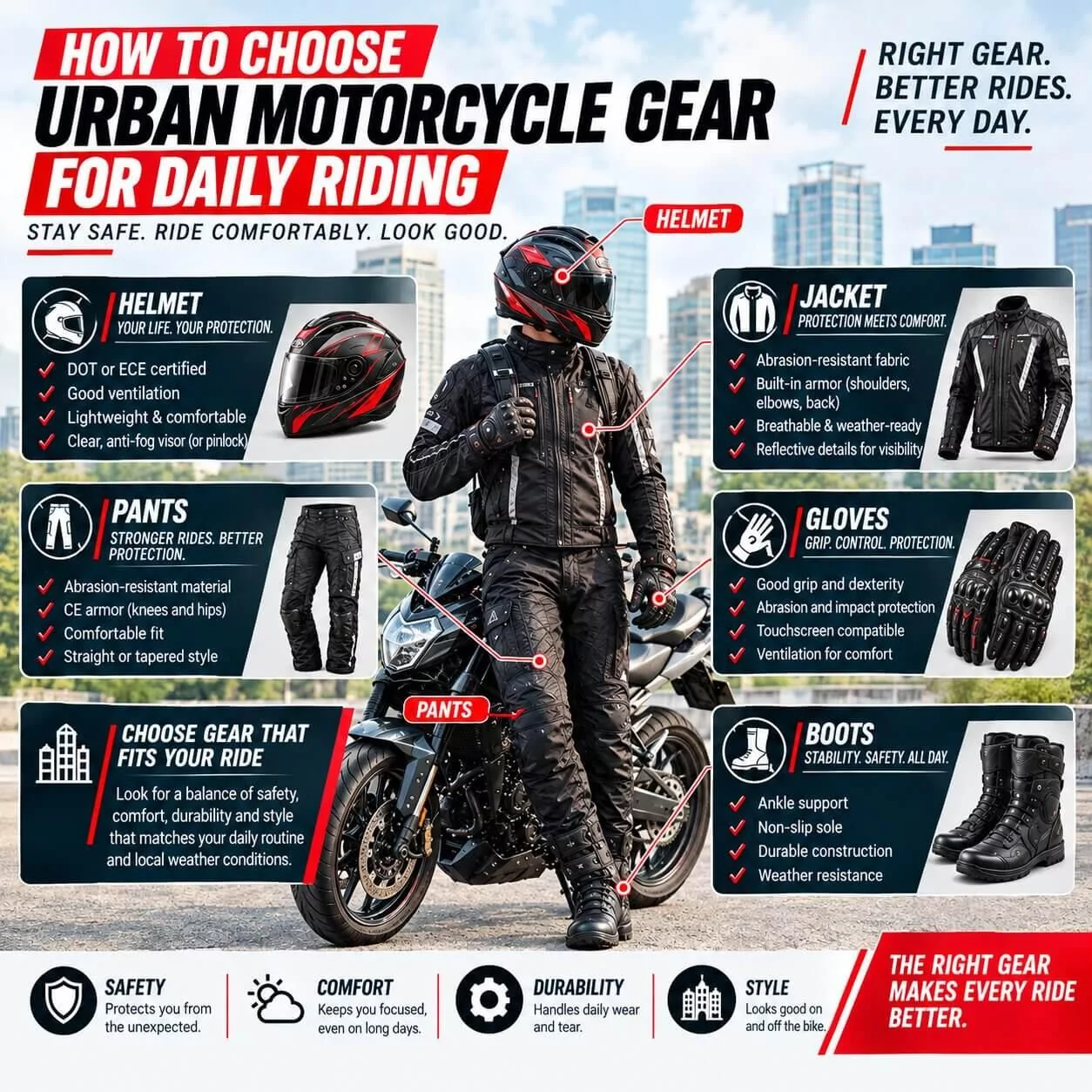
Table of Contents
- What Urban Motorcycle Gear Do You Actually Need?
- How to Choose Urban Motorcycle Gear for Daily Riding
- Which Features Matter Most When Buying Urban Gear?
- Leather vs Textile vs Mesh: Which Is Right for City Riding?
- How Should Motorcycle Gear Fit for Urban Riding?
- What Should You Check Before Buying Motorcycle Gear?
- Common Urban Motorcycle Gear Buying Mistakes
- Final Buying Guidance for Urban Riders
What Urban Motorcycle Gear Do You Actually Need?
Urban riders need protective gear covering the areas most likely to contact pavement in a city crash: hands, wrists, elbows, shoulders, knees, hips, and back. This means at minimum a protective jacket, gloves, boots, and pants. Each piece serves a specific purpose in a daily commute.
A motorcycle jacket protects your torso, shoulders, and arms. For city riding, you want one designed for stop-and-go traffic rather than highway speeds—this typically means better ventilation, easier movement, and practical sizing. Motorcycle gloves protect your hands and wrists, which riders instinctively use to catch themselves in a fall. Boots protect ankles and feet during shifts and in crashes. Motorcycle pants or reinforced riding jeans protect your legs and hips during slides.
The question is not whether you need each category, but which type within each category fits your commute. A rider facing summer heat needs different gear than one riding in cool weather. A short five-minute commute has different comfort demands than a 45-minute ride. A rider who parks and walks to an office needs gear that works off the bike as well as on it.
How to Choose Urban Motorcycle Gear for Daily Riding
Start by identifying your actual riding conditions. Urban motorcycle gear selection depends on climate, commute length, frequency, and how gear needs to function in your daily life.
Summer and hot-weather riding: Prioritize ventilation and breathability. Mesh jackets, textile jackets with mesh panels, and perforated leather offer airflow while maintaining abrasion protection. Look for removable or roll-up sleeves and ventilation panels that open easily. Lightweight gloves and boots designed for heat management prevent fatigue during longer city rides. Summer gear should not trap heat, as discomfort leads to poor decisions and unsafe riding.
Cooler weather and rain: Choose gear with water resistance or weatherproof liners. Leather jackets with sealed seams or textile jackets with waterproof membranes keep you dry during light rain and cooler commutes. Removable thermal liners add warmth without bulk. Waterproof gloves and boots with good traction prevent slipping during wet city stops.
Longer commutes (30+ minutes): Comfort becomes critical. Gear that feels restrictive for a short trip becomes painful for extended wear. Look for stretch panels, articulated construction, and padding that supports longer periods on the bike. Removable armor or less aggressive protection may suit urban riding better than track-focused gear designed for maximum protection but minimal comfort.
Work environment compatibility: Consider how gear fits your destination. If you arrive at an office, gear that looks professional or stores easily matters. If you park outside, durability and weather resistance matter more. Gear that transitions from commute to everyday wear (like a riding shirt over regular clothes) offers practical flexibility.
Riders building a practical setup for daily city riding can explore our
for protective gear suited to urban riding needs.Which Features Matter Most When Buying Urban Gear?
Not every feature matters equally for urban riding. Prioritize based on your specific conditions.
Abrasion resistance and construction: This is the primary protection concern in urban crashes. Look for gear rated under EN 17092, which classifies garments into classes AAA, AA, A, B, and C based on abrasion resistance, tear strength, and seam durability. The AA class indicates tested abrasion resistance, though it is not a measure of impact force. For urban riding, AA or AAA class provides strong abrasion protection. Check that seams are reinforced, particularly at stress points like shoulders, elbows, and knees where slides concentrate impact.
Armor and impact protection: Armor is rated separately under EN 1621. Level 1 armor is tested for standard impacts; Level 2 is tested for higher-impact forces. For urban riding, Level 1 armor on elbows, knees, shoulders, and back provides meaningful protection. Verify that armor is positioned correctly in the garment and that it stays in place during movement. Armor that shifts during riding loses effectiveness.
Fit and positioning: Gear that moves or bunches during riding cannot protect effectively. Proper fit matters more than brand or material. Armor must sit over vulnerable joints and stay there. Jackets should not ride up when you lean forward. Sleeves should reach your wrists when arms are extended. Pants should not slide down during riding.
Ventilation: For urban riders, ventilation often matters more than maximum protection. Stop-and-go traffic means frequent heat buildup. Gear that ventilates well encourages you to wear it consistently, which is more protective than uncomfortable gear you remove or avoid. Look for mesh panels, removable liners, and vents that open easily.
Weather adaptability: Removable liners, sealed seams, and water-resistant materials extend gear usability across seasons. A jacket that works in summer with liners removed and in cooler weather with liners added offers better value than single-season gear.
Leather vs Textile vs Mesh: Which Is Right for City Riding?
Material choice affects comfort, durability, weather resistance, and appearance—not just protection.
Leather: Leather offers excellent abrasion resistance and durability when properly constructed. It requires maintenance to preserve weather resistance and flexibility. Leather jackets and pants work well for riders who prefer classic appearance and are willing to care for gear. Leather can be warm in summer and requires ventilation. For urban riding, perforated leather or leather with mesh panels provides better airflow than solid leather. Leather is not inherently more protective than quality textile; both can meet high EN 17092 ratings.
Textile: Modern textile materials with reinforced weaves offer excellent abrasion resistance, often comparable to leather, while providing better ventilation and easier care. Textile jackets with waterproof membranes and removable liners adapt well to changing weather. They typically weigh less than leather and dry faster after rain. Textile gear suits riders who prioritize comfort, practicality, and low maintenance. Quality textile construction is as durable as leather for urban use.
Mesh: Mesh prioritizes ventilation for hot-weather riding. Mesh jackets and pants with armor provide protection while allowing maximum airflow. Mesh is best for summer commutes and short trips in heat. In cooler weather or rain, mesh offers less weather protection and requires layering. Many urban riders use mesh gear for summer and switch to textile or leather for other seasons.
For urban riding, the best material is the one you will wear consistently. Uncomfortable gear encourages riders to skip protection. A textile jacket you wear every day offers more protection than a leather jacket left at home because it is too hot.
How Should Motorcycle Gear Fit for Urban Riding?
Fit directly affects protection, comfort, and whether you will wear gear regularly.
Jackets: A protective jacket should fit snugly without restricting arm movement. When seated on the bike with arms forward (as if holding the bars), the jacket should not ride up your back or pull at the shoulders. Sleeves should reach your wrists. The jacket should stay in place during braking and cornering. Try the jacket on the bike if possible, or at least in a riding position, not standing upright.
Pants: Motorcycle pants should fit securely at the waist without a belt (or with a belt that does not slip). They should not slide down during riding or braking. Inseams should allow full leg extension without pulling. Knees should align with armor placement. Too-loose pants shift during riding and leave gaps at the waist and knees.
Gloves: Gloves should fit snugly around the palm and fingers without gaps. Loose gloves bunch up during grip and reduce feel. The cuff should seal at the wrist without cutting off circulation. Gauntlet-style gloves that extend up the forearm provide better wrist protection than short cuffs.
Boots: Motorcycle boots should fit with room for a thin sock but not so loose they shift during shifts. The ankle should feel supported, not squeezed. Laces or straps should be secure enough that boots do not slip during braking.
Many riders find that custom sizing from manufacturers like MotoSpeeds produces better fit than standard sizes, particularly if you are outside typical sizing ranges or have specific mobility needs. Custom gear costs more but ensures armor sits correctly and protection is not compromised by poor fit.
What Should You Check Before Buying Motorcycle Gear?
Before purchasing, verify these details on the product page or in product documentation.
Armor coverage and positioning: Check where armor is installed. Does it cover shoulders, elbows, knees, and back? Are armor pieces removable or fixed? Where exactly does the armor sit in the garment? Verify that armor placement aligns with your body when you wear the gear.
Safety certifications: Look for EN 17092 classification (AAA, AA, A, B, or C) for the garment itself. Check for EN 1621 certification on armor (Level 1 or Level 2). Manufacturer documentation should list these ratings. Do not assume a high price means high protection; verify certifications directly.
Material and construction details: Check leather thickness (if applicable), textile weave type, seam construction, and reinforcement zones. Look for sealed seams, double stitching at stress points, and reinforced panels at abrasion zones. Read care instructions to understand maintenance requirements.
Fit and sizing: Check the size chart carefully. Read customer reviews for fit feedback. Note whether the brand runs small, large, or true to size. Confirm return policies in case sizing is incorrect. If you are between sizes or have specific concerns, contact the manufacturer before ordering.
Weather features: Verify whether the gear is water-resistant or waterproof. Check if liners are removable and whether they are included. Look for ventilation details such as mesh panels or zip-open vents. Confirm that weather features match your riding conditions.
Intended use: Confirm the gear is designed for street riding or commuting, not racing or track use. Track-focused gear prioritizes maximum protection over comfort and practicality, making it less suitable for daily urban riding.
Common Urban Motorcycle Gear Buying Mistakes
Buying a single-piece race suit for daily commuting: Track suits prioritize protection over comfort and practicality. They restrict movement, lack ventilation for city traffic, and are difficult to wear to work. Urban riders need separate pieces that work independently and adapt to different conditions.
Choosing gear based on appearance alone: Gear that looks good but does not fit properly or match your riding conditions offers poor protection and discomfort. Protection and fit matter more than style. Practical gear looks better on the road than impressive gear left at home.
Ignoring weather adaptability: Buying separate summer and winter gear is more practical than a single all-purpose setup. Gear optimized for one season often fails in others. Removable liners and ventilation options extend gear life across seasons.
Underestimating the importance of gloves and boots: Hands and feet are most likely to contact pavement in a crash. Many riders invest heavily in jackets but cheap out on gloves and boots. Every piece matters equally for protection.
Not trying gear on or checking fit: Buying online without confirming fit leads to protection gaps and discomfort. Always verify sizing, read fit feedback, and understand return policies. Poor fit is the most common reason riders abandon protective gear.
Assuming higher price means better protection: Price does not guarantee protection. A mid-range textile jacket with proper EN 17092 rating and correct fit protects better than an expensive jacket that does not fit. Compare certifications and construction, not just cost.
Final Buying Guidance for Urban Riders
Building an urban motorcycle gear setup is a practical purchasing decision, not a one-time purchase. Start with the basics—a protective jacket, gloves, boots, and pants that fit correctly and match your primary riding conditions. Evaluate each piece based on abrasion resistance, armor placement, fit, comfort, and weather suitability. Choose materials and styles you will actually wear consistently.
As you ride and learn your preferences, upgrade individual pieces. A rider who starts with mesh gear for summer may add a textile jacket for cooler months. A rider who discovers a commute is longer than expected may invest in more comfortable or weather-resistant gear. Urban gear evolution is normal and practical.
For riders comparing specific options and detailed product information, the
provides a closer look at the features, construction, and fit buyers should evaluate before making a purchase decision.Prioritize fit and protection over brand, price, or appearance. Verify certifications and armor placement before buying. Choose gear that works for your commute length, climate, and daily environment. When you invest in urban motorcycle gear that fits well and matches your riding conditions, you are making a decision based on practicality and protection—not marketing or trend. That is how urban riders build gear setups that last and work every day.
Frequently Asked Questions
What is the minimum motorcycle gear I need for urban commuting?
At minimum, wear a protective jacket, gloves, boots, and pants. These cover the areas most likely to contact pavement in a city crash: torso, hands, feet, and legs. Each piece should be designed for street riding and fit correctly. A jacket alone is not enough protection; hands, feet, and legs need equal protection. Many urban riders start with these four pieces and add additional gear like riding shirts or protective base layers as they expand their setup.
How do I know if motorcycle gear fits correctly?
Gear fits correctly when it stays in place during riding without restricting movement. Sit on your motorcycle in a riding position; the jacket should not ride up your back, and sleeves should reach your wrists. Pants should not slide down and should not pull at the knees or waist. Gloves should fit snugly without gaps, and boots should feel secure without cutting circulation. If gear shifts, bunches, or feels restrictive during riding, it does not fit properly. Many brands offer sizing charts and fit descriptions; read them carefully and check customer reviews for fit feedback before ordering.
Is leather or textile better for urban motorcycle gear?
Neither is inherently better; both can meet high protection ratings when properly constructed. Leather offers excellent durability and classic appearance but requires maintenance and can be warm in summer. Textile provides better ventilation, easier care, and good abrasion resistance. Mesh offers maximum airflow for hot weather but less weather protection. Choose based on your climate, maintenance preference, and intended use. A textile jacket you wear every day offers more protection than a leather jacket left at home because it is uncomfortable.
What does EN 17092 rating mean for motorcycle gear?
EN 17092 is a standard that classifies motorcycle garments (jackets, pants, suits) into classes AAA, AA, A, B, and C based on abrasion resistance, tear strength, and seam durability. The AA class indicates tested abrasion resistance under this standard. The rating applies to all materials—leather and textile alike. EN 17092 does not measure impact protection; that is rated separately under EN 1621 for armor. When shopping, look for the EN 17092 class listed in product documentation to understand abrasion protection level.
Should I buy custom-sized motorcycle gear?
Custom sizing is worth considering if you are outside typical sizing ranges, have specific fit concerns, or prioritize perfect armor placement. Custom gear costs more but ensures protection is not compromised by poor fit. If you wear standard sizes and find gear that fits well off-the-rack, custom sizing may not be necessary. If you struggle to find jackets, pants, or gloves that fit your body without gaps or bunching, custom sizing from a manufacturer like MotoSpeeds ensures protection and comfort.
How often should I replace urban motorcycle gear?
Replace gear after a crash, even if damage is not visible, because armor may be compromised. For regular use, quality gear lasts several years with proper care. Inspect gear regularly for wear, damage, or loose armor. If seams are failing, armor is shifting, or material is tearing, replacement or repair is necessary. Removable armor can sometimes be replaced without replacing the entire garment, extending gear life. Textile gear typically lasts longer than leather if properly maintained.
Can I wear regular clothes under motorcycle gear for warmth?
Yes, layering regular clothes under gear is practical for cooler weather. Base layers and sweaters under a mesh or ventilated jacket add warmth without requiring separate gear. However, avoid bulky clothing that prevents proper fit or causes armor to shift. Tight base layers work better than loose sweaters. For serious cold-weather riding, removable thermal liners designed for motorcycle gear offer better fit than layering regular clothes, but layering is a practical option for mild temperature changes.