Table of Contents
Introduction
Few motorsports events carry the legendary status—and the risk—of the Isle of Man TT (Tourist Trophy). Known for its breathtaking speeds and unforgiving road circuit, this race has been thrilling fans since 1907.
Unlike most motorcycle races held on controlled circuits, the Isle of Man TT takes place on public roads closed specifically for racing. Riders navigate narrow village streets, stone walls, mountain passes, and blind corners at speeds exceeding 320 km/h (200 mph).
Because of these extreme conditions, Isle of Man TT standards for rider protection are among the most demanding in motorcycle racing. Competitors rely heavily on advanced protective leather gear, CE-certified racing suits, reinforced impact zones, and high-strength stitching to survive crashes at extreme speeds.
In this guide, we will explore why the Isle of Man TT is considered the most dangerous race in the world, how the legendary 37-mile TT course tests riders, and how modern racing suits are designed to protect riders in such a high-risk environment.
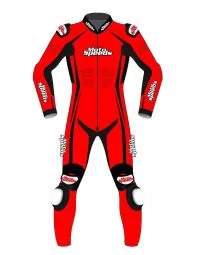
If you’re looking for professional-level , explore the MotoSpeeds Collection.
What Makes the Isle of Man TT Unique
The Isle of Man TT is not just another motorcycle race—it is a historic road racing event that pushes both riders and machines to their absolute limits.
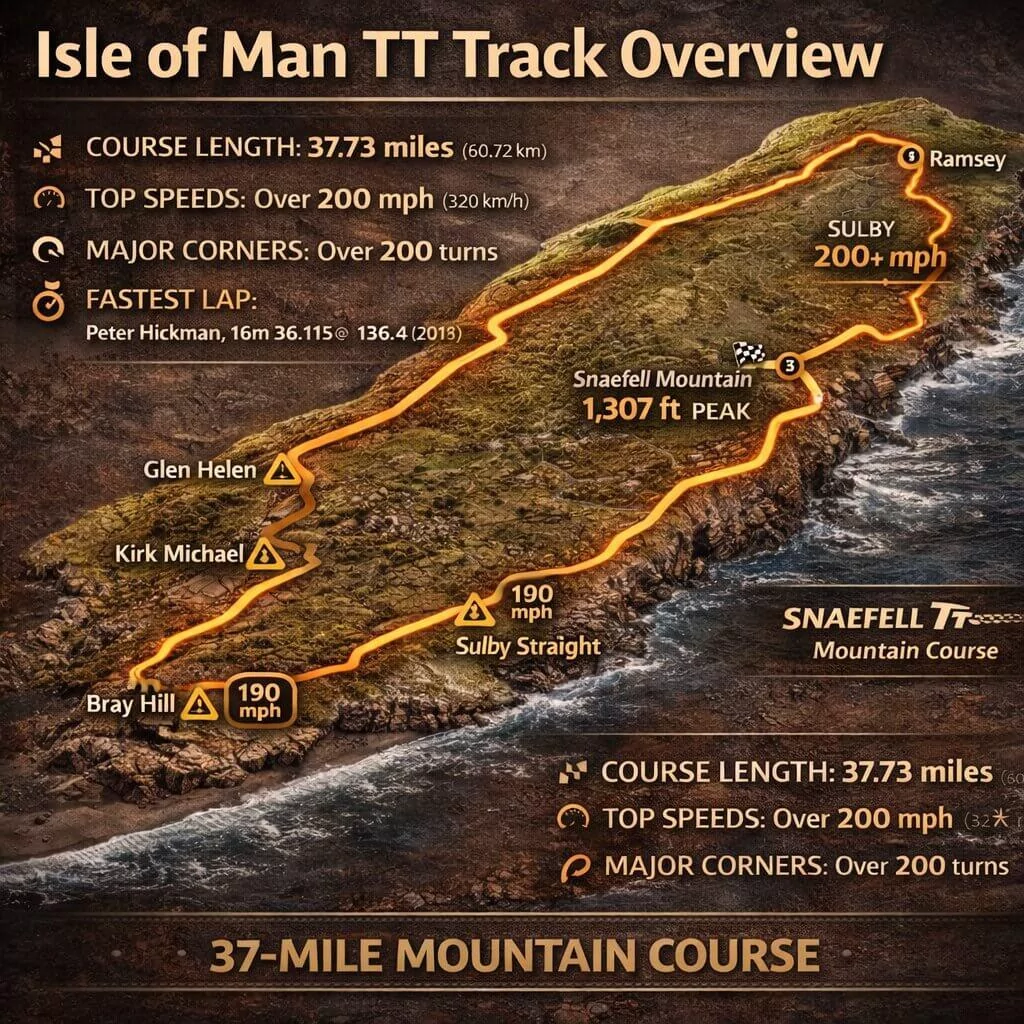
The race takes place on the Snaefell Mountain Course, a public road network transformed into a racing circuit during the event.
Key characteristics that make the TT unique include:
A 37.73-mile track, far longer than traditional race circuits
Over 200 corners throughout the course
Narrow village roads and mountain passes
Minimal run-off areas compared to closed circuits
Extreme top speeds exceeding 200 mph
These conditions create a race that demands exceptional rider skill and high-level protective gear.
The Isle of Man TT Track: A 37-Mile Test of Courage
The Isle of Man TT track is one of the longest and most complex racing circuits in the world.
Unlike modern tracks built with safety zones, the TT course runs through:
Villages
countryside roads
mountain climbs
tight residential areas
Course Statistics
Length: 37.73 miles (60.72 km)
Corners: 200+ turns
Top speeds: 200+ mph (320 km/h)
Elevation change: 1,300+ feet
Riders must memorize every corner, bump, and braking point.
Even small mistakes can have serious consequences.
Why the TT Is Considered the Most Dangerous Race
The Isle of Man TT has earned its reputation as the world’s most dangerous motorcycle race because of its combination of speed, track design, and environmental hazards.
Unlike MotoGP circuits that feature gravel traps and run-off zones, the TT course is lined with:
stone walls
buildings
trees
fences
street furniture
At racing speeds above 200 mph, crashes can be devastating.
The race requires extraordinary mental focus, physical endurance, and advanced protective equipment.
Safety Gear Requirements and Isle of Man TT Standards
Because of the extreme risks involved, riders must meet strict Isle of Man TT safety standards.
Protective gear requirements typically include:
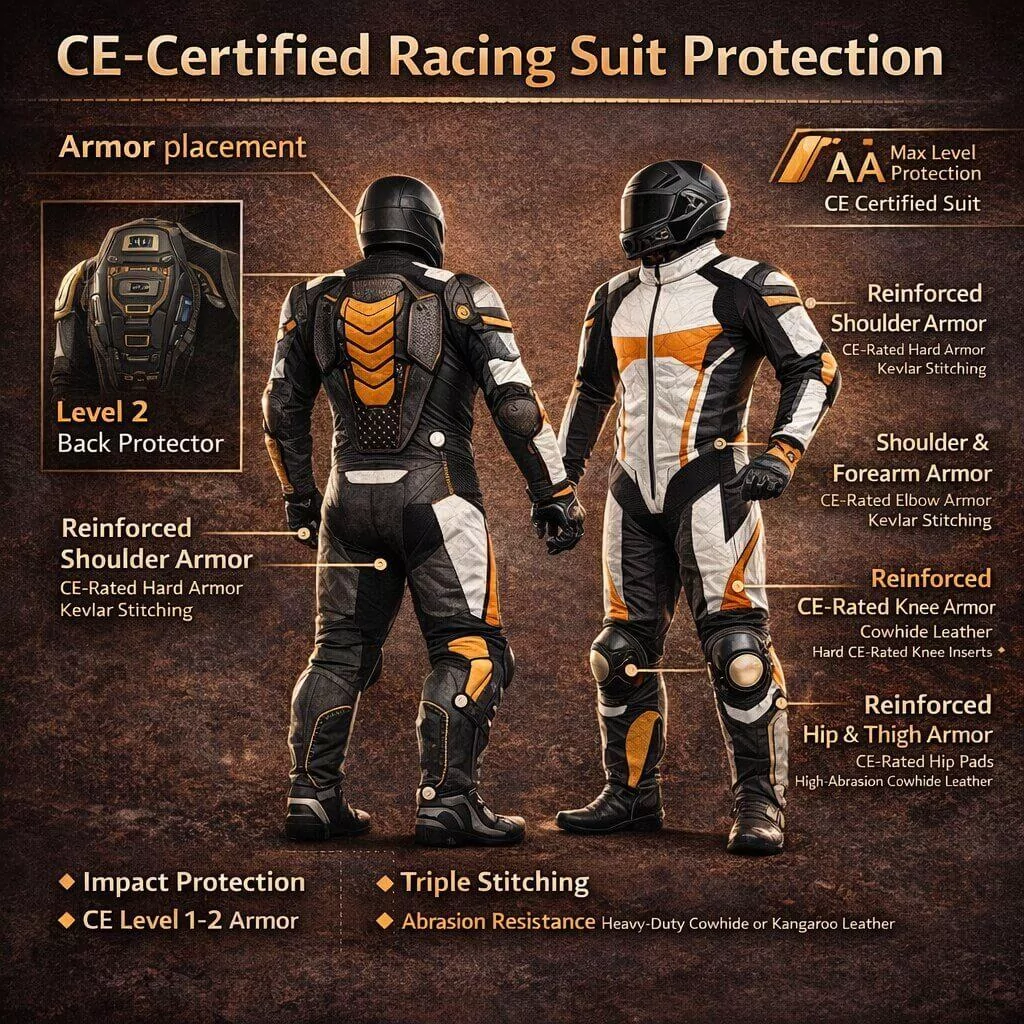
CE-certified racing suits
back protectors
chest protectors
racing boots
racing gloves
helmets meeting international safety standards
The racing suit itself is one of the most important pieces of equipment.
Modern racing suits are engineered to withstand:
high-speed abrasion
impact forces
repeated sliding on asphalt
CE-Certified Motorcycle Racing Suits Explained
CE certification is a European safety standard used to evaluate protective motorcycle gear.
For racing suits, the most relevant regulation is EN 17092, which tests clothing for:
abrasion resistance
impact protection
tear strength
seam durability
CE-certified suits must undergo laboratory testing that simulates crash conditions.
The goal is to ensure riders receive reliable protection during accidents.
Protective Leather Gear: Designed for Extreme Racing
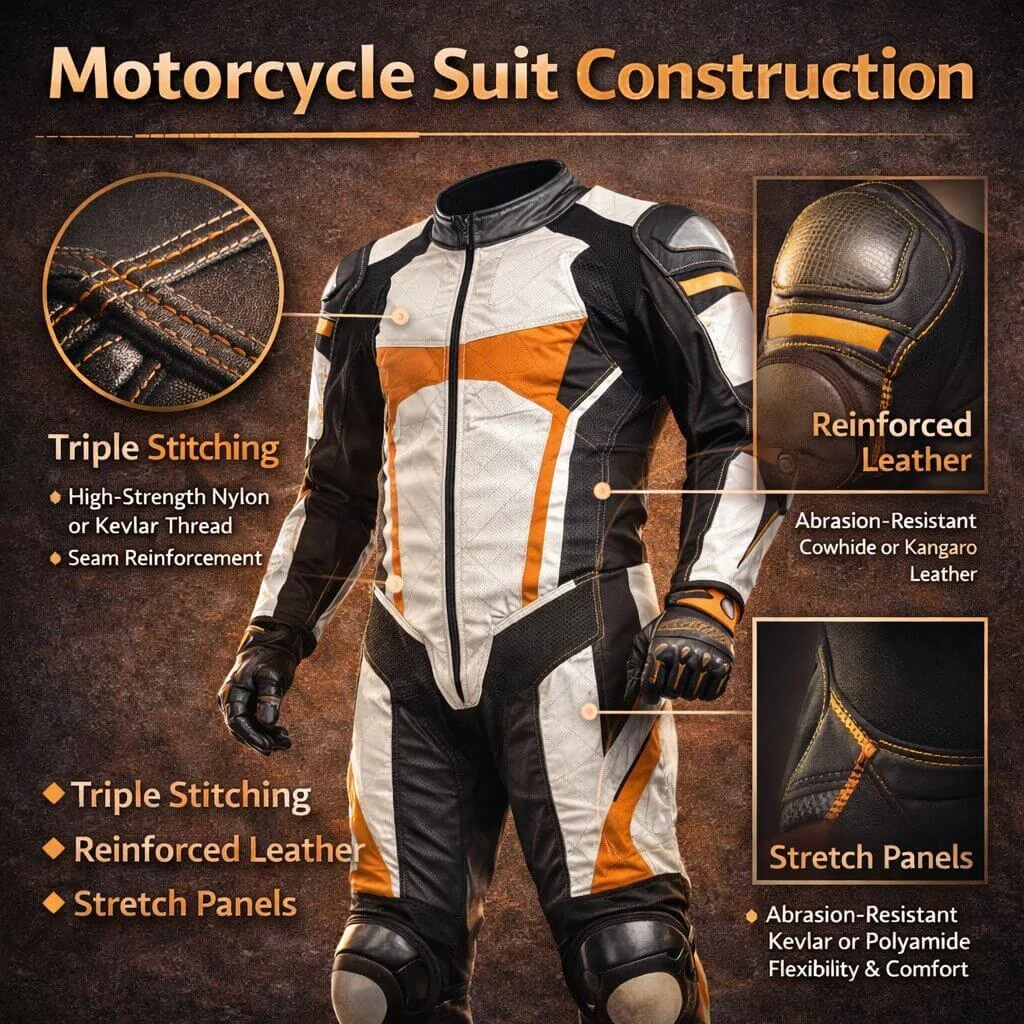
Professional riders rely on high-quality leather suits because leather provides exceptional abrasion resistance.
Common materials used in racing suits include:
full-grain cowhide leather
kangaroo leather
reinforced stretch panels
Kevlar or aramid stitching
Leather is particularly effective because it can withstand long slides on asphalt without tearing.
This makes it ideal for high-speed road racing events like the Isle of Man TT.
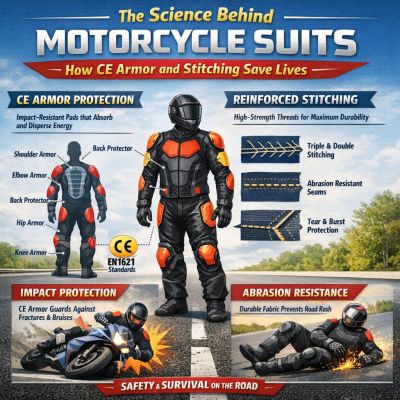
Impact Zones in Motorcycle Racing Suits
Modern racing suits incorporate strategically reinforced impact zones.
Impact zones are areas of the suit designed to absorb crash forces and protect the rider’s body.
Typical impact zones include:
shoulders
elbows
forearms
hips
knees
tailbone
These areas often include CE-approved armor inserts and additional leather layers.
This protection helps reduce injuries during crashes.
Why Triple Stitching Matters in Racing Safety
One often overlooked safety feature in racing suits is triple stitching.
Seams are critical failure points during crashes.
High-quality racing suits use:
triple-stitched seams
high-strength nylon or Kevlar thread
reinforced panel connections
Triple stitching ensures that the suit remains intact during high-speed slides.
If seams fail, the protective structure of the suit collapses.
Therefore, seam construction is a crucial part of Isle of Man TT safety gear standards.
Track Casualties and the Reality of Road Racing
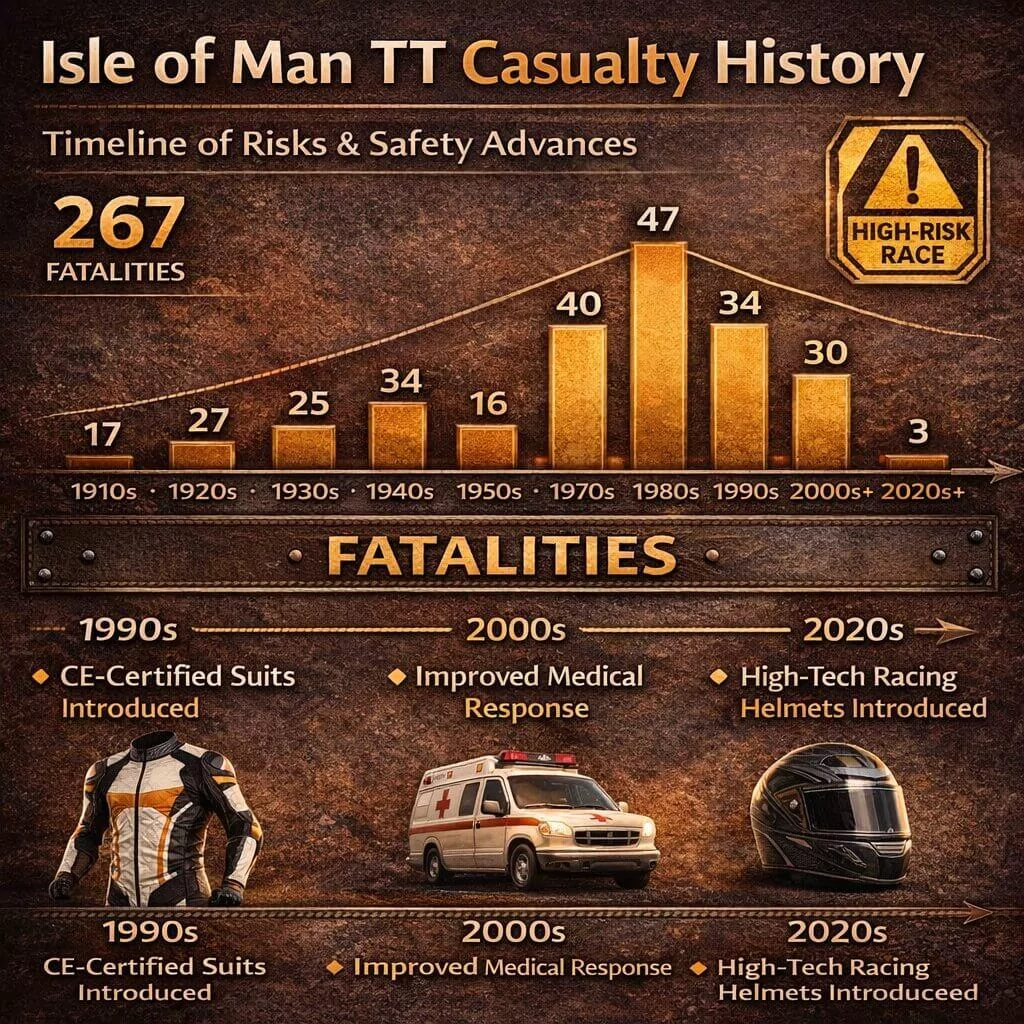
The Isle of Man TT has seen numerous accidents throughout its long history.
Since the race began in 1907, there have been over 260 fatalities during TT events and practices.
These statistics highlight the extreme nature of road racing.
However, it is important to understand that safety improvements have significantly reduced risks over time.
Advancements include:
improved racing suits
better helmets
enhanced medical response
improved track safety procedures
How Modern Racing Gear Improves Rider Safety
Motorcycle racing gear has evolved dramatically over the past decades.
Modern suits now feature:
CE-certified armor systems
aerodynamic race humps
perforated cooling panels
stretch Kevlar panels for flexibility
improved abrasion resistance
Some professional racing suits now even include airbag technology, which deploys during crashes.
These innovations greatly improve rider safety during high-speed incidents.
Choosing Certified Racing Gear for Road Racing
Whether racing professionally or participating in track events, choosing certified gear is essential.
When selecting a racing suit, consider:
Certification
Look for CE-certified suits meeting international safety standards.
Construction Quality
Check for:
reinforced leather panels
triple stitching
CE armor
Fit
A properly fitted suit improves protection and rider mobility.
If you are looking for professional-grade racing gear, explore the MotoSpeeds advanced racing suit line:
Conclusion
The Isle of Man TT stands as one of the most legendary—and dangerous—events in motorcycle racing history.
The race challenges riders with a 37-mile mountain road course, extreme speeds, and minimal margin for error.
Because of these risks, protective racing gear plays a vital role in rider safety.
Modern CE-certified racing suits, reinforced leather construction, impact armor, and triple-stitched seams provide riders with crucial protection during crashes.
While the TT will always carry inherent dangers, continuous improvements in safety technology help protect riders competing in this iconic race.
Explore professional racing gear designed for performance and protection:
FAQs
What is the Isle of Man TT?
The Isle of Man TT is a historic motorcycle road race held annually on the Isle of Man. It takes place on public roads closed for racing.
Why is the Isle of Man TT considered dangerous?
The race occurs on narrow public roads lined with buildings, walls, and trees, and riders reach speeds exceeding 200 mph.
What safety gear do TT riders wear?
Riders wear CE-certified leather racing suits, helmets, gloves, boots, and protective armor.
What are impact zones in motorcycle suits?
Impact zones are reinforced areas of a racing suit designed to absorb crash forces and protect key body parts.
Why is triple stitching important in racing suits?
Triple stitching strengthens suit seams, preventing the suit from tearing during high-speed crashes.