
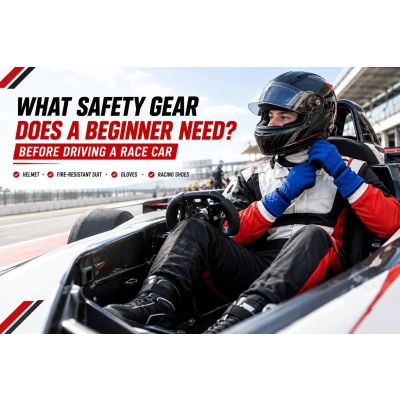
Car Racing Gear Safety Guide for Drivers
Before stepping into the cockpit for the first time, beginner race drivers face an important question: What car racing gear and track safety gear do I actually need? The answer depends on your racing discipline, event rules, and the protection you want to prioritize. Car racing gear isn't about eliminating risk—it's about reducing it through fire-resistant materials, proper fit, layering, and compliance with motorsport safety standards. Whether you're preparing for a track day, circuit race, drag racing event, or karting competition, understanding what gear does, how to inspect it, and why fit matters will help you make safer choices before race day.
Table of Contents
- Why Car Racing Gear Matters for Driver Safety
- Safety Standards, Materials, and Certification Checks
- Fit, Layers, and Comfort in the Cockpit
- Inspection, Maintenance, and Common Mistakes
- How MotoSpeeds Supports Car Racing Gear Buyers
- Final Safety Guide Before You Buy
Quick Safety Summary
Car racing gear serves one core purpose: to help reduce burn risk, provide abrasion protection, and support driver escape time in motorsport environments. Fire-resistant racing suits, gloves, shoes, balaclavas, and underlayers work together as a system. Fire-resistant materials are designed to slow heat transfer, not prevent burns entirely. Certification labels (such as SFI or FIA) indicate that gear has been tested to a defined standard, but certification does not guarantee injury prevention. Protection depends on the correct rating, proper fit while seated, compatible layers, gear condition, and correct use. Always check product labels, event rulebooks, and manufacturer documentation before competition use.

Why Car Racing Gear Matters for Driver Safety
Car racing gear exists because motorsport environments present specific risks that street clothing cannot address. Inside a race car cockpit, drivers face elevated temperatures from engine heat, brake friction, and prolonged sun exposure. In the event of a fire or impact, street fabrics ignite quickly and offer no thermal protection. Racing suits, racing gloves, racing shoes, balaclavas, and racing underwear are engineered with fire-resistant materials to slow heat transfer and give drivers critical escape time.
Beyond fire risk, racing gear protects against abrasion. During high-speed turns, contact with the cockpit interior, or a rollover, unprotected skin can suffer severe friction injuries. A properly fitted racing suit with reinforced seams and fire-resistant fabric acts as a barrier. Racing gloves protect hands during steering and gear changes. Racing shoes with reinforced soles and ankle support protect feet during pedal operation. A balaclava covers the neck and face—areas often exposed in a helmet opening.
Event rules also require specific gear. Most sanctioning bodies and racing organizations mandate that drivers wear SFI or FIA-certified racing suits, gloves, shoes, and sometimes balaclavas. Some events specify minimum certification levels or require gear to be within a certain validity period. Drivers who show up without compliant gear may not be permitted to race. Understanding what your event requires before you buy ensures you invest in gear that meets both safety and rule compliance.
Safety Standards, Materials, and Certification Checks
Two major motorsport safety certification systems exist: SFI (Safety Equipment Institute) and FIA (Fédération Internationale de l'Automobile). Both organizations test racing gear against defined standards and award certification labels to products that pass. However, certification does not guarantee that gear will prevent injury. Instead, it shows that the gear has been tested to a specific performance level under laboratory conditions.
Fire-resistant racing suits are typically made from aramid fabrics such as Nomex or similar materials. These fabrics are engineered to resist ignition and slow heat transfer compared to cotton or synthetic street fabrics. Multilayer constructions—where the suit is made of several layers rather than one—can provide additional thermal protection, but exact protection levels depend on material quality, construction method, fit, and how the gear is used in a real racing incident.
When shopping for car racing gear, always check the product label for certification markings. Look for an SFI patch or FIA label that shows the certification level and, where relevant, the expiration or validity date. Some racing events require certification to be current; others accept older gear if it remains in good condition. Read the product details carefully to confirm the gear matches your event's requirements. If you're uncertain whether a suit, glove, shoe, or balaclava meets your event rules, contact the event organizer or the gear manufacturer before purchasing.
Certification helps show that gear has been tested to a defined standard, but it does not guarantee injury prevention. Protection depends on the correct rating, fit, condition, layers, and racing environment. Always verify certification details before competition use.
Fit, Layers, and Comfort in the Cockpit
Fit is critical for both safety and comfort. A racing suit that is too loose will bunch inside the cockpit, creating hot spots and reducing your ability to move freely. A suit that is too tight will restrict breathing, reduce range of motion, and become uncomfortable during long races. The best way to check fit is to sit in a race car seat while wearing the suit, or to simulate a seated position at home.
When seated, check that the suit does not pull at the shoulders or restrict arm movement for steering and gear changes. Cuffs should overlap with glove openings so no skin is exposed at the wrist. Pant legs should reach your ankles and overlap with racing shoes. Sleeves should extend to your wrists without bunching. The suit should feel snug but not restrictive.
Layers matter too. Most racing suits are worn over a base layer—typically racing underwear or a fire-resistant undershirt and pants. Base layers wick moisture, add thermal protection, and improve comfort during long races. Make sure any base layers you choose are fire-resistant and compatible with your suit. Mixing unrated street clothing under a racing suit defeats the purpose of the protective system.
Gloves, shoes, and a balaclava should also fit well and work together. Racing gloves should allow you to grip the steering wheel and operate pedals without slipping. Racing shoes should be snug enough to prevent foot movement inside the pedal box but loose enough to remove quickly in an emergency. A balaclava should fit under your helmet without creating pressure points or restricting your view. Test the full gear combination before race day if possible.
Inspection, Maintenance, and Common Mistakes
Before wearing car racing gear to a track or race event, always inspect it. Check seams for tears or separation. Look at zippers to make sure they slide smoothly and close fully. Examine cuffs and collar for damage. Feel the fabric for burns, stains, or chemical contamination. If gear has been involved in an accident or fire, inspect it thoroughly—even small damage can compromise protection. If you find damage, do not wear the gear to an event. Replace it or have it professionally repaired.
After each race or track day, follow the care label instructions. Most fire-resistant racing suits can be hand-washed or machine-washed in cool water with mild detergent, but always check the label. Store gear in a cool, dry place away from direct sunlight, heat sources, and chemicals. Avoid storing damp gear in a sealed bag, which can promote mold. Check your gear periodically for signs of wear, fading, or fabric degradation.
Here are five common mistakes beginner drivers make when choosing and using car racing gear:
- Choosing by looks only: Style matters, but certification, fit, and material quality matter more. Prioritize function and safety over color or brand name.
- Ignoring certification labels: Always check that your suit, gloves, shoes, and balaclava carry the certification your event requires. An uncertified suit may not be legal for competition.
- Wearing the wrong underlayers: Street clothing or non-fire-resistant base layers under a racing suit reduce the protective system's effectiveness. Use compatible fire-resistant underlayers.
- Buying the wrong fit: Ordering a suit based on street clothing size alone often leads to poor fit. Always test fit while seated or use a detailed sizing guide and consider custom options.
- Skipping inspection: Damaged, contaminated, or expired gear should not be worn. Inspect before every use and replace gear that no longer meets event requirements or shows signs of wear.
How MotoSpeeds Supports Car Racing Gear Buyers
MotoSpeeds specializes in performance-focused car racing gear designed for drivers who take safety and fit seriously. The brand offers fire-resistant racing suits, auto racing suits, racing gloves, racing shoes, balaclavas, and racing underwear. MotoSpeeds emphasizes custom sizing and made-to-measure options so drivers can achieve the fit that matters most in the cockpit.
Drivers comparing fire-resistant suits, gloves, shoes, and related safety apparel can review
to explore gear options and product details before ordering.Each product includes detailed information about materials, construction, certification status, sizing guidance, and care instructions. MotoSpeeds helps buyers understand what they're buying so they can make informed decisions that align with their racing discipline and event requirements.
Drivers who want to review a real gear example can check
to compare fit, material, and protective feature details.MotoSpeeds offers car racing gear options for drivers who want to compare fit, materials, comfort, and protective features before ordering. Buyers should always review product details, certification information, sizing guidance, and event requirements before competition use.
Final Safety Guide Before You Buy
Before purchasing car racing gear, follow these practical steps to make a safer, more informed decision.
First, identify your racing discipline. Are you preparing for a track day, circuit racing, drag racing, karting, rally, autocross, or club racing? Each discipline may have slightly different gear requirements and expectations.
Next, check your event's safety requirements. Read the event rulebook or contact the organizer to find out what certification level (SFI or FIA) is required, whether gear must be within a certain validity period, and what specific items (suit, gloves, shoes, balaclava) are mandatory. Write down the exact requirements so you don't buy gear that won't be legal for your event.
Choose the right suit type and layers for your climate and racing environment. A single-layer suit works for warm climates and shorter races. A multilayer suit provides more thermal protection for longer events or cooler conditions. Decide on compatible base layers—fire-resistant racing underwear or a fire-resistant undershirt and pants.
Confirm fit while seated. Use a detailed sizing chart, measure yourself carefully, or consider a custom-fit option. Test the full gear combination (suit, gloves, shoes, balaclava) in a seated position if possible. Check that cuffs, pant legs, and collar coverage meet your needs.
Inspect your gear before the first use and after any incident. Check seams, zippers, labels, and fabric condition. Replace gear if it is damaged, contaminated, expired by event rules, or no longer compliant.
Review care instructions and store gear properly between uses. Follow the manufacturer's guidance on washing, drying, and storage to extend gear life and maintain protection.
If you're uncertain about sizing, certification, or whether specific gear meets your event rules, contact MotoSpeeds support or the gear manufacturer before ordering. Taking time to ask questions now prevents costly mistakes later.
Choosing the right track safety gear and car racing gear is one of the most important decisions you'll make as a driver. Start with education, verify your event requirements, prioritize fit and certification, and inspect your gear before every use. When you understand what car racing gear does and what to look for, you're better prepared to make choices that support your safety and performance on race day.
Frequently Asked Questions
What is car racing gear designed to do?
Car racing gear is designed to reduce burn risk through fire-resistant materials, provide abrasion protection, and support driver escape time in motorsport environments. Racing suits, gloves, shoes, balaclavas, and underlayers work as a protective system. Fire-resistant fabrics slow heat transfer compared to street clothing, but they do not prevent burns entirely. Gear also protects against friction injuries during high-speed driving or contact with the cockpit. Additionally, certified gear helps drivers comply with event safety rules and sanctioning body requirements.
Is fire-resistant race gear the same as fireproof gear?
No. Fire-resistant and fireproof are different concepts. Fireproof means something will not burn under any condition—a claim that is not realistic for clothing. Fire-resistant means the material is designed to resist ignition and slow heat transfer. Fire-resistant racing gear will not ignite as easily as street clothing, and it provides thermal protection that buys drivers critical escape time. However, fire-resistant gear is not immune to extreme heat or flames. Always use the term fire-resistant when describing racing suits and gear, and never assume any clothing is completely burn-proof.
What should I check before buying a car racing suit?
Before buying a racing suit, check the certification label to confirm it meets your event's requirements (SFI or FIA level). Verify that any validity or expiration date is acceptable for your event. Measure yourself carefully and compare your measurements to the sizing chart, or consider a custom-fit option. Test fit while seated to ensure the suit does not restrict movement or bunch in the cockpit. Review the material composition and construction (single-layer vs. multilayer) to match your racing climate. Read product details about care instructions and compatible underlayers. If you're unsure about any detail, contact the manufacturer or seller before ordering.
Do I need racing gloves, shoes, balaclava, and underlayers too?
Most racing events require or strongly recommend racing gloves and shoes as part of a complete protective system. A balaclava is often optional but highly recommended to protect your neck and face. Racing gloves protect your hands during steering and gear changes. Racing shoes protect your feet during pedal operation and provide ankle support. A balaclava covers areas that may be exposed at the helmet opening. Racing underlayers (fire-resistant base layers) improve comfort and add thermal protection under your suit. Check your event rules to confirm what is mandatory, then consider adding optional items based on your comfort and the racing environment.
How should car racing gear fit in the cockpit?
Car racing gear should fit snugly without restricting movement or causing discomfort. When seated, the suit should not pull at the shoulders or limit arm movement for steering and gear changes. Sleeves should extend to your wrists without bunching. Pant legs should reach your ankles and overlap with racing shoes. Cuffs should overlap with glove openings so no skin is exposed at the wrists. The suit should feel secure but allow you to breathe and move freely. Test fit while seated in a race car or in a simulated seated position at home. If a suit is too loose, it will bunch and create hot spots. If it is too tight, it will restrict movement and become uncomfortable during long races.