
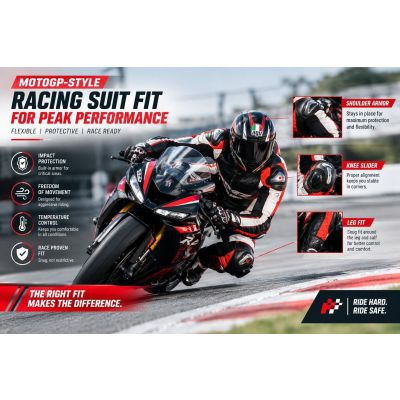
Knee fit in a motorcycle racing suit is one of the most overlooked yet critical aspects of protective gear selection. Many riders focus on jacket fit or overall suit size but miss how poor knee positioning can compromise both protection and comfort during street riding, track days, and long-distance journeys. Your knees are among the first impact zones in a crash—along with elbows, shoulders, and hips—making their armor placement and suit tension absolutely essential to rider safety.
If your racing suit is too loose at the knees, armor shifts during cornering or slides. If it's too tight, you lose range of motion and comfort, which often leads riders to wear gear less consistently. Understanding the motorcycle racing suit knee fit balance helps you choose gear that protects effectively while letting you ride with confidence and control.
Quick Answer
A MotoGP-style racing suit should fit snugly at the knees without restricting movement. The knee armor should sit directly over the kneecap when you're in a riding position, not sliding up or down. The suit fabric around the knees should feel firm but allow you to bend your legs fully. Check the fit by sitting on the bike and performing test movements; if the armor shifts, the suit is too loose. If you can't bend your knees comfortably, the suit is too tight. Custom sizing ensures the best fit for your unique body shape and riding style.

Table of Contents
- What Proper Knee Fit Means for Rider Safety
- Why Knee Armor Placement Matters on the Road and Track
- How Knee Armor Helps During a Crash or Slide
- What Riders Should Check Before Buying a Racing Suit
- Common Mistakes Riders Make with Knee Fit
- How Fit, Comfort, and Protection Work Together
- Final Buying Advice from MotoSpeeds
What Proper Knee Fit Means for Rider Safety
Proper knee fit in a motorcycle racing suit means the suit fabric and armor stay in the correct position during riding and braking, without shifting or bunching. When you sit on the bike in your normal riding posture, the knee armor should align directly over your kneecap. The suit should feel snug around the thigh and calf but allow your legs to bend at full range without pulling or restricting.
In a MotoGP-style racing suit, the knees experience constant flex. You're moving your legs to shift body weight, adjust your position, brake hard, and corner aggressively. If the suit is too loose, the armor can slide sideways or upward during these movements, leaving your knee exposed. If the suit is too tight, it limits your ability to move freely, which can make riding less responsive and less safe.
The fit also affects how long you'll actually wear the suit. Riders who choose suits that are uncomfortable often skip wearing them for casual rides, thinking they're "not necessary." This behavior increases crash risk far more than any minor fit adjustment ever could. A racing suit that fits well becomes something you want to wear every time you ride.
Why Knee Armor Placement Matters on the Road and Track
Your knees are vulnerable in almost every crash scenario. During a slide on asphalt, your knee often makes contact with the road surface. During a low-side crash, your outer leg and knee take the impact. On the track, high-speed corners mean your knees are working hard to keep you stable, and any loss of fit means any loss of protection at that critical moment.
Knee armor is tested under safety standards such as EN 1621-1, which rates impact protectors as Level 1 or Level 2. Level 2 armor is tested for higher impact forces than Level 1. However, the rating only matters if the armor stays in place. If your racing suit is too loose and the armor migrates during a crash, the protection the armor is designed to provide becomes ineffective.
Track-day riders and sportbike enthusiasts experience this problem most acutely. At high lean angles and speeds, the suit shifts on your body. City riders and street riders may not lean as hard, but they still need the armor positioned correctly because crashes happen unexpectedly, and you don't have time to adjust your suit during impact.
Riders who want better protection for track and street use can explore our [[widget type="Magento\Catalog\Block\Category\Widget\Link" template="category/widget/link/link_block.phtml" id_path="category/238"]] for gear designed around safety, fit, and high-performance riding comfort.
How Knee Armor Helps During a Crash or Slide
When you slide or crash, your knee can experience two types of injury risk: abrasion (skin and tissue damage from friction with the road) and impact (force transmitted through bone and joint). A well-fitted racing suit with proper knee armor addresses both.
The suit's outer leather or textile material resists abrasion. High-quality materials rated as EN 17092 AA or AAA class indicate tested abrasion resistance under standardized conditions. These materials are designed to withstand the friction of a slide and reduce the amount of skin damage from road contact. The armor underneath—typically made of foam or gel—absorbs and disperses impact energy, reducing force transmitted to your knee joint and bone.
However, armor effectiveness depends on it staying in place. If the suit is loose and the armor shifts during the crash, the impact protection may not cover the exact area where your knee strikes the road. The surrounding suit fabric still provides abrasion resistance, but the localized impact protection is lost. This is why fit is not a comfort issue alone—it is a protection issue.
After a crash, even if you feel fine, inspect your suit and armor carefully. Damaged armor or damaged leather may need repair or replacement before the next ride. A single crash can compromise the protective properties of both the armor and the suit material, even if the damage is not visible to the naked eye.
What Riders Should Check Before Buying a Racing Suit
Before you buy a racing suit, perform these practical fit checks to ensure the motorcycle racing suit knee fit works for your body and riding style.
The Sitting Test: Put on the suit and sit on your motorcycle in your normal riding position. Your knees should bend fully without the suit pulling or bunching. The armor should feel like it's sitting directly over your kneecap, not sliding to the side or up toward your thigh. If you feel the armor shift when you move, the suit is too loose.
The Movement Test: While sitting on the bike, move your legs as if you're shifting your body weight during cornering. Lean forward and back. Lift your knees slightly. The suit should move with your body, not lag behind or pull in unexpected directions. If the suit feels stiff or restrictive, it's too tight.
The Measurement Check: Ask the retailer for exact knee armor positioning measurements. Some suits place armor higher or lower than others. Check the product documentation to confirm the armor covers the area you want protected. Different manufacturers may have different armor placements, so do not assume all racing suits fit the same way.
The Reach Test: Extend your leg as if you're reaching for the rear brake. The suit should not restrict this movement. Your ankle and calf should have freedom to flex. If your knee or calf feels constrained, the suit is too tight in the leg.
The Pinch Test: Pinch the suit fabric at your knee with two fingers. There should be roughly a quarter-inch to half-inch of fabric between your skin and the outer material when you're in a relaxed standing position. This gives the suit room to move without being so loose that the armor shifts during riding.
Custom sizing eliminates most fit problems. MotoSpeeds and other custom suit makers measure your legs, knees, thighs, and ankles to create a suit that fits your unique body shape. If you're between standard sizes or have longer legs, shorter legs, wider thighs, or any other variation, custom sizing ensures your racing suit knee fit is precise and your armor stays in place.
Common Mistakes Riders Make with Knee Fit
Mistake 1: Choosing Size Based on Weight Alone Many riders pick a suit size based on their weight or overall frame size, ignoring leg length and knee position. A suit that fits your chest and waist may be too short or too long in the legs, throwing off knee armor placement entirely. Always check leg length and inseam measurements, not just jacket or suit size.
Mistake 2: Assuming Loose Fit Is Comfortable Some riders believe a loose suit is more comfortable, especially for street riding. In reality, loose suits shift during movement, move the armor out of position, and often feel less comfortable than a properly fitted suit. Loose also means less aerodynamic stability and more wind noise on the highway.
Mistake 3: Not Testing the Suit on the Bike Buying a suit and trying it on at home or in the shop is not the same as testing it on your motorcycle. Your body position changes when you sit on the bike and grip the handlebars. Armor can shift during this position change. Always test the suit while sitting on your actual motorcycle before committing to the purchase.
Mistake 4: Ignoring Armor Coverage Not all racing suits have the same armor coverage. Some suits include knee armor; others do not. Some include armor for hips, elbows, and back; others include only basic knee and elbow protection. Check the product details and certification label to confirm exactly which armor is included and where it sits on the suit.
Mistake 5: Choosing Style Over Fit A racing suit that looks cool but doesn't fit properly is not cool when you crash. Fit directly affects protection. Choose a suit that fits first, then select the style and color you prefer within that fit range.
How Fit, Comfort, and Protection Work Together
Fit, comfort, and protection are not separate concerns—they are interconnected. A suit that fits well is comfortable, and a comfortable suit is more likely to be worn consistently, which improves your overall safety.
When a suit fits properly at the knees, the armor stays in place, the leather or textile resists abrasion effectively, and your legs can move freely. You're not distracted by a suit that's too tight or too loose. You can focus on riding, braking, and cornering. This mental and physical comfort translates into better bike control and faster reaction times.
Comfort also affects long-distance riding. On a four-hour highway ride, a suit that's too tight at the knees becomes painful. You shift in your seat more often, which increases fatigue and reduces concentration. A properly fitted suit lets you ride longer without discomfort, which means you're more alert and responsive to road conditions.
For track-day riders and club racers, fit affects performance. If your suit restricts your movement, you can't shift your body weight as effectively during cornering. You might lean less, which changes your line and your speed. A well-fitted suit lets you move with the bike, not against it.
Protective gear also needs to breathe and manage moisture for summer riding and long rides. A suit that's too tight restricts airflow and traps heat. A suit that's too loose allows too much wind and reduces the insulating effect of the leather. Proper fit balances protection with ventilation and comfort across different riding conditions.
Final Buying Advice from MotoSpeeds
Choosing the right racing suit starts with understanding your needs. Are you a street rider, a city commuter, a track-day enthusiast, or a club racer? Each riding style puts different demands on your suit's fit and protection.
Street and city riders need a suit that's comfortable enough to wear regularly and protective enough to handle unexpected crashes. Track-day and club racers need a suit that allows aggressive movement while keeping armor in place at high speeds and lean angles.
Standard sizing works for many riders, but if you're outside typical measurements—taller, shorter, wider in the thighs, or any other variation—custom sizing is worth the investment. The cost of a custom suit is small compared to the cost of a crash, and proper fit means you'll actually wear the suit every time you ride.
For riders comparing real protective gear and how armor placement, reinforced construction, and fit work together, explore the [[widget type="Magento\Catalog\Block\Product\Widget\Link" template="product/widget/link/link_block.phtml" id_path="product/2295"]] to see how professional-grade racing suits are built.
Before you ride, take time to understand your motorcycle racing suit knee fit. Sit on your bike. Move your legs. Check the armor position. If something doesn't feel right, adjust the fit or try a different size. A few minutes of testing now can make the difference between a suit that protects you effectively and one that fails when you need it most. Ride with a better understanding of how fit, armor placement, and abrasion resistance work together to reduce injury risk.
Frequently Asked Questions
How do I know if my racing suit is too tight at the knees?
If you can't bend your knees fully while sitting on your bike, the suit is too tight. You should also feel no pain or pinching at the knee joint or around the thigh. Try standing and squatting; if the suit restricts this movement, it's too tight. A suit that's too tight also causes fatigue on long rides and can reduce blood flow, which is uncomfortable and potentially unsafe.
What happens if knee armor shifts during a crash?
If the armor shifts out of position, it may not cover the area where your knee strikes the road. The surrounding suit fabric still provides abrasion resistance, but the localized impact protection is compromised. This is why fit is critical—armor can only protect you if it stays where it's supposed to be during impact.
Can I adjust knee armor after buying a suit?
Some armor can be repositioned or replaced, depending on the suit design. Check the product documentation or contact the manufacturer to see if the armor is removable and adjustable. Some suits have pockets for armor; others have armor sewn in place. Do not attempt to remove or reposition armor yourself unless you're confident in the process, as improper installation can compromise protection.
Should knee fit feel the same as jacket fit?
No. Knee fit is typically snugger than jacket fit because the knees need armor to stay in place during movement. Your jacket might feel looser across the shoulders and chest for comfort and airflow, but your knees should feel firm and secure. This difference in tightness is normal and necessary for protection.
Is custom sizing worth the cost for knee fit?
Yes, especially if you're outside standard measurements or if you plan to wear the suit regularly. Custom sizing ensures your armor sits exactly where it should and your legs have the right length and width. The cost is typically a small premium over standard sizing, and proper fit means better protection and comfort, which often leads to wearing the suit more consistently.
How often should I replace a racing suit after a crash?
After a crash, inspect your suit and armor carefully. If the leather is torn, scuffed, or punctured, or if the armor is cracked or compressed, the suit may need repair or replacement. Even minor damage can compromise the protective properties of the suit. Contact the manufacturer or a professional gear repair service to assess whether the suit is still safe to wear or needs servicing.
Does knee armor type affect fit?
Yes. Different armor materials—foam, gel, composite, or hybrid—have different thicknesses and densities. Thicker armor may require a slightly looser fit around the knee to avoid restriction. Check the product details to understand the armor type and thickness, and test the suit on your bike to confirm the fit works for you.