Car racing boots are the shoes you wear behind the wheel. They look simple, but they do three jobs at once. They help your feet feel the pedals. They are made to resist heat and flame. They also keep your feet steady in a tight footwell. Below, you will find what to look for before you choose a pair.
You will learn what the SFI and FIA labels mean and why a thin sole matters. You will see how a racing shoe should fit and why suede or leather sits on the toe and heel. At the end, there is a short checklist you can use.
- Check the rating your race series asks for, on the shoe's tag or label.
- Pick a thin, flexible sole for good pedal feel.
- Choose a snug fit with laces and a strap.
- Try shoes on with the socks you will race in.
What makes car racing shoes different from normal shoes?
Car racing shoes are made for driving, not walking. They have a thin, flexible sole, so you can feel the pedals. They fit close, almost like a glove for your foot. They use fire-resistant materials, and many also cover the ankle. A normal sneaker has a thick, soft sole that blocks pedal feel.
If you searched for the "best car racing shoes", these four traits are the place to start:
- A thin sole that lets you feel each pedal.
- A narrow fit that suits a small footwell.
- A fire-resistant build, inside and out.
- Ankle cover that meets the cuff of your suit.
The footwell of a race car is small. The pedals sit close together. A wide, bulky shoe can catch the edge of the brake when you press the throttle. A slim racing shoe helps each foot press one pedal at a time.
You can see the MotoSpeeds range of to compare these traits on a real pair.
Fire resistance: what SFI 3.3/5 and FIA 8856 mean
SFI and FIA are two groups that write safety rules for racing gear. SFI 3.3 is the SFI spec for driver accessories, and shoes are part of it. FIA 8856 is the FIA standard for driver clothing, and it covers shoes too. A rated shoe has a tag or label that shows its rating.
SFI 3.3
SFI is a US group. Many US clubs and race series use its specs. A shoe rating is written like "SFI 3.3/5". The 3.3 is the spec number. The number after the slash shows the level of heat protection. Look for the SFI tag on the shoe itself.
FIA 8856
The FIA runs world motorsport, including Formula 1. FIA 8856 is its standard for the clothes and shoes a driver wears. The number after the dash is the year of that version. For example, 8856-2018 is the 2018 version. FIA-rated gear has a label that names the standard.
Which one do you need?
Your race series decides, not the shoe maker. Read your rulebook before you choose. Some series ask for SFI. Others ask for FIA. Some accept both. Track days may have looser rules, but ask the organizer first. Then pick a shoe whose label matches the rule you must meet.
Thin sole and pedal feel
A thin sole lets you feel the pedals. You can sense how hard you press the brake and how far you open the throttle. That helps you make small, smooth moves. A thick sole dulls that feel. For quick pedal response, pick a thin, flexible sole with a slim toe.
Grip matters too. Look for rubber that is non-slip and oil-resistant. Pedals and pit lanes can get oily. A grippy sole helps your foot stay put when you move from the brake to the throttle.
Some drivers press the brake and tap the throttle at the same time when they shift down. This is called heel-and-toe. A thin sole makes it easier to roll your foot from one pedal to the next.
There is a trade-off. A thin sole is not made for long walks. Many drivers wear other shoes in the paddock. They put on their racing shoes just before they get in the car. This also keeps the sole clean and grippy.
Light weight and fit
A racing shoe should be light and snug. Light shoes help your feet move fast, and they feel less tiring in long sessions. A snug fit stops your heel from slipping. It keeps your foot steady on the pedal. The shoe should feel close, but it should never pinch or press hard.
Laces and straps
Most racing shoes use laces. Many add a Velcro strap over the top. The laces set the fit. The strap holds the laces down, so they cannot catch on a pedal or come loose during a session.
High top or low top
A high top covers the ankle. It also meets the cuff of your suit, so less skin shows. A low top is lighter and lets your ankle move more. Check your rules, since many series care about full cover. Your suit cuffs and socks should close any gap.
Sizing tips
- Try shoes on with the racing socks you will wear.
- Measure your feet late in the day, when they are a bit larger.
- Check for heel slip when you walk and when you press a pedal.
- Leave a little room at the toes, but not much.
- Use the size chart for the exact shoe you want.
Young drivers, such as karters, need racing shoes too. Some racing shoes come in youth sizes. The MotoSpeeds shoe comes in youth sizes 10 to 12 and 1 to 4, plus sizes 5 to 13.
Racing shoes with leather or suede detailing
Many racing shoes mix a fire-resistant fabric with suede or leather on the toe and heel. Those are the spots that rub on the pedals and the floor. Suede and leather add grip there and help those areas resist wear. The fabric keeps the rest of the shoe light and easy to bend.
That is why "motorsport shoes with leather detailing" can mean two very different things.
Rated racing shoes
These are made to be worn in a race car. They carry an SFI or FIA label. The suede or leather is there for a reason: grip and wear on the toe and heel. The rest of the shoe is often a fire-resistant fabric. Nomex is one such fabric. It is a fiber made to resist heat and flame, and it does not melt or drip.
Motorsport-style sneakers
Many fashion brands sell sneakers that look like racing shoes. They often have a low shape and leather trim. They look the part, but they are street shoes. They carry no SFI or FIA rating. They are fine for the street or a sim rig at home. They are not made for a race car.
A quick checklist before you buy
Before you choose car racing boots, check seven things. Start with the rating your series asks for. Then look at the sole, the fit and the closure. Check the lining and the heel and toe. Last, measure your feet and use the size chart. This short list covers the main points.
- Rating: the SFI or FIA level your rulebook asks for, on a tag or label.
- Sole: thin, flexible, non-slip and oil-resistant.
- Fit: snug at the heel, with no pinch at the toes.
- Closure: laces plus a strap, so nothing flaps near the pedals.
- Lining: a fire-resistant lining inside the shoe.
- Heel and toe: reinforced, with suede or leather where the shoe rubs.
- Size: checked against the size chart, with your racing socks on.
Your shoes are only one part of your kit. For the full list, read our guide to safety equipment for car racing.
MotoSpeeds High-Performance Auto Racing Shoes
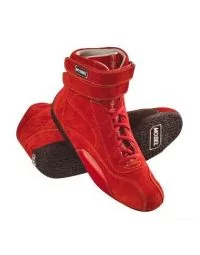
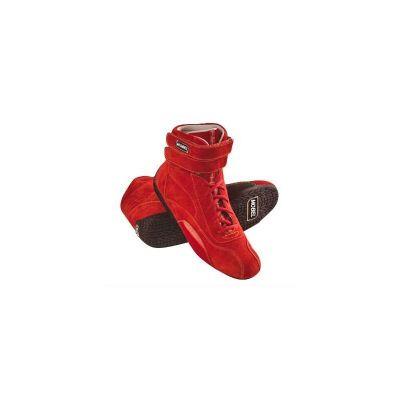
The MotoSpeeds are made for driving. The upper is flame-resistant Nomex fabric with suede leather reinforcement. Inside is a fire-resistant lining. The sole is thin, non-slip and oil-resistant, so you can feel the pedals. The heel and toe areas are reinforced. The shoes are rated SFI 3.3/5.
- Upper: flame-resistant Nomex fabric with suede leather reinforcement.
- Lining: fire-resistant.
- Sole: thin, non-slip and oil-resistant, for pedal feel.
- Heel and toe: reinforced areas.
- Fit: anatomical shape, with a Velcro strap and lace-up closure.
- Sizes: Youth 10-12, Youth 1-4 and Size 5-13.
Before you race, check the shoe's label against your series rules. Then match the shoes with your other gear. MotoSpeeds also has and for a full set.
Car racing boots FAQ
Who makes motorsport shoes with leather detailing?
Most racing gear makers use suede or leather on the toe and heel of their racing shoes. Those spots rub on the pedals and the floor, so they need grip and extra wear. The MotoSpeeds racing shoe pairs flame-resistant Nomex fabric with suede leather reinforcement. Fashion brands also sell motorsport-style sneakers with leather trim, but those are street shoes.
Are FIA-rated racing shoes made with leather?
Many are. A common build mixes fire-resistant fabric with leather or suede on the toe and heel. But the material alone does not make a shoe FIA-rated. The rating comes from the standard the shoe meets, and the label shows it. Always check the label, not just the look.
What are good lightweight racing boots for quick pedal response?
Look for a thin, flexible sole, a low weight and a snug fit. A thin sole lets you feel the pedals. A light shoe lets your feet move fast. A snug fit keeps your heel in place, so each press is exact. A slim toe also helps in a tight footwell.
What should the "best auto racing shoes" have?
They should have the rating your series asks for, a thin non-slip sole and a snug fit with laces and a strap. Look for a fire-resistant lining and a reinforced heel and toe. Then check the size chart with your racing socks on.
Can I race in normal sneakers or driving shoes?
Not in most race series. Fashion motorsport sneakers and driving loafers have no SFI or FIA rating. Many series ask for rated shoes, so read your rulebook first. For a casual track day, ask the organizer what they allow. A rated racing shoe is the simple choice.