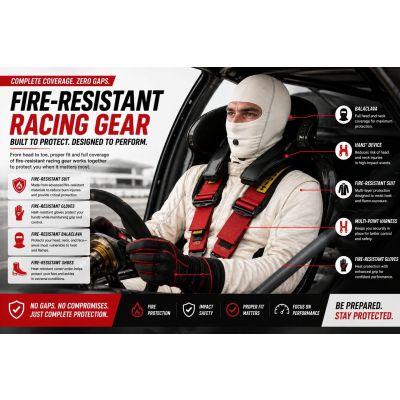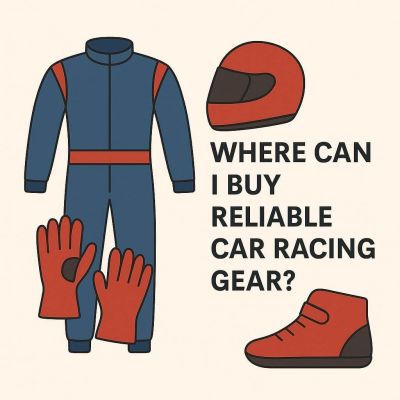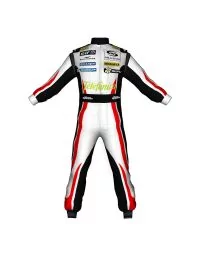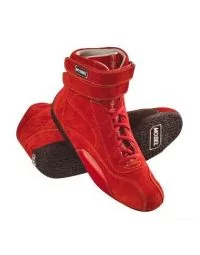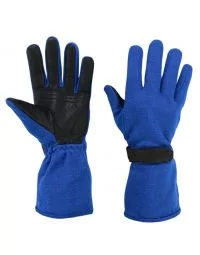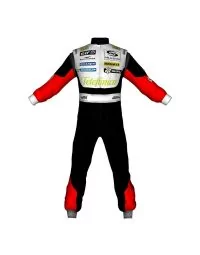
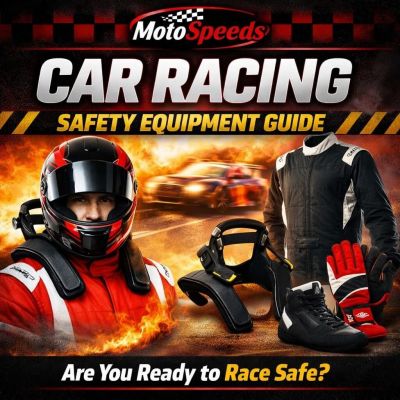
Motorsport safety equipment for a car driver starts with a fire-resistant suit. Under it go fire-resistant underwear, socks and a head sock. Then add gloves, shoes, a helmet, a head-and-neck restraint and a harness. Open cars also need arm restraints. Your event rulebook decides the exact labels each item must carry.
Use the checklist below before every event. Each row says what to check and which label to look for. The sections after the table explain each item in plain words.
| Item | What to check | Label to look for |
|---|---|---|
| Fire suit (1- or 2-piece) | Fits when seated, no holes, zipper closes fully | SFI 3.2A rating or FIA 8856-2018 |
| Fire-resistant underwear | Covers neck to ankles and wrists | SFI 3.3 or FIA 8856-2018 |
| Socks | Fire-resistant, no street socks | SFI 3.3 or FIA 8856-2018 |
| Balaclava or head sock | Covers head and neck under the helmet | SFI 3.3 or FIA 8856-2018 |
| Gloves | Separate fingers, no worn spots, cuff covers the wrist | SFI 3.3 or FIA 8856-2018 |
| Shoes | Thin sole, fire-resistant upper, laces tucked in | SFI 3.3 or FIA 8856-2018 |
| Helmet | Made for car racing, no cracks, snug fit | The helmet rule your event names |
| Head-and-neck restraint | Fits your seat and your helmet | The rule your event names |
| Harness | No fraying, buckle works, date tag still valid | The date and label your event accepts |
| Arm restraints (open cars) | Short enough to keep hands inside the car | The rule your event names |
Clothing: What to Wear From the Skin Out
Auto racing safety clothing works as layers. Fire-resistant underwear, socks and a head sock sit on your skin. The fire suit goes on top. Gloves and shoes close the gaps at your hands and feet. Each layer slows heat on its way to your skin, so every layer should be fire-resistant.
Underwear, Socks and Balaclava
Check: every base layer is fire-resistant, with no cotton or synthetic street clothes under the suit. Racing underwear should cover you from the neck to the ankles and wrists. Socks should be fire-resistant too. A balaclava, also called a head sock, covers the head and neck that show at the helmet opening.
The SFI 3.3 spec from the SFI Foundation covers gloves, underwear, socks, head socks and shoes. You can read the SFI 3.3 driver accessories spec if you want the full detail.
Fire Suit
Check: the suit has the label your event asks for, fits when you sit, and has no holes, burns or fuel stains. Suits come as 1-piece or 2-piece. A 1-piece suit has no gap at the waist. A 2-piece suit is easier to put on, but the jacket and pants should overlap well.
Most fire suits use aramid fabric such as Nomex. To learn more, read how Nomex fire suits work. You can compare cuts and options in our .
Gloves
Check: the gloves have separate fingers, a fire-resistant layer, and no thin or worn spots on the palm. The glove cuff should cover your wrist and tuck under the suit sleeve. Under SFI 3.3, any leather on a glove must have a fire-resistant layer between it and your hand.
Gloves also help your grip on the wheel. See our for the current range.
Shoes
Check: the shoes have a fire-resistant upper, a thin sole for pedal feel, and laces you can tuck in. Street shoes have thick soles that make it hard to feel the brake. The suit legs should reach down over the top of the shoe so no skin shows at the ankle.
Our racing boots guide goes deeper on fit and soles. Browse to see the shoe range.
Head and Neck: Helmet, Restraint and Harness
Your head, neck and body need gear that holds them in place. Use a helmet made for car racing, not a street or bike helmet. Add a head-and-neck restraint that fits your seat. Keep your harness tight and in date. Your rulebook names the exact helmet and restraint rules for your class.
Helmet
Check: the helmet is made for car racing, has no cracks or deep marks, and fits snug without pressure points. Event rules name which helmet labels they accept, so read them before you choose one. Replace a helmet after a hard hit, even if it looks fine.
Head-and-Neck Restraint
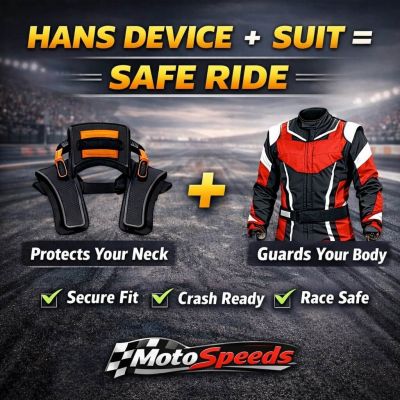
Check: the device fits your seat angle and connects to your helmet. A head-and-neck restraint, often called a HANS-type device, sits on your shoulders. It links to the helmet and limits how far your head moves forward in a sudden stop. Many classes require one, so check your rules.
Harness and Arm Restraints
Check: the belts are not frayed, the buckle opens fast, and the date tag is still accepted by your event. In open cars, arm restraints keep your hands inside the car. For help with how the suit, belts and restraint work together, read our guide on gear fit with a harness and HANS.
What the Labels Mean: SFI and FIA
SFI and FIA labels show which standard a piece of gear was made to meet. SFI 3.2A covers fire suits. SFI 3.3 covers gloves, underwear, socks, head socks and shoes. FIA 8856-2018 covers driver clothing for FIA events. Your event rulebook says which labels it accepts.
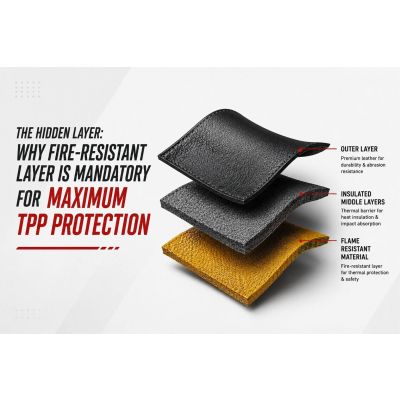
An SFI 3.2A label ends in a number, such as /1, /5 or /15. A higher number means a higher TPP score. TPP stands for Thermal Protective Performance. It measures how long the fabric slows heat before a burn could start.
FIA gear carries a sewn-in homologation label. Homologation just means the item is approved and on the FIA list. You can read the FIA 8856-2018 standard for the full text. For a side-by-side look, read SFI vs FIA racing suits.
Does a Higher-Rated Kit Last Longer?
No. A rating describes how much heat protection the gear gives, not how long it lasts. A higher-rated suit and a lower-rated suit both wear out with use. Sweat, washing, sun, fuel and oil all weaken fabric over time. Condition and your event's label rules decide when to replace gear.
Inspect your kit before each event. Look for:
- thin spots, holes or loose seams;
- zippers that stick or will not close fully;
- fuel, oil or chemical stains that do not wash out;
- labels that are missing, faded or older than your rules allow.
Any one of these is a reason to repair or replace. For more detail, read how often to replace a race suit.
Fit and Sizing
Try on racing gear in the seated position, with your fire-resistant underwear on. A suit that fits when you stand can pull at the shoulders or knees when you sit. Sleeves should reach your wrists when your hands are on the wheel. Legs should reach your shoes when your feet are on the pedals.
A suit that is too loose can bunch up and press heat into your skin. A suit that is too tight can limit your arms and make long races harder. Use our size chart to start. For a custom suit, follow how to measure yourself for a racing suit.
First Race Day: The Beginner Minimum
A new driver needs the full core kit on day one: suit, underwear, socks, head sock, gloves, shoes, helmet, and any restraint the class requires. Start with the event rulebook, not a shopping list. It tells you which items are required and which labels count. Then inspect everything before you leave home.
Follow these steps before your first event:
- Read the rulebook for your class and write down every required item and label.
- Check each label for the right standard and a date your event accepts.
- Try on the full kit in a seat, with gloves and helmet on.
- Inspect seams, zippers, cuffs and soles.
- Pack the kit dry and keep it out of direct sun.
Common beginner mistakes:
- wearing street socks or a synthetic shirt under the suit;
- racing in worn gloves with thin palms;
- using a suit or harness with a label the event no longer accepts;
- picking a suit size from street clothes without a seated fit check.
MotoSpeeds Auto Racing Gear
MotoSpeeds offers fire suits, gloves and shoes for car drivers. Every suit comes as a 1-piece or 2-piece, in standard sizes or Custom Size. With Custom Size, the suit is made to your measurements. For helmets, restraints and base layers, check your rulebook for the labels you need.
- : extra layers of Nomex fabric on the shoulders, elbows and knees, with a moisture-wicking inner lining. Rated SFI 3.2A/5.
- and : extra layers of material on the shoulders, elbows and knees, with a moisture-wicking inner lining. Both are rated SFI 3.2A/5.
- : a 1-piece or 2-piece suit, in standard sizes or Custom Size. Rated SFI 3.2A/5.
- : reinforced knuckle areas and a fire-resistant lining. Rated SFI 3.3/5.
- : reinforced heel and toe areas and a fire-resistant lining. Rated SFI 3.3/5.
Before you order a Custom Size suit, read how to measure. To pick between suit types, see how to pick a racing suit. You can see the full range of in one place.
FAQ
Does a higher-end certified racing kit last longer than a budget certified set?
Not because of the rating. A rating tells you how much heat protection the gear gives when it is in good shape. It does not tell you how long it will last. Every kit wears with use, washing and stains. Inspect it before each event and replace it when it is damaged or the label is no longer accepted.
What racing clothing gives the most protection at high speed?
Protection comes from the full system, not one piece. That means fire-resistant underwear, socks and a head sock under a fire suit, plus gloves, shoes, a helmet and restraints. For suits, a higher SFI 3.2A number means a higher TPP score, which means the fabric slows heat for longer.
What safety gear does an amateur motorsport driver need?
The core kit is a fire suit, fire-resistant underwear, socks, a head sock, gloves, shoes and a helmet. Many classes also require a head-and-neck restraint and a harness, and open cars need arm restraints. Your event rulebook is the final word on what you must wear.
What should I look for in racing boots?
Look for a thin sole for pedal feel and a fire-resistant upper. The shoe should fit snug so your foot does not slide on the pedals. Our racing boots guide covers this in more detail, and the have a fire-resistant lining.
How do I choose the right size racing fire suit?
Measure yourself, then check fit in the seated position with your underwear on. The suit should not pull at the shoulders or knees when you sit and reach for the wheel. Sleeves and legs should still cover your wrists and ankles. Our guide on measuring for a racing suit walks you through it.
What should I wear under my racing fire suit?
Wear fire-resistant underwear that covers you from the neck to the ankles and wrists. Add fire-resistant socks and a balaclava, also called a head sock. Do not wear cotton or synthetic street clothes under the suit. Check that each base layer carries a label your event accepts, such as SFI 3.3 or FIA 8856-2018.