When it comes to , the type of leather used can make a significant difference in safety, performance, and comfort. Riders often focus on design, fit, and branding, but the material beneath the surface plays a critical role in how well a suit performs on the track. Two of the most commonly used leathers in professional motorcycle gear are kangaroo leather and cowhide. Each has its own strengths, and understanding the difference helps riders make smarter, safer choices.
This comparison breaks down kangaroo leather vs cowhide by strength, weight, durability, and real-world riding performance.
Understanding Cowhide Leather in Motorcycle Racing Gear
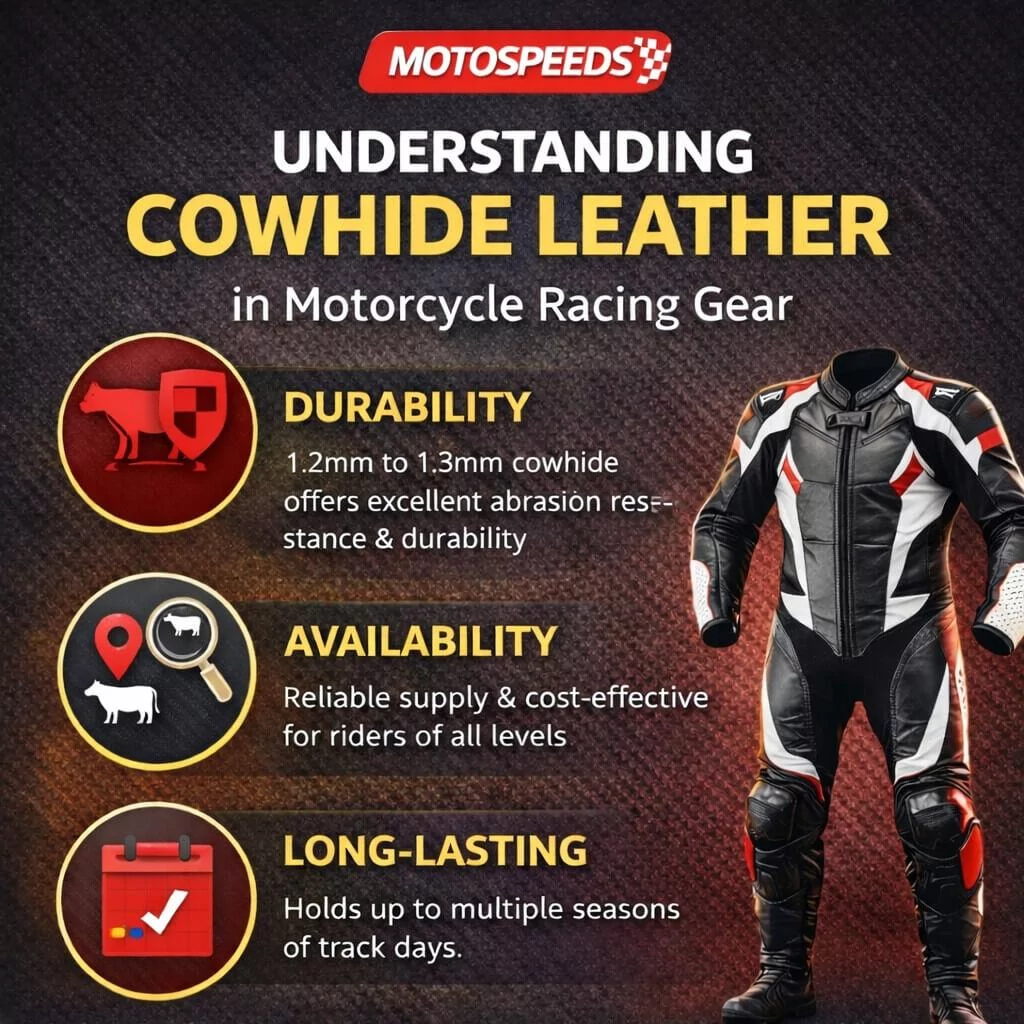
Cowhide has been the backbone of motorcycle racing gear for decades. It is widely used because of its durability, availability, and proven performance in crashes.
Strength and Thickness of Cowhide
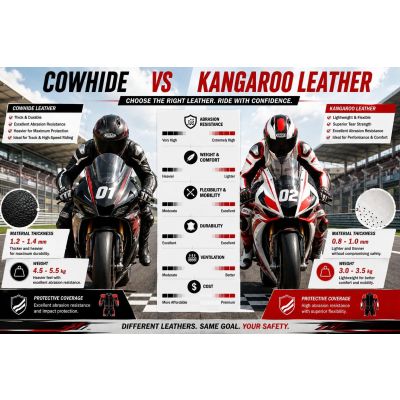
Cowhide racing leather typically ranges between 1.2 mm and 1.4 mm in thickness for track use. Its strength comes from density and thickness, which provide excellent abrasion resistance during slides. This makes cowhide a reliable choice for riders who prioritize long-term durability and cost-effectiveness.
Durability and Longevity
One of cowhide’s biggest advantages is its ability to withstand repeated wear. It holds up well to daily riding, track days, and long seasons of use. For riders who want gear that lasts for years, cowhide remains a solid option.
What Makes Kangaroo Leather Different?
Kangaroo leather is considered a premium material in High-performance leather suit and is often used in professional-level suits.
Strength-to-Weight Ratio
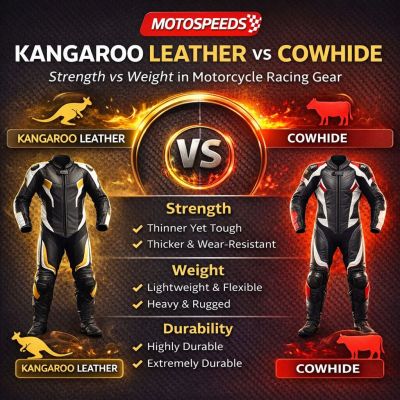
The most important advantage of kangaroo leather is its exceptional strength-to-weight ratio. Kangaroo leather fibers are naturally tighter and more uniform, allowing it to be thinner while maintaining equal or greater abrasion resistance than cowhide.
In practical terms, this means a kangaroo leather suit can be lighter without sacrificing protection.
Reduced Weight for Better Performance
Because kangaroo leather can be used at thinner gauges, it significantly reduces overall suit weight. This lower weight improves rider mobility, reduces fatigue, and enhances comfort during long sessions on the track.
Kangaroo Leather vs Cowhide: Abrasion and Impact Protection
Both materials offer excellent protection when properly constructed, but they behave differently in real-world riding conditions.
Abrasion Resistance in High-Speed Slides
Kangaroo leather provides outstanding abrasion resistance despite being thinner. This makes it ideal for high-speed racing where minimizing bulk is important. Cowhide, while slightly heavier, also performs extremely well in slides and is often preferred for its rugged feel.
Impact Zones and Reinforcement
In modern motorcycle race gear, leather type works alongside CE-approved armor, reinforced stitching, and stretch panels. Whether kangaroo or cowhide, proper construction matters just as much as material choice.
Comfort and Flexibility on the Bike
Comfort plays a major role in rider confidence and control.
Flexibility and Fit
Kangaroo leather is naturally more flexible, which allows for a closer, race-focused fit. Riders often describe it as feeling “broken-in” faster than cowhide. Cowhide may feel slightly stiffer at first but softens over time with use.
Heat Management and Breathability
Because kangaroo leather is thinner, it allows better airflow when paired with perforation zones. This can be beneficial in hot racing conditions. Cowhide, while slightly warmer, still performs well when designed with proper ventilation.
Cost vs Performance: Which Leather Is Right for You?
Choosing between kangaroo leather and cowhide often comes down to riding style, budget, and performance goals.
Kangaroo leather is typically more expensive due to limited supply and specialized processing. It is best suited for competitive racers and riders who demand maximum performance with minimal weight.
Cowhide offers excellent protection at a more accessible price point. It is ideal for track-day riders, street riders, and those who want long-lasting gear without premium cost.
Explore MotoSpeeds Motorbike Race Gear Collection
MotoSpeeds offers professionally engineered motorbike race gear designed using both premium cowhide and kangaroo leather options. Each product is built with rider safety, comfort, and performance as top priorities.
Choosing the Right Leather for Your Riding Style
There is no single “best” leather for every rider. Kangaroo leather excels in lightweight performance and flexibility, while cowhide remains a proven, durable, and cost-effective choice. The right decision depends on how and where you ride.
When paired with proper fit, CE-certified armor, and expert craftsmanship, both materials deliver outstanding protection on the track.
Conclusion: Strength vs Weight Comes Down to Riding Priorities
The debate between kangaroo leather vs cowhide is ultimately about balance. Kangaroo leather offers unmatched strength for its weight, making it ideal for high-performance racing. Cowhide delivers proven durability and reliability that continues to earn rider trust worldwide.
Understanding these differences allows you to invest confidently in gear that matches your riding goals.
Explore MotoSpeeds today and choose the leather that matches your riding style, performance needs, and protection standards.